Originally published in my "
Aural Fixation" column on PopMatters.com on July 25, 2012.
See original post here.

"Help me! My career is slipping away!"
image from kdamos.es
Dear Tom Cruise: We know you are hurting from the failure of Rock of Ages. However, if you learn the lessons from the best rock-themed movies, you can still make a rock film for the ages.
You poor man. When average folks crash and burn they don’t have to endure the blazing spotlight of the international media. As one of the biggest stars on the planet, you, Mr. Mission Impossible, have to deal with scrutiny most of us can’t possibly imagine.
I’m not talking about your recently failed marriage to Katie Holmes. We all saw that coming, right? This is much more serious. You, the man who’s starred in 17 movies grossing more than $100 million (see the box office for all his movies here), may have lost your Midas touch.
With $37 million banked, Rock of Ages won’t be joining that blockbuster club. You can’t shoulder all the blame, though. After all, the typical over-the-top intensity you infuse in rock star Stacee Jaxx has some critics hailing you performance as Oscar-worthy.
Still, with widespread derision heaped upon Rock of Ages, you’re left helplessly watching your personal and professional life tanking. You no longer have the luxury of a two-income household. You’re faced with being a single dad, scrounging enough cash to cover child support and alimony payments. Like Jerry Maguire, you need, a break—and soon—to get you out of this slump. You need to make another rock movie.
It might seem like risky business, but Mr. Top Gun, you can tap your own blockbuster-making talents, mix in the elements of critically successful music movies, and gift the world with a true rock film for the ages. Here’s how.
Tip #1: Start with a director who knows rock ‘n’ roll.
“Rock ‘n’ roll” is a specific genre, not an interchangeable term with “pop music”. My kids watched Camp Rock this week, after which I posted on Facebook that Disney owed them an apology for suggesting that the Jonas Brothers and rock have anything to do with each other.
Kudos to director Adam Shankman for adapting Broadway’s Hairspray to the big screen (itself a reworking of John Waters’ 1988 comedy film of the same name). However, when ‘80s hair-band and arena-rock anthems are put in the mouths of Julianne Hough and Diego Boneta, they are scrubbed free of whatever grit they first possessed, and the audience feels like its watching an episode of Glee (which Shankman also directed, by the way). Movie critic Richard Roeper said, “Every time an actor belts out a hit, you’re reminded that the original, however, cheesy, was better.” (15 June 2012, Rotten Tomatoes)
So, Tom – instead of Shankman, tap Cameron Crowe or Rob Reiner. They directed you in Jerry Maguire and A Few Good Men respectively – and both have helmed iconic rock films. More on those in a moment.
Tip #2: If any actors are going to sing, make sure they really know how to sing.
Rock of Ages cast member Malin Akerman told USA Today that you “made a good, good rock star, that’s for sure. I let him know if this acting thing doesn’t work out, he’s definitely got a second career as a rocker.”
Tom, you have all the right moves. You look the part and your stage presence could be a primer for wannabe rockers. However, if I’m listening to “Paradise City” and “Pour Some Sugar on Me” I’d rather hear Guns N’ Roses and Def Leppard than the man who slung drinks in Cocktail back when those songs were hits.
So, Tom – leave the singing to someone else. Maybe Jamie Foxx? You guys worked together in Collateral. The legendary Ray Charles approved Foxx to play him in the 2004 biopic Ray! and the result was an Oscar for Best Actor.
Tip #3: Musicians are not actors.
When it comes to pipes, Mary J. Blige is the 21st century version of Aretha Franklin. When it comes to acting, her role in Rock of Ages is akin to Lou Reed’s performance in 1983’s Get Crazy. That bad B-movie focused on a New Year’s Eve concert at a Fillmore East-type venue. Among the performers were a Mick Jagger type played by Malcolm MacDowell and a reclusive singer played by Reed. I’ll happily debate anyone who questions Reed’s contributions to the music world, but you can knock his acting ability all you want.
So, Tom, what can you learn from this? If you’re going to put musicians in your film, do it with documentary footage. Call up Martin Scorsese. He did great things for your career in The Color of Money. Since then, he’s won a Best Director Oscar and done a slew of music documentaries, including Living in the Material World, Shine a Light, No Direction Home, and The Last Waltz. The latter, about The Band’s farewell show, has been called the best concert film of all time. Watch Levon Helm. He looks convinced that if he pours enough energy and anguish into “The Night They Drove Ol’ Dixie Down” he might prevent The Band from breaking up.
Tip #4: Avoid rock clichés – unless you can make them farcical.
The best moment in Rock of Ages comes when we get a glimpse into Stacee Jaxx’s psyche as he unloads to a reporter about the burden of being a rock star. I imagined a hard-hitting and probing film built around this premise. Then you launched into Bon Jovi’s “Wanted Dead or Alive”.
The documentary Anvil! The Story of Anvil doesn’t beat the viewer over the head with a clichéd tale of rockers who drink a lot, do drugs a lot, and have sex a lot. Instead, it probes the life of rock musicians who will never be stars, but keep slogging away at it anyway, because it’s what they love to do.
Tom, if you must deal with clichés, use This Is Spinal Tap! as your guide. Director Rob Reiner brilliantly mocked the absurdities of the rock ‘n’ roll lifestyle in what some consider the best rock movie of all time.
Tip #5: There’s a fine line between goofy and joyful.
Rock of Ages opens with Julianne Hough as a small-town girl determined to make it big. She boards a bus bound for Hollywood and soon passengers are crooning advice to her via Night Ranger’s “Sister Christian.” I have no idea why no one on the bus broke into a screaming fit begging to get off at the next stop.
Tom – this brings us to Cameron Crowe, again. The man knows how to show power of music to create joy. Crowe explored his years as a Rolling Stone journalist in the fantastic Almost Famous. In one scene, the weariness of life on the road has clearly taken its toll. However, the tour bus travelers break into an impromptu sing-along with Elton John’s “Tiny Dancer” and everyone on the bus – and in the theater – is left smiling.
Tip #6: Rock music has the power to heal.
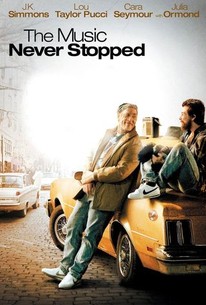
The Music Never Stopped tells the real-life story of a 30-something whose short-term memory is robbed from him by a brain tumor. As a result, his mind is stuck in the teen version of himself in the early ‘70s. His father, desperate to connect with his son, realizes the only way to do so is through the music of his son’s youth. Despite vehement opposition to his son’s Deadhead tastes, the pivotal point of the movie is when father and son go to a Grateful Dead concert together.
Rock of Ages, however, just leaves viewers in pain. Tom, we know you’re hurting as well, but you can get through this. You can make a rock-themed blockbuster. After all, you’re the guy who taught us all to love old time rock ‘n’ roll – and in your tighty whiteys, no less.