Showing posts with label Tapestry. Show all posts

Sunday, September 1, 2024

Pop: Top 100 Albums

Pop:

The Top 100 Albums

There are no inarguable terms to define rock music – or R&B, or country, or dance, or any other genre. Perhaps the most baffling, though, is pop music. Why? Because it’s an amalgam of all other genres. Just take a glance at the top ten on this list. Michael Jackson shows up with a couple of R&B/dance-oriented albums. Fleetwood Mac makes an appearance with classic rock. The Bee Gees and others give us their spin on disco. Carole King shows why she reigned supreme at the forefront of the singer/songwriter movement of the ‘70s. Alanis Morissette serves up a slice the kind of alternative rock which became mainstream in the ‘90s while Adele gives us a dose of blue-eyed British soul.

A strong effort was made to focus on albums that generated multiple pop hits, did well on the album chart, and were big sellers. While albums like the Beatles’ Sgt. Pepper’s Lonely Hearts Club Band, Pink Floyd’s Dark Side of the Moon, and Led Zeppelin’s Led Zeppelin IV are monster sellers, they only generated a mere three top-40 hits between them.

Welcome to the world of pop music. All the different ingredients described above have been factored in – as well as an aggregate of a handful of lists focused on the best pop albums of all time (see sources at bottom of page) – to create the list you have before you. Hopefully there’s something here to fit your tastes. After all, pop is the great equalizer. It can bring disparate groups together because of a shared love of a particular album. Without further ado, here’s the top 100 pop albums of all time, as determined by Dave’s Music Database.

Check out other best-of-genre/category lists here.

1. Michael Jackson Thriller (1982)
2. Various artists (Bee Gees et al) Saturday Night Fever (soundtrack, 1977)
3. George Michael Faith (1987)
4. Fleetwood Mac Rumours (1977)
5. Elton John Goodbye Yellow Brick Road (1973)
6. Michael Jackson Bad (1987)
7. Whitney Houston Whitney Houston (1985)
8. Janet Jackson Rhythm Nation 1814 (1989)
9. Bruce Springsteen Born in the U.S.A. (1984)
10. Prince & the Revolution Purple Rain (1984)

11. Adele 21 (2011)
12. Justin Timberlake FutureSex/LoveSounds (2006)
13. Shania Twain Come on Over (1997)
14. Taylor Swift 1989 (2014)
15. Alanis Morissette Jagged Little Pill (1995)
16. Various artists (Olivia Newton-John and John Travolta et al) Grease (1978)
17. Michael Jackson Dangerous (1991)
18. Madonna Like a Virgin (1984)
19. Michael Jackson Off the Wall (1979)
20. Def Leppard Hysteria (1987)

21. Phil Collins No Jacket Required (1985)
22. Janet Jackson Control (1986)
23. Taylor Swift Fearless (2008)
24. Lady Gaga The Fame (2008)
25. Various artists (Whitney Houston et al) The Bodyguard (soundtrack, 1992)
26. Madonna Like a Prayer (1989)
27. Usher Confessions (2004)
28. Janet Jackson janet. (1993)
29. Mariah Carey Daydream (1995)
30. Katy Perry Teenage Dream (2010)

31. Mariah Carey Mariah Carey (1990)
32. Boyz II Men II (1994)
33. Whitney Houston Whitney (1987)
34. Wham! Make It Big (1984)
35. Various artists Dirty Dancing (soundtrack, 1987)
36. Madonna True Blue (1986)
37. Black Eyed Peas The E.N.D. (Energy Never Dies) (2009)
38. Carole King Tapestry (1971)
39. Lionel Richie Can’t Slow Down (1983)
40. The Police Synchronicity (1983)

41. Paula Abdul Forever Your Girl (1988)
42. Bruno Mars Unorthodox Jukebox (2012)
43. TLC Crazy Sexy Cool (1994)
44. The Beatles Magical Mystery Tour (1967)
45. Beyoncé Dangerously in Love (2003)
46. New Kids on the Block Hangin’ Tough (1988)
47. Simon & Garfunkel Bridge Over Troubled Water (1970)
48. Taylor Swift Red (2012)
49. Destiny’s Child Survivor (2001)
50. Bon Jovi Slippery When Wet (1986)

51. Ace of Base Happy Nation/The Sign (1993)
52. Bon Jovi New Jersey (1988)
53. Mariah Carey Music Box (1993)
54. Tina Turner Private Dancer (1984)
55. INXS Kick (1987)
56. Christina Aguilera Christina Aguilera (1999)
57. Phil Collins …But Seriously (1989)
58. Journey Escape (1981)
59. Kelly Clarkson Breakaway (2004)
60. Lady Gaga Born This Way (2011)
61. Spice Girls Spice (1996)
62. Bobby Brown Don’t Be Cruel (1988)
63. Celine Dion Falling into You (1996)
64. Rihanna Loud (2010)
65. Milli Vanilli Girl You Know It’s True (aka All or Nothing) (1989)
66. Billy Joel The Stranger (1977)
67. Tears for Fears Songs from the Big Chair (1985)
68. Huey Lewis & the News Sports (1983)
69. U2 The Joshua Tree (1987)
70. Fergie The Dutchess (2006)

71. Post Malone Hollywood’s Bleeding (2019)
72. Britney Spears …Baby One More Time (1999)
73. Cyndi Lauper She’s So Unusual (1983)
74. Backstreet Boys Millennium (1999)
75. Lionel Richie Dancing on the Ceiling (1986)
76. Lady Gaga The Fame Monster (2009)
77. Drake Scorpion (2018)
78. Ed Sheeran ÷ (Divide) (2017)
79. Genesis Invisible Touch (1986)
80. Hootie & the Blowfish Cracked Rear View (1994)

81. Wilson Phillips Wilson Phillips (1990)
82. Guns N’ Roses Appetite for Destruction (1987)
83. The Beatles Please Please Me (1963)
84. Huey Lewis & the News Fore! (1986)
85. Nickelback All the Right Reasons (2005)
86. T.I. Paper Trail (2008)
87. Bee Gees Spirits Having Flown (1979)
88. Rihanna Good Girl Gone Bad (2007)
89. The Beatles A Hard Day’s Night (1964) 90. Taylor Swift Midnights (2022)

91. Bruno Mars Doo Wops & Hooligans (2010)
92. Justin Bieber Purpose (2015)
93. Stevie Wonder Songs in the Key of Life (1976)
94. The Weeknd Starboy (2016)
95. The Weeknd After Hours (2020)
96. Various Artists (Whitney Houston et al) Waiting to Exhale (soundtrack, 1995)
97. Billy Joel An Innocent Man (1983)
98. Foreigner 4 (1981)
99. The Beatles Help! (1965)
100. Ariana Grande Thank U, Next (2019)


Resources and Related Links:


First posted 11/22/2020; last updated 9/1/2024.

Saturday, December 7, 2019

Carole King: Top 50 Songs

First posted 12/4/2019; updated 2/1/2020

Carole King

Singer/songwriter and pianist born Carole Joan Klein on 2/9/1942 in Manhattan, NY. Married lyricist Gerry Goffin in 1958; they wrote a number of hits together as part of the famous Brill Building team. Divorced in 1968. She recorded her first solo album in 1970 and became a Grammy darling the next year with four awards. Her album, Tapestry, is featured in the DMDB book The Top 100 Albums of All Time.

Awards:


Top 50 Songs


Dave’s Music Database lists are determined by song’s appearances on best-of lists as well as chart success, sales, radio airplay, streaming, and awards. Songs which hit #1 on various charts are noted. (Click for codes to singles charts.)

DMDB Top 1%:

1. It’s Too Late (King, 1971) #1 US, CB, HR, CN
2. The Loco-Motion (Little Eva, 1962) #1 US, CB, HR, RB, CN
3. Will You Love Me Tomorrow (The Shirelles, 1960) #1 US, CB
4. You’ve Got a Friend (James Taylor, 1971) #1 US, CB

DMDB Top 5%:

5. You Make Me Feel Like a Natural Woman (Aretha Franklin, 1967)
6. Up on the Roof (The Drifters, 1962)
7. Take Good Care of My Baby (Bobby Vee, 1961) #1 US, CB, HR, CN
8. I Feel the Earth Move (King, 1971) #1 US, HR
9. One Fine Day (The Chiffons, 1963)
10. Go Away, Little Girl (Steve Lawrence, 1962) #1 US, CB, HR
11. The Loco-Motion (Grand Funk Railroad, 1974) #1 US, CB, HR, RR, CN

DMDB Top 10%:

12. Pleasant Valley Sunday (The Monkees, 1967) #1 CN
13. Go Away, Little Girl (Donny Osmond, 1971) #1 US, CB, CN
14. The Loco-Motion (Kylie Minogue, 1987) #1 AU
15. I’m into Something Good (Herman’s Hermits, 1964) #1 UK
16. You’ve Got a Friend (King, 1971)
17. So Far Away (King, 1971)
18. It Might As Well Rain Until September (King, 1962)

DMDB Top 20%:

19. Jazzman (King, 1974) #1 CB, HR
20. Up on the Roof (James Taylor, 1979)

21. Don’t Bring Me Down (The Animals, 1966)
22. Just Once in My Life (The Righteous Brothers, 1965)
23. Porpoise Song (The Monkees, 1968)
24. Nightingale (King, 1974) #1 AC
25. Sweet Seasons (King, 1971)
26. Only Love Is Real (King, 1975) #1 AC
27. Hey Girl (Donny Osmond, 1971)
28. Crying in the Rain (The Everly Brothers, 1962)
29. Been to Canaan (King, 1972) #1 AC
30. You Make Me Feel Like a Natural Woman (King, 1971)

31. Hi-De-Ho (Blood, Sweat & Tears; 1970)
32. One Fine Day (King, 1980)
33. Every Breath I Take (Gene Pitney, 1961)

Beyond the DMDB Top 20%:

34. Corazón (King, 1973)
35. Believe in Humanity (King, 1973)
36. Crying in the Rain (aha, 1990)
37. Goin’ Back (The Byrds, 1967)
38. I Feel the Earth Move (Martika, 1989)
39. I Can’t Hear You No More (Helen Reddy, 1976) #1 AC
40. He’s a Bad Boy (King, 1963)

41. Hard Rock Café (King, 1977)
42. You Light Up My Life (King, 1973)
43. Will You Love Me Tomorrow (King, 1971)
44. Will You Love Me Tomorrow (Dave Mason, 1978)
45. Some Kind of Wonderful (The Drifters, 1961)
46. When My Little Girl Is Smiling (The Drifters, 1962)
47. It’s Going to Take Some Time (Carpenters, 1972)
48. Keep Your Hands Off My Baby (Little Eva, 1962)
49. Her Royal Majesty (James Darren, 1962)
50. Halfway to Paradise (Billy Fury, 1961)


Resources and Related Links:

Friday, November 22, 2019

Dave’s Music Database Hall of Fame: Album Inductees (Nov. 2019)

Originally posted 11/22/2019.

January 22, 2019 marked the 10-year anniversary of the DMDB blog. To honor that, Dave’s Music Database announced its own Hall of Fame. This month marks the fourth batch of album inductees. Only 11 albums have achieved the trifecta of winning the Grammy for Album of the Year, being inducted into the Grammy Hall of Fame, and being named to the National Recording Registry. Two of these have already been inducted into the Dave’s Music Database Hall of Fame – The Beatles’ Sgt. Pepper’s Lonely Hearts Club Band and Michael Jackson Thriller (1982). A third album, The Button-Down Mind of Bob Newhart is not eligible as it is a comedy album, not a music album. That leaves eight albums to be inducted this month.

See the full list of album inductees here.

Fleetwood Mac Rumours (1977)

Inducted November 2019 for “The Trifecta: Grammy for Album of the Year, Grammy Hall of Fame, National Recording Registry.”

“Intense, internal drama always adds a kick to a final piece of work…[and] few bands can equal Fleetwood Mac…[for] their angst.” DV “Keyboardist Christine McVie sparred with husband/bassist John, and singer Stevie Nicks scrapped with boyfriend/guitarist Lindsay Buckingham.” CDU “The resulting romantic pressure-cooker” AZ produced “a tour de force” BN which made Rumours “the ultimate hangover album for the lovestruck.” DV and “an album that defined a decade.” DV Read more.

Judy Garland Judy at Carnegie Hall (1961)

Inducted November 2019 for “The Trifecta: Grammy for Album of the Year, Grammy Hall of Fame, National Recording Registry.”

Judy Garland became Hollywood royalty, thanks to performances in classics like The Wizard of Oz, but struggled personally and professionally in the late ‘50s. “This live recording…would (rightfully) bring the legendary icon back into the spotlight.” AZ “This is easily one of pop music’s greatest live recordings and a fine testament to Garland’s recorded legacy.” AZ “With relentless verve, Garland takes on her entire musical catalogue with astonishing aplomb. There is little sign of the decades of self-abuse which had left her frail by the early ‘60s.” AMG Read more.

Carole King Tapestry (1971)

Inducted November 2019 for “The Trifecta: Grammy for Album of the Year, Grammy Hall of Fame, National Recording Registry.”

Carole King made a name herself in the 1960s as a songwriter with her husband Gerry Goffin, but on Tapestry “reaches even greater heights as a performer.” AMG She “created the archetype of the female singer-songwriter” TL by insisting she be heard as “human, with all the cracks and imperfections that implies.” RC “The music is loose, earthy, L.A. session-pop” AZ delivered “with a sharpness worthy of a Brooklyn girl.” RC Read more.

Henry Mancini Music from Peter Gunn (1959)

Inducted November 2019 for “The Trifecta: Grammy for Album of the Year, Grammy Hall of Fame, National Recording Registry.”

In 1958, “Peter Gunn was one of the unexpected hits of the new television season, capturing the imagination of millions of viewers by mixing private eye action with a jazz setting. Composer Henry Mancini was more than fluent in jazz, and his music nailed down the popularity of the series.” AMG He created “a key piece of jazz and pop music history” AMG that is a “ valuable addition to any jazz or soundtrack collection of the era.” AMG Read more.

Paul Simon Graceland (1986)

Inducted November 2019 for “The Trifecta: Grammy for Album of the Year, Grammy Hall of Fame, National Recording Registry.”

In 1984, Paul Simon was inspired by a bootleg tape of South African music and, despite the United States’ economic sanctions against the country because of its apartheid government, he arranged a visit. He threw “his ears open to a host of new players and singers” TL and created “exotically fanciful collaborations” UT with Ladysmith Black Mambazo and others. The resulting introduction of world music into a pop arena gave listeners “that magical combination: something they’d never heard before that nevertheless sounded familiar.” AMG Read more.

U2 The Joshua Tree (1987)

Inducted November 2019 for “The Trifecta: Grammy for Album of the Year, Grammy Hall of Fame, National Recording Registry.”

In the early 1980s, U2 built a following first with college radio and then album rock. By the mid-‘80s, they were “spending more and more time with rock legends like Bruce Springsteen and Bob Dylan” QM and were, as Rolling Stone magazine declared, “a band utterly determined to be Important.” RS With its “inspirational, larger-than-life gestures...that’s precisely what [The Joshua Tree] sounds like.” RS It wasn’t just the band’s blockbuster, but its “most varied, subtle and accessible album.” RS Read more.

Stevie Wonder Songs in the Key of Life (1976)

Inducted November 2019 for “The Trifecta: Grammy for Album of the Year, Grammy Hall of Fame, National Recording Registry.”

After securing an unprecedented $13 million contract with Motown, Stevie Wonder took two years – “an eternity in R&B” TL – to write his “longest, most ambitious collection of songs.” AMG His “Grand Artistic Statement” EK “featured more true classics than even most great artists write in a lifetime.” TL It is “like stumbling into a cave full of treasure” JM and not knowing “which piece of gold to stuff into [one’s] pocket first.” JM It “touched on nearly every issue under the sun, and did it all with ambitious (even for him), wide-ranging arrangements and some of the best performances of Wonder’s career.” AMG Read more.

Various Artists (including the Bee Gees) Saturday Night Fever soundtrack (1977)

Inducted November 2019 for “The Trifecta: Grammy for Album of the Year, Grammy Hall of Fame, National Recording Registry.”

“Every so often, a piece of music comes along that defines a moment in popular culture history;” AMG The disco soundtrack for Saturday Night Fever epitomized the latter half of the 1970s and made the Bee Gees the biggest group since the Beatles. They had “been exploring disco and funk rhythms on two albums before this one.” TM However, “the disco boom had seemingly run its course, primarily in Europe, and was confined mostly to Black culture and the gay underground in America.” AMG “The soundtrack “made disco explode into mainstream…with new immediacy and urgency.” AMG Read more.

Saturday, July 31, 1971

James Taylor hit #1 with “You’ve Got a Friend”

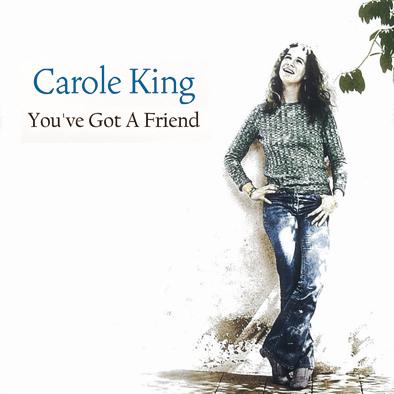
You’ve Got a Friend

Carole King

Writer(s): Carole King (see lyrics here)


Released: February 10, 1971 (album cut)


First Charted: --


Peak: 7 CL, 6 DF (Click for codes to charts.)


Sales (in millions): 0.5 US


Airplay/Streaming (in millions): -- radio, 86.49 video, 128.91 streaming

You’ve Got a Friend

James Taylor


First Charted: May 29, 1971


Peak: 11 US, 11 CB, 2 HR, 11 AC, 1 CL, 4 UK, 2 CN, 25 AU, 1 DF (Click for codes to charts.)


Sales (in millions): 1.0 US, 0.2 UK, 1.2 world (includes US + UK)


Airplay/Streaming (in millions): -- radio, 46.45 video, 187.71 streaming

Awards (James Taylor):

Click on award for more details.


Awards (Carole King):

Click on award for more details.

About the Song:

Carole King was “a New Yorker and Brill Building pop merchant” TB who, with then husband and songwriting partner Gerry Goffin, earned a Rock and Roll Hall of Fame induction. By the turn of the ‘70s, however, she garnered the credentials for a second Hall induction as a performer as she “became the queen of the laidback and mainly acoustic songs of Pacific adult reflection” TB that characterized the decade’s singer/songwriter movement and even more specifically the musicians who lived and worked in the Laurel Canyon era of Los Angeles.

King’s song, “You’ve Got a Friend,” “encapsulated that style.” TB She wrote it during sessions for her Tapestry album as well as James Taylor’s Mud Slide Slim and the Blue Horizon in January 1971. King, Taylor, Joni Mitchell, and Danny Kortchmar perform on both versions. Kortchmar and Taylor had been friends since they were kids and Taylor and King were long-time friends as well. FB

In April 1971, King released the double-A side single “It’s Too Late”/ “I Feel the Earth Move” to promote the Tapestry album. It went to #1 in June 1971 for five weeks and was knocked from the top by Paul Revere & the Raiders’ “Indian Reservation.” After one week at the pinnacle, that song succumbed to Taylor’s version of “You’ve Got a Friend.”

King said “the song was as close to pure inspiration as I’ve ever experienced. The song wrote itself. It was written by something outside myself, through me.” WK Taylor said King wrote the song in response to his line “I’ve seen lonely times when I could not find a friend” in his song “Fire and Rain.” WK She didn’t, however, write it with the intent of him or anyone else specifically recording it. However, she said “when James heard it he really liked it and wanted to record it.” WK Taylor has said the song had particular resonance for him because he had recovered from depression shortly before hearing it. RC

When King’s version was released on the Tapestry album, Rolling Stone critic Jon Landau called it her “most perfect new song.” WK Author James D. Perone said Taylor’s version had “anthem-like qualities” similar to Simon & Garfunkel’s “Bridge Over Troubled Water.” SS He described the song’s themes as “a universal, sister/brotherly, agape-type love of one human being for another.” WK The song won Grammys for Song of the Year and Best Pop Male Vocal Performance.


Resources:


Related Links:


First posted 3/16/2021; last updated 4/28/2024.

Saturday, June 19, 1971

Carole King “It’s Too Late” hit #1

It’s Too Late

Carole King

Writer(s): Carole King (music), Tori Stern (words) (see lyrics here)


Released: April 16, 1971


First Charted: May 7, 1971


Peak: 15 BB, 14 CB, 12 GR, 12 HR, 15 AC, 1 CL, 6 UK, 13 CN, 6 AU, 6 DF (Click for codes to charts.)


Sales (in millions): 1.0 US, 0.2 UK


Airplay/Streaming (in millions): 1.0 radio, 51.23 video, 190.59 streaming

Awards:

Click on award for more details.

About the Song:

She was born Carol Klein on February 9, 1942, in Brooklyn. She met Gerry Goffin at Queens College. They married and by 1960, they’d sailed to the top of the charts as songwriters with the Shirelles’ “Will You Love Me Tomorrow.” They followed up with #1 hits “Take Good Care of My Baby” by Bobby Vee, “Go Away Little Girl” by Steve Lawrence, and “The Loco-Motion” by Little Eva. However, by 1968 the pair had divorced and King was in California embarking on a second career as both a singer and songwriter.

She released an album with a band called the City and a solo album called Writer before she became a superstar with Tapestry, an album which “belongs to the Laurel Canyon folk-rock school, but there’s also some jazz and soul in the breezy, laid-back arrangement.” SG It “helped make the world safe for the ’70s singer-songwriter boom.” SG It sold 25 million copies, spent 15 weeks at #1, and won the Grammy for Album of the Year. The album also produced that year’s Grammy winners for Song of the Year (“You’ve Got a Friend”) and Record of the Year (“It’s Too Late”).

Music historian Steve Sullivan called “It’s Too Late” “the foremost song from the 1970s’ singer/songwriter album.” SS It “represents a whole different form of pop music from a woman who’d already mastered the kind that had been around the previous decade.” SG “The melody is pure Tin Pan Alley pop, the arrangement owes something to light jazz and a whole lot more to L.A. studio craftmanship – but it has bite, resonance, even a mature theme.” DM “There’s a conversational looseness to the way she sings, but there’s intensity, too. It’s one of those voices you immediately recognize, a distinctive honk.” SG

King wrote the music, but not the lyrics – although “she did sell them.” SG Her friend Tori Stern penned the lyrics fresh off her breakup with James Taylor, the singer/songwriter who had worked with King, most notably recording “You’ve Got a Friend.” It is “a layered and nuanced” SG breakup song that sounds like “it might be written in a note left on the kitchen table when somebody’s slipped out for good while her partner’s back was turned.” DM It’s significant the the female narrator “sets the terms of her own departure.” DM She “recognizes that the couple isn’t working anymore, that it’s time to move on.” SG


Resources:


Related Links:


First posted 9/23/2023; last updated 4/28/2024.