Showing posts with label top adult contemporary songs. Show all posts

Friday, March 27, 2015

Today in Music (1965): Roger Miller “King of the Road” hit #1 on the country chart

King of the Road

Roger Miller

Writer(s): Roger Miller (see lyrics here)


Released: January 1965


First Charted: January 29, 1965


Peak: 4 BB, 3 CB, 2 GR, 4 HR, 110 AC, 15 CW, 11 UK, 3 CN, 7 AU, 3 DF (Click for codes to charts.)


Sales (in millions): 1.0 US, 0.2 UK


Airplay/Streaming (in millions): 3.0 radio, 24.7 video, 84.05 streaming

Awards:

Click on award for more details.

About the Song:

Roger Miller was born in Texas in 1936. He left school after eighth grade to become a ranch hand. When he joined the Army in 1956, he became friends with Bill Anderson, a future country songwriter. In 1958, Miller launched his singing career with “City Lights,” a song written by Anderson. In 1960, Miller landed his first top-10 country hit with “When Two Worlds Collide,” which he co-wrote with Anderson. SS

By 1964, Miller had moved to California where he made multiple appearances on television to showcase “his light, amiable style.” SS After switching to Smash Records, he “began a string of hits with the clever, goofy ‘Dang Me.’ The high point of his hot streak was ‘King of the Road.’” SS

Glenda West, a family friend of Miller’s, said he wrote the song on the back of a credit card application. She said he got stuck after writing one verse but finished the song after seeing a picture of a hobo at an airport. TC It is “country music storytelling at its most brilliantly incisive, sketching character, situation and narrative in the minimum number of words with maximum effect.” SS Merle Travis, himself a country songwriting legend, said, “I’d have to rate him higher than Hank Williams.” SS

Author Toby Creswell called the song “the layabouts’ national anthem” TC that is “a good-natured update of Huckleberry Finn.” TC “King of the Road” drew strongly from Miller’s life experiences about growing up in poverty and leading a gypsy lifestyle after his discharge from the Army. It dpecited his “hard-scrabble lifestyle with warmth and humor, its flavorful narrative matched by an engaging melodyand lazy finger-snapping rhythm.” SS


Resources:


First posted 1/31/2024.

Saturday, January 17, 1998

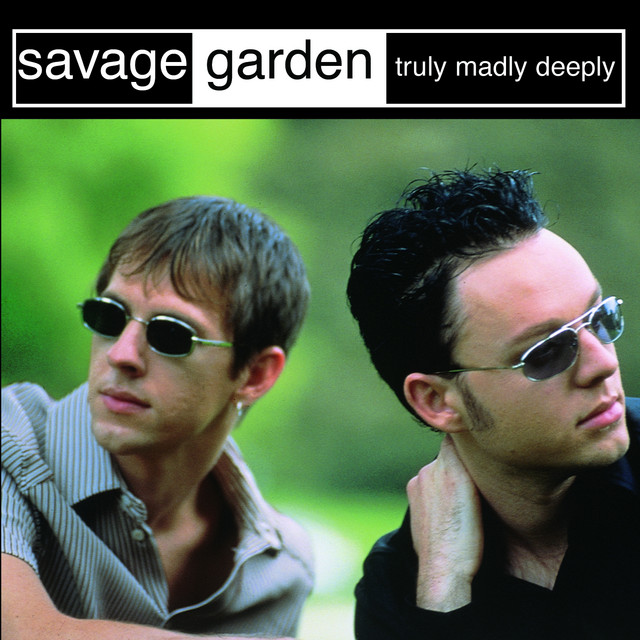
Savage Garden “Truly Madly Deeply” hit #1

Truly Madly Deeply

Savage Garden

Writer(s): Darren Hayes, Daniel Jones (see lyrics here)


Released: March 3, 1997


First Charted: April 6, 1997


Peak: 12 BB, 15 BA, 12 GR, 13 RR, 111 AC, 2 A40, 4 UK, 11 CN, 18 AU, 19 DF (Click for codes to charts.)


Sales (in millions): 0.5 US, 1.2 UK, 2.22 world (includes US + UK)


Airplay/Streaming (in millions): 0.7 radio, 532.33 video, 478.86 streaming

Awards:

Click on award for more details.

About the Song:

Savage Garden was a pop duo consisting of singer Darren Hayes and instrumentalist Daniel Jones which formed in Australia in 1993. The name was inspired by the works of author Anne Rice, FB best known for Interview with the Vampire. They “weren’t part of a cultural wave, and they didn’t belong to any particular genre or scene.” SG “They were two faintly anonymous-looking white guys…and there was nothing especially outwardly interesting about them…The duo made lighter-than-air earworms that would simply become a part of your environment.” SG

They only released two albums before splitting in 2001. Their first album, a self-titled release in 1997, went seven times platinum and generated the hits “I Want You” (#4 BB), “To the Moon and Back” (#24 BB), and “Truly Madly Deeply” (#1 BB).

Hayes wrote the latter song (originally called “Magical Kisses”) about his wife, but it didn’t have a chorus initially. He eventually came up “with a bit about wanting to stand with you in the mountain, to bathe with you in the sea, to lay like this forever until the sky falls down.” It is “a perfectly composed piece of sentimental gibberish.” SG He rewrote the lyrics in a cafĂ© the night before the duo was set to record it in the studio FB and retitled the song “Truly Madly Deeply,” after a 1990 Anthony Minghella film. Hayes only wanted to put it on the album as a bonus track but the duo’s producer, Charles Fisher, knew it was a hit. SG

Not only did the song top the Billboard Hot 100, but it proved to be a monstrous success on the adult contemporary chart. It set a record, spending 123 weeks on that chart. Two years later, Savage Garden broke their own record when “I Knew I Loved You” spent 124 weeks on the chart. RC


Resources:


First posted 4/23/224.

Saturday, August 4, 1990

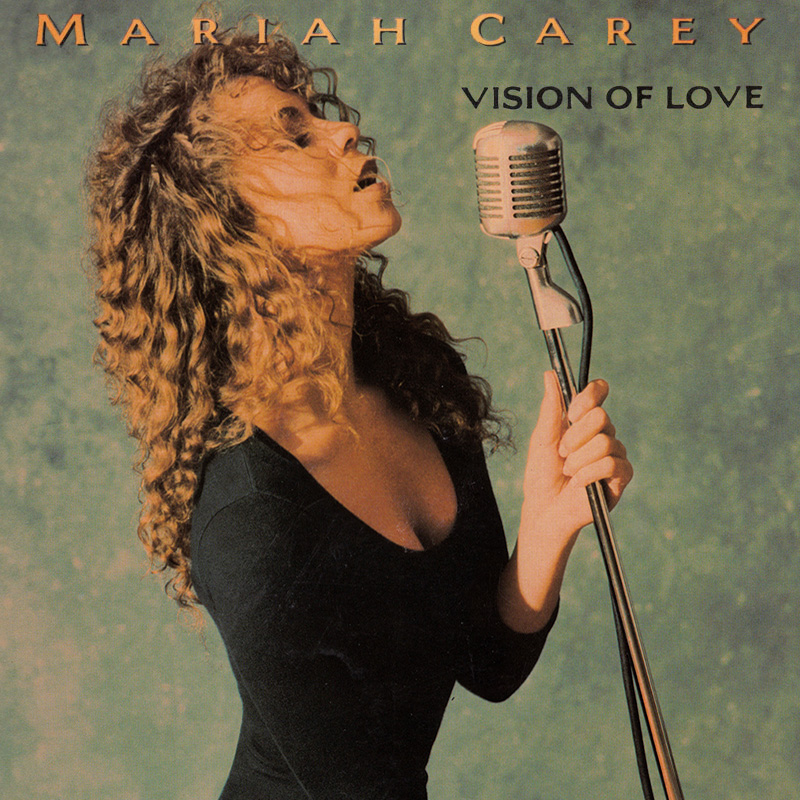
Mariah Carey “Vision of Love” hit #1

Vision of Love

Mariah Carey

Writer(s): Mariah Carey, Ben Marguiles (see lyrics here)


Released: May 15, 1990


First Charted: June 2, 1990


Peak: 14 US, 12 CB, 14 GR, 13 RR, 13 AC, 12 RB, 9 UK, 14 CN, 9 AU, 4 DF (Click for codes to charts.)


Sales (in millions): 1.0 US, 0.2 UK


Airplay/Streaming (in millions): 2.0 radio, 44.6 video, -- streaming

Awards:

Click on award for more details.

About the Song:

Singer/songwriter Mariah Carey was born in 1969 in New York, the daughter of a white opera singer and black aeronautical engineer. She recorded her first demo at sixteen and even sang back-up on Brenda K. Starr’s top 20 hit “I Still Believe” in 1988. She met record executive Tommy Mottola at a party and gave him her demo tape. He listened to it in his limo on the way home and had the driver take him back to the party. She’d already left, but he tracked her down and signed her to Columbia. BR

He “started making romantic overtures almost immediately” BR and the two eventually married, despite the 20-year-plus age difference. She would later describe him as “a repressive, controlling force” BR but he did “ruthlessly believe in her talent” BR and she was considered a priority at Columbia. Mottola wanted to do with Carey what Clive Davis had done with Whitney Houston (who’d already had seven #1’s at this point) at Arista. He even brought in Narada Michael Walden, who’d produced many of Houston’s dance-pop hits, to work on many of the tracks on Carey’s debut album, including “Vision of Love.”

Carey had a more active role in her career than Houston because she had a hand in writing and producing her songs. BR She wrote “Vision of Love” roughly a week after signing to Columbia. BR She wrote it as “a howl of triumph after making it through her chaotic, uncertain early years.” BR “The song self-consciously evokes classic soul” BR backed by “the same kind of twinkly, artificial late-eighties synthpop that previous teen sensations like Debbie Gibson and Tiffany were using.” BR

In light of the scandal at the time that exposed group Milli Vanilli as not actually singing their vocals, Columbia took great care in presenting Carey as “someone who looked like a model but who really could sing.” BR Critics focused on her seven-octave vocal range at the onset of her career. BR From the beginning, Carey “understood that her voices was what set her apart” BR and “Vision of Love” “is a vehicle for that voice.” BR It is also “a sleek piece of pop craftmanship, a canny showcase for a fully formed persona, and a moving account of personal triumph.” BR

The song introduced the world to someone who would become one of the most successful artists of all time. “Vision of Love” was the first of nineteen songs to reach #1 on the Billboard Hot 100. That made her second only to the Beatles’ twenty chart-toppers. “Vision of Love” was the first of four #1 songs from her debut album and the first of five consecutive #1 singles, making her the first artist to top the charts the first five times out.


Resources:


Related Links:


First posted 4/10/2023.

Saturday, October 23, 1976

Chicago “If You Leave Me Now” hit #1

If You Leave Me Now

Chicago

Writer(s): Peter Cetera (see lyrics here)


Released: July 30, 1976


First Charted: August 6, 1976


Peak: 12 US, 11 CB, 15 GR, 12 HR, 13 RR, 11 AC, 1 CL, 13 UK, 12 CN, 15 AU, 1 DF (Click for codes to charts.)


Sales (in millions): 2.0 US, 0.8 UK


Airplay/Streaming (in millions): -- radio, 63.4 video, 250.72 streaming

Awards:

Click on award for more details.

About the Song:

Chicago formed in the city of the same name in 1967. Their jazz-inflected rock made them somewhat oblivious to genre trends and proved to be a hit-making formula as well. From 1969 to 1975 they landed eleven songs in the top 10 and were sitting on five consecutive #1 albums when Chicago X was released. While that album missed the top slot, peaking at #3, it continued the group’s perfect record of platinum albums and gave the band something they’d never had before – a #1 song.

“If You Leave Me Now” is “a breezy ballad about attempting to stave off a breakup.” SG It’s written and sung by Peter Cetera, who “sings the hell out of the song, hitting inverted-eyebrow blue-eyed-soul sincerity notes all over the place.” SG He “sells the wounded sadness of the song’s sentiment” SG backed by “a slow horn riff, some acoustic-guitar flourishes, [and] a sad-bastard string section.” SG The Guardian said the song “impossibly lush and beautifully written, but its sadness is pervasive and affecting.” WK Stereogum’s Tom Breihan, however, suggests that it “is soft and gooey enough that it never even sounds like a possible-breakup song. Instead, it comes off as a simple love song, a prom slow-dance kind of thing.” SG

The other band members weren’t overjoyed about how “that one huge ballad begat more huge ballads — most of them from Peter Cetera.” SG Prior to that, the band had more of a collective. Keyboardist Robert Lamm said, “If somebody is obviously egoing out, there’s six of ous to deal with and we’ll get together and give him a knuckle sandwich.” FB

However, Cetera’s role was becoming more prominent. Lamm had written and sung some of the band’s best known songs such as “Saturday in the Park,” “25 or 6 to 4,” and “Does Anybody Really Know What Time It Is?” Trombonist James Pankow wrote “Make Me Smile,” on which guitarist Terry Kath sang lead. Although Pankow and trumpeter Lee Loungnane had penned the band’s last four top-10 hits, it was Cetera who took the lead on vocals.


Resources:

  • FB Fred Bronson (2003). The Billboard Book of Number One Hits (5th edition). Billboard Books: New York, NY. Page 446.
  • SG Stereogum (9/18/2019). “The Number Ones” by Tom Breihan
  • WK Wikipedia


Related Links:


First posted 12/27/2022.