Friday, November 30, 2012

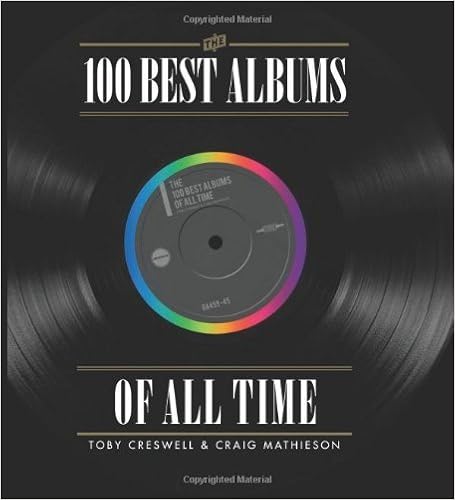
Creswell & Mathieson The 100 Best Albums of All Time

Toby Creswell & Craig Mathieson:

The 100 Best Albums of All Time

This book, published in 2012, offers a look at the best albums of all time. In Anita Awbi’s review of the book for PRS for Music, she says “experienced authors Creswell and Mathieson have certainly done their research for this one and the results are an enthralling journey through the vaults of popular music.” She notes that the book includes many of the usual suspects, but is “not without its eyebrow-raising moments with some interesting inclusions and omissions.” She specifically notes the inclusions of Devo and Midnight Oil and the omissions of Madonna, Abba, and Human League. See the full list below.

Check out other best-of album lists by individuals/critics here.

1. Bob Dylan Highway 61 Revisited (1965)
2. The Beatles Revolver (1966)
3. The Clash London Calling (1979)
4. Nirvana Nevermind (1991)
5. Van Morrison Astral Weeks (1968)
6. Joni Mitchell Blue (1971)
7. The Rolling Stones Sticky Fingers (1971)
8. Fleetwood Mac Rumours (1977)
9. Velvet Underground & Nico Velvet Underground & Nico (1967)
10. Public Enemy It Takes a Nation of Millions to Hold Us Back (1988)

11. The Beach Boys Pet Sounds (1966)
12. Bruce Springsteen Darkness on the Edge of Town (1978)
13. Television Marquee Moon (1977)
14. Little Richard Here’s Little Richard (1957)
15. Led Zeppelin Led Zeppelin IV (1971)
16. Radiohead OK Computer (1997)
17. The Band The Band (1969)
18. The Beatles The Beatles (aka “The White Album”) (1968)
19. Pixies Doolittle (1989)
20. John Lennon Plastic Ono Band (1970)

21. U2 Achtung Baby (1991)
22. Simon & Garfunkel Bridge Over Troubled Water (1970)
23. Bob Dylan Blonde on Blonde (1966)
24. Sex Pistols Never Mind the Bollocks, Here’s the Sex Pistols (1977)
25. Prince Sign ‘O’ the Times (1987)
26. Arcade Fire Funeral (2004)
27. Michael Jackson Thriller (1982)
28. Neil Young On the Beach (1974)
29. Jay-Z The Blueprint (2001)
30. Massive Attack Blue Lines (1991)

31. The Smiths The Queen Is Dead (1986)
32. Carole King Tapestry (1971)
33. David Bowie Hunky Dory (1971)
34. Ray Charles Modern Sounds in Country and Western Music (1962)
35. Paul Simon Graceland (1986)
36. The Stooges Raw Power (1973)
37. The Jimi Hendrix Experience Are You Experienced? (1967)
38. Aretha Franklin Lady Soul (1968)
39. Ramones Ramones (1976)
40. The Rolling Stones Exile on Main Street (1972)

41. Patti Smith Horses (1975)
42. Miles Davis Kind of Blue (1959)
43. Sonic Youth Daydream Nation (1988)
44. Bruce Springsteen Born to Run (1975)
45. The Beatles Abbey Road (1969)
46. Guns N’ Roses Appetite for Destruction (1987)
47. Black Sabbath Paranoid (1970)
48. George Harrison All Things Must Pass (1970)
49. Green Day American Idiot (2004)
50. The Doors The Doors (1967)

51. Pink Floyd Dark Side of the Moon (1973)
52. James Brown Live at the Apollo Volume 1 (live, 1962)
53. Creedence Clearwater Revival Cosmo’s Factory (1970)
54. Pearl Jam Vs. (1993)
55. Bob Marley & the Wailers Burnin’ (1973)
56. The Monkees Headquarters (1967)
57. Talking Heads Remain in Light (1980)
58. Rod Stewart Every Picture Tells a Story (1971)
59. Devo Q: Are We Not Men? A: We Are Devo (1978)
60. Chuck Berry After School Session (1957)

61. Eminem The Marshall Mathers LP (2000)
62. Blondie Parallel Lines (1978)
63. Dusty Springfield Dusty in Memphis (1969)
64. R.E.M. Automatic for the People (1992)
65. The Supremes Where Did Our Love Go? (1964)
66. Oasis (What’s the Story) Morning Glory (1995)
67. Kanye West My Beautiful Dark Twisted Fantasy (2010)
68. Jeff Buckley Grace (1994)
69. The White Stripes Elephant (2003)
70. Eagles Hotel California (1976)

71. Wilco Yankee Hotel Foxtrot (2001)
72. Beastie Boys Paul’s Boutique (1989)
73. Tom Waits Rain Dogs (1985)
74. Kate Bush Hounds of Love (1985)
75. The Who Live at Leeds (1970)
76. Joy Division Closer (1980)
77. Kraftwerk Trans-Europa Express (Trans Europe Express) (1977)
78. Randy Newman Sail Away (1972)
79. Pavement Crooked Rain, Crooked Rain (1994)
80. Curtis Mayfield Curtis (1970)

81. Roxy Music For Your Pleasure (1973)
82. The Strokes Is This It (2001)
83. Midnight Oil Diesel and Dust (1987)
84. Coldplay Viva La Vida or Death and All His Friends (2008)
85. The Kinks Village Green Preservation Society (1968)
86. Pretenders Pretenders (1979)
87. The Modern Lovers The Modern Lovers (recorded 1973, released 1976)
88. Primal Scream Screamadelica (1991)
89. Fairport Convention Unhalfbricking (1969)
90. Elvis Costello & The Attractions This Year’s Model (1978)

91. Portishead Dummy (1994)
92. AC/DC Back in Black (1980)
93. Beck Odelay (1996)
94. Gang of Four Entertainment! (1979)
95. Marvin Gaye What’s Going On (1971)
96. Arctic Monkeys Whatever People Say I Am, That’s What I’m Not (2006)
97. Queen A Night at the Opera (1975)
98. Derek and the Dominos Layla & Other Assorted Love Songs (1970)
99. PJ Harvey Let England Shake
100. The Byrds Sweetheart of the Rodeo (1968)


Resources and Related Links:


First posted 12/13/2021.

Wednesday, November 21, 2012

Grammy Hall of Fame Inductees for 2013

image from kfwbarn.com

In 1973, the Recording Academy (more widely known as the Grammys) established a Hall of Fame to, as it says on their website, “honor recordings of lasting qualitative or historical significance that are at least 25 years old.” GH On November 21, the 2013 class was inducted, marking the 40th anniversary of the Grammy Hall of Fame. UT The full list now comes to 933 entries. UT

Neil Portnow, the President and CEO of the Recording Academy, echoed the Grammy’s mission by calling this new batch of recordings “memorable for being both culturally and historically significant.” HP Inductees include both albums (in italics) and songs (in quotation marks). Here are the 2013 Grammy Hall of Fame inductees:

  • AC/DC Back in Black (1980)
  • James Brown “I Got You (I Feel Good)” (1965)
  • Ray Charles “Hit the Road Jack” (1961)

  • John Coltrane and Johnny Hartman John Coltrane and Johnny Hartman (1963)
  • Francis Craig & His Orchestra “Near You” (1947)
  • The Drifters “On Broadway” (1963)
  • Bob Dylan “The Times They Are A-Changin’” (1964)

  • Joe Falcon “Allons À Lafayette (Lafayette)” (1928)
  • Lester Flatt, Earl Scruggs, & the Foggy Mountain Boys Foggy Mountain Banjo (1961)
  • Carols Gardel “El Día Que Me Quieras” (1935)
  • Son House “My Black Mama (Parts 1 & 2)” (1930)

  • Whitney Houston Whitney Houston (1985)
  • Billy Joel “Piano Man” (1973)

    Piano Man

  • Elton John Elton John (1970)
  • Louis Jordan “Ain’t Nobody Here But Us Chickens” (1946)
  • Little Richard Here’s Little Richard (1957)
  • Memphis Jug Band “Stealin’ Stealin’” (1928)
  • Charles Mingus Mingus Ah Um (1959)

  • Paul McCartney & Wings Band on the Run (1973)
  • Buck Owens “Act Naturally” (1963)
  • Richard Pryor That N*****’s Crazy (1974)
  • Frank Sinatra “Theme from ‘New York New York’” (1980)

  • W.H. Stepp “Bonaparte’s Retreat” (1937)
  • Ernest V. “Pop” Stoneman “The Titanic” (1924)
  • Willie Mae “Big Mama” Thornton “Hound Dog” (1953)

  • Lennie Tristano Sextet Crosscurrents (1949)
  • Various Artists Lost in the Stars (original Broadway cast, 1949)


Resources and Related Links:

Monday, November 19, 2012

2012 American Music Awards

image from kawankumagz.com

On November 18, 2012, the 40th American Music Awards were held in Los Angeles and broadcast live on ABC. Nominees were announced October 9, 2012. Here were the winners:

  • Artist of the Year: Justin Bieber
  • New Artist of the Year: Carly Rae Jepsen

    Justin Bieber with “As Long As You Love Me”
    and “Beauty and a Beat” with Nicki Minaj


    Favorite Pop/Rock
  • Male Artist: Justin Bieber
  • Female Artist: Katy Perry
  • Band/Duo/Group: Maroon 5
  • Album: Justin Bieber Believe


    Favorite Country
  • Male Artist: Luke Bryan
  • Female Artist: Taylor Swift
  • Band/Duo/Group: Lady Antebellum
  • Album: Carrie Underwood Blown Away


    Favorite Rap/Hip-Hop
  • Artist: Nicki Minaj
  • Album: Nicki Minaj Pink Friday: Roman Reloaded

    Perhaps the most talked about performance of the night:


    Favorite Soul/R&B
  • Male Artist: Usher
  • Female Artist: Beyonce
  • Album: Rihanna Talk That Talk


    Additional Categories
  • Favorite Alternative Artist: Linkin Park
  • Adult Contemporary Artist: Adele
  • Latin Artist: Shakira
  • Contemporary Inspirational Artist: TobyMac
  • Favorite Electronic Dance Music: David Guetta


Resources and Related Links:

Saturday, November 17, 2012

The Four Seasons hit #1 with “Big Girls Don’t Cry”

Big Girls Don’t Cry

The Four Seasons

Writer(s): Bob Gaudio, Bob Crewe (see lyrics here)


First Charted: October 20, 1962


Peak: 15 BB, 14 CB, 13 GR, 16 HR, 13 RB, 13 UK, 12 CN, 11 AU, 1 DF (Click for codes to charts.)


Sales (in millions): 1.0 US, -- UK, 1.0 world (includes US + UK)


Airplay/Streaming (in millions): 1.0 radio, 18.5 video, 88.24 streaming

Awards:

Click on award for more details.

About the Song:

Five weeks after the Four Seasons got their first #1 with “Sherry” they were back on top again with “Big Girls Don’t Cry.” The two songs “were recorded at the same session and it was a toss-up as to which would be released first. As it turned out, it didn’t matter. They both established Frankie Valli’s falsetto voice and the danceable rhythms of the group as the definitive East Coast sound, with its roots in doo-wop and R&B music of the fifties.” FB

The two songs – both of which spent five weeks at #1 – were very similar. The group’s chief songwriter Bob Gaudio said, “I didn’t feel it was the freshest follow-up…After the success of ‘Sherry,’ we had to follow it up with something vaguely similar. The harmonies were structured differently, a little bigger.” FB The group would reach #1 again in early 1963 with “Walk Like a Man,” making them the first group in history to have three consecutive non-holiday #1 singles on the Billboard Hot 100.

“Big Girls Don’t Cry” was inspired by a line in the 1955 Western Tennessee’s Partner, which starred Ronald Reagan with John Payne and Rhonda Fleming. In one scene, Payne slaps Fleming and asks her what she thinks about that. She responds, “Big girls don’t cry.” According to the liner notes in Time-Life Records’ Frankie Valli & the Four Seasons, Gaudio was dozing off during the movie, but heard the slap. He wrote the line on a scrap of paper and wrote the song the next morning. WK However, another account attributes the story to Bob Crewe, the Four Tops’ producer and the song’s other writer. SF

While not featured on the blockbuster soundtrack to the 1987 movie Dirty Dancing, this song played in the opening scene of the movie. It also appeared in the movies The Main Event (1979) and Mermaids (1990). SF


Resources:

  • FB Fred Bronson (2003). The Billboard Book of Number One Hits (5th edition). Billboard Books: New York, NY. Page 120.
  • SF Songfacts
  • WK Wikipedia


Related Links:


First posted 3/12/2021; last updated 5/12/2025.

Tuesday, November 13, 2012

Today's "New" Music Is All Folked Up

Originally published in my "Aural Fixation" column on PopMatters.com on November 1, 2012. See original post here.

Mumford & Sons press photo, image from PopMatters.com


One of todays biggest musical trends owes a debt to one of musics oldest traditions: buddies gathered on a front porch jamming with guitars, banjos, and mandolins. Some of today's most popular groups sound like they belong in the Appalachian Mountains in the 1920s, not on alternative radio of the 2010s.

With the year 80 percent over, it seems an appropriate time to reflect on 2012's biggest albums before the slew of impending big-label seasonal blockbusters get a choke hold on the music-buying public. Out of the four biggest 2012 US chart debuts, two owe their success to career longevity, another can attribute his massive first week outing to a stranglehold on the teen and tween market, and a fourth is successful for…well, who knows for sure why.

In April, Madonna scored her fifth consecutive #1 album and eighth overall when MDNA topped the Billboard album charts. With 359,000 units sold, she set the bar early as the year’s biggest debut (cnn.com, “‘MDNA’ gives Madonna biggest album debut of 2012,” 4 April 2012).

It lasted but a few months, though. Summer was marked by a Canadian teen sensation who eclipsed the 53-year-old Madge with 374,000 copies of his official sophomore release. Perhaps you’ve heard of Justin Bieber? He not only outdid the Queen of Pop but himself, considering it was his best sales week ever (popdust.com, “Justin Bieber’s ‘Believe’ Records Biggest Debut of the Year,” 27 June 2012). In the record industry heyday of the ‘90s, the album would likely have moved a million copies in a week. However, in the digital age, Bieber’s sales were still impressive.

In September, the Dave Matthews Band became the first group in history to land six straight studio albums atop the Billboard album chart (mtv.com, “Dave Matthews Band’s Away From the World Debuts At #1,” 19 September 2012). While they’d proved themselves a model of consistency, their 266,000-unit week wasn’t enough to dislodge the Bieb. Certainly if veterans like Madonna and Dave Matthews Band couldn’t outdo Canada’s finest, then no one could, right?

Except that someone did – and with a sound that owed more to the music of the Appalachian Mountains nearly a hundred years ago than any of today’s current trends. Relying on instruments like banjo and accordion, Mumford & Sons logged more than 600,000 in first-week sales of Babel, their sophomore release (Rolling Stone, “On the Charts: Mumford & Sons’ ‘Babel’ Scores Biggest Debut of 2012,” 3 October 2012).

The group emerged from the West London folk scene when their 2009 debut, Sigh No More, became a slow-burning hit, eventually hitting #2 and selling two million copies in the US. However, it had to be a fluke, right? How could their next effort even hope to come close?

There was precedent for such a decidedly niche group picking up an even bigger audience the second time out. The Fleet Foxes, a Seattle-based folk band, garnered enough critical acclaim with their 2008 eponymous debut to start life on the Billboard chart at #4 with 2011's Helplessness Blues.

It's important to note that the digital age has afforded some flexibility to niche acts. In an era when six-figure sales are no longer a necessity to top the charts, more modestly successful acts can boast about racking up #1 albums.

For example, with Sigh No More still a top-ten album in early 2011, the folk-rock group The Decemberists debuted at #1 with their third album, The King Is Dead. As an article in Billboard noted, the album moved 94,000 copies (“Decemberists’ ‘King Is Dead’ Is No. 1 on Billboard 200,’ 26 January 2011). While that bested any previous efforts by the Decemberists, it was a so-so figure for the top-selling album."

Mumford & Sons, however, didn’t just scratch the top ten with an album selling south of six figures. They landed a gold record in a mere seven days. This wasn’t just a sales bonanza, either – the crew also stormed radio with first single, “I Will Wait”, topping the Alternative Songs and Rock Songs charts.

When taken along with the success of the Fleet Foxes and Decemberists, the Mumfords’ triumph looks more like a trend than a fluke. Sure enough, Mumford & Sons aren’t the only group topping the Rock Songs chart with a decidedly un-rock mix of instruments like mandolin and strings. The Lumineers, a group out of Colorado, also hit #1 with their song "Ho Hey."

Last year’s Grammys acknowledged the new trend by putting Mumford & Sons and the Avett Brothers on stage alongside Bob Dylan, arguably the most important figure in the history of folk music. Just a few weeks ago, the Avett Brothers debuted at #4 on the Billboard charts with The Carpenter, one notch behind Dylan’s Tempest.

They weren’t the only new folk stars to emerge from those Grammys. Bon Iver surprised everyone when they stormed out of the gates to a #2 start on the album chart. Even more people were surprised when the Justin Vernon-led crew landed a slew of Grammy nominations, including Song and Record of the Year for "Holocene."

However, in a move which embarrassingly demonstrated the Grammys’ misunderstanding of the word “new”, Bon Iver was also nominated as Best New Artist, an award they ended up taking home. It didn’t matter that the folk group’s self-titled album was their second release. Apparently since the public had largely ignored 2007’s self-released For Emma, Forever Ago, the brilliant minds behind the Grammy selections figured they could as well.

By also taking home the prize for Best Alternative Album, Bon Iver demonstrated the full-fledged acceptance by the alternative rock crowd of a new segment of indie-rock bands – those inspired not by being at the forefront of what was new with music, but tapping into what was old.

The move arguably began a year earlier when Arcade Fire’s mix of indie-rock with baroque pop took home the prize for Album of the Year with The Suburbs. Suddenly the idea of string-drenched rock ‘n’ roll didn’t seem so odd for radio, sales, or awards.

It’s never a simple task to nail down when a movement starts and why. However, the message sent by the widespread acceptance of these folk acts as more than just niche groups suggests a desire to return to music of a simpler time. In a world where enough dollars and proper Auto-tuning can seemingly turn any pretty face into a superstar, perhaps enough cynics cried, "Enough!" to allow for music from a simpler era to take hold.

Interestingly, it also signals a return to rock ‘n’ roll or, more accurately, the roots of rock ‘n’ roll. Music historians largely peg the ‘50s as the birth of rock music, or at least its explosion. The sound, however, grew out of the blues and country sounds from the decades before. In the United States, both of those genres were rooted in the folk music of the early part of the 20th century.

Certainly Mumford & Sons, the Fleet Foxes, the Lumineers, the Avett Brothers, Bon Iver, and Arcade Fire have done more than just mimic the music of a century ago. No, they’ve done what any good artist does – tap into what has come before to point us in a new direction entirely.


Dave Whitaker is the author of The Top 100 Songs of the Rock Era, 1954-1999 and No One Needs 21 Versions of “Purple Haze”…And Other Essays from a Musical Obesessive. He maintains a website (DavesMusicDatabase.com), blog, and Facebook page (all music related) with followers in more than 40 countries.

Saturday, November 10, 2012

Taylor Swift’s Red debuted at #1

Red

Taylor Swift


Released: October 22, 2012 (Original Version)


Released: November 12, 2011 (Taylor’s Version)


Peak: 17 US, 116, 11 UK, 12 CN, 13 AU


Sales (in millions): 7.0 US, 0.6 UK, 8.78 world (includes US and UK)


Genre: pop/country


Song Title (Writers) [Time] (date of single release, chart peaks) Click for codes to singles charts.

    Tracks (Original Album):

  1. State of Grace [4:55] (10/27/12, 13 US, 36 UK, 9 CN, 44 AU)
  2. Red [3:43] (10/13/12, 6 US, 2 CW, 26 UK, 5 CN, 30, AU, worldwide sales: 1.44 million)
  3. Treacherous (Swift, Dan Wilson) [4:02] (11/10/12, 26 CW, 65 CN)
  4. I Knew You Were Trouble (Swift, Max Martin, Shellback) [3:39] (10/8/12, 2 US, 5 AC, 11 A40, 55a CW, 2 UK, 2 CN, 3 AU, worldwide sales: 7.75 million)
  5. All Too Well (Swift, Liz Rose) [5:29] (11/10/12, 80 US, 17 CW, 59 CN)
  6. 22 (Swift, Martin, Shellback) [3:52] (11/10/12, 20 US, 19 AC, 9 A40, 9 UK, 20 CN, 21 AU, worldwide sales: 2.92 million)
  7. I Almost Do [4:04] (11/10/12, 65 US, 13 CW, 50 CN)
  8. We Are Never Ever Getting Back Together (Swift, Martin, Shellback) [3:13] (8/13/12, 13 US, 10 AC, 7 A40, 110 CW, 4 UK, #14 CN, 3 AU, worldwide sales: 9.1 million)
  9. Stay Stay Stay [3:25] (11/10/12, 91 US, 24 CW, 70 CN)
  10. The Last Time (Swift, Gary Lightbody, Jacknife Lee) [4:59] (with Gary Lightbody, 11/4/13, 25 UK, 73 CN)
  11. Holy Ground [3:22] (11/10/12, 32 CW, 89 CN)
  12. Sad Beautiful Tragic [4:44] (11/10/12, 37 CW, 92 CN)
  13. The Lucky One [4:00] (11/10/12, 33 CW, 88 CN)
  14. Everything Has Changed (Swift, Sheeran) [4:05] (with Ed Sheeran, 11/10/12, 32 US, 11 AC, 8 A40, 7 UK, 28 CN, 28 AU, worldwide sales: 1.07 million)
  15. Starlight [3:40] (11/10/12, 28 CW, 80 CN)
  16. Begin Again [3:57] (9/25/12, 7 US, 10 CW, 30 UK, 4 CN, 20 AU, US sales: 1 million)

    Tracks (Deluxe Edition):

  17. The Moment I Knew [4:46]
  18. Come Back…Be Here (Swift, Wilson) [3:43] (1/26/13, 64 CN)
  19. Girl at Home [3:40] (1/26/13, 75 CN)
  20. Treacherous (original demo recording) (Swift, Wilson) [4:00] *
  21. Red (original demo recording) [3:47] *
  22. State of Grace (acoustic version) [5:23]

    Tracks (Taylor’s Version):

  23. Ronan (Swift, Maya Thompson) [4:24] (9/8/12, 16 US, 34 CW)
  24. Better Man [4:57]
  25. Nothing New (with Phoebe Bridgers) [4:18]
  26. Babe (Swift, Patrick Monahan) [3:44]
  27. Message in a Bottle (Swift, Martin, Shellback) [3:45]
  28. I Bet You Think About Me (with Chris Stapleton) (Swift, Lori McKenna) [4:45] (11/15/21, 22 US, 23a CW, 17 CN, 43 AU)
  29. Forever Winter (Swift, Mark Foster) [4:23]
  30. Run (with Ed Sheeran) (Swift, Sheeran) [4:00]
  31. The Very First Night (Swift, Amund Bjørklund, Espen Lind) [3:20]
  32. All Too Well (10 minute version) Swift, Rose [10:13] (11/15/21, 1 US, 1 CW, 3 UK, 1 CN, 1 AU)

Songs written by Taylor Swift unless noted otherwise. Songs marked with an asterisk are not on Taylor’s Version.


Total Running Time (Original Version): 65:11

Total Running Time (Taylor’s Version): 130:26

Rating:

3.820 out of 5.00 (average of 11 ratings)


Quotable: Red establishes “Taylor Swift as perhaps the only genuine cross-platform superstar of her time.” AMG


Awards: (Click on award to learn more).

About the Album:

“Taylor Swift shocked the world with her fourth album, breaking away from country music to make a record that recalled classics by the Beatles and Prince in the way it pulled from across the pop and rock landscape and transformed every sound it touched.” RS’20 Red seeks “to prove Taylor is a genuine superstar, the kind who transcends genre, the kind who can be referred to by a single name.” AMG It certainly accomplished that goal on a commercial level. It was her third consecutive chart-topper, debuting with first-week sales of 1.21 million, making it the fastest-selling album in the US in more than a decade. WK It was also her third consecutive top-selling album of the year WK and received Grammy nominations for Album of the Year and Country Album of the Year.

Red barely winks at country, and it’s a better album for it.” AMG It offers “every kind of sound or identity a Swift fan could possibly want.” AMG While the result is “uneven” and runs “just a shade too long as it sprints along in its quest to be everything to everyone,” AMG it establishes “Swift as perhaps the only genuine cross-platform superstar of her time.” AMG Billboard magazine said the album “transcends her country roots for a genre-spanning record” that is “her most interesting full-length to date.” WK Randall Roberts of the Los Angeles Times was impressed by her talent at incorporating different music styles. In Slant magazine, Jonathan Keefe gave the album a mixed review, but acknowledged that Swift “now sounds like the pop star she was destined to be all along.”

She used the term “red emotions” to describe the “semi-toxic relationships” she experienced while making the album, hence the title of the album. WK “Tabloid types tied themselves in knots trying to figure out which song was about which ex, but the real news was Swift’s songwriting on high points like the astonishing All Too Well, as vivid a post-breakup remembrance as any artist has ever produced.” RS’20 When Swift re-recorded and re-released the album in 2021, the ten-minute version of the song soared to the top of the Billboard Hot 100 – and gave her yet another #1 country hit.

In addition to exporing her “signature themes of love and heartbreak” WK she explores “fame and the pressure of being in the limelight.” WK She told MTV News “each song stands on its own. It’s this patchwork quilt of different sounds and different emotions.” WK

Billboard magazine noted that “Red will likely be remembered for its sonic risks.” WK This includes the dance-pop lead single We Are Never Ever Getting Back Together with its “stomping, swaying electro twang.” RS’20 The song became Swift’s first chart-topper on the Billboard Hot 100.

Also of note are the title cut, which “the title track was a swirl of banjos, dusty guitars, and talk-box elation,” RS’20 and I Know You Were Trouble. The latter, with its “dubstep groove,” RS’20 was released as an official single and became her eleventh song to debut in the top 10.

“Back Together” was nominated for a Grammy for Record of the Year while Begin Again also received a Grammy nod – for Best Country Song. It was released as the official second single, debuting in the top ten of the Billboard Hot 100. It was also serviced to country radio, becoming her seventeenth consecutive top 10 on the Billboard country songs chart. WK

22 was the album’s official fourth single. Stephen Thomas Erlewine of All Music Guide called it a “ludicrous club-filler,” AMG pointing it out as one of the songs contributing to the album’s uneven buffet nature. In noting the variety of the album’s material, he also cited the “shimmering melancholy reminiscent of Mazzy Star” AMG on Sad Beautiful Tragic), the “chilly new wave pulse” AMG of The Lucky One and “the unabashed arena rock fanfare of State of Grace.” AMG

“Although she can still seem a little gangly in her lyrical details – her relationship songs are too on the nose and she has an odd obsession about her perceived persecution by the cool kids – these details hardly undermine the pristine pop confections surrounding them. If anything, these ungainly, awkward phrasings humanizes this mammoth pop monolith: she’s constructed something so precise its success seems preordained, but underneath it all, Taylor is still twitchy, which makes Red not just catchy but compelling.” AMG


Notes: A deluxe edition, which was released in January 2013, added bonus tracks. In 2021, Swift re-recorded the album with even more songs. See track listings above for full details.

Resources and Related Links:


Other Related DMDB Pages:


First posted 3/4/2019; last updated 4/21/2022.

Thursday, November 8, 2012

Soul Train Lifetime Achievement Awards

Soul Train Lifetime Achievement Awards:

1987-2012

Soul Train was a music variety show which aired in syndication from 1971 to 2006. Its primary focus was on R&B, soul, and hip-hop. Starting in 1987, they hosted their own annual awards show. Among the first batch of awards was a lifetime achievement award. It has been given every year since, although under different names including the Heritage Award (1987-1997), The Quincy Jones Award for Career Achievement (1998-2007), the Legends Award (2008-2011), and the Lifetime Achievement Award (2012). The most recent recipient, New Edition, received their award on November 8, 2012, at the ceremonies at Planet Hollywood, in Las Vegas, Nevada.

See other lifetime achievement awards.


Resources/Related Links:


First posted 11/8/2012; last updated 1/19/2022.

Friday, November 2, 2012

2012 Country Music Association Awards

image from nashvillegab.com

The 46th annual Country Music Association (CMA) awards were held on November 1, 2012. For a full list of nominees, check out the CMA site. Here are the winners in each category:

Entertainer of the Year: Blake Shelton
Female Vocalist of the Year: Miranda Lambert
Male Vocalist of the Year: Blake Shelton
New Artist of the Year: Hunter Hayes
Vocal Group of the Year: Little Big Town
Vocal Duo of the Year: Thompson Square
Musician of the Year: Mac McAnally (guitar)


Single of the Year: Little Big Town “Pontoon”


Song of the Year: Miranda Lambert “Over You”


Album of the Year: Eric Church Chief


Musical Event of the Year: Kenny Chesney with Tim McGraw “Feel Like a Rock Star”


Music Video of the Year: Toby Keith “Red Solo Cup”


Resources and Related Links: