Wednesday, February 25, 2026

Top 50 Operas of All Time

Opera:

The Top 50

This list was created, as are most DMDB lists, by aggregating multiple best-of lists, both those focused specifically on opera and those on all albums/works regardless of genre, alongside sales, chart data, and album ratings. Here are the results:

Check out other best-of-genre/category lists here.

1. Richard Wagner The Ring Cycle (Der Ring Des Nibelungen) (1874)
2. George Gershwin, Ira Gershwin, & Dubose Heyward Porgy and Bess (1935)
3. Georges Bizet Carmen (1875)
4. Wolfgang Amadeus Mozart Le Nozze di Figaro (The Marriage of Figaro) (1786)
5. Wolfgang Amadeus Mozart Don Giovanni (1787)
6. Richard Wagner Tristan Und Isolde (1859)
7. Wolfgang Amadeus Mozart Die Zauberflote (The Magic Flute) (1791)
8. Giacomo Puccini La Bohème (The Bohemian Life) (1896)
9. Giacomo Puccini Tosca (1900)
10. Gioacchino Rossini Il Barbiere di Siviglia (The Barber of Seville) (1816)

11. Giuseppe Verdi La Traviata (The Fallen Woman) (1853)
12. Claudio Monteverdi L’Orfeo (Orpheus) (1607)
13. Giacomo Puccini Turandot (1926)
14. Giuseppe Verdi Rigoletto: La Donna È Mobile (1851)
15. Giuseppe Verdi Aida (1871)
16. Henry Purcell Dido and Aeneas (1689)
17. Ludwig van Beethoven Fidelio (1805)
18. Giacomo Puccini Madama Butterfly (Madame Butterfly) (1904)
19. Vincenzo Bellini Norma (1831)
20. Richard Strauss Der Rosenkavalier (The Knight of the Rose) (1911)

21. Claudio Monteverdi L’incoronazione di Poppea (The Coronation of Poppaea) (1642)
22. Alban Berg Wozzeck (1922)
23. George Friedrich Händel Julius Caesar in Egypt (Giulio Cesare in Egitto) (1724)
24. Wolfgang Amadeus Mozart Cosí Fan Tutte (Thus Do They All) (1790)
25. Wolfgang Amadeus Mozart Die Entfuhrung aus dem Serail (The Abduction from the Seraglio) (1781)
26. Luciano Pavarotti with Placido Domingo & Jose Carreras The Three Tenors in Concert/Mehta (live: 1990)
27. Andrea Bocelli Romanza (1997)
28. Gaetano Donizetti Lucia di Lammermoor (1911)
29. Christoph Willibald Gluck Orfeo ed Euridice (Orpheus and Eurydice) (1762)
30. Gaetano Donizetti L'Elisir d'Amore (The Elixir of Love) (1873)

31. Gioacchino Rossini Guillaume Tell (William Tell) (1829)
32. Giuseppe Verdi Otello (1887)
33. Richard Wagner Lohengrin (1850)
34. Modest Mussorgsky Boris Godunov (1873)
35. Giuseppi Verdi Il Trovatore (The Troubador) (1853)
36. Richard Wagner Die Meistersinger Von Nurnberg (The Master-Singers of Nuremburg) (1868)
37. Pyotr Il’yich Tchaikovsky Eugene Onegin (1879)
38. Giuseppe Verdi Don Carlos (1867)
39. Charles Gounod Faust (1859)
40. Richard Wagner Der Fliegende Hollander (aka “The Flying Dutchman”) (1843)

41. Claude Debussy Pelléas et Mélisande (1902)
42. Richard Wagner Tannhauser (1845)
43. Giuseppe Verdi Nabucco (Nebuchadnezzar) (1842)
44. Giuseppe Verdi Falstaff (1893)
45. Pietro Mascagni Cavalleria Rusticana (Rustic Chivalry) (1890)
46. Rugerro Leoncavallo Pagliacci (The Clowns) (1892)
47. Jules Massenet Manon (1884)
48. Richard Strauss Salome (1905)
49. Amilcare Ponchilelli La Gioconda (1876)
50. Richard Strauss Elektra (1909)


Resources and Related Links:


First posted 9/11/2018; last updated 2/25/2026.

Monday, February 23, 2026

Concertos: The Top 25

Concertos:

The Top 25

A concerto is a solo instrument accompanied by an orchestra. These are the top 25 ranked concertos according to Dave’s Music Database.

Check out other best-of-genre/category lists here.


Composer Name of Work (year composition was finished)
1. Antonio Vivaldi The Four Seasons (1725)
2. Pyotr Il’yich Tchaikovsky Piano Concerto No. 1 (1875)
3. Johann Sebastian Bach Brandenburg Concertos (6) (1719-21)
4. Ludwig van Beethoven Piano Concerto No. 5 “Emperor” (1811)
5. Wolfgang Amadeus Mozart Piano Concerto No. 21 (1785)

6. Wolfgang Amadeus Mozart Piano Concerto No. 20 (1785)
7. Ludwig van Beethoven Violin Concerto in D Major (1806)
8. Wolfgang Amadeus Mozart Clarinet Concerto in A Major (1791)
9. Sergei Rachmaninov Piano Concerto No. 2 in C minor (1901)
10. Béla Bartók Concerto for Orchestra (1944)

11. Wolfgang Amadeus Mozart Piano Concerto No. 24 in C minor (1786)
12. Wolfgang Amadeus Mozart Piano Concerto No. 23 in C minor (1786)
13. Johannes Brahms Violin Concerto in D major (1879)
14. Felix Mendelssohn Violin Concerto in E minor (1845)
15. Edvard Grieg Piano Concerto in A minor (1868)

16. Antonin Dvorák Cello Concerto in B minor (1895)
17. Sergei Rachmaninov Piano Concerto No. 3 in D minor (1909)
18. Wolfgang Amadeus Mozart Piano Concerto No. 27 in B flat major (1791)
19. Wolfgang Amadeus Mozart Piano Concerto No. 14 in E flat major (1784)
20. Wolfgang Amadeus Mozart Piano Concerto No. 25 in C major (1786)

21. Wolfgang Amadeus Mozart Piano Concerto No. 19 in F major (1784)
22. Wolfgang Amadeus Mozart Piano Concerto No. 9 in E flat major (1777)
23. Ludwig van Beethoven Piano Concerto No. 4 in G major (1806)
24. Wolfgang Amadeus Mozart Piano Concerto No. 17 in G major (1784)
25. Johann Sebastian Bach Violin Concerto No. 2 in E major (1723)


Resources and Related Links:


First posted 10/3/2023; last updated 2/23/2026.

Sunday, February 22, 2026

1638: Monteverdi’s Madrigals of Love and War published

Madrigals of Love and War (Madrigali Guerrieri ed Amorosi)

Claudio Monteverdi


Composed: 1608 to 1638


Published: 1638


First Performed: ?


Peak: --


Sales (in millions): --


Genre: classical > chamber music


Rating:

4.702 out of 5.00 (average of 4 ratings)


Awards:

(Click on award to learn more).

About the Work:

Monteverdi offered his first book of madrigals in 1587 when “the popularity of the genre of little vocal pieces had just reached its pinnacle.” CG He published six more collections of madrigals through 1619. The “madrigals are an important component of his early operas” CG and “serve as a kind of laboratory in which he can experiment mainly with the building of dramatic tension in music in connection with the text’s dramatic content.” CG

However, his best-known book of madrigals, Madrigali guerrieri ed amorosi (Madrigals of Love and War), was published in 1638 when Monteverdi was 71 years old and the music director of Venice’s ducal church of St. Mark’s. “The madrigals of the Eighth Book are for voices and instruments, developing further an Italian form with a hundred years of history.” MB It “was dedicated to Ferdinand III, the newly crowned Hapsburg Emperor in Vienna.” MB “The texts repeatedly expound the interlocking themes of love and war – the warrior as lover, the lover as warrior and the war between the sexes.” MB

This was “the final collection of his secular music to be issued in his lifetime.” MB “This is an extensive collection of diverse compositions ranging from solo laments to vast eight-voice compositions with instrumental accompaniment.” CG It brought “together music written as early as 1608, and including one large work from 1624 and a variety of other compositions whose origins are unknown but which probably span the entire period 1619-1638.” MB

The work “transformed a venerable genre – the Renaissance part song – into dramatic scenes that rival the flamboyant art of Caravaggio or Bernini. By updating an old musical form, Monteverdi created a repertoire that is both timeless and singular: few madrigals from any age hold a candle to these masterworks for multiple voices and instruments.” LH

Reviews:


Related DMDB Links:


First posted 2/22/2026.

Top 25 Chamber Music Works

Chamber Music:

Top 25 Works

Chamber music is a form of classical music composed for a small group of instruments, traditionally a group which could fit in a palace chamber. This list was comprised by taking the top 25 chamber music works as determined by their overall ranking in the Dave’s Music Database. Most of these are album-length works and therefore qualify for album lists with the exception of those works marked with an asterisk (*).

Check out other best-of-genre/category lists here.


Composer Name of Work (year composition was finished)
1. Franz Schubert Piano Quintet in A Major (“Trout”) (1814)
2. Ludwig van Beethoven String Quartet No. 14 (1826)
3. Ludwig van Beethoven String Quartet No. 13 (1825)
4. Johann Pachelbel “Canon in D major” (1694) *
5. Ludwig van Beethoven String Quartet No. 15 (1825)

6. Franz Josef Haydn String Quartet No. 5 in D major (Largo) (1797)
7. Felix Mendelssohn Octet for Strings in E flat major (1825)
8. Franz Josef Haydn String Quartet No. 3 in C major (Emperor) (1797)
9. Johann Sebastian Bach Sonatas and Partitas for Violin (1720)
10. Wolfgang Amadeus Mozart Clarinet Quintet in A Major (Stadler) (1789)

11. Claudio Monteverdi Madrigals of Love and War (Madrigali Guerrieri ed Amorosi) (1638)
12. Giovanni Gabrieli “Canzon Noni Toni a 12, CH 183 (Brass Choir)” (1597) *
13. Ludwig van Beethoven String Quartet No. 16 (1826)
14. Ludwig van Beethoven String Quartet No. 7 (1806)
15. Ludwig van Beethoven String Quartet No. 9 (Hero) (1806)

16. Franz Schubert String Quintet in C major (1828)
17. Ludwig van Beethoven String Quartet No. 8 (1806)
18. Ludwig van Beethoven String Quartet No. 10 (Harp) (1809)
19. Ludwig van Beethoven String Quartet No. 12 (1824)
20. Franz Josef Haydn String Quartet No. 2 in D minor (1797)

21. Ludwig van Beethoven String Quartet No. 2 (1801)
22. Ludwig van Beethoven String Quartet No. 4 (1801)
23. Franz Schubert String Quartet No. 14 in D minor (Death and the Maiden) (1824)
24. Johann Sebastian Bach Musikalisches Opfer (The Musical Offering) (1747)
25. Johann Sebastian Bach The Art of the Fugue (Die Kunst der Fuge) (1750)


Resources and Related Links:


First posted 10/4/2023; last updated 2/22/2026.

1797: Haydn’s String Quartet No. 5

String Quartet No. 5 in D major (Largo)

Franz Josef Haydn


Composed: ?


First Performed: 1797


Peak: --


Sales (in millions): --


Genre: classical


Parts/Movements:

  1. I. Allegretto
  2. II. Largo. Cantabile e mesto
  3. III. Menuetto. Allegro
  4. IV. Finale. Presto


Average Duration: --

Rating:

4.612 out of 5.00 (average of 5 ratings)


Awards:

(Click on award to learn more).

About the Work:

“Haydn was an early cultivator of the string quartet. His first works for the combination of instruments (two violins, viola, and cello) were lighter in tone, an intimate version of the serenades and divertimentos called on to accompany the events of life at the princely court where Haydn worked.” LP Over the course of six quartets, Haydn delved “deeper, intensifying the music’s emotional expression and adding layers of complexity not found in his previous quartets.” LP

String Quartet No. 5 “is sometimes called the Largo or Friedhofsquartett (Graveyard-Quartet). Both monikers stem from its substantial slow movement, which dominates the work.” WK In her book Muss es sein?: Leben im Quartett Sonia Simmenauer says it is “called the Graveyard Quartet because the second movement...is often played at burials.” WK German music journalist Felix Werthschulte affirms this, saying the movement “is still sometimes played at funeral services, because this music not only sounds sad, it also gives comfort.” WK

Werthschulte also says, “The focus and core of the work is the extended Largo in the unusual and remote key of F♯ major.” He also writes that the piece is “A melancholy-beautiful lament...the main theme resounds, but becomes quieter and quieter, before the music finally falls silent. A farewell in tones – grieving, but also solemn and dignified.” WK

Reviews:


Related DMDB Links:


First posted 2/22/2026.

Saturday, February 21, 2026

Bach’s Sonatas and Partitas for Violin

Sonatas and Partitas for Solo Violin

Johann Sebastian Bach (composer)


Composed: 1717-1720


Published: 1802


First Performed: ?


Peak: --


Sales (in millions): --


Genre: classical > chamber music


Parts/Movements:

  1. Sonata No. 1 in G minor, BWV 1001
  2. Partita No. 1 in B minor, BWV 1002
  3. Sonata No. 2 in A minor, BWV 1003
  4. Partita No. 2 in D minor, BWV 1004
  5. Sonata No. 3 in C major BWV 1005
  6. Partita No. 3 in E major, BWV 1006


Average Duration: around 2 hours

Rating:

4.786 out of 5.00 (average of 5 ratings)


Awards:

(Click on award to learn more).

About the Composer:

“Johann Sebastian Bach (1685-1750) was a German composer of the Baroque period and widely considered one of the greatest composers in the Western canon. He carefully studied the work of his forebears and contemporaries, incorporating intricate counterpoint and harmonic innovations into a sophisticated style that represents the zenith of the Baroque tradition. Though he wrote predominantly religious music-including several passions and over 200 cantatas-he is most celebrated today for his profoundly moving instrumental music, including concertos, suites, and sonatas, including many for strings-such as his Cello Suites and Sonatas and Partitas for violin.” JS

About the Work:

He composed “three sonatas (restrained ‘church sonatas’ with fugal elements) and three partitas (essentially ‘dance’ suites).” JS He “elevated both forms to a deeply emotional and reverent height” JS by setting “up elaborate schemes that utilize the violin’s full range of sounds.” TM The works “firmly established the technical capability of the violin as a solo instrument” WK serving “as archetypes for solo violin pieces by later generations of composers.” WK

It isn’t certain when work began on the pieces, although 1717 seems most likely. WK It is possible, however, that Bach began composition as early as 1703 when he met Johann Paul von Westhoff, “a violinist and composer who published a number of works for unaccompanied violin.” WK The set was completed by 1720 but wasn’t published until 1802. It is unknown if they were even performed during Bach’s lifetime (he died in 1750). They didn’t really become celebrated until violinist Joseph Joachim started performing them.

Sonata No. 1:

“Though the key signature of the manuscript suggests D minor, such was a notational convention in the Baroque period, and therefore does not necessarily imply that the piece is in the Dorian mode. The second movement, the fugue, would later be reworked for the organ (in the Prelude and Fugue, BWV 539) and the lute (Fugue, BWV 1000), with the latter being two bars longer than the violin version.” WK

Partita No. 1:

“This partita substitutes a bourrée (marked Tempo di Borea) for the gigue. Each movement is followed by a variation (double in French).” WK

Partita No. 2:

“In the original manuscript, Bach marked Segue la Corrente at the end of Allemanda. The monumental Chaconne, the last and most famous movement of the suite, was regarded as "the greatest structure for solo violin that exists" by Yehudi Menuhin. It involves a set of variations based on a simple phrase repeated in harmonic progression in the bass line (ground bass).” WK

Sonata No. 3:

“The opening movement of the work introduced a peaceful, slow stacking up of notes, a technique once thought to be impossible on bowed instruments. The fugue is the most complex and extensive of the three, with the subject derived from the chorale Komm, heiliger Geist, Herre Gott. Bach employs many contrapuntal techniques, including a stretto, an inversion, as well as diverse examples of double counterpoint.” WK

Reviews:


Related DMDB Links:


First posted 2/21/2026.

Friday, February 20, 2026

Concept Albums: The Top 50

Concept Albums:

The Top 50

Concept albums are collections of songs which are linked in some manner, generally thematically, to create a greater work as a whole than the individual songs. It is a format often associated with the progressive rock movement of the late ‘60s (indeed this list includes works by Genesis, Yes, and Rush), but dates back as far as Woody Guthrie’s 1940 collection Dust Bowl Ballads and has expanded to include artists outside the rock realm, such as Marvin Gaye, Willie Nelson, or Kendrick Lamar. Often a narrative (such as with Pink Floyd’s The Wall or The Who’s Tommy) links the songs together to tell a story.

This page highlights the top 50 concept albums of all time as determined by aggregating more than 40 best-of lists (see sources at the bottom of the page). I’ve offered a brief snapshot of each album accompanied by a link to the album’s DMDB page for even more details.

Check out other best-of-genre/category lists here.

#1. The Beatles Sgt. Pepper’s Lonely Hearts Club Band (1967)

It is often celebrated as the first concept album although a quick perusal of this list will show there were predecessors. Still, as the #1 album of all time, Sgt. Pepper’s has reached iconic status as arguably the most influential album of all time. Conceptually, the idea was that the Beatles took on identities as an alternate band, but the theme doesn’t really extend beyond the title cut and reprise. Still, the songs make for the most cohesive sounding Beatles’ album – these songs just sound like they are meant to be played together as a whole. Read more at the DMDB page for this album.

#2. Pink Floyd The Wall (1979)

Roger Waters, the bassist and chief songwriter for Pink Floyd, was disillusioned with rock stardom and felt like a figurative wall had been built between the band and its fans. He turned that feeling of alienation into a story of a rock star being walled off from the world because of a the education system, an overbearing mother, and the trauma of losing a father in war. The protagonist’s ego becomes so overblown by fan worship that he becomes a fascist leader until his protective wall is stripped away and his still-fragile ego is exposed. Read more at the DMDB page for this album.

#3. The Who Tommy (1969)

After testing the waters with 1966’s mini-rock opera “A Quick One While He’s Away” and 1967’s concept album The Who Sell Out, The Who unleashed a full-fledged rock opera. Tommy explored powerful themes of childhood abuse and the dangers of leaders who demand unquestioned allegiance, but like many concept albums to follow, was accompanied by a sometimes head-scratching story, this time about a deaf, dumb, and blind kid who becomes a pinball wizard and amasses a cult following. Read more at the DMDB page for this album.

#4. David Bowie The Rise and Fall of Ziggy Stardust and the Spiders from Mars (1972)

David Bowie embraced his chameleonic nature and flare for theatrics by adopting the persona of Ziggy Stardust, an androgynous alien rock star “whose mission is to offer sex and salvation to earthlings” TL “just as the earth enters the last five years of its existence.” AD This “is the definitive glam-rock record” CQ and the artistic highpoint in Bowie’s long, storied career. Read more at the DMDB page for this album.

#5. Pink Floyd The Dark Side of the Moon (1973)

Six years before Pink Floyd released The Wall, they were already playing with the idea of a collection of songs that were thematically linked. The Dark Side of the Moon explored the different factors that cause madness, such as “Money,” an “Us and Them” mentality or simply the ticking away of “Time.” The album has also been hailed as a psychedelic and progressive rock masterpiece that has spent more time on the Billboard album chart than any album in history. Read more at the DMDB page for this album..

#6. Genesis The Lamb Lies Down on Broadway (1974)

For Peter Gabriel’s last hurrah with Genesis, he concocted this surreal tale of Rael, a half-Puerto Rican juvenile delinquent on an odyssey through the urban squalor of New York to rescue his brother. Bandmate Phil Collins said, the story is really “about a split personality. In this context, Rael would believe he is looking for John but is actually looking for a missing part of himself.” WK Read more at the DMDB page for this album.

#7. Green Day American Idiot (2004)

Green Day rose to fame in the mid-‘90s with their made-for-suburban-kids brand of punk rock songs that didn’t seem to take anything too seriously. When they delivered this politically-charged rock opera a decade later, it didn’t even seem like it could be the same band. However, they were still a punk band at heart, telling a tale about a misfit named St. Jimmy trying to navigate through the post-9/11 George Bush years in the United States. Read more at the DMDB page for this album.

#8. Jethro Tull Thick As a Brick (1972)

Jethro Tull’s Ian Anderson said he wrote Thick As a Brick “because everyone was saying we were a progressive rock band, so we decided to live up to the reputation and write a progressive album, but done as a parody of the genre.” WK It was “a send-up of all pretentious ‘concept albums.’” The album featured just one song with dense, stream-of-conscious lyrics about an English boy’s trials growing up. Read more at the DMDB page for this album.

#9. The Who Quadrophenia (1973)

After 1969’s Tommy, The Who’s Pete Townshend initially intended to create another rock opera called Lifehouse. That project was aborted in favor of the more traditional 1971 Who’s Next album, but Townshend went right back to the rock opera format for the follow up. Quadrophenia focuses on Jimmy, an adolescent with a four-way split personality struggling to come of age in the mid-‘60s. The four personalities represented the band members while the album’s concept allowed them to explore their roots in mod culture. Read more at the DMDB page for this album.

#10. Marvin Gaye What’s Going On (1971)

In the ‘60s, Marvin Gaye established himself as “the Prince of Motown.” By 1970, however, he wasn’t interested in the label’s assembly line approach to making music. He wanted to branch out with music that made philosophical and political commentaries. He battled with Motown head honcho Berry Gordy over the new direction he wanted to take his music, eventually winning out when he proved music with a message could also sell. The album was told from the perspective of a Vietnam vet who, upon returning home, is struggling to deal with the myriad of societal issues, especially inner city life for black Americans. Read more at the DMDB page for this album.

#11. Queensrÿche Operation: Mindcrime (1988)

On their third album, progressive metal group Queensrÿche took a leap forward commercially and artistically with a story of Nikki, a drug addict who is roped into a revolutionary group as a reluctant assassin. When he falls for a prostitute turned nun and she ends up dead, he wonders if he is responsible but he loses his memory when he’s arrested and thrown in a mental institution. Read more at the DMDB page for this album.

#12. Kendrick Lamar Good Kid, m.A.A.d. City (2012)

AllMusic.com said Kendrick’s major label debut “would be a milestone even without the back story.” The album is Kendrick’s “story of growing up in Compton, surrounded by gunfire, gang warfare, police brutality, drugs, liquor, dead friends.” RS’20 He had “a film director’s eye for narrative but the voice of a poet;” RS’20 this was “like a West Coast answer to Martin Scorsese’s Mean Streets.” RS’20 Read more on the DMDB page for this album.
fandro

#13. Frank Zappa Joe’s Garage (1979)

Originally released as two separate albums in 1979, this was later put out as a triple album box set in 1987. Joe is “an average adolescent male…who forms a garage rock band, has unsatisfying relationships with women, gives all of his money to a government-assisted and insincere religion, explores sexual activities with appliances, and is imprisoned. After being released from prison into a dystopian society in which music itself has been criminalized, he lapses into insanity” (Wikipedia). Read more on the DMDB page for this album.

#14. Rush 2112 (1976)

On their fourth album, the Canadian rock band merged prog rock and heavy rock centered around a side-long piece that “paints a chilling picture of a future world where technology is in control.” AM The album is often categorized as a concept album because of that work although the songs on side two don’t follow that theme. Read more on the DMDB page for this album.

#15. The Beach Boys Pet Sounds (1966)

The album has been celebrated as “a pop milestone” SP and is “considered by many to be one of the most influential albums ever.” SM It really “was the first rock record that can be considered a ‘concept album,’” RS largely because it broke with the approach of the day which dictated surrounding a few hits with filler. It was a “carefully planned recording that attempted to present an album as a unified work and not merely a collection of singles.” NRR Read more on the DMDB page for this album.

#16. My Chemical Romance The Black Parade (2006)

For their third album, the emo-punk band created an album “centered on the story of a dying man with cancer…as he nears the end of his life” (Wikipedia). It “has been revered by music journalists as one of, if not the most important album to the history of the emo music genre, as well as My Chemical Romance's defining work” and “left a significant impact on alternative culture and fashion” (Wikipedia). Read more at Wikipedia.

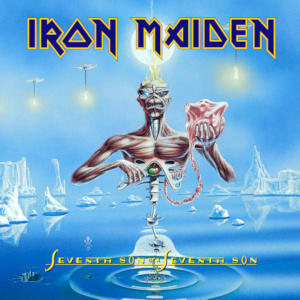
#17. Iron Maiden Seventh Son of a Seventh Son (1988)

The seventh album from the English heavy metal band was inspired by Orson Scott Card’s Seventh Son novel. The band’s Steve Harris described the book as being about “this mystical figure that was supposed to have all these paranormal gifts, like second sight” (Wikipedia). Lead singer Bruce Dickinson said, “it was only half a concept album. There was no attempt to see it all the way through, like we really should have done. Seventh Son…has no story. It’s about good and evil, heaven and hell, but isn’t every Iron Maiden record?” (Wikipedia) Read more at Wikipedia.

#18. Dream Theater Metropolis Part 2: Scenes from a Memory (1999)

This progressive metal band crafted this album as a sequel to “Metropolis – Part I: The Miracle and the Sleeper,” a song featured on their 1992 album Images and Words. The album follows Nicholas, “a trouble man undergoing past life regression therapy” (Wikipedia). He discovers he was a woman named Victoria in a past life who was murdered. Back in the present, Nicholas tries to solve the murder. Read more at Wikipedia.

#19. The Kinks Village Green Preservation Society (1968)

This was the sixth and final album for the original lineup of the Kinks. Frontman Ray Davies was “sensing that the Beatles, Stones, and Who were radically transforming rock music by turning it literate and conceptual” RO and responded with this effort. It was “a concept album lamenting the passing of old-fashioned English traditions.” AM Read more on the DMDB page for this album.

#20. Frank Sinatra In the Wee Small Hours (1955)

Long before bands like the Beach Boys and Beatles were hailed for making the first concept album, Frank Sinatra was making albums that were cohesive works unified by songs centered around a theme. In the Wee Small Hours is an “authoritative take on masculine loneliness” TL that is “a prototypical concept album” RS that is “considered by many to be the first concept album.” CAD Read more on the DMDB page for this album.

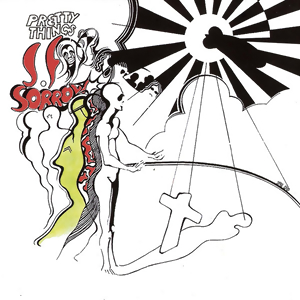
#21. The Pretty Things S.F. Sorrow (1968)

S.F. Sorrow “is now recognized as the first rock-opera;” TB but it barely got noticed upon its release because the record company, EMI, didn’t know how to market the album. It “loosely tells the story of a lonely kid named [Sebastian F.] Sorrow,” PK following him “from birth to death, with love, work, war, and burning airship disasters in between.” TB It was based on a short story written by singer Phil May about World War II that featured “a central character who was an amalgam of May himself and his foster father, Charlie.” TB Read more on the DMDB page for this album.

#22. Pink Floyd Animals (1977)

Reviewer Jason Thorpe enlisted his wife to offer analysis of the lyrics and themes of the album. She says, “Animals portrays a young man’s rage using obvious references to George Orwell’s Animal Farm. At the beginning, Waters separates himself from the barnyard animals. If we didn’t care about each other, we would be barnyard animals.” SU Read more on the DMDB page for this album.

#23. Nine Inch Nails The Downward Spiral (1994)

Wikipedia.org says this “is a concept album detailing the self-destruction of a man from the beginning of his misanthropic ‘downward spiral’ to his suicidal breaking point.” Frontman Trent Reznor conceived it “after Nine Inch Nails' run in the lineup of the Lollapalooza festival tour, feeling increasingly alienated and disinterested.” Read more on the DMDB page for this album.

#24. Sufjan Stevens Illinois (2005)

Amazon.com’s Mike McGonigal said that the album conceptually “weaves personal recollections, historical narratives, and strange facts together to create lush portraits of Midwestern life.” Sufjan Stevens references historical figures and places from the state of Illinois. Read more on the DMDB page for this album.

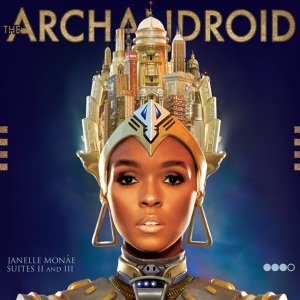
#25. Janelle Monáe The Arch Android (2010)

In 2007, Janelle Monáe released Metropolis: Suite I (The Chase), an EP inspired by Fritz Lang’s 1927 silent film classic Metropolis. The Arch Android “continues the series’ fictional tale of a messianic android” WK named Cindy Mayweather sent back in time “to liberate Metropolis from a secret society of oppressors” AM who suppress freedom and love. Monáe said the android “represents the mediator between the haves and the have-nots, the minority and the majority” WK and that “her return will mean freedom for the android community.” WK Read more on the DMDB page for this album.

#26. Willie Nelson Red Headed Stranger (1975)

According to AllMusic.com: Red Headed Stranger tells the story of a renegade “preacher on the run after murdering his departed wife and her new lover.” The story is “told entirely with brief song-poems and utterly minimal backing. It’s defiantly anticommercial and it demands intense concentration – all reasons why nobody thought it would be a hit.” Read more on the DMDB page for this album.

#27. The Who Sell Out (1967)

Sell Out was intended “as a concept album of sorts that would simultaneously mock and pay tribute to pirate radio stations, complete with fake jingles and commercials linking the tracks. For reasons that remain somewhat ill defined, the concept wasn’t quite driven to completion, breaking down around the middle of side two.” AM “Nonetheless…it’s a terrific set of songs that ultimately stands as one of the group’s greatest achievements.” AM Read more on the DMDB page for this album.

#28. The Moody Blues Days of Future Passed (1967)

On only their second album, the Moody Blues delivered “with the strongest, most cohesive body of songs in their history.” AM Days succeeded because it “was refreshingly original” AM and “one of the earlier theme albums, a loose story told of a man’s journey over the course of a day (a metaphor for the course of a life).” CS The album was also pivotal in the emergence of progressive rock for its marriage of orchestral and rock music. Read more on the DMDB page for this album.

#29. Pink Floyd Wish You Were Here (1975)

Roger Waters “found his grand theme for Wish You Were Here [in] the music business…and its tendency to crush the dreams of those who pursue fame, fortune and a chance at creative self-expression.” GW It gave him leeway to explore his frustration with the band’s disintegrating camaraderie and the drug-induced mental breakdown of Syd Barrett, one of the band’s founders and its original frontman. Waters painted him as “a messianic martyr to the soulless mechanisms of the music biz.” GW Read more on the DMDB page for this album.

#30. Woody Guthrie Dust Bowl Ballads (1940)

AllMusic.com’s William Ruhlmann says this album “helped define all the folk music that followed it.” To be such a pivotal album for a particular genre seems significant enough, but Dust Bowl Ballads also gets hailed as the birth of the concept album. Guthrie conceived of this collection of songs as a musical version of John Steinbeck’s The Grapes of Wrath, which tells the story of Okies devastated by severe droughts in the 1930s who moved to California to become migrant workers. Read more on the DMDB page for this album.

#31. Elton John Captain Fantastic and the Brown Dirt Cowboy (1975)

Wikipedia.org says this album “is an autobiographical account of the early musical careers of Elton John (Captain Fantastic) and his long-term lyricist Bernie Taupin (the Brown Dirt Cowboy).” Read more on the DMDB page for this album.

#32. Beyoncé Lemonade (2016)

The proverb ““When life gives you lemons, make lemonade” “serves as the premise behind Beyoncé’s sixth studio album, a cathartic exploration of the emotional turmoil she endured after her husband, rapper and business mogul Jay-Z, cheated on her” (Wikipedia.org). Read more on the DMDB page for this album.

#33. Radiohead OK Computer (1997)

This is “an album about the way machines dehumanize people that’s almost entirely un-electronic” (Amazon.com). “Themes of alienation and dysfunction bubble up through the band’s fearlessly experimental textures” (USA Today). Read more on the DMDB page for this album.

#34. Brian Wilson Smile (2004)

The famous unreleased Beach Boys’ album languished in the vaults for decades before Brian Wilson revived it. It “reveals the record as nothing more (or less) than a jaunty epic of psychedelic Americana, a rambling and discursive, playful and affectionate series of song cycles. Infectious and hummable, to be sure, and a remarkably unified, irresistible piece of pop music” (AllMusic.com). Read more on the DMDB page for this album.

#35. Hüsker Dü Zen Arcade (1984)

In 1,000 Recordings to Hear Before You Die, Tom Moon calls this “a loose concept album about a runaway kid who encounters unpleasantness out in the unforgiving real world.” It is “a highly pressurized tour of the adolescent turmoils” with “the requisite indie-rock elements.” Read more on the DMDB page for this album.

#36. Marillion Misplaced Childhood (1985)

My favorite album of all time. Misplaced Childhood is a cohesive, focused, and seemingly autobiographical effort that takes the listener on a rollercoaster ride through the initial depression of a breakup, struggles with fame, the subsequent acid-induced fall into the abyss, and the final realization that, as he sings in “Childhood’s End?,” “I can do anything and still the child/’cos the only thing misplaced was direction and I found direction/There is no childhood’s end.” Read more on the DMDB page for this album.

#37. Eagles Desperado (1973)

The sophomore outing for the Eagles was a concept album “based on the Dalton gang and the Old West,” (Wikipedia.org) which was “a natural for those born unto rock and roll soil” (Amazon.com). “It may be that [singer and drummer Don] Henley, who hailed from Northeast Texas, had the greatest affinity for the subject matter,” (AllMusic.com) “but it had no specific narrative” (AllMusic.com). Read more on the DMDB page for this album.

#38. Arcade Fire The Suburbs (2010)

Frontman Win Butler said The Suburbs “is neither a love letter to, nor an indictment of, the suburbs – it’s a letter from the suburbs” (Wikipedia.org). Andrea Warner from Exclaim! calls the album “a perfect actualization of the suburbs as metaphor for the classic North American dream” (Wikipedia.org). Read more on the DMDB page for this album.

#39. The Kinks Arthur (Or the Decline and Fall of the British Empire) (1969)

Wikipedia.org: “Kinks frontman Ray Davies constructed the concept album as the soundtrack to a Granada Television play and developed the storyline with novelist Julian Mitchell; the television programme was never produced. The rough plot revolved around Arthur Morgan, a carpet-layer, who was based on Ray and guitarist Dave Davies’ brother-in-law Arthur Anning.” Read more at Wikipedia.

#40. The Flaming Lips Yoshimi Battles the Pink Robots (2002)

Wikipedia.org: The lyrics of Yoshimi Battles the Pink Robots concern a diverse array of subject matter, mostly melancholy ponderings about love, mortality, artificial emotion, pacifism, and deception, while telling the story of Yoshimi's battle.” Read more on the DMDB page for this album.

#41. Electric Light Orchestra Eldorado (1974)

Eldorado, the fourth album from Electric Light Orchestra, was written by bandleader Jeff Lynne “in response to criticisms from his father, a classical music lover, who said that Electric Light Orchestra's repertoire ‘had no tune.’” “The plot follows a Walter Mitty-like character who journeys into fantasy worlds via dreams, to escape the disillusionment of his mundane reality.” Read more at Wikipedia.

#42. Yes Tales from Topographic Oceans (1973)

Tales from Topographic Oceans is “four-piece work of symphonic length and scope (based on the Shastric scriptures, as found in a footnote within Paramahansa Yogananda’s book Autobiography of a Yogi), was their most ambitious to date. The four songs of the album symbolise (in track order) the concepts of Truth, Knowledge, Culture, and Freedom, the subjects of that section of text.” WK Read more on the DMDB page for this album.

#43. XTC Skylarking (1986)

XTC brought on Todd Rundren to produce Skylarking and he helped “the record feel like a song cycle even if it doesn’t play like one, but what really impresses is the consistency and depth of Andy Partridge’s and Colin Moulding’s songs. Each song is a small gem, marrying sweet, catchy melodies to decidedly adult lyrical themes, from celebrations of love (Grass) and marriage (Big Day) to skepticism about maturation (Earn Enough for Us) and religion (Dear God).” AMG Read more on the DMDB page for this album.

#44. Lou Reed Berlin (1973)

AllMusic.com’s Mark Deming called Berlin “the most ambitious album” of Lou Reed’s career. He created “a loose story line about a doomed romance between two chemically fueled bohemians.” While he has “often been accused of focusing on the dark side of life, he and [producer Bob] Ezrin approached Berlin as their opportunity to make The Most Depressing Album of All Time, and they hardly missed a trick.” The album is “the musical equivalent of a drug-addled kid set loose in a candy store.” Read more on the DMDB page for this album.

#45. Queens of the Stone Age Songs for the Deaf (2002)

Wikipedia.org: “Songs for the Deaf is a loose concept album, taking the listener on a drive through the California desert from Los Angeles to Joshua Tree, tuning into radio stations from towns along the way.” In 2012, music critic Steven Hyden called it “the greatest hard-rock record of the 21st century.” Read more at Wikipedia.

#46. Drive-By Truckers Southern Rock Opera (2001)

Wikipedia.org: “A double album covering an ambitious range of subject matter from the politics of race to 1970s stadium rock, Southern Rock Opera either imagines, or filters, every topic through the context of legendary Southern band Lynyrd Skynyrd.” Read more at Wikipedia.

#47. Alice Cooper Welcome to My Nightmare (1975)

Wikipedia.org: Alice Cooper and producer Bob Ezrin conceived a “storyline in which a rock star named Steven and his mistress are on a private jet flying over the Rocky Mountains. The jet crashes, and both Steven and his mistress disappear. However, 28 days later, Steven emerges alone and unharmed. During those 28 days, Steven became a vampire and he now lives out his days as a rock star by day and killer at night.” Read more at Wikipedia.

#48. Alan Parsons Project I Robot (1977)

"With its title originating from an Isaac Asimov novel, I Robot’s main concept is one that deals heavily in the field of science fiction.” MD The theme of the album is, “according to the liner notes, a meditation on ‘the rise of the machine and the decline of man.’” SS Alan Parsons uses this as his platform for voicing his “concern with the onslaught of machinery and its inevitable takeover of man, both in a physical sense and a spiritual one.” MD Read more on the DMDB page for this album.

#49. Liz Phair Exile in Guyville (1993)

Liz Phair said in countless interviews that this album was designed, “at least tempo-wise, a song-by-song recreation” PK of “the Rolling Stones’ decadent 1972 epic, Exile on Main Street.” JD It doesn’t quite line up as “the song-by-song response Phair promoted it as” AM but “there are general similarities in the stripped-down sounds and in-your-face attitudes of the two Exiles. And whether or not you buy the link, you have to hand it to Phair for even daring to invite the comparison.” JD Read more on the DMDB page for this album.

#50. Parliament Mothership Connection (1975)

Funkmaster George “Clinton’s otherworldly persona and outrageous lyrics” RV combined for the ultimate concept album. BT He loads the P-Funk gang into “a spaceship and blasts off to other galaxies, where it musically interacts with societies that surely found the collective as whacked-out as we did back here on Earth.” CS Read more on the DMDB page for this album.

Resources and Related Links:


First posted 9/3/2025; last updated 2/20/2026.