Tuesday, March 23, 2004

Guns N' Roses released Greatest Hits

Guns N’ Roses

A Retrospective: 1987-1994

Overview:

Rock group formed in Los Angeles in 1985. Their debut album, 1987’s Appetite for Destruction, was the biggest selling debut of all time with 30 million copies sold worldwide and ranks as one of the top 100 albums of all time. The follow-up albums Use Your Illusion I & II rank in the top 1000 albums of all time.

Sweet Child O' Mine,” a #1 single from Appetite, ranks as one of the top 100 songs of all time. The songs “Welcome to the Jungle,” “Paradise City,” and “November Rain” rank in the top 1% of all time.


The Players:

  • W. Axl Rose (vocals: 1985-)
  • Saul “Slash” Hudson (guitar: 1985-1996, 2016-)
  • Izzy Stradlin (rhythm guitar: 1985-1991)
  • Duff McKagan (bass: 1985-1997, 2016-)
  • Steven Adler (drums: 1985-1990)
  • Dizzy Reed (keyboards: 1990-)
  • Matt Sorum (drums: 1990-1997)


On the Web:


Lists:

Awards:

Compilations:

Under each album snapshot, songs featured on the anthologies are noted. If the song charted, the date of the song’s release or first chart appearance and its chart peaks are noted in parentheses. Click for codes to charts.

Appetite for Destruction (1987):

  • Welcome to the Jungle (9/28/87, 7 US, 9 CB, 13 GR, 10 RR, 37 AR, 24 UK, 41 AU, 1 DF, sales: 1.1 million worldwide) G
  • Sweet Child O' Mine (6/11/88, 12 US, 613 CB, 12 GR, 12 RR, 7 AR, 6 UK, 7 CN, 11 AU, 1 DF, sales: 4.6 million worldwide) G
  • Paradise City (11/30/88, 5 US, 4 CB, 9 GR, 4 RR, 14 AR, 6 UK, 10 CN, 48 AU, 15 DF) G

Click here for DMDB album page.

GN’R Lies (1988):

  • Patience (12/24/88, 4 US, 4 CB, 4 GR, 6 RR, 7 AR, 10 UK, 16 AU, 1 DF) G

Click here for DMDB album page.

Use Your Illusion I (1991):

  • Don’t Cry (9/17/91, 10 US, 7 CB, 9 GR, 13 RR, 3 AR, 8 UK, 11 CN, 5 AU, 16 DF) G
  • November Rain (9/28/91, 3 US, 13 CB, 4 GR, 2 RR, 15 AR, 4 UK, 5 CN, 5 AU, 2 DF) G
  • Live and Let Die (9/28/91, 33 US, 26 CB, 26 GR, 26 RR, 20 AR, 5 UK, 56 CN, 10 AU, 13 DF) G

Click here for DMDB album page.

Use Your Illusion II (1991):

  • Knockin’ on Heaven’s Door (9/28/87, 18 AR, 2 UK, 56 CN, 12 AU, 4 DF) G
  • Civil War (8/4/90, 4 AR, 11 UK, 45 AU, 1 DF) G
  • You Could Be Mine (6/21/91, 29 US, 3 AR, 3 UK, 30 CN, 3 AU, 16 DF) G
  • Yesterdays (10/17/92, 72 US, 58 CB, 13 AR, 8 UK, 52 CN, 14 AU, 33 DF) G

Click here for DMDB album page.

The Spaghetti Incident? (1993):

  • Ain’t It Fun (11/13/93, 8 AR, 9 UK, 32 DF) G
  • Since I Don’t Have You (2/11/94, 69 US, 62 CB, 28 GR, 31 RR, 10 UK, 20 CN, 47 AU, 12 DF) G

Click here for DMDB album page.

Greatest Hits

Guns N’ Roses


Released: March 23, 2004


Recorded: 1987-1994


Peak: 3 US, 13 UK, 2 CN, 2 AU, 11 DF


Sales (in millions): 6.0 US, 2.1 UK, 12.72 world (includes US and UK)


Genre: classic rock/hair band/metal


Rating:

4.067 out of 5.00 (average of 12 ratings)


Awards: (Click on award to learn more).

Tracks: (1) Welcome to the Jungle (2) Sweet Child O' Mine (3) Patience (4) Paradise City (5) Knockin’ on Heaven’s Door (6) Civil War (7) You Could Be Mine (8) Don’t Cry (9) November Rain (10) Live and Let Die (11) Yesterdays (12) Ain’t It Fun (13) Since I Don’t Have You (14) Sympathy for the Devil


Total Running Time: 79:24


Tracks Not on Previously Noted Albums:

  • Sympathy for the Devil (from the Interview with the Vampire soundtrack) (11/19/94, 55 US, 10 AR, 9 UK, 48 CN, 12 AU, 13 DF) G

Resources and Related Links:


First posted 2/11/2023.

Friday, March 19, 2004

100 years ago: “Silver Threads Among the Gold” hit #1

Silver Threads Among the Gold

Richard Jose

Writer(s): Hart Pease Danks (music), Eben E. Rexford (lyrics) (see lyrics here)


First Charted: February 6, 1904


Peak: 14 US, 30 GA (Click for codes to singles charts.)


Sales (in millions): 3.0 (sheet music)


Airplay/Streaming (in millions): -- radio, -- video, -- streaming

Awards:

Click on award for more details.

About the Song:

“Silver Threads Among the Gold” was published in 1873 and became a barbershop quartet standard. WK It was the most frequently recorded song of the acoustic recording era WK from the 1890s to 1925. More than a hundred versions were recorded from 1903 until the Great Depression. TY2 In 1932, the song won a poll by New York’s WABC AM radio station as listerners’ favorite song, even though it was 60 years old. WK

A 1930 article in The New York Times said the love ballad, “which has stirred the hearts of more than one generation, was not the inspiration of an aging poet but a ‘re-hash’ produced on order.” WK Eben E. Rexford wrote poems for flower and garden magazine articles. He sold some verses called “Growing Old” for $3 when he was 18. When composer H.P. Danks, who’d written “Silver Threads,” wrote to Rexford requesting lyrics for a song, Rexford revised “Growing Old.” WK

Danks paid Rexford $3 for the resulting “Silver Threads Among the Gold,” which Rexford wrote for his wife. TY2 Danks turned around and sold the sentimental ballad to publishers, meaning he failed to capitalize on its future success. TY2

The first known recording was by Richard Jose in 1903. In 1904, his version reached #1. Other chart versions followed by Will Oakland (#4, 1909), John McCormack (#6, 1912), and Charles Adams (#10, 1915). Others who have recorded the song include Henry Burr (1905), Bing Crosby (1947), Jerry Lee Lewis (1956), George Ots (1958), Tapio Rautavaara (1967), and Jo Stafford (1969). WK The song was used in the Mae Mwest movie musical She Done Him Wrong in 1933. TY2


Resources:


First posted 12/14/2022.

Saturday, March 13, 2004

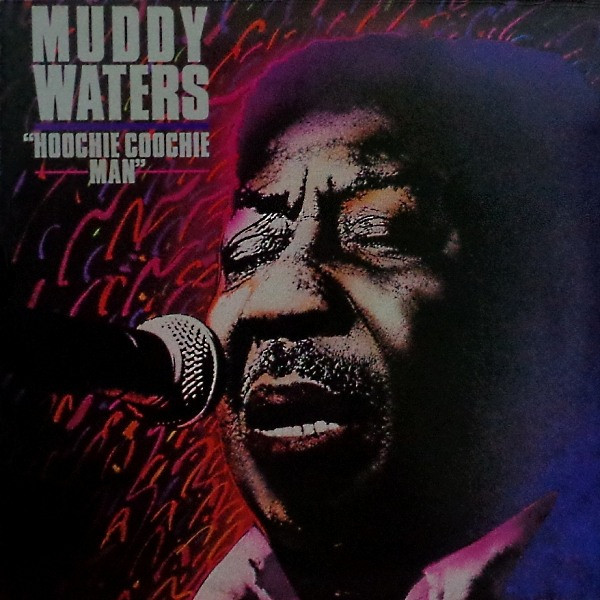
On This Day (1954): Muddy Waters “Hoochie Coochie Man” charted

Hoochie Coochie Man

Muddy Waters

Writer(s): Willie Dixon (see lyrics here)


Recorded: January 7, 1954


First Charted: March 13, 1954


Peak: 3 RB, 3 DF (Click for codes to charts.)


Sales (in millions): --


Airplay/Streaming (in millions): -- radio, 7.76 video, 30.54 streaming

Awards:

Click on award for more details.

About the Song:

Music historian Steve Sullivan called Muddy Waters “the mighty rock upon which the foundation of postwar Chicago blues was constructed.” SS Chicago blues was the term for “urban blues music that came about as southern blacks moved north to find work in the industrial heartland of America. Adapted from the more rural delta blues of the Mississippi, it was originally played on acoustic guitars with whatever accompaniment was available.” LW

Waters was born McKinley Morganfield in the Mississippi Delta on April 4, 1913. He moved to Chicago in 1946 after being discovered by Alan Lomax and John Work while making field recordings for the Library of Congress. He started recording for Chess Records, which linked him to Willie Dixon, a top songwriter and session player for the label.

Dixon came to Zanzibar, a Chicago club, to see Muddy play and pitched his song “Hoochie Coochie Man” to Waters. They ran it down together in the men’s room. It was the first of many Dixon songs recorded by Waters and became Waters’ “defining song.” SS It “built on Muddy’s already-established charisma to build him an even more powerful macho image.” BH

The song “is raw sex, with no concessions to gentility.” LW The term “hoochie coochie” was a reference to “a belly dance that scandalized prurient Americans in the late 19th century.” BH It’s also blues slang for vagina. LW The song also conjured up “the powers of hoodoo magic” BH and was, as Muddy sang, a number to “make pretty women jump and shout.” BH

The song was the biggest hit of Waters’ career, reaching #3 on the R&B chart, but “its influence on rock music in general is incalculable.” LW It has been widely covered by artists as diverse as Jimi Hendrix, Chuck Berry, and jazzy organist Jimmy Smith as well as multiple Chicago blues artists. BH


Resources:


Related Links:


First posted 9/10/2023.

Monday, March 8, 2004

Modest Mouse “Float On” released

Float On

Modest Mouse

Writer(s): Isaac Brock, Dann Gallucci, Eric Judy, Benjamin Weikel (see lyrics here)


Released: March 8, 2004


First Charted: April 3, 2004


Peak: 68 BB, 29 RR, 4 AA, 11 MR, 46 UK, 94 UK, 12 DF (Click for codes to charts.)


Sales (in millions): 5.0 US, 0.2 UK, 5.44 world (includes US + UK)


Airplay/Streaming (in millions): 0.1 radio, 97.0 video, 495.94 streaming

Awards:

Click on award for more details.

About the Song:

Singer/guitarist Isaac Brock, bassist Eric Judy, and drummer Jeremiah Green formed the rock band Modest Mouse in 1993 in Issaquah, Washington. They released their first album in 1996, but didn’t crack the Billboard album chart until 2000 with their third album. Their big commercial breakthrough, however, came with fourth album Good News for People Who Love Bad News. The double-platinum release reached #18 in the United States.

The album owed much of its success to the first single, “Float On.” As the group’s first chart entry, it proved a massive success, topping the alternative rock chart and eventually reaching five million in sales. It also garnered a Grammy nomination for Best Rock Song. In 2014, New Musical Express ranked it one of the top 500 songs of all time. WK In 2009, Rolling Stone named it one of the top 100 songs of the 2000s. WK

Brock sings about “backing his car into a cop’s cruiser, being scammed, and him and his partner losing their jobs on the exact same day.” FO However, it becomes what Far Out magazine’s Tim Coffman called “one of the greatest perseverance anthems of all time.” FO Songfacts.com said it “was written to reassure that everything will be all right with life.” SF Brock recognized that “all he can do is just sit back and watch as the world floats on.” FO

Brock was already dealing with the loss of two close friends SF and facing the possibility of his band imploding. They questioned if they had anything of value to say. They aborted their original album effort and stated fresh. Brock made a conscious effort to write something more positive. He said he was fed up with “how dark everything was, with bad news coming from everywhere...I just want to feel good for a day.” WK It became “a statement…that it’s possible to make great art out of creative tragedy.” FO


Resources:


Related Links:


First posted 7/6/2025.