Showing posts with label Barrett Strong. Show all posts

Saturday, January 12, 2019

Today in Music (1959): Motown founded

January 12, 1959

Motown founded

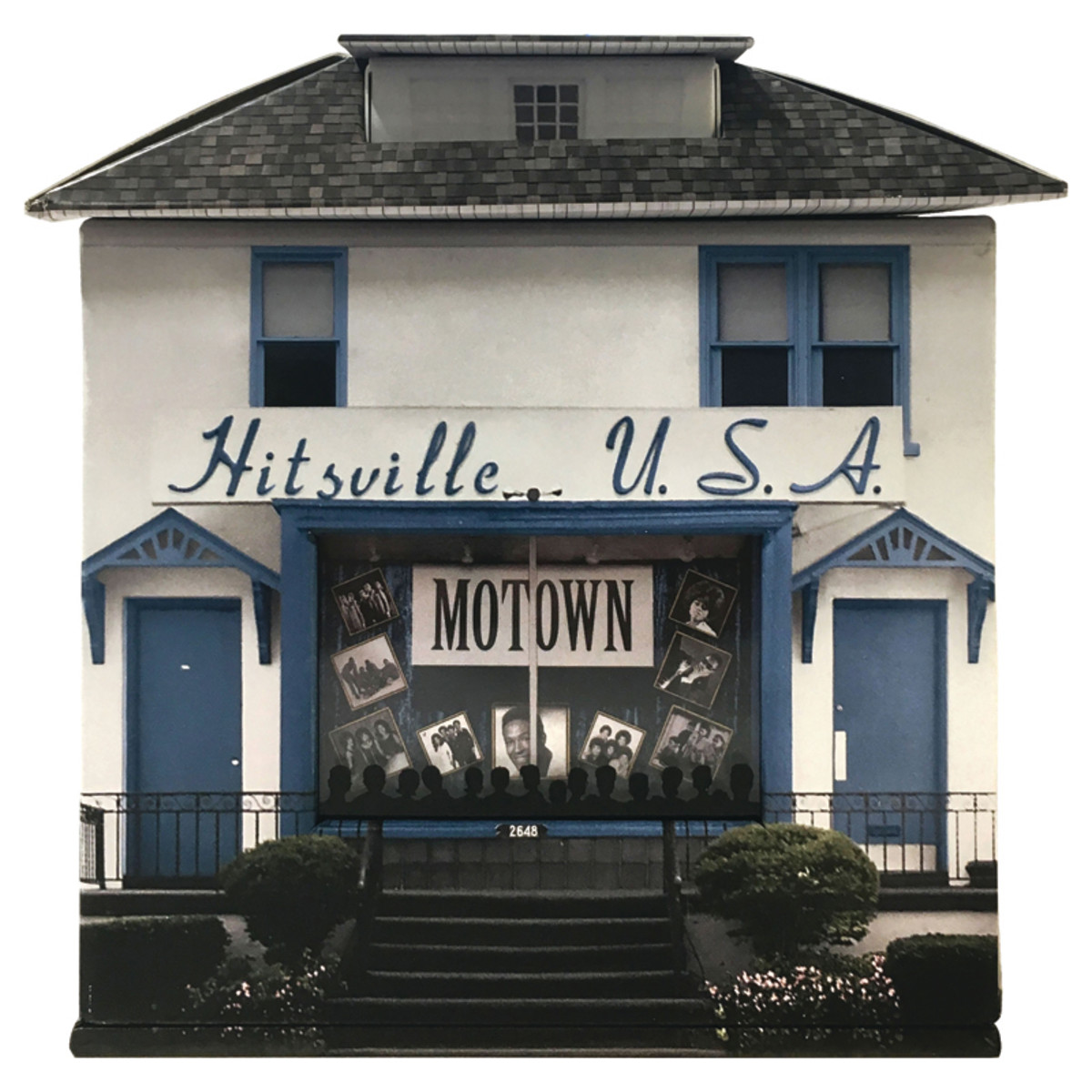
In 1957, Berry Gordy, Jr. wrote the hit “Reet Petite” for Jackie Wilson. He went on to write others, such as “Lonely Teardrops,” but aspired for more. With an $800 loan from his family, he founded Tamla Records on January 12, 1959. He added the Motown label later that year. He purchased property on Grand Boulevard, converting a photography studio into a recording studio and setting up administrative offices in other buildings. DH

His first successful signing was The Matadors, who were rechristened as The Miracles. Gordy co-wrote Barrett Strong’s “Money (That’s What I Want),” the company’s first big hit in 1960. The Miracles’ “Shop Around,” also released that year, became the company’s first million seller. Over the next decade, the company produced more than 100 top-ten hits from artists including the Four Tops, Marvin Gaye, Martha & the Vandellas, the Marvelettes, the Supremes, the Temptations, Stevie Wonder.

Gordy applied an assembly line approach to crafting the artists and their hits. Artists were trained in choreography and how to present themselves. OMC Songwriting was often handled by famous teams such as Holland-Dozier-Holland and the Funk Brothers served as studio musicians. The company owed much of its success to the ability to create music that crossed over to become popular with white audiences as well as black audiences.

In 1972, the company moved its headquarters to Los Angeles. In 1988, Gordy sold his stake in Motown to MCA for $61 million. The original Motown location in Detroit – known as Hitsville U.S.A. – is now a museum where people can see the original recording studio. DH


Resources:


Related Links:


First posted 1/6/2024.

Saturday, December 2, 1972

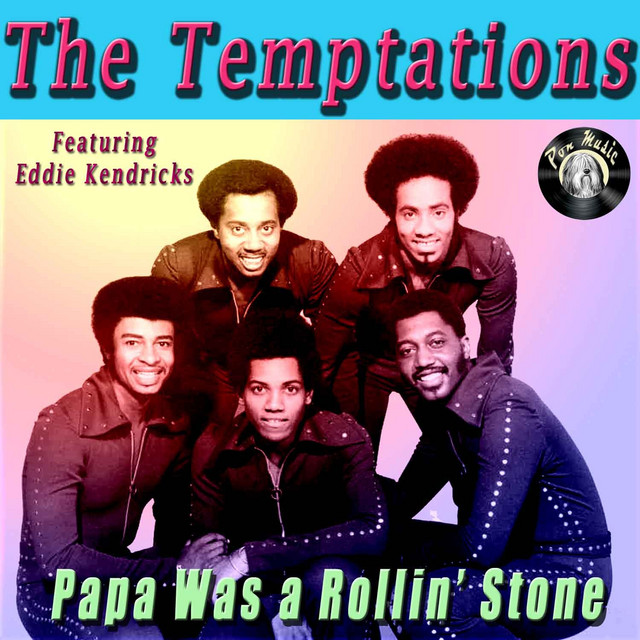
The Temptations “Papa Was a Rollin’ Stone” hit #1

Papa Was a Rollin’ Stone

The Temptations

Writer(s): Barrett Strong, Norman Whitfield (see lyrics here)


Released: September 28, 1972


First Charted: October 13, 1972


Peak: 11 US, 11 CB, 3 GR, 3 HR, 5 RB, 14 UK, 12 CN, 69 AU, 6 DF (Click for codes to charts.)


Sales (in millions): 2.0 US, 0.2 UK


Airplay/Streaming (in millions): -- radio, 66.7 video, 130.49 streaming

Awards:

Click on award for more details.

About the Song:

“By 1972, the classic Motown sound — that gorgeous, efficient pop-soul assembly line — was just about dead. Instead, the music had turned lush and psychedelic and orchestral.” SG However, within Motown artists like Marvin Gaye and Stevie Wonder had fought for more artistic control and it had a positive impact on other artists on the roster. The Temptations, who had major Motown hits with songs like “My Girl” and “”Ain’t Too Proud to Beg” were transforming as well. By the late ‘60s and early ‘70s, their sound evolved into that of psychedelic soul, due in large part to the songwriting of Barrett Strong and Norman Whitfield.

Perhaps the peak of Strong and Whitfield’s output was “Papa Was a Rollin’ Stone,” “an all-time monster of a hit, a masterful orchestral howl that would anticipate so many of the changes to come.” SG It was first given to Motown act The Undisputed Truth, Whitfield’s pet project which he’d assembled in 1970. SG That “fuzzed-out, horn-drenched” SG version stalled at #63 on the Billboard Hot 100 and #24 on the R&B chart. When the Temptations covered it, it swelled into “a dazed, world-swallowing 12-minute symphony.” SG Even the edited single version ran seven minutes.

Amidst the undeniably funky groove, however, lurked the dark story of siblings (as voiced by four of the Temptations trading verses throughout the song) WK discussing the now-deceased father who he never met – and apparently wasn’t worth meeting. Dad was a drunk bum who slept around and even had another whole family.

Despite the success of the song – which included three Grammys – the Temptations were frustrated with what “was more of a Norman Whitfield record than a Temptations record.” SG They weren’t happy about their songs becoming increasingly focused on instrumentation instead of vocals and complained to Motown chief Berry Gordy. Member Dennis Edwards said he hated the song when he first heard it. FB Whitfield soon left to start his own label and the Temptations returned to the kinds of songs they wanted to sing, which led to them drifting into “artistic and commercial irrelevance.” SG


Resources:

  • FB Fred Bronson (2003). The Billboard Book of Number One Hits (5th edition). Billboard Books: New York, NY. Page 323.
  • SF Songfacts
  • SG Stereogum (3/14/2019). “The Number Ones” by Tom Breihan
  • WK Wikipedia


Related Links:


First posted 2/4/2023.

Saturday, April 3, 1971

The Temptations “Just My Imagination” hit #1

Just My Imagination (Running Away with Me)

The Temptations

Writer(s): Barrett Strong, Norman Whitfield (see lyrics here)


Released: January 14, 1971


First Charted: January 29, 1971


Peak: 12 BB, 11 CB, 12 GR, 11 HR, 33 AC, 13 RB, 8 UK, 72 CN, 6 DF (Click for codes to charts.)


Sales (in millions): 2.0 US


Airplay/Streaming (in millions): 2.0 radio, 84.35 video, 96.10 streaming

Awards:

Click on award for more details.

About the Song:

The Temptations formed in 1960 with Eldbridge “Al” Bryant, Melvin Franklin, Eddie Kendricks, Otis Williams, and Paul Williams. By 1971, they’d undergone relatively minor personnel changes, but “Just My Imagination” represented the last hurrah for Kendricks and Paul Williams. The former left for a solo career while the latter was forced to retire due to health issues. WK

They went out on top, though. “Imagination” was the third song by the Temptations to top the Billboard Hot 100 after “My Girl” in 1964 and “I Can’t Get Next to You” in 1969. The latter represented the group’s move to a more psychedelic sound, which had much to do with Norman Whitfield. The band’s early years were overseen by Smokey Robinson as a producer while Whitfield stepped in later. DM He and Barrett Strong co-wrote “Imagination” and other songs establishing the “newer” sound for the Temptations with “I Wish It Would Rain,” “Cloud Nine,” “Ball of Confusion,” and other hits.

Those songs focused on more dance-heavy beats and socially conscious lyrics, but “Just My Imagination” recalled the band’s classic sound, partly out of demand from fans wanting the band to return to its roots. RC It was written in 1969 but the band didn’t tackle it until a year later RC when they were recording tracks for their 1971 album Sky’s the Limit. The Motown house band, the Funk Brothers, played on the track along with members of the Detroit Symphony Orchestra.

Kendricks’ lead vocals are “subtle and introspective, the musings of a dreamer.” DM Writer Thomas Ryna called it “the most mesmerizing and relaxed performance of his career.” SS The protagonist’s “tenyous hold on reality could perhaps land him in an institution; but we identify completely with his sweetly desperate yearning as he drifts in to warm delusions.” SS


Resources:


Related Links:


First posted 1/20/2024.

Saturday, August 29, 1970

Edwin Starr “War” hit #1

War

Edwin Starr

Writer(s): Norman Whitfield, Barrett Strong (see lyrics here)


Released: June 10, 1970


First Charted: July 11, 1970


Peak: 13 US, 12 CB, 11 HR, 3 RB, 3 UK, 1 CN, 37 AU, 5 DF (Click for codes to singles charts.)


Sales (in millions): 3.0 US, 0.2 UK


Airplay/Streaming (in millions): -- radio, 25.4 video, 85.89 streaming

War

Bruce Springsteen


Recorded: September 30, 1985 (live)


Released: November 10, 1986


First Charted: November 21, 1986


Peak: 8 US, 9 CB, 12 RR, 4 AR, 18 UK, 11 CN, 38 AU, 1 DF (Click for codes to singles charts.)


Sales (in millions): -- US, -- UK, -- world (includes US + UK)


Airplay/Streaming (in millions): -- radio, 2.5 video, -- streaming

Awards (Edwin Starr):

Click on award for more details.


Awards (Springsteen):

About the Song:

Motown liked to recycle songs amongst their roster of artists. In 1967, Gladys Knight & the Pips hit #2 with “I Heard It Through the Grapevine.” The next year, Marvin Gaye took it to #1. 1967 also saw Gaye paired with Tammi Terrell for the top-20 hit “Ain’t No Mountain High Enough,” a song which would top the charts in 1970 – in fact, it knocked Edwin Starr’s “War” from the perch.

“War” was another of those recycled songs. The song was written by Norman Whitfield and Barrett Strong, who also penned “Grapevine.” They also wrote several top-10 hits for the Temptations, including the #1 “I Can’t Get Next to You.” The pair wrote everything for the Temptations’ 1970 album Psychedelic Shack, which included the non-single “War.” The song was “a hard, intense stomp-chant, as visceral as what the moment demanded.” SG Motown received hundreds of letters pleading for them to release it as a single FB but head honcho Berry Gordy was leary to unleash an anti-war song SG on the group’s “large and surprisinginly conservative Black middle-class audience.” BD

Whitfield asked Edwin Starr if he’d like to record it. FB He was “a journeyman soul belter who was low on the Motown totem pole.” SG Essentially he had “no fan fase to alienate.” BD He’d been signed to the label in 1966, but didn’t record anything for two-and-a-half years while contract negotiations stalled. FB Finally, in 1969 he found success with the top-10 hit “Twenty-Five Miles,” but it was followed by several failed singles.

The Temptations’ version of “War” “is nasty and funky, but it’s not the vein-throbbing wail that it would eventually become.” SG Starr’s version “was harder and choppier, all its power coming from that merciless rhythmic march…The groove is huge and all-consuming…There’s fuzz all over the guitars, and a nervous tambourine tingles all through it. This is weaponized music, music that’s impossible to ignore.” SG Vocally, Starr “swipe[s] all of [James] Brown’s affectations, right down to that perfectly placed ‘good God, y’all’ on the chorus.” SG

Bob Dylan says, “One can’t help but wonder whether or not the peacenik sentiment behind the song was sincere or merely the next relevant subject to be mined in the attempt to reach Young America’s wallets…Even if it was a blatant exploitation of the peace movement, it’s still a stronger song than ‘Eve of Destruction.’” BD It is ironic that the song asking, “war, what is it good for?” is co-written by Barrett Strong who gave Motown “its first hit, that oft-covered anthem of avarice – ‘Money.’” BD

In 1985, Bruce Springsteen performed “War” while touring in support of his monstrously successful Born in the U.S.A. album. The song was featured on the monstrously successful live box set in 1986 and was released as a single. Before singing, Springsteen offers his own perspective on the Vietnam War, for which he received a draft notice but then failed his physical. He warns the young members of the audience that the next time the country may come looking to them and that “blind faith in your leaders, or anything, will get you killed.”


Resources:

  • DMDB encyclopedia entry for Edwin Starr
  • DMDB encyclopedia entry for Bruce Springsteen
  • FB Fred Bronson (2003). The Billboard Book of Number One Hits (5th edition). Billboard Books: New York, NY. Page 280.
  • BD Bob Dylan (2022). The Philosophy of Modern Song. New York, NY: Simon & Schuster. Pages 211-5.
  • SG Stereogum (1/10/2019). “The Number Ones” by Tom Breihan
  • WK Wikipedia


Related Links:


First posted 11/5/2022.