Showing posts with label Funk Brothers. Show all posts

Tuesday, April 28, 2026

Musicians Hall of Fame

Musicians Hall of Fame:

2007-2026

The Musicians Hall of Fame formed to honor musicians of all instruments and genres. As the website explains, nominations are made by current members of the American Federation of Musicians as well as various music industry professionals. There is no indication of how these nominees are whittled down to determine who is inducted. After its formation in 2007, the Hall inducted three classes before closing, reopening, and then sporadically inducting new classes in 2014, 2016, 2019, 2022, and 2026.

See other Hall of Fames.

  • Richard “Pistol” Allen (2007)
  • Jerry Allison (2008)
  • Jack Ashford (2007)
  • Chet Atkins (2009)
  • Bob Babbitt (2007)
  • Randy Bachman (Bachman-Turner Overdrive, 2014)
  • Eddie Bayers (session drummer, 2019)
  • Barry Beckett (2008)
  • William “Benny” Benjamin (2007)
  • Bob Berryhill (2019)
  • Bill Black (2007)
  • The Blue Moon Boys (2007)
  • Booker T. & the MG’s (2008)
  • John Boylan (2026)
  • Lou Bradley (2016)
  • Owen Bradly (producer, 2019)
  • David Briggs (2019)
  • Garth Brooks (2016)
  • Eddie “Bongo” Brown (2007)
  • Harrison Calloway (Muscle Shoals Horns, 2019)
  • Jimmy Capps (2014)
  • Pete Carr (2008)
  • Jerry Carrigan (2019)
  • Felix Cavaliere (songwriter/keyboardist with the Rascals, 2019)
  • Gene Chrisman (2007)
  • Dennis Coffey (2007)
  • Tommy Cogbill (2007)
  • Pat Connolly (2019)
  • Jeff Cook (keyboardist/fiddle player with Alabama, 2019)
  • Billy Cox (2009)
  • The Crickets (Jerry Allison, Sonny Curtis, Joe B. Mauldlin, 2008)
  • Steve Cropper (2008)
  • Mike Curb (2014)
  • Sonny Curtis (2008)
  • Dick Dale (2009)
  • Charlie Daniels (2009)
  • Ronnie Eades (Muscle Shoals Horns, 2019)
  • Duane Eddy (2008)
  • Bobby Emmons (2007)
  • Don Everly (2019)
  • Don Felder (guitarist, 2016)
  • Victor Feldman (2009)
  • D.J. Fontana (2007)
  • Fred Foster (2009)
  • Peter Frampton (2014)
  • Paul Franklin (2019)
  • Jim Fuller (Surfaris drummer, 2019)
  • The Funk Brothers (Richard “Pistol” Allen, Jack Ashford, Bob Babbitt, William “Benny” Benjamin, Eddie “Bongo” Brown, Dennis Coffey, Johnny Griffith, Joe Hunter, James Jamerson, Uriel Jones, Joe Messina, Earl Van Dyke, “Wah Wah” Watson, Eddie Willis, 2008)
  • Teddy Gentry (bassist and singer with Alabama, 2019)
  • Billy Gibbons (guitarist with ZZ Top, 2022)
  • Vince Gill (country singer, 2022)
  • Marshall Grant (2007)
  • Johnny Griffith (2007)
  • James William Guercio (2022)
  • Buddy Guy (2014)
  • Roger Hawkins (2008)
  • John Hobbs (2019)
  • Buddy Holly (2008)
  • David Hood (2008)
  • Nicky Hopkins (2026)
  • Dan Huff (2026)
  • David Hungate (2009)
  • Joe Hunter (2007)
  • Clayton Ivey (2008)
  • Al Jackson, Jr. (2008)
  • Wayne Jackson (2008)
  • James Jamerson (2007)
  • Jimmy Johnson (2008)
  • Booker T. Jones (2008)
  • Uriel Jones (2007)
  • Ben Keith (2014)
  • Al Kooper (2008)
  • Will Lee (2014)
  • Mike Leech (2007)
  • Andrew Love (2008)
  • Steve Lukather (2009)
  • Barbara Mandrell (2014)
  • Brent Mason (2019)
  • George Massenburg (2022)
  • Joe B. Mauldin (2008)
  • Randy McCormick (2008)
  • Michael McDonald (2026)
  • Will McFarlane (2008)
  • Don McLean (2022)
  • The Memphis Boys (Gene Chrisman, Tommy Cogbill, Bobby Emmons, Mike Leech, Bobby Wood, Reggie Young, 2007)
  • The Memphis Horns (Wayne Jackson, Andrew Love, 2008)
  • Joe Messina (2007)
  • Mark Miller (2016)
  • Earl Peanutt Montgomery (Muscle Shoals Rhythm Section, 2019)
  • Scotty Moore (2007)
  • The Muscle Shoals Rhythm Section (Barry Beckett, Pete Carr, Roger Hawkins, David Hood, Clayton Ivey, Jimmy Johnson, Randy McCormick, Will McFarlane, Spooner Oldham, 2008)
  • The Nashville “A” Team (2007)
  • Corki Casey O’Dell (2014)
  • Spooner Oldham (2008)
  • Roy Orbison (2014)
  • Randy Owen (singer/guitarist with Alabama, 2019)
  • David Paich (2009)
  • Dolly Parton (2026)
  • Luther Perkins (2007)
  • Jeff Porcaro (2009)
  • Mike Porcaro (2009)
  • Steve Porcaro (2009)
  • Norbert Putnam (2019)
  • Jerry Reed (country singer/guitarist, 2016)
  • Allen Reynolds (producer, 2016)
  • Ron “Snake” Reynolds (engineer, 2016)
  • Michael Rhodes (2019)
  • Paul Riser (2009)
  • Charlie Rose (Muscle Shoals Horns, 2019)
  • Billy Sharrill (recording engineer, 2019)
  • Billy Sherrill (2008)
  • Sigma Sound Studios (2016)
  • Ricky Skaggs (2016)
  • Leland Sklar (2026)
  • Velma Smith (2014)
  • Joe South (Muscle Shoals Rhythm Section, 2019)
  • Ray Stevens (2022)
  • Marty Stuart (country singer, 2022)
  • Joe Tarsia (engineer, 2016)
  • Bob Taylor (2019)
  • The Tennessee Two (Grant Marshall, Luther Perkins, 2007)
  • Harvey Thompson (Muscle Shoals Horns, 2019)
  • Terry Thompson (Muscle Shoals Rhythm Section, 2019)
  • George Thorogood (2026)
  • Toto (David Hungate, Steve Lukather, David Paich, Jeff Porcaro, Mike Porcaro, Steve Porcaro, 2009)
  • Keith Urban (2026)
  • Earl Van Dyke (2007)
  • Stevie Ray Vaughan & Double Trouble (2014)
  • Steve Wariner (country singer, 2019)
  • “Wah Wah” Watson (2007)
  • Eddie Willis (2007)
  • Ron Wilson (2019)
  • Bobby Wood (2007)
  • The Wrecking Crew (2007)
  • Reggie Young (2019)

Resources/Related Links:


First posted 1/28/2014; last updated 4/28/2026.

Saturday, December 11, 2021

Today in Music (1961): Motown achieved its first #1

Please Mr. Postman

The Marvelettes

Writer(s): Brian Holland, Robert Bateman, William Garrett, Georgia Dobbins, Freddie Gorman (see lyrics here)


Released: August 21, 1961


First Charted: September 4, 1961


Peak: 11 US, 2 CB, 2 HR, 17 RB (Click for codes to charts.)


Sales (in millions): 1.0 US, 0.2 UK


Airplay/Streaming (in millions): 2.0 radio, 75.7 video, 180.99 streaming

Awards:

Click on award for more details.

About the Song:

Not only was “Please Mr. Postman” the debut single for the Marvelettes, but it was the first Motown song to hit #1 on the Billboard Hot 100. The song took a then-record fifteen weeks to reach the summit. FB It also topped the R&B charts. The Beatles notably covered the song for their 1963 album With the Beatles and the Carpenters took the song back to the top of the pop charts in 1975.

The group, originally called the Casinyets, formed in high school. In 1961, they entered the school’s talent show knowing the winner would get an audition with Motown. They came in fourth, but their teacher, Mrs. Sharpley, pushed for the group to also go to the audition. Motown was impressed, but wanted original material. FB

Member Georgia Dobbins turned to her friend William Garrett. He gave her a blues song which she reworked for the group. Sadly, Dobbins had to drop out of the group to care for her sick mother so the final version of the song featured Gladys Horton on lead. The song and group underwent still more changes when Motown chief Berry Gordy renamed the group and brought in songwriters Brian Holland and Robert Bateman to rework the song again. WK The final rendition featured Motown’s legendary studio team the Funk Brothers.

The song wasn’t just the launch of Motown, but a quintessential slice of the girl group sound with “frothy harmonies, Horton’s gritty lead, a nifty blues piano, and some remarkably funky drumming by the young Marvin Gaye.” DM


Resources:


First posted 12/11/2011; last updated 1/20/2024.

Saturday, January 12, 2019

Today in Music (1959): Motown founded

January 12, 1959

Motown founded

In 1957, Berry Gordy, Jr. wrote the hit “Reet Petite” for Jackie Wilson. He went on to write others, such as “Lonely Teardrops,” but aspired for more. With an $800 loan from his family, he founded Tamla Records on January 12, 1959. He added the Motown label later that year. He purchased property on Grand Boulevard, converting a photography studio into a recording studio and setting up administrative offices in other buildings. DH

His first successful signing was The Matadors, who were rechristened as The Miracles. Gordy co-wrote Barrett Strong’s “Money (That’s What I Want),” the company’s first big hit in 1960. The Miracles’ “Shop Around,” also released that year, became the company’s first million seller. Over the next decade, the company produced more than 100 top-ten hits from artists including the Four Tops, Marvin Gaye, Martha & the Vandellas, the Marvelettes, the Supremes, the Temptations, Stevie Wonder.

Gordy applied an assembly line approach to crafting the artists and their hits. Artists were trained in choreography and how to present themselves. OMC Songwriting was often handled by famous teams such as Holland-Dozier-Holland and the Funk Brothers served as studio musicians. The company owed much of its success to the ability to create music that crossed over to become popular with white audiences as well as black audiences.

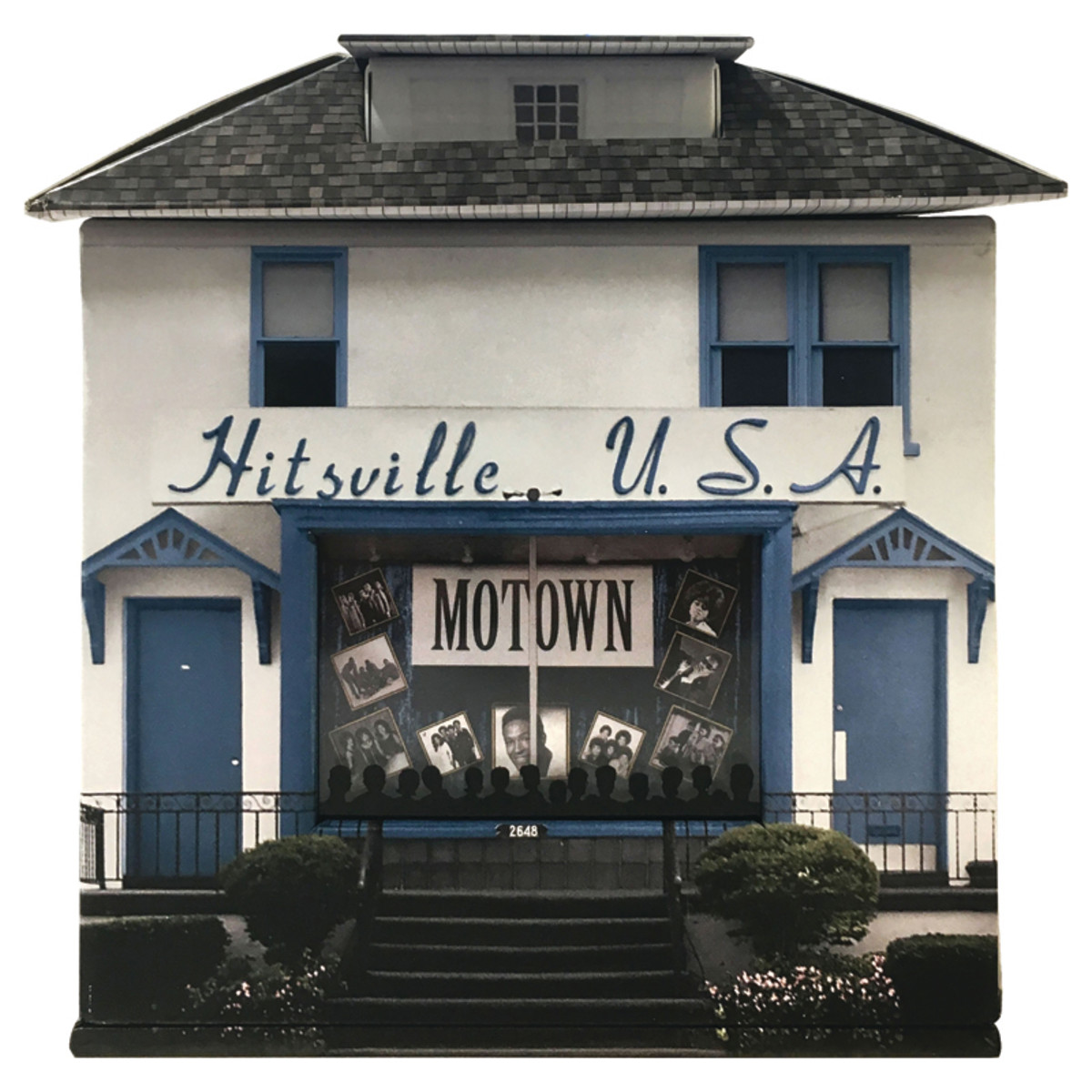
In 1972, the company moved its headquarters to Los Angeles. In 1988, Gordy sold his stake in Motown to MCA for $61 million. The original Motown location in Detroit – known as Hitsville U.S.A. – is now a museum where people can see the original recording studio. DH


Resources:


Related Links:


First posted 1/6/2024.

Friday, November 15, 2002

Documentary Standing in the Shadows of Motown released

November 15, 2002

Standing in the Shadows of Motown released

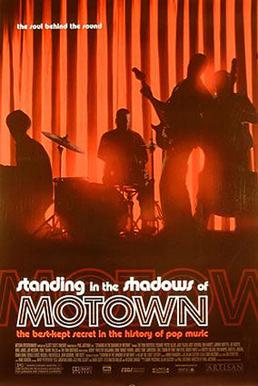
Standing in the Shadows of Motown is a film about the Funk Brothers, the Motown house band from 1959 to 1972. As the trailer for the documentary says, “they were the biggest hit machine in the history of music” producing more #1 hits than the Beatles, Elvis Presley, the Rolling Stones, and the Beach Boys combined. They backed the Four Tops, Marvin Gaye, Gladys Knight & the Pips, the Miracles, the Supremes, the Temptations, Stevie Wonder, and others.

The members of the Funk Brothers included Richard “Pistol” Allen (drums), Jack Ashford (percussion), Bob Babbitt (bass), William “Benny” Benjamin (drums), Eddie “Bongo” Brown (percussion), Dennis Coffey (guitar), Johnny Griffith (keyboards), Joe Hunter (keyboards), James Jamerson (bass), Uriel Jones (drums), Joe Messina (guitar), Melvin “Wah Wah Watson” Ragain (guitar), Earl Van Dyke (keyboards), and Eddie “Chank” Willis (guitar). They have received a Grammy Lifetime Achievement Award and a star on the Hollywood Walk of Fame. They’ve also been inducted into the Musicians Hall of Fame and R&B Hall of Fame.

The documentary was inspired by the book Standing in the Shadows of Motown: The Life and Music of Legendary Bassist James Jamerson. Allan Slutsky wrote it as a bass guitar instruction book which also featured a biography of James Jamerson. The movie offers archival footage as well as interviews with the surviving band members. The Funk Brothers also perform some of Motown’s hits with Bootsy Collins, Chaka Khan, Gerald Levert, Joan Osborne, and others.


Resources and Related Links:


First posted 11/14/2023.

Friday, May 21, 1971

Marvin Gaye released What’s Going On

What’s Going On

Marvin Gaye


Released: May 21, 1971


Peak: 6 US, 19 RB, 56 UK, 37 CN, -- AU, 14 DF


Sales (in millions): 2.0 US, 0.3 UK, 2.3 world (includes US and UK)


Genre: R&B


Tracks:

Song Title (date of single release, chart peaks) Click for codes to charts.

  1. What's Going On (1/17/71, 2 BB, 1 CB, 2 GR, 2 HR, 1 RB, 80 UK, 76 CN, 69 AU, 1 DF)
  2. What’s Happening Brother
  3. Flyin’ High in the Friendly Sky
  4. Save the Children (12/11/71, 41 UK, 16 DF)
  5. God Is Love
  6. Mercy Mercy Me (The Ecology) (6/10/71, 4 BB, 5 GR, 2 HR, 1 RB, 34 AC, 4 DF)
  7. Right On
  8. Wholy Holy
  9. Inner City Blues (Make Me Wanna Holler) (10/2/71, 9 BB, 6 CB, 31 GR, 7 HR, 1 RB, 6 DF)


Total Running Time: 35:38

Rating:

4.680 out of 5.00 (average of 31 ratings)


Quotable:

“The most important and passionate record to come out of soul music.” – John Bush, AllMusic.com

Awards:

(Click on award to learn more).

Motown Success

“A masterful stylist of sophisticated soul, Marvin Gaye helped promote the Motown sound throughout the 1960s,” NRR being dubbed “the Prince of Motown.” CM The Rolling Stone Record Guide called him “perhaps the most underrated soul singer of the Sixties.” CS Meanwhile Motown was the decade’s most successful label with about 65% of their releases reaching the Billboard Hot 100, a success rate four times greater than other label. CS

Gaye came to Motown under the tutetlage of [Motown founder] Berry Gordy, married the boss’s daughter, and worked as a session drummer and percussionist until he got his chance to shine in the spotlight.” JG Among his best performances was “the tumultuous ‘I Heard It Through the Grapevine,’ a record whose ramifications deserve their own book.” JG

Fighting the Motown Machine

“Motown Records – which introduced the concept of the assembly line to pop music – had no interest in giving its artists creative control, much less in venturing into territory that was explicitly political.” BN Gaye decided to record a song (“What’s Going On”) in late 1970 that the Four Tops’ Obie Benson brought him. Gordy refused to release it, “deeming it uncommercial” AM as well as “too philosophical and political.” RV

Gaye, “the label’s greatest pure vocalist,” TL responded by saying, “Put it out or I’ll never record for you again.” TB Gordy eventually caved. Gordy said, “I don’t think you’re right, but if you really want to do it, do it. And if it doesn’t work, you’ll learn something; and if it does I’ll learn something.” TB Gordy would later acknowledge, “I learned something.” TB

After the single met with success, Gaye “recorded the rest of the album over ten days in March.” AM “Finally free to speak his mind and so move from R&B sex symbol to true recording artist,” AM Gaye “produced the album himself with backing from the Funk Brothers, and presented it as a complete nine-song suite.” PM It “was far and away the best full-length to issue from the singles-dominated Motown factory.” AM “The soulster shattered Motown’s pop formula with his powerful social commentary on race, war and the environment.” UT

Social Commentary

His “self-written, self-produced, concept album” NRR was more than just a peak for Motown; “it was a transformative record of almost unparalleled effect.” CM It was “the most important and passionate record to come out of soul music” AM and “one of the defining albums of its time,” TL allowing Gaye to explore “deeply held spiritual beliefs and social commentary on cultural events of the day.” NRR It was “a State of the Union address from a President of Soul” TB and “gave him a road back from the wilderness in which he’d found himself following the death of singing partner Tammi Terrell.” TB

What’s Going On is not a question. Marvin Gaye’s 11th studio album is a survey of all of existence” CQ that chronicled a multitude of societal ills” BN but as a “lament for the way things were rather than an angry protest, making the message both clear and difficult to tune out.” PM Gaye shines “a welcome spotlight on the reality of inner city life for black Americans” CS and “implores for the people of the world to take a look at the hate festering around them and attempt to make peace with each other.” RV

It is “told from the perspective of a Vietnam veteran returning home.” CQ “Gaye’s brother Frankie had returned from a three-year hitch in 1967.” AM“Gaye meditated on what had happened to the American dream of the past – as it related to urban decay, environmental woes, military turbulence, police brutality, unemployment, and poverty.” AM

“These feelings had been bubbling up between 1967 and 1970, during which he felt increasingly caged by Motown’s behind-the-times hit machine and restrained from expressing himself seriously through his music.” AM The resulting album is “perhaps the truest melding of social commentary and swooning musicality ever achieved – a triumph of substance and soul.” EW’12 Gayes’s “influence has been felt in music ever since. His album made it a civic duty of artists to acknowledge the problems of society, and conscious music has been forever better because of it.” RV

Vocal Prowess

“Your tour guide on this journey is one of the greatest vocal instruments ever to grace this good Earth..” CQ Gaye said that for What’s Going On, “I finally learned how to sing. I’d been studying the microphone for a dozen years, and suddenly I saw what I’d been doing wrong. I’d been singing too loud…One night I was listening to a record by Lester Young, the horn player, and it came to me. Relax, just relax.” TB

“Sometimes the lyrics hardly change, but even as he endlessly utters the same words…it never feels repetitive, the same way a waterfall never feels repetitive.” CQ “Alternately depressed and hopeful, angry and jubilant, Gaye…[delivered] the most sublime, deeply inspired performances of his career.” AM This was his “masterwork, the most perfect expression of an artist’s hope, anger, and concern ever recorded.” AM


Musically Ambitious

What’s Going On “not only kicked off an era of unprecedented social consciousness in R&B, it also introduced a whole new style of making records.” TL Gaye “was experimenting, trying to discover new ways to sing, emote, project.” JG He “overdubbed his voice multiple times, creating a one-man vocal group,” BN “amid a backdrop of horns, strings and conga drums” RV and layered “rhythm tracks into mellow, hypnotic grooves that made the hard-nosed message…utterly irresistible.” TL It was also “a soul album with jazz time signatures and classical instrumentation.” PM

The resulting sound “was like no other record heard before it: languid, dark and jazzy, a series of relaxed grooves with a heavy bottom, filled by thick basslines along with bongos, conga, and other percussion.” AM

“Fortunately, this aesthetic fit in perfectly with the style of long-time Motown sessionmen like bassist James Jamerson and guitarist Joe Messina. When the Funk Brothers were, for once, allowed the opportunity to work in relaxed, open proceedings, they produced the best work of their careers (and indeed, they recognized its importance before any of the Motown executives).” AM They also got actual credits on the album for once, after being identified only as “session players” on previous releases. TB


The Songs

Here are thoughts on the individual songs from the album.

“What’s Gong On”
“The title track is not only Gaye’s masterpiece, it’s one of the finest songs ever written. If I say, “You know we’ve got to find a way/ To bring some loving here today,” it might sound cheesy, but from Gaye it sounds like the trumpeting of a celestial being. His eye takes in “picket lines/ and picket signs,” police brutality, mothers crying, brothers dying, until there aren’t any words left. The song ends with a lyric-free vocal exploration, as if the things Gaye has seen have brought him past human utterance.’” CQ

“An improvisatory jam by Eli Fountain on alto sax furnished the album’s opening flourish.” AM

“What’s Happening Brother”
The narrator “finds a nation in turmoil on What’s Happening Brother.” CQ The song “takes the opening general themes of dissatisfaction and embodies them into a single man’s struggle. A Vietnam vet returns from war to find his town and his country turned upside down. ‘Say man, I just don’t understand / What’s going on across this land.’ He tries to grasp the changes in the community and the nation with equal zeal, but never quite finds out what's happening.” RV

“Flyin’ High in the Friendly Sky”
This song is about “some A+ drugs.” CQ

“Save the Children”
Save the Children is about “a system failing its most vulnerable populations.” CQ It captures the essence of the album in that it “describes a world of pain, but it also creates a feeling of deliverance.” CM Gaye “wonders what will become of the generations to follow his, there’s an uplifting sense of belief.” CM

“God Is Love”
As the title implies, this song is about “a strong relationship with God.” CQ

“Mercy Mercy Me (The Ecology)”
This is about “a natural world on the brink of collapse.” CQ

“Right On”
Right On “broke rules about what could happen on a soul record and not just because it sported a flute solo.” JG

“Inner City Blues (Make Me Wanna Holler)”
Inner City Blues (Make Me Wanna Holler) owes a great deal to Stevie Wonder’s ‘Living in the City,’ but manages to build upon that song’s magnificence. Gaye again employs congas, strings and multiple track harmonies, but this time the lyrics are more searing, cutting straight to his own pain. ‘Make me wanna holler / The way they do my life / This ain’t livin’, this ain’t livin’ / No, no baby, this ain’t livin’,’ he repeats perhaps in hopes that maybe it will no longer be true.” RV

Resources and Related Links:


Other Related DMDB Pages:


First posted 3/18/2008; last updated 7/23/2024.