Showing posts with label top Motown songs. Show all posts

Friday, May 16, 2014

Today in Music (1964): Mary Wells hit #1 with “My Guy”

My Guy

Mary Wells

Writer(s): Smokey Robinson (see lyrics here)


Released: March 13, 1964


First Charted: March 28, 1964


Peak: 12 BB, 11 CB, 2 GR, 2 HR, 17 RB, 5 UK, 7 CN, 12 AU (Click for codes to charts.)


Sales (in millions): -- US, 0.2 UK, -- world (includes US + UK)


Airplay/Streaming (in millions): -- radio, 11.9 video, 168.60 streaming

Awards:

Click on award for more details.

About the Song:

Smokey Robinson is best known as a performer, but also proved himself an impressive songwriter. His group, The Miracles, was one of the first to sign with what later became Motown. He was the chief songwriter for the group, but also wrote for other Motown acts including the Four Tops, Marvin Gaye, the Marvelettes, the Temptations, and Mary Wells.

Like Robinson, Wells was born in Detroit in the early ‘40s. She was 17 when she sang “Bye Bye Baby,” a song she wrote, for Motown’s Berry Gordy. He signed her on the spot. RC With her “soft-voiced, gently sexy style…Wells became “Motown’s first important solo female star.” SS She reached the top 10 on the Billboard Hot 100 four times – each with a song written by Robinson. The most successful of these was the #1 hit “My Guy,” “the first Motown record to become a top international hit.” SS

“’My Guy’ is a warm, happy declaration of a girls’ eternal loyalty to her man.” SS Author Thomas Ryan said, “Every girl wanted to find a boy she could feel this wa about, and every boy wanted his girl to be this true.” TR The song charted again three more times – Petula Clark hit #70 with it in 1972, Ami Stewart & Johnny Bristol took a medley of the song with Robinson’s “My Girl” to #63 in 1980, and Sister Sledge reached #23 with their rendition in 1982.

Unfortunately, the song also signalled the end. Wells, now 21, had her Motown contract invalidated in court because she signed it when she was underage. She signed with Twentieth Century Fox for a half million dollar advance but, sadly, never again came close to the success she’d had with Motown, only achieving one minor top-40 hit. SS


Resources:


Related Links:


First posted 4/22/2025.

Saturday, June 6, 1987

"You Keep Me Hangin' On" hit #1 for the second time - 20 years after the first time

You Keep Me Hangin’ On

The Supremes

Writer(s): Brian Holland, Lamont Dozier, Eddie Holland (see lyrics here)


Released: October 12, 1966


First Charted: October 29, 1966


Peak: 12 BB, 11 CB, 11 GR, 12 HR, 14 RB, 8 UK, 3 CN, 11 AU, 1 DF (Click for codes to charts.)


Sales (in millions): 1.0 US, 0.08 UK


Airplay/Streaming (in millions): -- radio, 13.7 video, 52.05 streaming

You Keep Me Hangin’ On

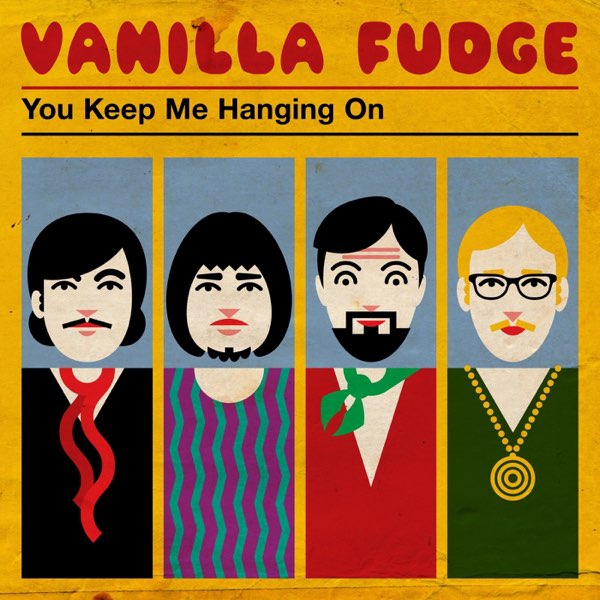
Vanilla Fudge


Released: June 1967


First Charted: July 1, 1967


Peak: 6 BB, 7 CB, 12 GR, 7 HR, 6 CL 18 UK, 11 DF (Click for codes to charts.)


Sales (in millions): --


Airplay/Streaming (in millions): -- radio, 10.8 video, 22.10 streaming

You Keep Me Hangin’ On

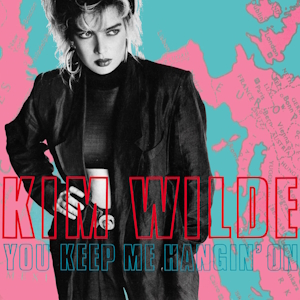
Kim Wilde


Released: September 19, 1986


First Charted: October 25, 1986


Peak: 1 BB, 11 BA, 2 CB, 11 GR, 11 RR, 30 AC, 1 CO, 2 UK, 11 CN, 12 AU, 8 DF (Click for codes to charts.)


Sales (in millions): -- US, 0.25 UK


Airplay/Streaming (in millions): -- radio, 21.4 video, 82.43 streaming

Awards (Supremes):

Click on award for more details.


Awards (Vanilla Fudge):


Awards (Kim Wilde):

About the Song:

The Supremes were signed to Motown at the urging of Smokey Robinson, who was Diana Ross’ neighbor. RC In 1963, the trio were paired with the writing team of Holland-Dozier-Holland. It was one of the most successful matches in pop history, resulting in nine #1 songs. The Supremes would go on to reach the pinnacle three more times in their post H-D-H years.

“You Keep Me Hangin’ On” was the eighth of those #1 songs. “Lamont Dozier came up with the stuttering guitar part, inspired by radio signals for news flashes.” RC It also featured “one of the definitive Motown tambourine bits and a deep, dark drum and bass pattern” DM alongside Diana Ross’s “ultra-airhead vocal.” DM

In 1967, Vanilla Fudge – who called their music “psychedelic-symphonic rock” TB – did what co-writer Brian Holland called “a brilliant re-adaption.” TB “Where Diana Ross was full of fire and life, the Fudge’s version was dark and desperate,” TC “imbiding it with kaleidoscopic moods” DT and creating the “inescapable blueprint for every Prog band of the next two or three years.” DT Organist Mark Stein reportedly came up with the “slow and soulful” TC version by playing the 45 record at 33 speed. TC

20 years after the Supremes took the song to the top of the charts, Kim Wilde’s cover went to #1. It marked only the sixth time in the history of the Billboard Hot 100 that two different artists took a song to #1. It was the first time three versions of a song reached the top 10. FB In the UK, the English dance/pop singer had charted eleven times before “You Keep Me Hangin’ On,” including her #2 hit “Kids in America,” which also reached the top 40 in the U.S. Surprisingly, Wilde was unaware of the previous success of “You Keep Me Hangin’ On” when she covered it. FB Lamont Dozier, one of the song’s co-writers, said he “liked the fresh sound.” FB


Resources:


Related Links:


First posted 1/21/2024.

Friday, August 26, 1977

Commodores “Brick House” charted

Brick House

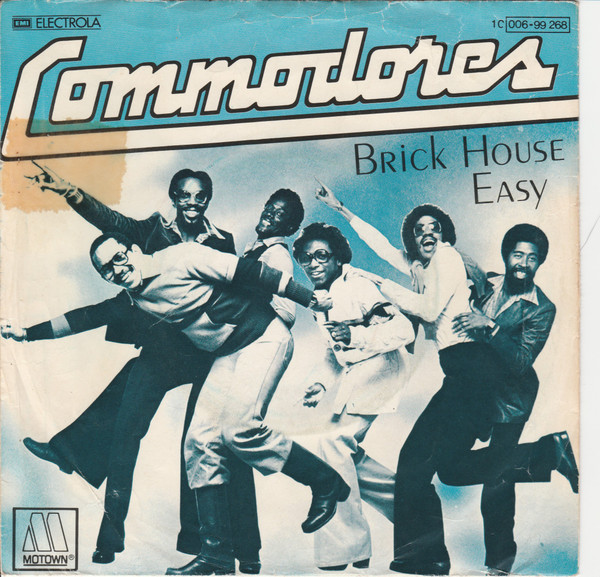
Commodores

Writer(s): Lionel Richie, Milan Williams, Walter Orange, Ronald LaPread, Thomas McClary, William King (see lyrics here)


First Charted: Auugst 26, 1977


Peak: 5 BB, 6 CB, 5 GR, 9 HR, 10 RR, 4 RB, 32 UK, 24 CN, 4 DF (Click for codes to charts.)


Sales (in millions): -- US, -- UK, -- world (includes US + UK)


Airplay/Streaming (in millions): -- radio, 48.16 video, 138.88 streaming

Awards:

Click on award for more details.

About the Song:

The Commodores were a horn-driven funk collective that formed at Tuskegee University (then Tuskegee Institute) in 1968. They won a freshman talent contest and went on to play fraternity parties and weekend gigs while in college. In 1972, they signed to Motown. The group’s debut album, Machine Gun, was released in 1974. The album’s instrumental title track became their first chart hit, reaching #22 on the Billboard Hot 100 and #7 on the R&B chart.

The group, however, would come to be known more for slower fare like “Sweet Love,” “Just to Be Close to You,” and “Easy” – all of which hit the top ten on the Billboard Hot 100. These Lionel Richie-helmed ballads came to define the band. He was also the voice behind future hits such as “Three Times a Lady,” “Sail On,” and “Still.”

However, the group never abandoned their funk sound. The fifth studio album, Commodores, showed both sides of the band with “Easy” as the lead single and “Brick House” as the follow-up. Drummer Walter Orange tended to handle the more upbeat, funk numbers. “Brick House” was the most successful of these. Songfacts.com said it “epitomizes the funky side of the Commodores.” SF

Richie said the phrase is a play on the expression “built like a brick shithouse,” a reference to a strongly built woman. WK The band’s guitarist and trumpeter William King was tasked to write a song and fell asleep at home before completing the task. His wife Shirley, however, was also a songwriter and wrote the words while he was sleeping. The band then put a groove to the words at a jam session. SF


Resources:


Related Links:


First posted 4/16/2024.