Friday, April 26, 2019

Alan Parsons’ The Secret: First album in 15 years!

The Secret

Alan Parsons


Released: April 26, 2019


Peak: -- US, -- UK, -- CN, -- AU


Sales (in millions): -- US, -- UK, -- world (includes US and UK)


Genre: progressive rock lite


Tracks:

Song Title [time] (date of single release, chart peaks) Click for codes to singles charts.

  1. The Sorcerer’s Apprentice [5:44]
  2. Miracle [3:22] v: Jason Mraz (2/25/2019, --)
  3. As Lights Fall [3:58] v: Alan Parsons (4/26/2019, --)
  4. One Note Symphony [4:43] v: Todd Cooper
  5. Sometimes [5:08] v: Lou Gramm
  6. SoireƩ Fantastique [5:27] v: Alan Parsons/Todd Cooper
  7. Fly to Me [3:45] v: Mark Mikel
  8. Requiem [4:02] v: Todd Cooper
  9. Years of Glory [4:05] v: P.J. Olsson
  10. The Limelight Fades Away [3:36] v: Jordan Huffman
  11. I Can’t Get There from Here [4:38] v: Jared Mahone (3/20/2019, --)

Rating:

2.967 out of 5.00 (average of 11 ratings)


Awards: (Click on award to learn more).

About the Album:

After making a name for himself as an engineer on classic albums such as the Beatles’ Abbey Road and Pink Floyd’s Dark Side of the Moon (albums which are both referenced in the video for As Lights Fall), Alan Parsons helmed the Alan Parsons Project from 1976 to 1987. The group featured a rotating lineup of members with only Eric Woolfson as a constant. The two also worked together on Freudiana in 1990 which, for all practical purposes, served as an Alan Parsons Project album.

In 1993, Parsons released his first solo album, although he relied on many of the same players he’d turned to over the years for Project albums. He released four studio albums from 1993 to 2004, the last being A Valid Path, a “voyage into spongey electronica and arty synth-pop” UCR which Parsons said “was very much an attempt to capture a younger audience,” UCR but he confessed “it just didn’t do very well, didn’t set the world alight.” UCR

After that, he took a fifteen-year hiatus from recording, during which time Woolfson passed away from kidney cancer in 2009, derailing any hope of the pair working together again. However, Parsons’ 2019 album The Secret “is a U-turn back to the organic, light symphonic pop-rock style” UCR “for which the Project were so loved.” UDM Parsons says the album “could have been slotted between any of the Alan Parsons Project albums over the years…Any of the albums we made were pretty much timeless and didn’t really fit into any particular decade or year. I feel the same way about this new album, that it could have been made at any time.” UCM

The album also reflects Parsons’ longtime interest in magic. “[It] has always been a passion of mine,” he says. “I am a member of the Magic Castle in Los Angeles. I’ve also worked with the Japanese magic company Tenyo, writing instruction books and catalogues for their tricks. I dabble with magic myself in my free time, so an album with magical influences was a natural progression.” UDM

The first single, Miracle, continues the ever-revolving-door tradition of musicians with Jason Mraz (“I’m Yours”) providing lead vocals. Parsons explained to LouderSound.com, “I met Jason two years ago through a neighbour who grows coffee on his ranch. Jason wanted to grow coffee himself and our neighbour, Jay, was kind enough to introduce us since we had mutual musical interests.” LS

When Mraz heard “Miracle” he said “it sounded like a song right off of Eye in the Sky.” LS He said he had early memories of hearing Parsons’ “Eye in the Sky” while “strapped in the backseat of my mom's green Fiat, 1982. Alan Parsons is on the radio and I’m singing along, harmonising. That sound of rich harmony over magical words would stick with me for my whole life and ultimately become what my own career is about – trying to solve universal quandaries through song craft.” LS Mraz has even recorded an unreleased version of “Eye in the Sky” which Parsons has said he should put out some time. UCR

The two were not in the same studio when recording the song. Parsons was in Santa Barbara and Mraz recorded the vocals in Dallas. They sent files back and forth. That was similar to the process of adding vocals to Sometimes. Lou Gramm, of Foreigner fame (“Waiting for a Girl Like You,” “I Want to Know What Love Is”), recorded his vocals in New York.

Another notable guest on the album is Steve Hackett, best known for his work as the guitarist for Genesis in their early years. He appears on The Sorcerer’s Apprentice, the orchestra overture which opens the album. UCR Parsons said he “wanted some fairly adventurous guitar parts on it” UCR and “that there were only two people who could have done this: either Brian May or Steve Hackett.” UCR

Parsons also turns to musicians with whom he’d worked before. P.J. Olsson, who sings on Beyond the Years of Glory, took on lead vocal duties for the Alan Parsons Live Project in 2002. He also contributed to the 2004 Alan Parsons’ album, A Valid Path.

Ian Bairnson also makes an appearance, contributing guitar – as he did on every Alan Parsons Project album. In the early ‘70s, he was a member of the band Pilot (“Magic”). Parsons produced their self-titled debut album and then used most of the members on the Alan Parsons Project debut, Tales of Mystery and Imagination.

One Note Symphony will “sort of be the anthem for the [50th anniversary] for the moon landing.” UCR Parsons explained that he was commissioned to play it in July at Cocoa Beach, Floria, near the Kennedy Space Center. The title refers to the one note in which the song is sung – the “resonant frequency of the universe,” UCR also known as the Schumann Frequency. UCR

The highlight is the song As Lights Fall, released as the third single. A video featuring Parsons as a pirate includes multiple nods to his past career, a perfect companion to lyrics reflecting on the legacy he’ll leave behind and the importance of not living with regret. These were themes visited as far back as 1982 with the song “Old and Wise” (one of my top-10 favorite songs of all time), but here it leaves the listener worried that the 70-year-old Parsons is issuing a last hurrah from his deathbed. Luckily, his legacy isn’t over yet.

Resources and Related Links:


Other Related DMDB Pages:


First posted 2/27/2019; last updated 7/20/2022.

Monday, April 22, 2019

Dave's Music Database Hall of Fame: Song Inductees (April 2019)

Originally posted 4/22/2019.

In honor of the 10th anniversary of the DMDB blog on January 22, 2019, Dave’s Music Database launched its own Hall of Fame. This is the second set of song inductees. They have been selected for appearing on more than 80 lists and/or receiving various awards.

The Beach Boys “Good Vibrations” (1966)

Inducted April 2019 for 80+ lists/awards.

The song is the “crowning achievement” RS500 for Brian Wilson, who has been called “rock and roll’s finest composer ever.” WI At the time of its release, “Good Vibrations” was the most expensive single ever released BR1 with one claim putting the total recording cost as high as a million dollars. JA The song was pieced together from hundreds of recording sessions NPR and more than seventy hours of tape CR generated in four studios over seventh months time. RS500 Read more.

The Beatles “I Want to Hold Your Hand” (1963)

Inducted April 2019 for 80+ lists/awards.

On February 9, 1964, the Beatles performed “I Want to Hold Your Hand” for a record-setting 73 million TV viewers on The Ed Sullivan Show. It was their first number one in the United States, launching Beatlemania and the British Invasion. Only two British acts had previously topped the U.S. charts, but in 1964 and 1965, the Brits occupied a whopping 52 weeks at the American chart pinnacle. LW Read more.

Bob Dylan “Like a Rolling Stone” (1965)

Inducted April 2019 for 80+ lists/awards.

“No other pop song has so thoroughly challenged and transformed the commercial laws and artistic conventions of its time.” RS500 Regarding Dylan’s 1965 Newport Folk Festival performance of this song, Joni Mitchell said, “The American folk song has grown up.” NPR Folk music fans had seen their genre as carrying intellectual import while rock-n-roll was “adolescent trash.” TB This song, however, proved that lyrical prowess need not be an impediment to commercial success BBC and suddenly rock was not just teen music, but an art form on par with any other. TB Read more.

Eagles “Hotel California” (1976)

Inducted April 2019 for 80+ lists/awards.

By their fifth album, personnel changes in the Eagles had transformed them from a country rock group to the classic rock arena. “Hotel California,” with the dual guitars of Don Felder and Joe Walsh served as a marker of the band’s new sound. The song’s tale of a luxury resort where “you can check out anytime you like, but you can never leave” prompted multiple interpretations with singer Don Henley saying merely that it was about “the decadence and escapism of the ‘70s.’” LW-138 It has also been considered an allegory about the music industry and the destructive influence it had on the Eagles. RS500 Read more.

Aretha Franklin “Respect” (1967)

Inducted April 2019 for 80+ lists/awards.

“Respect” was first recorded by Otis Redding backed by Booker T. & the MG’s along with the Memphis Horns. It was a 1965 top five R&B hit and “considered among the best Southern blues-soul records of the era,” TB but Aretha Franklin transformed it into an anthem for blacks and women and made it her signature song in launching her reign as the Queen of Soul. Redding reportedly responding, saying “That girl done stole my song.” CR Read more.

Marvin Gaye “I Heard It Through the Grapevine” (1968)

Inducted April 2019 for 80+ lists/awards.

Norman Whitfield, a producer for Motown, had a habit of pushing the same song on multiple acts. The Miracles, the Isley Brothers, BR1 and Gladys Knight & The Pips tackled it WK before Marvin Gaye. He didn’t want to record it RS500 and Motown head honcho Berry Gordy thought it was horrible BR1 and was initially reluctant to release it as a single. TB Naturally it became Gaye’s first pop #1 and biggest hit, as well as Motown’s longest running #1 to date. BR1 Read more.

Michael Jackson “Billie Jean” (1982)

Inducted April 2019 for 80+ lists/awards.

With its “insanely catchy melody atop an insistent beat,” BB100 “this fabulously funky slice of disco-pop” BBC is “the single that made Jackson the biggest star since Elvis.” RS500 The Thriller album, from which this was the second single, became the best-selling album of all-time with a record-breaking seven top ten pop singles. Read more.

Nirvana “Smells Like Teen Spirit” (1991)

Inducted April 2019 for 80+ lists/awards.

As producer Bruce Vig said, Nirvana’s Kurt Cobain “had the dichotomy of punk rage and alientation…but also this vulnerable pop sensibility.” RS500 That all combined to give the grunge movement of the 1990s its signature song. The song owes its inspiration to perspiration. Kathleen Hanna of punk band Bikini Kill scrawled the phrase “Kurt smells like Teen Spirit,” a reference to a deodorant, on Cobain’s bedroom wall. He interpreted it as a suggestion “that he could incite teenage rebellion” LW and crafted an anti-commercial message in what became an ironically monstrous commercial success. Read more.

Queen “Bohemian Rhapsody” (1975)

Inducted April 2019 for 80+ lists/awards.

Called “one of the most complex singles ever recorded,” KL “Bohemian Rhapsody” begins as a ballad, veers into opera, and ends as rock. When record execs wouldn’t release it, singer Freddie Mercury gave a copy to a DJ friend. This prompted fans to try to buy the non-existing single, which finally led to its release. WK It went top 10 in the U.S. and topped the British charts with more than a million sales. MG In the wake of Mercury’s death in 1991 and inclusion in the 1992 movie Wayne’s World, the song re-charted, peaking at #2 in the U.S. and topping the UK charts again – the only song to ever do so. MG Read more.

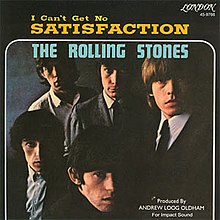
The Rolling Stones “(I Can’t Get No) Satisfaction” (1965)

Inducted April 2019 for 80+ lists/awards.

This has often been hailed as the best rock song of all time and “one of the defining records of...its era.” AMG Richards and Jagger didn’t want to release it, but were outvoted by their band mates who wanted what they considered an unusual sound for a rock record. SF It was the Stones’ first chart topper on both sides of the pond and the biggest song of 1965. WHC Read more.

Simon & Garfunkel “Bridge Over Troubled Water” (1970)

Inducted April 2019 for 80+ lists/awards.

Paul Simon originally wrote the song on guitar TB and tried to sing it in falsetto, before deciding Art Garfunkel’s voice was better suited to the song. AMG Garfunkel disputed Simon’s contention that it was the best song he’d ever written AMG and thought Simon should sing it. As Simon said in 1972, “Many times I think I’m sorry I didn’t do it.” RS500 The duo disagreed with Clive Davis, then CBS Records president, over releasing the ballad as the album’s lead single, but Davis won out. AMG The result was the top pop single of the year. AMG Read more.

Friday, April 19, 2019

Rolling Stones released Honk compilation

The Rolling Stones

A Retrospective: 1971-2019

This page has been consolidated with The Rolling Stones: A Retrospective (1962-present).

Thursday, April 18, 2019

Sheryl Crow released “Redemption Day” duet with Johnny Cash

Redemption Day

Sheryl Crow with Johnny Cash

Writer(s):Sheryl Crow (see lyrics here)


Released: April 18, 2019


First Charted: --


Peak: --


Sales (in millions): --


Airplay/Streaming (in millions): -- radio, 1.34 video, -- streaming

Awards:

Click on award for more details.

About the Song:

I’ve joked for years that the biggest artists don’t let little inconveniences like death prevent them from releasing new music. Johnny Cash was no exception. When he died in 2003, he was in the midst of a phenomenal career renaissance. He’d released four albums with the Rick Rubin-helmed American Recordings label. The collections were built around stripped-down covers of unexpected songs. In the final months of his life, he recorded sessions which led to two posthumous releases – American : A Hundred Highways (2006) and American VI: Ain’t No Grave (2010).

The latter included a cover of Sheryl Crow’s “Redemption Day,” a song she featured on her self-titled 1996 album. According to Crow, Cash told her, “This will be the cornerstone of my next record. It’s important right now.” EW She told Southern Living magazine “Having Johnny Cash record one of my songs was my biggest accomplishment as a songwriter…Talk about bringing weight to a song. He owned it.” SF

Cash’s version was more “about personal redemption” while Crow’s original recording was about “personal redemption.” SF She wrote it as a protest to the Bosnian War after she visiting the country on a USO trip with Hilary and Chelsea Clinton. WK1 She was struck by the suffering of the people and the question of why the United States invested in some countries, but not others. SF

After the Cash version was released, Crow incorporated his vocals and footage of him into her on-stage performance of the song. She said, “I felt like I couldn’t deny the importance of him being heard.” EW When she was preparing what she claimed would be her last studio album (2019’s Threads) she decided to include a newly-recorded version of the song which incorporated Cash’s vocals. She noted what an outspoken American he was and thought he’d be proud of the new version, as the song’s ultimate message is about being “better caretakers of our planet and each other.” EW


Resources:


Related Links:


First posted 5/7/2020; last updated 12/18/2023.

Tuesday, April 16, 2019

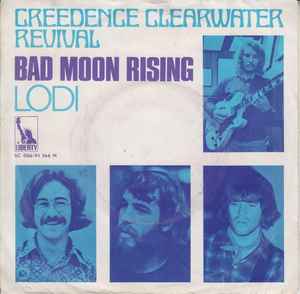
On This Day (1969): Creedence Clearwater Revival “Bad Moon Rising” released

Bad Moon Rising

Creedence Clearwater Revival

Writer(s): John Fogerty (see lyrics here)


Released: April 16, 1969


First Charted: May 2, 1969


Peak: 2 BB 2 CB, 11 GR, 11 HR, 1 CL, 13 UK, 5 CN, 3 AU, 1 DF (Click for codes to charts.)


Sales (in millions): 2.0 US, 0.6 UK


Airplay/Streaming (in millions): 2.0 radio, 121.15 video, 683.45 streaming

Awards:

Click on award for more details.

About the Song:

Creedence Clearwater Revival was formed in 1968 by John Fogerty. Rock and roll may have been in its adolescence, but it was already old enough for roots revival music like CCR’s that “turned to bluegrass, mountain music, rockabilly, and honky-tonk for inspiration.” MM The band’s first two hits were covers of Dale Hawkins’ “Suzy Q” and Screamin’ Jay Hawkins’ “I Put a Spell on You.” Between those and their third single, the original Mississippi-steamboat-themed “Proud Mary” the band established themselves as the band with a swampy-vibe that sounded like they were from New Orleans – even though they’d never been there.

They extended that feeling with their next single, “Bad Moon Rising,” and its suggestion of down-south voodoo. The song was considered a reflection of “the cosmic ethos of the hippie movement and the foreboding late 1960s. In truth, the song poked fun at astrology and had little to do with current events.” MM Still, it was “a dark song for dark times, with the Vietnam war riaging and Richard Nixon in power – but all set to a bouncy, jangly beat; a vision of Doomsday with a smile.” SS Author Dave Thompson describes it as “the end of the world set to music. It is every horror film you’ve ever seen and every nightmare you’ve ever had.” DT

It was inspired more by the 1941 The Devil and Daniel Webster about a farmer who sells his soul to the devil. As Fogerty said, “What I remembered most is this furious storm the town endures. All of my lyrics for the song were inspired by that scene.” MM Of course, the title of the song has evoked one of the most misunderstood lyrics of all time as people have mistakenly thought Fogerty to be singing, “There’s a bathroom on the right.” Fogerty has said he purposely pokes fun at the song now by singing the incorrect lyrics. MM

Fogerty also shared that the instrumental arrangement was influenced by “I’m Left, You’re Right, She’s Gone” by Elvis Presley, MM particularly Scotty Moore’s guitar licks. SS The recording technique was inspired by Gene Vincent, who recorded vocals and instrumentals separately. MM It worked. As rock critic Dave Marsh said, “The jangle of the guitar isn’t simply evoking old rockabilly singles, just vibrating at the same damnable frequency as your nerves.” DM


Resources:


Related Links:


First posted 9/12/2023; last updated 9/15/2023.

Monday, April 15, 2019

Pulitzer Prize

Pulitzer Prize:

Special Awards and Citations for Musicians

The Pulitzer is an award best known for honoring excellence in journalism, but they also award excellence in the arts. Just over a dozen musicians have been honored through the years with special awards and citations with Aretha Franklin being the most recent recipient in 2019.

See other lifetime achievement awards.


Resources/Related Links:

First posted 4/12/2010; last updated 4/15/2019.

Friday, April 12, 2019

Today in Music (1969): The Fifth Dimension hit #1 with “Aquarius/Let the Sunshine In”

Aquarius/Let the Sunshine In

The Fifth Dimension

Writer(s): James Rado, Gerome Ragni, Galt MacDermot (see lyrics here)


First Charted: March 8, 1969


Peak: 16 BB, 15 CB, 13 GR, 14 HR, 12 AC, 6 RB, 11 UK, 13 CN, 3 AU, 3 DF (Click for codes to charts.)


Sales (in millions): 2.0 US


Airplay/Streaming (in millions): -- radio, 24.23 video, 74.10 streaming

Awards:

Click on award for more details.

About the Song:

In the rock era, only two Broadway musicals have produced #1 singles: Louis Armstrong’s title song from Hello, Dolly! and a medley of two songs from the 1968 hippie musical Hair. FB The latter would never have happened if Billy Davis, a member of the Fifth Dimension, hadn’t lost his wallet in a New York City cab. SJ The passenger who found the wallet and called Billy was one of the producers of Hair. To show his gratitude, Billy invited the man and his wife to see the Fifth Dimension in concert. The producer, in turn, invited the group to a performance of Hair. FB

Before the group even left the theater, they knew they should record “Aquarius.” FB When they suggested it to Bones Howe, their producer, AMG his response was that “It’s half a song…it needs something on the back end.” FB The group paired the song with “Let the Sunshine In,” also from the play. SJ The resulting medley not only became the biggest hit of 1969 CPM but the “biggest and most lasting record” AMG of the Fifth Dimension’s career.

“Aquarius” is based on the idea that by the close of the 20th century, mankind would enter an age of enlightment. BB That concept and the song’s astrological references were perfectly suited to the hippie vibe of 1969. AMG Such ideas may seem dated today, but the song’s overall message of unity is timeless. AMG


Resources:


Related Links:


First posted 3/8/2012; updated 5/14/2025.