Showing posts with label Escape. Show all posts

Wednesday, February 22, 2023

Dave's Music Hall of Fame: Album Inductees (February 2023)

The Top ‘80s Rock Albums

Originally posted 2/22/2023.

January 22, 2019 marked the 10-year anniversary of the DMDB blog. To honor that, Dave’s Music Database announced its own Hall of Fame. This month marks the seventeenth group of album inductees. Eight of the ten albums here are taken from the top classic rock albums of all time list. Previous ‘80s rock albums to be inducted were Dire Straits’ Brothers in Arms, Bruce Springsteen’s Born in the U.S.A., and U2’s The Joshua Tree.

See the full list of album inductees here.

Bon Jovi Slippery When Wet (1986)

Inducted February 2023 as “Top ‘80s Rock Albums.”

This rock band from New Jersey reached platinum status with their first two albums they didn’t exactly set the world on fire. Their third album, Slippery When Wet, proved Bon Jovi weren’t just another “hair band” when it topped the charts and sold 28 million copies worldwide, thanks to #1 hits “You Give Love a Bad Name” and “Livin’ on a Prayer.” Billboard named it the album of the year. Read more.

Def Leppard Pyromania (1983)

Inducted February 2023 as “Top ‘80s Rock Albums.”

With their third album, Pyromania, Def Leppard leapt into the mainstream thanks to MTV and radio ready to embrace the band’s glam-metal style on surprise hits such as “Photograph,” “Rock of Ages,” and “Foolin’.” The band went a long way in crafting the look and sound of hair bands but proved to have more cred than the almost-comic-book-like characterization of their peers. The album sold 10 million copies in the U.S. alone. Read more.

Def Leppard Hysteria (1987)

Inducted February 2023 as “Top ‘80s Rock Albums.”

It took four years for Def Leppard to release a follow-up to Pyromania, a seemingly impossible task. The band rose to the challenge with a metal version of Michael Jackson’s Thriller: the album launched seven singles, including the chart-topping “Love Bites” and #2 hit “Pour Some Sugar on Me.” The album reached #1 in the U.S. and UK on its way toward 22 million in sales worldwide. Read more.

Peter Gabriel So (1986)

Inducted February 2023 as “Top ‘80s Rock Albums.”

After his departure from the progressive-rock group Genesis in 1975, Peter Gabriel embarked on a solo career that looked to be artier than it would be commercial. His first four albums produced only one top-40 hit so no one expected the pop sensation of So. The lead single, “Sledgehammer,” was a #1 hit, helped tremendously by a video celebrated as one of the best of all time. That and a slew of album rock and pop hits, including the top-40 “In Your Eyes” and top-10 “Big Time,” propelled the album to 12 million in sales worldwide. Read more.

Journey Escape (1981)

Inducted February 2023 as “Top ‘80s Rock Albums.”

Journey became a significant arena rock band in the late ‘70s, but found their commercial peak in 1981 with Escape. The album produced top-10 hits “Who’s Crying Now,” “Open Arms,” and “Don’t Stop Believin’,” the latter of which became the most-streamed song of the ‘80s thanks to its revival via iconic TV and movie features. The album reached #1 in the U.S., where it sold nine million copies. Read more.

The Police Synchronicity (1983)

Inducted February 2023 as “Top ‘80s Rock Albums.”

New wave trio The Police only released five albums but saved their best for last. Synchronicity spent a monstrous 17 weeks atop the Billboard album chart, thanks to #1 hit “Every Breath You Take” (the most-played song in radio history) and top-10 hits “King of Pain” and “Wrapped Around Your Finger.” The Grammy Hall of Fame inductee has sold 20 million copies worldwide. Read more.

REO Speedwagon Hi Infidelity (1981)

Inducted February 2023 as “Top ‘80s Rock Albums.”

REO followed a similar trajectory as Journey by building up a reputation as an arena rock band in the ’70s thanks to a stable of classic rock favorites. Then in the early ‘80s, they released their biggest album, Hi Infidelity, fueled by #1 hit “Keep on Lovin’ You” and top-5 hit “Take It on the Run.” The album spent 15 weeks atop the Billboard album chart and sold ten million copies in the U.S. Read more.

Rush Moving Pictures (1980)

Inducted February 2023 as “Top ‘80s Rock Albums.”

Rush’s best-selling album saw them embrace the ‘80s by finding a way to integrate new wave synths into their brand of progressive rock that had earned them a loyal following throughout the ‘70s. “Tom Sawyer,” “Limelight,” and “Red Barchetta” all became classic rock favorites and concert staples. AllMusic.com’s Greg Prato called it “one of the greatest hard rock albums of all time.” Read more.

Van Halen 1984 (1984)

Inducted February 2023 as “Top ‘80s Rock Albums.”

Like may of their peers on this list, Van Halen built a classic rock following in the ‘70s that culminated with a commercial peak in the ‘80s. Known for Eddie Van Halen’s guitar prowess, the metal quartet found a way to mix synthesizers into the mix without losing their core audience. Coupled with lead singer David Lee Roth’s stage presence that was made for MTV, the band’s song “Jump” became a #1 hit that lifted parent album 1984 to more than 16 million in sales worldwide. Read more.

ZZ Top Eliminator (1983)

Inducted February 2023 as “Top ‘80s Rock Albums.”

ZZ Top’s best-selling album was another case of an iconic rock band embracing the synthesizer-driven sound of the early ‘80s with the inescapable presence of MTV. Although they didn’t exactly look video-worthy, the Texas blues-rock trio figured out how to sell themselves with videos like “Legs” and “Sharp Dressed Man” that focused on scantily-clad women and fast cars. As drummer Frank Beard said, the were “a lot better looking than we were.” Read more.

Friday, April 6, 1984

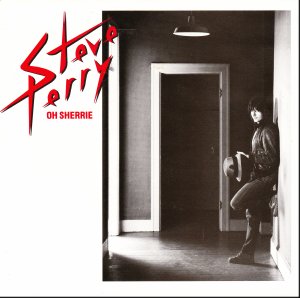
Steve Perry “Oh Sherrie” charted

Oh Sherrie

Steve Perry

Writer(s): Steve Perry, Randy Goodrum, Craig Krampf, Bill Cuomo (see lyrics here)


Released: March 1984


First Charted: April 6, 1984


Peak: 3 US, 4 CB, 2 GR, 2 RR, 33 AC, 12 AR, 12 CN, 5 AU, 2 DF (Click for codes to charts.)


Sales (in millions): --


Airplay/Streaming (in millions): -- radio, 34.8 video, 77.75 streaming

Awards:

Click on award for more details.

About the Song:

Rock singer/songwriter Steve Perry was born in 1949 in Hanford, California. He was fronting a band called Alien Project when a demo reached the band Journey and Perry became their new lead singer in 1977. The band, originally an offshoot of Santana, had released three albums but never even had a chart single. Their 1978 Infinity album changed their fortunes, reaching #21 and triple platinum status as well as giving them their first chart entries with “Wheel in the Sky” and “Lights.”

Their next four albums all achieved at least three million in sales and three of them reached the top 10. The most successful of these was 1981’s Escape, which sold 10 million copies and produced top-10 hits “Who’s Crying Now,” “Don’t Stop Believin’,” and “Open Arms.” 1983’s Frontiers, which sold six million copies, reached #2, and had four top-40 hits, including the top-10 song “Separate Ways.”

Then Steve Perry decided to release his first solo album. 1984’s Street Talk reached #12 and sold two million copies. Like Frontiers, it also produced four top-40 hits, including a top-10 hit – “Oh Sherrie.” The song is often considered an “honorary” Journey song because of “its resemblance to the band’s trademark sound.” WK Perry wrote the love song for then-girlfirend Sherrie Swafford, who also appeared in the video. WK Two of the song’s co-writers, Bill Cuomo and Craig Krampf, played keyboards and drums respectively on Kim Carnes’ “Bette Davis Eyes.” WK

While some worried that a solo outing from Perry might mean the end of his days with Journey, their fears were alleviated in 1986. Perry reunited with guitarist Neal Schon and keyboardist Jonathan Cain for Raised on Radio, another top-10, multi-platinum effort from the band. It also made for Steve Perry’s fourth album in a row to feature four top-40 hits with at least one of them reaching the top ten.


Resources:


First posted 12/26/2022.

Saturday, September 25, 1982

Dave’s Faves: The Columbia House Record Club

First posted 8/12/2020.

Dave’s Faves:

Columbia House

September 25, 1982. I was 15 years old and had just started my sophomore year in high school. Arguably, there is no more significant time for musical discovery. I was very much a slave to whatever was popular at the time, but my tastes were starting to shift from more middle-of-the-road artists like John Denver, Neil Diamond, and Barry Manilow to more rock-oriented fare like Journey, Queen, and Styx.

A week before, I’d put together my very first personal song chart. I’d listened to a local radio station’s countdown of the hits of the summer and decided to create my own list of all-time favorites. However, within the week I revamped it and I was on my way to more than a decade’s worth of creating weekly personal song charts.

By that second week, I was hit by an influx of “new” music. Actually, it would be more appropriate to call it “newly acquired music” as the six new albums in my collection were all at least nine months old:

To what did I owe this new treasure trove? Columbia House’s Record and Tape Club. Anyone from my generation should remember the omnipresent ads in magazines to buy 13 albums for a dollar, sometimes a penny, under the agreement that you bought X number more albums over the next few years. The catch was they would automatically send an album each month if you didn’t specifically refuse it, sticking some people with albums they didn’t want.

My friend Nic and I decided to jump into the venture together, each getting half the albums and therefore only spending half as much money. I believe Nic took on the responsibility of mailing in the cards and I think he only got stuck once with the automatically mailed album.

I’d started my music collection three years earlier with the K-Tel compilation High Energy (1979) on eight track. Now I was beginning my transition from eight track to cassette. I’d already bought Styx Cornerstone (1979) and the Xanadu soundtrack (1980) on tape and now, with six new titles in my collection, I was well on my way toward this newer medium surpassing the old. Before year’s end, I would also have John Cougar’s American Fool (1982), J. Geils Band Freeze Frame (1981), and Olivia Newton-John’s Olivia’s Greatest Hits Vol. 2 (1982). In December of that year, I also hit the jackpot when my local rock station played a Beatles’ album every day at midnight for a week. I recorded the Beatles’ 1962-1966 and 1967-1970 collections as well as Magical Mystery Tour (1967), Sgt. Pepper’s Lonely Hearts Club Band (1967), and Hey Jude (1968).

The impact on my personal chart was immediately apparent. Songs from the above tapes which showed up on my charts in the next few weeks included:

  • Air Supply “The One That You Love,” “Here I Am,” “Sweet Dreams”
  • Foreigner “Urgent,” “Juke Box Hero,” “Waiting for a Girl Like You”
  • Journey “Who’s Crying Now,” “Don’t Stop Believin’,” “Open Arms
  • The Police “Every Little Thing She Does Is Magic”
  • Queen “You’re My Best Friend,” “Flash,” “Another One Bites the Dust”
  • Styx “The Best of Times,” “Too Much Time on My Hands,” “Rockin’ the Paradise,” “Nothing Ever Goes As Planned”

Some of the songs from those tapes still rank on my top 100 songs of all-time list (Foreigner “Waiting for a Girl Like You,” Journey “Open Arms,” Queen “Bohemian Rhapsody,” Queen “We Will Rock You/We Are the Champions,” and Styx’s “The Best of Times”). Styx Paradise Theater and Journey Escape rank amongst my top 100 albums of all time. Perhaps no other week in my life has had more impact on me musically.


Resources and Related Links:

Saturday, February 27, 1982

Journey hit #2 for 1st of 6 weeks with “Open Arms”

Open Arms

Journey

This post has been moved here.

Saturday, September 12, 1981

Journey’s Escape hit #1

Escape

Journey


Released: July 17, 1981


Peak: 11 US, 32 UK, 6 CN, -- AU, 110 DF Click for codes to charts.


Sales (in millions): 9.0 US, -- UK, 12.10 world (includes US and UK), 34.93 EAS


Genre: classic rock


Tracks:

Click on a song titled for more details.
  1. Don’t Stop Believin’ [4:11]
  2. Stone in Love [4:26]
  3. Who’s Crying Now [5:01]
  4. Keep on Runnin’ [3:40]
  5. Still They Ride [3:50]
  6. Escape [5:17]
  7. Lay It Down [4:13]
  8. Dead or Alive [3:21]
  9. Mother, Father [5:29]
  10. Open Arms [3:23]

Total Running Time: 42:46

Also from This Era:


The Players:

  • Steve Perry (vocals)
  • Neal Schon (guitar, backing vocals)
  • Jonathan Cain (keyboards, rhythm guitar, backing vocals)
  • Ross Valory (bass, backing vocals)
  • Steve Smith (drums)

Rating:

4.365 out of 5.00 (average of 22 ratings)


Quotable:

Journey’s “definitive statement” – Classic Rock Magazine

Awards:

(Click on award to learn more).

Journey to the Top

Journey formed in San Francisco in 1973. They released “three modestly successful jazz-rock albums” TB before singer Steve Perry joined the band. “His smooth vocal delivery and the group’s arrival at a more concise, hard-rock sound immediately reaped dividends, with Infinity (1978) selling a million copies in the U.S.A. alone.” TB

Escape, the group’s fourth album with Perry, “was a groundbreaking album” AM flinging the band “steadfastly into the AOR arena” AM and making “them stadium-filling superstars.” CR The album is marked by songs that “are more rock-flavored, with more hooks and a harder cadence compared to their former sound.” AM

A More Polished Sound

The album was produced by Kevin Elson and Mike “Clay” Stone and recorded in Berkeley, California, at Fantasy Studios. It had “a more polished commercial sound than its predecessors.” TB

Part of the group’s new direction could be attributed to Jonathan Cain, who came on board as the keyboardist after the departure of founding member Gregg Rolie. He co-wrote every song on the album and his “blatant keyboards” AM combined with “Neal Schon’s grand yet palatable guitar playing” AM and “the passionate, wide-ranged vocals of Steve Perry, who is the true lifeblood of this album, and this band.” AM

Why It Succeeded

“There is a certain electricity that circulates through…the album.” AM The “heartfelt songwriting and sturdy musicianship” AM has “a way of rekindling the innocence of youthful romance and the rebelliousness of growing up.” AM

The accessibility of the songs led to three top-10 singles as well as a top 20 hit with “Still They Ride” and an album rock favorite in “Stone in Love.” The album soared to the top of the charts and sold more than 12 million in sales worldwide. “Escape became Journey’s “definitive statement.” CR

A Pinnacle of Arena Rock

The year of its release could be marked as the pinnacle of arena rock. REO Speedwagon, Styx, Foreigner, and Journey had all been around since at least the mid-‘70s and amassed huge followings, but peaked that year with the only #1 albums of their careers.

All four groups were savaged by critics. Their power ballads were mocked and their proclivity toward radio-friendly rock wasn’t taken seriously.

The Revival of “Don’t Stop Believin’”

Journey may have had the last laugh, though. More than two decades after Don’t Stop Believin’ first hit the charts, it had a surprising resurgence when it was used in the finale of television’s The Sopranos. Then it also served as the springboard for Glee, giving that television franchise a #4 hit. The song, an evocative tale of “‘streetlight people, living just to find emotion’, became an American classic.” CR “The whisper of Perry’s ardor is crept up to with Schon’s searing electric guitar work, making for a perfect rock song.” AM Thanks to its revival, it has become the biggest hit in Journey’s catalog.

Columbia House

Escape played an important role in my burgeoning obsession with music when I acquired that album and five others after signing up for the Columbia House Record and Tape Club with my friend Nic. Read more here. I’d just started my own weekly chart in September 1982 and this influx of “new” music (all the releases were actually from 1981) stormed onto the chart and into my own personal music history.

The Songs

Here’s a breakdown of each of the individual songs.

Don’t Stop Believin’

Journey

Writer(s): Steve Perry, Jonathan Cain, Neal Schon (see lyrics here)


Released: single (10/19/1981), Escape (1981), Greatest Hits Live (live, recoded 1981-83, released 1998), Greatest Hits (compilation, 1988), Time3 (box set, 1992), The Essential (compilation, 2001)


B-side:Natural Thing


First Charted: 8/15/1981


Peak: 9 BB, 8 CB, 8 GR, 9 HR, 9 RR, 8 AR, 6 UK, 9 CN, 83 AU, 1 DF Click for codes to charts.


Sales (in millions): 18.0 US, 1.40 UK, 19.40 world (includes US + UK)


Airplay/Streaming (in millions): 1.0 radio, 613.67 video, 2590.87 streaming

Awards:

(Click on award to learn more).

About the Song:

Journey was at their peak with 1981’s Escape, their sole #1 album. The lead-off single, “Who’s Crying Now,” went to #4 on the Billboard Hot 100 and the power ballad “Open Arms” was a #2 hit. It was “Don’t Stop Believin’,” however, which became the biggest hit of Journey’s career. Chartwise, it only peaked at #9, but it demonstrated a longevity no one could have imagined.

In 2003, the song was used – and even discussed – in a scene from the movie Monster, for which Charlize Theron won an Oscar. That sparked requests for the song in other movies and TV shows. In 2007, the song was used in the memorable final scene of the last episode of The Sopranos. It showed up again in the musical Rock of Ages, which ran on Broadway from 2009-2015.

Perhaps most significant, however, was the song’s use in the TV show Glee in 2009. The Glee Cast landed an overwhelming 200+ chart hits on the Billboard Hot 100, but “Don’t Stop Believin’” was the first and the most successful, reaching #4 and selling a million copies. Journey’s version was propelled to millions more in sales, making it the best-selling digital track of the 20th century. WK

The song is marked by Steve “Perry’s stern yet romantic vocals” A2 and “cutting guitar work from Neil Schon.” A2 It was “more than just an escalating guitar rock song;” A2 it became “an anthem for the young who wanted to feel free and unrestricted.” A2

One of the song’s unique features is that it doesn’t have a repeated chorus. The title isn’t sung until almost three and a half minutes into the song after verses. SF The inspiration for the title came from keyboardist Jonathan Cain’s father. When Cain was struggling to make it, he asked his father if he should give up on his dream. Dad told him, “Don’t stop believin’.” SF

Stone in Love

Journey

Writer(s): Steve Perry, Neal Schon, Jonathan Cain


Released: single (UK, 10/29/1982), Escape (1981), Greatest Hits Live (live, recoded 1981-83, released 1998), Time3 (box set, 1992), The Essential (compilation, 2001), Greatest Hits 2 (compilation, 2011)


B-side:Only Solutions


First Charted: 8/1/1981


Peak: 6 CL, 13 AR, 16 DF Click for codes to charts.


Sales (in millions): 1.0 US


Airplay/Streaming (in millions): -- radio, -- video, 89.30 streaming


About the Song:

This was released in Europe as the fifth single from Escape. It failed to reach the UK charts, but did find success more than a year earlier on the album rock chart in the United States.

Who’s Crying Now

Journey

Writer(s): Jonathan Cain, Steve Perry (see lyrics here)


Released: 7/9/1981 (single), Escape (1981), Greatest Hits Live (live, recoded 1981-83, released 1998), Greatest Hits (compilation, 1988), Time3 (box set, 1992), The Essential (compilation, 2001)


B-side: “Mother, Father”


Peak: 4 BB, 3 CB, 14 GR, 3 HR, 11 RR, 14 AC, 4 AR, 46 UK, 3 CN, 65 AU, 1 DF Click for codes to charts.


Sales (in millions): 2.0 US


Airplay/Streaming (in millions): 2.0 radio, 43.00 video, 120.44 streaming

Awards:

(Click on award to learn more).

About the Song:

Journey began in 1973 as an offshoot of Santana. In just five years they evolved from a more progressive-rock-leaning band to a staple at album rock, thanks to hits such as “Lights,” “Wheel in the Sky,” “Lovin’, Touchin’, Squeezin’,” and “Any Way You Want It.” The latter two gave the band their first sniffs at the top 40 of the Billboard Hot 100 and the latter propelled Journey to the top 10 of the album chart with Departure.

Even though their star was clearly on the rise, the success of their 1981 album Escape pushed the group into unexpected blockbuster category. “Who’s Crying Now,” the lead single from the album, gave Journey a #4 hit and it was followed by two more top-10 hits with “Don’t Stop Believin’” and “Open Arms.”

Billboard magazine called “Who’s Crying Now” “one of Journey’s strongest and classiest records” and “one of the most appealing love songs” of 1981. WK The song showcases Steve Perry’s “passionate, wide-ranged vocals” AM and “vocal riffs highly reminiscent of Sam Cooke.” WK The song explores “the ups and downs of a relationship.” AM

Steve Perry wrote the chorus while driving from Bakersfield to San Francisco. He headed to keyboardist Jonathan Cain’s house and hummed the song to him. Cain then helped with the piano part SF and verses. WK Cain, who was previously a member of the Babys, had just become a member of Journey in 1980, replacing Gregg Rolie on keyboards.

Keep on Runnin’

Journey

Writer(s): Steve Perry, Neal Schon, Jonathan Cain


Released: Escape (1981), Time3 (box set, 1992)


Peak: 34 DF Click for codes to charts.


Sales (in millions): --


Airplay/Streaming (in millions): -- radio, -- video, 4.53 streaming

Still They Ride

Journey

Writer(s): Steve Perry, Neal Schon, Jonathan Cain


Released: single (May 1982), Escape (1981), Greatest Hits Live (live, recoded 1981-83, released 1998), Time3 (box set, 1992), The Essential (compilation, 2001), Greatest Hits 2 (compilation, 2011)


B-side:La Raza del Sol


Peak: 19 BB, 25 CB, 18 GR, 18 RR, 37 AC, 20 CL, 47 AR, 5 DF Click for codes to charts.


Sales (in millions): --


Airplay/Streaming (in millions): -- radio, -- video, 14.52 streaming


About the Song:

“Still They Ride” was the fourth single released from Journey’s multi-platinum, #1 album Escape. While the first three singles reached the top 10, “Ride” stalled just inside the top 20.

Escape

Journey

Writer(s): Steve Perry, Neal Schon, Jonathan Cain


Released: Escape (1981), Greatest Hits Live (live, recoded 1981-83, released 1998), The Essential (compilation, 2001), Greatest Hits 2 (compilation, 2011)


Peak: 25 CL, 33 DF Click for codes to charts.


Sales (in millions): --


Airplay/Streaming (in millions): -- radio, -- video, 7.33 streaming

Lay It Down

Journey

Writer(s): Steve Perry, Neal Schon, Jonathan Cain


Released: Escape (1981)


Peak: 39 DF Click for codes to charts.


Sales (in millions): --


Airplay/Streaming (in millions): -- radio, -- video, 2.62 streaming

Dead or Alive

Journey

Writer(s): Steve Perry, Neal Schon, Jonathan Cain


Released: Escape (1981)


Peak: 39 DF Click for codes to charts.


Sales (in millions): --


Airplay/Streaming (in millions): -- radio, -- video, 2.36 streaming

Mother, Father

Journey

Writer(s): Steve Perry, Neal Schon, Jonathan Cain, Matt Schon


Released: B-side of “Who’s Crying Now” (7/9/1981), Escape (1981), Time3 (box set, 1992), The Essential (compilation, 2001)


Peak: 15 DF Click for codes to charts.


Sales (in millions): --


Airplay/Streaming (in millions): -- radio, -- video, 6.02 streaming

Open Arms

Journey

Writer(s): Steve Perry, Jonathan Cain (see lyrics here)


Released: single (1/8/1982), Escape (1981), Greatest Hits Live (live, recoded 1981-83, released 1998), Greatest Hits (compilation, 1988), Time3 (box set, 1992), The Essential (compilation, 2001)


B-side: “Little Girl”


Peak: 2 BB, 11 CB, 16 GR, 11 HR, 17 RR, 7 AC, 35 AR, 2 CN, 43 AU, 1 DF Click for codes to charts.


Sales (in millions): 4.0 US


Airplay/Streaming (in millions): 3.0 radio, 71.60 video, 307.16 streaming

Awards:

(Click on award to learn more).

About the Song:

Journey’s keyboardist, Jonathan Cain, wrote the melody for “Open Arms” when he was with The Babys. John Waite, that group’s lead singer, considered the song “too syrupy” and passed on it. SF Cain tried again when he was in Journey, showing it to singer Steve Perry. He was sold, but the rest of the band wasn’t so sure about a ballad. Perry and Cain ended up writing a song about a couple drifting apart and finding each other again when they realize how much they love each other.

“Open Arms” was the third single from Journey’s chart-topping Escape album following “Don’t Stop Believin’” (#9) and “Who’s Crying Now” (#4). It not only bested them both but became the band’s biggest hit ever. It held on to the runner-up spot for six weeks, held out from the top by two huge #1 songs – J. Geils Band’s “Centerfold” (6 weeks) and Joan Jett & the Blackheart’s “I Love Rock and Roll” (7 weeks). Songfacts.com said the song “pioneered the entire concept of the power ballad” while Perry said, “Now everybody’s got to have one.” SF All Music.com’s Mike DeGagne’s echoed that idea saying the song “broke down the flood gates and paved the way for…the power ballad.” A2

However, “Open Arms” was definitely not the first power ballad. In the late ‘70s and early ‘80s, a genre known as “arena rock” emerged, led by groups like Journey, Styx, REO Speedwagon, and Foreigner. Each garnered wide rock and pop audiences and landed #1 albums. All four had their biggest hits with power ballads – but the other three groups did so before Journey. Styx topped the charts with “Babe” in 1979 and REO Speedwagon pulled of the same feat with 1980’s “Keep on Loving You.” Foreigner arguably pulled off the biggest hit of the four groups with 1981’s “Waiting for a Girl Like You.” While it didn’t hit #1, it held the #2 spot for 10 weeks. In 1984, they hit the top with “I Want to Know What Love Is.”

While “Open Arms” wasn’t the first power ballad as claimed, it is “one of rock’s most beautiful ballads,” AM according to DeGagne. He said the song “gleams with an honesty and feel only Steve Perry could muster” AM as it puts his “voice on a pedestal for all to hear.” A1 “The accompanying piano riffs that floated and then wisped away the song’s delicate lyrics had a lot to do with the song’s prosperity as well.” A1 The song has been covered by Boyz II Men, Celine Dion, Barry Manilow, and Mariah Carey, who reached #4 with the song in the UK in 1996.

Little Girl

Journey

Writer(s): Neal Schon, Steve Perry, Gregg Rolie


Released: Dream After Dream (soundtrack, 1980), B-side of “Open Arms” (1/8/1982), Time3 (box set, 1992), Departure (2006 reissue), Greatest Hits 2 (compilation, 2011)


Peak: 24 DF Click for codes to charts.


Sales (in millions): --


Airplay/Streaming (in millions): -- radio, -- video, 0.90 streaming


About the Song:

In late 1980, Journey released a mostly instrumental soundtrack for Dream After Dream, a Japanese romantic fantasy film directed by Kenzo Takada. It was an odd move for a group coming off the multi-platinum success of a top-ten album (Depature) released earlier that year. One of the vocal tracks on the album, “Little Girl,” feels like an overlooked single that might have been a top-40 ballad for the group. During Journey’s successful run with 1981’s Escape, the song was released as the B-side of “Open Arms,” the group’s highest charting single.

Natural Thing

Journey

Writer(s): Steve Perry, Ross Valory


Released: B-side of “Don’t Stop Believin’” (10/19/1981), Time3 (box set, 1992), Departure (2006 reissue)


First Charted: 1/2/1993


Peak: 32 AR, 17 DF Click for codes to charts.


Sales (in millions): --


Airplay/Streaming (in millions): -- radio, -- video, 0.62 streaming


About the Song:

This song was recorded in 1979 but wasn’t released until 1981 when it was slated as the B-side of “Don’t Stop Believin’.” In 1992, it was issued to radio to promote Journey’s box set Time 3.

La Raza del Sol

Journey

Writer(s): Steve Perry, Jonathan Cain


Released: B-side of “Still They Ride” (May 1982), Time3 (box set, 1992), Escape (2006 reissue)


Peak: -- Click for codes to charts.


Sales (in millions): --


Airplay/Streaming (in millions): -- radio, -- video, 1.26 streaming


About the Song:

The title translates to “The Race of the Sun.” Originally released as the B-side of “Still They Ride” in May 1982, the song was later added to the 2006 reissue of Escape as a bonus track.

Only Solutions

Journey

Writer(s): Steve Perry, Neal Schon, Jonathan Cain


Released: Tron (soundtrack, 1982), B-side of “Stone in Love” (10/29/1982), Time3 (box set, 1992), Frontiers (2006 reissue)


First Charted: 8/14/1982


Peak: 22 AR, 18 DF Click for codes to charts.


Sales (in millions): --


Airplay/Streaming (in millions): -- radio, -- video, 2.043 streaming


About the Song:

The 1982 soundtrack for Tron was written almost entirely by Wndy Carlos, a pioneering electronic musician best known for her album Switched-On Bach and previous soundtracks for A Clockwork Orange and The Shining. Perhaps in an attempt to generate a hit from the soundtrack, Journey were tapped to perform “Only Solutions.” The song did make a minor dent on the album rock chart and was released as the B-side of “Stone in Love,” a single released only in Europe. The song was later included as a bonus track on the 2006 reissue of Journey’s Frontiers album.

Resources/References:


Related DMDB Pages:


First posted 3/24/2008; last updated 10/1/2025.