Showing posts with label Don McLean. Show all posts

Thursday, June 5, 2025

Hollywood Walk of Fame

Hollywood Walk of Fame:

1957-2025

The Hollywood Walk of Fame is comprised of stars awarded to people in the entertainment industry for motion pictures, television, theater/live performance, recording, and radio. E.M. Stuart, the volunteer president of the Hollywood Chamber of Commerce, is credited with conceiving the idea in 1953. The design for the star was approved by 1956 and between then and 1957 more than 1500 honorees were selected by a committee representing the different entertainment industries. There are now more than 2700 stars.

This page acknowledges all of those stars who received stars on the Walk of Fame for recording as well as music-related stars for motion pictures, theater/live performance, television, and radio. Stars are for recording unless noted otherwise. The 2022 class was announced on June 17, 2021.

See other Hall of Fames.


A


B


C


D


E


F


G


H


I

  • Ice Cube (2017)
  • Ice-T (2023)
  • Billy Idol (2023)
  • Julio Iglesias (1985)
  • Pedro Infante (1994)
  • Jose Iturbi

J


K

  • Kitty Kallen
  • Casey Kasem (radio, 1981)
  • Danny Kaye (recording, 1960; radio, 1960)
  • Sammy Kaye (recording, 1960; radio, 1960)
  • KC & The Sunshine Band (2002)
  • Shotgun Tom Kelley (radio, 2013)
  • Stan Kenton
  • Chaka Khan (2011)
  • B.B. King (1990)
  • Carole King (2012)
  • Pee Wee King
  • Dorothy Kirsten
  • Kiss (1999)
  • Eartha Kitt (1960)
  • Evelyn Knight
  • Gladys Knight (1995)
  • Kool & the Gang (2015)
  • André Kostelanetz
  • Dave Koz (2009)
  • Lenny Kravitz (2024)
  • Fritz Kreisler
  • Kay Kyser

L


M


N


O


P


Q


R


S


T


U-V


W


X-Y-Z


Resources/Related Links:


First posted 6/28/2016; last updated 7/12/2025.

Saturday, February 3, 2024

Today in Music (1959): The Day the Music Died

February 3, 1959

The Day the Music Died

At the onset of 1959, Buddy Holly, J.P. “The Big Bopper” Richardson, and Ritchie Valens were three of the biggest rockers around. Holly had scored hits like “That’ll Be the Day” and “Peggy Sue.” Richardson’s biggest hit was the top 10 “Chantilly Lace” and Valens, only 17, was just getting started with his #2 hit “Donna” and the iconic “La Bamba.”

Along with Dion & the Belmonts, the trio of rockers embarked on a Winter Dance Party Tour set to hit 24 Midwestern cities over three weeks. On February 2, they performed at the Surf Ballroom in Clear Lake, Iowa. Holly was frustrated with the unheated tour bus and needed extra time to do laundry so he chartered a plane for himself and his bandmates Waylon Jennings and Tommy Alsup. However, Jennings gave up his seat to Richardson who had the flu, and Alsup lost a coin toss with Valens. Jennings, later of country music fame, joked with Holly, “I hope your ol’ plane crashes.” Jennings has said the words haunted him the rest of his life. WK

The Beechcraft Bonanza plane, piloted by Roger Peterson, departed around 1am and crashed less than 6 miles outside of the airport. Everyone died instantly. The crash was attributed to poor weather conditions and pilot error. Peterson was still testing on-flight instrumentation and had not been certified to fly in weather that required sole reliance on the instruments.

Don McLean famously eulogized the event in his hit 1972 #1 hit “American Pie” as “the day the music died.” It has been called “the first and greatest tragedy rock and roll has ever suffered.” WK


Spotify Podcast:

Check out the Dave’s Music Database podcast episode February 3, 1959: The Day the Music Died which highlights four of the songs mentioned in this post.


Resources:


First posted 2/3/2012; updated 2/3/2024.

Friday, May 29, 2020

The Top 100 Songs by Singers/Songwriters

First posted 4/22/2020; updated 5/29/2020.

Singers & Songwriters:

Top 100 Songs, 1970-1979

The Singers and Songwriters compilations were a series of albums issued in the early 2000s by Time-Life. The U.S. series covered 445 songs over 19 volumes. The focus of the albums was on the singer-songwriter era of the 1970s. That meant most songs were written and performed by the same artist and most were released from 1970 to 1979 and fit most comfortably into the genre known as “soft rock” or “adult contemporary.”

To create this list, Dave’s Music Database took all 445 songs featured on the collections and ranked them according to their overall DMDB status. Non-‘70s songs were left off this list, but songs not necessarily recorded by the same artist who initially wrote them are included. A few other lists were also factored in to include some important songs not featured on any of the collections. Here are the results:

1. Elton John “Your Song” (1970)
2. Rod Stewart “Maggie May” (1971)
3. Don McLean “American Pie” (1971)
4. Carole King “It’s Too Late” (1971)
5. Carly Simon “You’re So Vain” (1972)
6. Harry Chapin “Cat’s in the Cradle” (1974)
7. Warren Zevon “Werewolves of London” (1978)
8. Janis Ian “At Seventeen” (1975)
9. Cat Stevens “Wild World” (1970)
10. John Lennon “Imagine” (1971)

11. George Harrison “My Sweet Lord” (1970)
12. Neil Young “Heart of Gold” (1972)
13. Elvis Costello “Alison” (1977)
14. David Bowie “Life on Mars?” (1973)
15. Jackson Brown “Running on Empty” (1978)
16. Gordon Lightfoot “The Wreck of the Edmund Fitzgerald” (1976)
17. Eagles “New Kid in Town” (1976)
18. Lou Reed “Perfect Day” (1972)
19. Marvin Gaye “What’s Going On” (1971)
20. Janis Joplin “Me and Bobby McGee” (1971)

21. America “A Horse with No Name” (1971)
22. Harry Nilsson “Without You” (1971)
23. Elton John “Tiny Dancer” (1971)
24. Gerry Rafferty “Baker Street” (1978)
25. Elton John “Goodbye Yellow Brick Road” (1973)
26. Roberta Flack “The First Time Ever I Saw Your Face” (1970)
27. Bill Withers “Lean on Me” (1972)
28. James Taylor “Fire and Rain” (1970)
29. Commodores “Three Times a Lady” (1978)
30. The Doobie Brothers “Black Water” (1974)

31. 10cc “I’m Not in Love” (1975)
32. Elton John “Daniel” (1972)
33. The Grateful Dead “Truckin’” (1970)
34. Gladys Knight & the Pips “Midnight Train to Georgia” (1973)
35. The Temptations “Just My Imagination Running Away with Me” (1971)
36. Elton John “Don’t Let the Sun Go Down on Me” (1974)
37. Todd Rundgren “Hello It’s Me” (1972)
38. Stealers Wheel “Stuck in the Middle with You” (1973)
39. Marvin Gaye “Mercy Mercy Me (The Ecology Song)” (1971)
40. The Doobie Brothers “What a Fool Believes” (1978)

41. Chicago “If You Leave Me Now” (1976)
42. The Doobie Brothers “Listen to the Music” (1972)
43. Daryl Hall & John Oates “She’s Gone” (1973)
44. Peter Frampton “Baby I Love Your Way” (1975)
45. Fleetwood Mac “You Make Loving Fun” (1977)
46. Eric Carmen “All by Myself” (1975)
47. Grateful Dead “Uncle John’s Band” (1970)
48. Commodores “Easy” (1977)
49. Dobie Gray “Drift Away” (1973)
50. Elton John “Someone Saved My Life Tonight” (1975)

51. Gary Wright “Dream Weaver” (1975)
52. Stephen Stills “Love the One You’re With” (1970)
53. America “Ventura Highway” (1972)
54. Todd Rundgren “I Saw the Light” (1972)
55. Three Dog Night “Mama Told Me Not to Come” (1970)
56. America “Sister Golden Hair” (1975)
57. Cat Stevens “Morning Has Broken” (1971)
58. Rick Nelson & the Stone Canyon Band “Garden Party” (1972)
59. Commodores “Still” (1979)
60. Elvin Bishop “Fooled Around and Fell in Love” (1976)

61. Fleetwood Mac “Say You Love Me” (1975)
62. Brook Benton “Rainy Night in Georgia” (1970)
63. Rod Stewart “You Wear It Well” (1972)
64. Commodores “Sail On” (1979)
65. Stephen Bishop “On and On” (1977)
66. Jefferson Starship “Miracles” (1975)
67. Grateful Dead “Sugar Magnolia” (1970)
68. Grateful Dead “Friend of the Devil” (1970)
69. Gary Wright “Love Is Alive” (1975)
70. Stevie Wonder “Superstition” (1972)

71. Paul Simon “50 Ways to Leave Your Lover” (1975)
72. Dolly Parton “Jolene” (1973)
73. Terry Jacks “Seasons in the Sun” (1974)
74. Dire Straits “Sultans of Swing” (1978)
75. Gilbert O’Sullivan “Alone Again (Naturally)” (1972)
76. Tony Orlando & Dawn “Tie a Yellow Ribbon Round the Ole Oak Tree” (1973)
77. Glen Campbell “Rhinestone Cowboy” (1975)
78. Jim Croce “Time in a Bottle” (1972)
79. Elton John & Kiki Dee “Don’t Go Breaking My Heart” (1976)
80. Rod Stewart “Tonight’s the Night (Gonna Be Alright)” (1976)

81. Olivia Newton-John “I Honestly Love You” (1974)
82. Eric Clapton “I Shot the Sheriff” (1974)
83. Al Stewart “Year of the Cat” (1976)
84. Joe Cocker “You Are So Beautiful” (1974)
85. Johnny Nash “I Can See Clearly Now” (1972)
86. John Denver “Take Me Home, Country Roads” (1971)
87. Charlie Rich “The Most Beautiful Girl” (1973)
88. Starland Vocal Band “Afternoon Delight” (1976)
89. Linda Ronstadt “You’re No Good” (1974)
90. Captain & Tennille “Love Will Keep Us Together” (1975)

91. Christopher Cross “Sailing” (1979)
92. Rupert Holmes “Escape (The Pina Colada Song)” (1979)
93. Bill Withers “Ain’t No Sunshine” (1971)
94. Player “Baby Come Back” (1977)
95. Jim Croce “Bad, Bad Leroy Brown” (1973)
96. Blue Swede “Hooked on a Feeling” (1974)
97. Tony Orlando & Dawn “Knock Three Times” (1970)
98. John Denver “Sunshine on My Shoulders” (1971)
99. The Nitty Gritty Dirt Band “Mr. Bojangles” (1970)
100. Mary MacGregor “Torn Between Two Lovers” (1976)


Resources and Related Links:

Saturday, March 2, 1974

Roberta Flack won Grammys for Song and Record of the Year

Killing Me Softly with His Song

Roberta Flack

Writer(s): Charles Fox, Norman Gimbel, Lori Lieberman (see lyrics here)


First Charted: January 20, 1973


Peak: 15 US, 13 CB, 13 HR, 2 RB, 6 UK, 13 CN, 12 AU, 5 DF (Click for codes to singles charts.)


Sales (in millions): 1.0 US, -- UK, 1.0 world (includes US + UK)


Airplay/Streaming (in millions): 5.0 radio, 8.3 video, 158.82 streaming

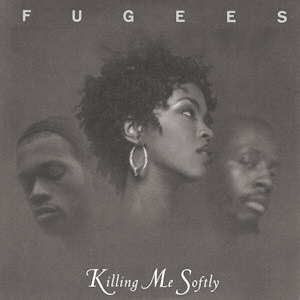
Killing Me Softly

The Fugees


First Charted: March 2, 1996


Peak: 2a US, 11 RR, 30 AC, 20 A40, 15 RB, 15 UK, 17 AU, 13 DF (Click for codes to singles charts.)


Sales (in millions): -- US, 1.46 UK, 2.98 world (includes US + UK)


Airplay/Streaming (in millions): 0.4 radio, 227.0 video, 496.83 streaming

Awards (Roberta Flack):

Click on award for more details.


Awards (Fugees):

Click on award for more details.

About the Song:

At the 16th Grammy Awards on March 2, 1974, Roberta Flack took home the prizes for Song and Record of the Year. She owes this monster hit to Don McLean – and airline headsets.

Folk singer Lori Lieberman was at a Don McLean show at the Troubadour in Los Angeles when she was inspired to write a poem RS500 – but not by “American Pie” or McLean’s other big hit, “Vincent.” No, she heard album track “Empty Chairs,” and thought, “Whoa! This person knows me!” TC Unsure how to put the poem into lyric form, TC she showed it to two men she was working with at the time: Gimbel and Fox of Happy Days fame. RS500

She recorded the song and released it as a single, but didn’t take off – well, that is, until it was literally lifted off the ground in its inclusion on a tape of music for airline headsets. SJ Roberta Flack’s curiosity was peaked when she saw the song title in an in-flight magazine while on a flight from L.A. to New York. SJ She says she “absolutely freaked” RS500 and knew she had to cover the song. TC

She and producer Quincy Jones spent three months polishing the track in the studio RS500 to create the “lushy romantic and forlorn atmosphere.” TC The result was her second chart-topper, three Grammy wins, the biggest song of 1973, WHC and, according to Blender magazine, is the eleventh most performed song ever. TC

More than 20 years later, the Fugees revived the song with the intention “to bring musicality back to hip-hop.” HL Their version became a big radio hit in 1996 and even lifted a remix of Flack’s original into the dance club play charts.


Resources:

  • DMDB Encyclopedia entry for Roberta Flack
  • DMDB Encyclopedia entry for The Fugees
  • TC Toby Creswell (2005). 1001 Songs: The Great Songs of All Time. Thunder’s Mouth Press: New York, NY. Pages 387-8.
  • HL Michael Heatley and Spencer Leigh (1998). Behind the Song: The Stories of 100 Great Pop & Rock Classics. London, England: Blandford Books. Page 70.
  • SJ Bob Shannon and John Javna (1986). Behind the Hits: Inside Stories of Classic Pop and Rock and Roll. New York, NY; Warner Brothers, Inc. Page 164.
  • WHC Joel Whitburn (1999). A Century of Pop Music. Menomonee Falls, WI; Record Research, Inc. Page 100.


Related Links:


Last updated 11/12/2022.

Saturday, January 15, 1972

Don McLean’s “American Pie” hit #1

American Pie

Don McLean

Writer(s): Don McLean (see lyrics here)


First Charted: November 19, 1971


Peak: 14 US, 14 CB, 15 GR, 15 HR, 13 AC, 2 UK, 15 CN, 15 AU, 1 DF (Click for codes to singles charts.)


Sales (in millions): 1.0 US, 0.6 UK, 1.6 world (includes US + UK)


Airplay/Streaming (in millions): 3.0 radio, 170.8 video, 362.11 streaming

Awards:

Click on award for more details.

About the Song:

February 3, 1959, is often called “the day the music died” because of a plane crash that killed early rockers Buddy Holly, Ritchie Valens, and the Big Bopper. Although singer/songwriter Don McLean doesn’t mention any of them by name, he immortalized the legendary trio with his epic song “American Pie.”

McLean has stated that Holly “was the first and last person I ever really idolized as a kid.” FB Holly was, in fact, McLean’s inspiration for taking up the guitar in the first place. TB McLean learned of the tragedy while folding newspapers for his paper route. WK McLean lamented that by 1964 Holly had been largely forgotten, but as McLean said, “I didn’t forget him.” TB In fact, he acknowledged that in writing the song’s first verse, he “exorcised his long-running grief over Holly’s death.” WK

The song expresses a general theme about the death of idealism in the 1960s, BBC but its lyrics maintained enough ambiguity to inspire radio stations to devote entire shows to analyzing “American Pie.” HL It has been amusingly suggested that one could “obtain a doctorate by writing on its hidden meaning.” HL McLean has done little to help in the interpretations, saying merely that it was an “attempt at an epic song about America and I used the imagery of music and politics to do that.” KN

“American Pie” was an epic in more than just theme; its nearly eight-and-a-half minute running time meant that the song was split into two parts to fit on the 45 RPM single format of the day. Initially, some stations played only the first side, but as the song grew in popularity, stations succumbed to playing it in its entirety. WK


Resources:

  • DMDB Encyclopedia entry for Don McLean
  • BBC BBC Radio 2 (2004). “Sold on Song Top 100
  • FB Fred Bronson (2003). The Billboard Book of Number One Hits (5th edition). Billboard Books: New York, NY. Page 305.
  • HL Michael Heatley and Spencer Leigh. (1998). Behind the Song: The Stories of 100 Great Pop & Rock Classics. London, England: Blandford Books. Page 62.
  • KN Steve Knight (2007). The Top 25 Rock Songs of All-Time are…
  • TB Thunder Bay Press (2006). Singles: Six Decades of Hot Hits & Classic Cuts. Outline Press Ltd.: San Diego, CA. Page 132.
  • WK Wikipedia


First posted 1/5/2012; last updated 11/26/2022.