Showing posts with label best country songs. Show all posts

Thursday, June 2, 2022

Today in Music (1962): Ray Charles’ “I Can’t Stop Loving You” hit #1 on the Hot 100

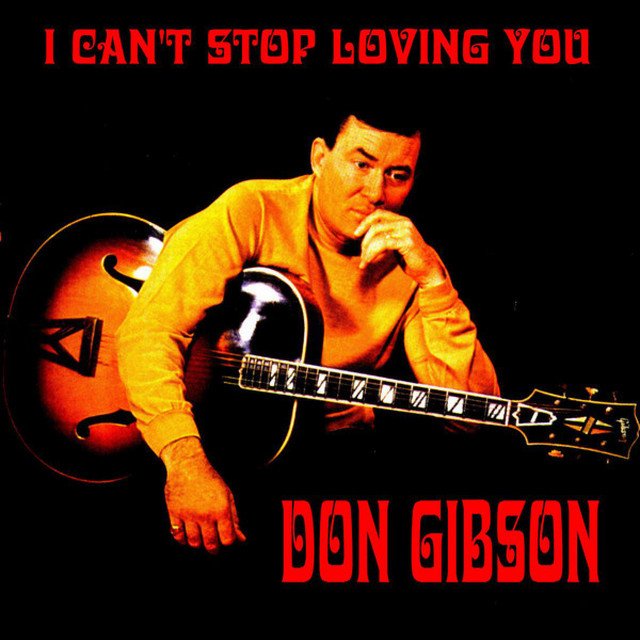
I Can’t Stop Loving You

Don Gibson

Writer(s): Don Gibson (see lyrics here)


First Charted: February 17, 1958


Peak: 81 US, 7 CW (Click for codes to charts.)


Sales (in millions): --


Airplay/Streaming (in millions): 6.0 radio, 0.37 video, 6.18 streaming

I Can’t Stop Loving You

Ray Charles

Writer(s): Don Gibson (see lyrics here)


First Charted: April 30, 1962


Peak: 15 US, 15 CB, 15 HR, 15 AC, 110 RB, 12 UK, 12 CN, 14 AU, 1 DF (Click for codes to charts.)


Sales (in millions): 1.0 US


Airplay/Streaming (in millions): 6.0 radio, 32.67 video, 58.10 streaming

Awards (Don Gibson):

Click on award for more details.


Awards (Ray Charles):

Click on award for more details.

About the Song:

Ray Charles career was marked by the blending of multiple genres. He started out in 1949 as a blues singer, but refashioned himself as more of an R&B musician when he went to Atlantic Records in 1952. KL Before he left there, he had dipped into country music as well, one of the first R&B stars to do so. DJ

Once at ABC-Paramount, he even recorded a full album of country songs with 1962’s Modern Sounds in Country and Western Music. They weren’t crazy about the idea. As Charles told Rolling Stone in 1973, ABC was concerned that he was going to lose his fan base, to which Charles said, “I’ll do it anyway.” FB

The result was the best-selling album of Charles’ career, KL spearheaded by perhaps the greatest crossover song of all-time – “I Can’t Stop Loving You.” The song originated in 1958 as a #7 country hit for Don Gibson. Charles gave the song “a soulful voice and added a middle of the road choir and strings,” KL turning it into the biggest pop song of 1962, CPM the biggest R&B hit of Ray Charles’ career, his biggest pop hit, and his biggest AC hit. Ironically, the song did not hit the country charts.

Of course, it might not have hit any of the charts if it weren’t for Tab Hunter. While DJs had picked up the song after the Charles’ album came out, RS500 ABC didn’t put out a single of it until after Hunter’s “note for note copy” which even duplicated the cracks in Charles’ voice. KL ABC then whittled Charles’ rendition down to “a 45-friendly two and a half minutes” and rushed it out for single release. RS500


Resources:


Related Links:


First posted 7/14/2012; last updated 11/13/2023.

Sunday, October 9, 2011

50 years ago: Patsy Cline charted with “Crazy”

Crazy

Patsy Cline

Writer(s): Willie Nelson (see lyrics here)


Recorded: August 21, 1961


First Charted: October 9, 1961


Peak: 9 US, 13 CB, 9 GR, 11 HR, 2 AC, 2 CW, 14 UK, 56 AU, 1 DF (Click for codes to charts.)


Sales (in millions): -- US, -- UK, -- world (includes US + UK)


Airplay/Streaming (in millions): 2.0 radio, 22.73 video, 61.28 streaming

Awards:

Click on award for more details.

About the Song:

Before Willie Nelson became one of country music’s top singers, he broke into the industry as a songwriter after “having tried everything from encyclopedia selling to hawking vacuum cleaners door-to-door.” HL After Faron Young took Nelson’s “Hello Walls” to the top of the country charts, seemingly everyone in town wanted a Willie song. Patsy Cline was looking for a follow-up to “I Fall to Pieces” which had potential to cross over to the pop charts. AC She loved his song “Funny How Time Slips Away,” but Billy Walker, whose relationship with Nelson went back to their Texas days, AC got to it first.

Cline was furious, but Willie and Billy thought her voice was perfect for another song Walker had demoed. AC When told the song title was “Crazy,” she shot back, “It sure is.” RS500 She was looking for the up-tempo fare she was more accustomed to singing. A slow-torch song was not what she had in mind. NPR Cline’s producer, Owen Bradley, was convinced of the song’s potential, believing it to be well suited to “her vocal talents and expressive style.” NPR

She was on crutches when she recorded the song. She had a fractured hip and near-fatal head injuries HL after she and her brother were in a head-on collision SS that threw her through the car’s windshield. HL “With a lush arrangement and understated backing vocals” RS500 from the Jordanaires alongside the “slow-burn sex appeal” RS500 she infused in the lyrics, she made the song her own. She recorded the vocal in one take TC for her “best-remembered performance.” HL It was “a perfect vehicle to showcase [her] poignant, heartbreaking voice and superb musicianship.” NRR It “bears the marks of Nelson’s idiosyncratic personality – it’s pop and jazz and western and not quite pure country.” TC

It became more than just Cline’s only top-10 pop hit and signature tune. Willie Nelson called it “the favorite of anything I ever wrote.” AC “The most enduringly popular ballad in country music history” SS is also the top jukebox single of all time. NPR It launched a new sound in country music called “countrypolitan” RS500 which gained popularity in the wake of rock and roll’s explosive success. NRR Sadly, Cline herself wouldn’t be around to see where country music was headed; she died in a plane crash in March 1963.


Resources:


Related Links:


First posted 8/21/2011; last updated 4/14/2023.