 | Heavy Metal/Hard Rock:Top 50 Acts |

DavesMusicDatabase.com is devoted to ranking, rating, and reviewing music of all genres and eras. The DMDB blog serves up album and song reviews, best-of lists, music history snapshots, and music-related essays.

|

|

|

|

|

|

|

|

|

|

|

|
Showing posts with label Ozzy Osbourne. Show all posts
Showing posts with label Ozzy Osbourne. Show all posts
Wednesday, July 1, 2026


Tuesday, July 22, 2025
Black Sabbath et al: Top 20 Songs
 | Black Sabbath et alTop 20 Songs |
Black Sabbath are considered one of the foundational heavy metal groups. Along with Led Zeppelin and Deep Purple, they introduced a genre of rock music characterized by distorted guitars, extended guitar solos, emphatic beats, and sheer volume that blended blues rock, psychedelic rock, and acid rock. All three bands formed in 1968. Black Sabbath started out as a blues group in Birmingham, England, that went by the name Earth. They changed their name to Black Sabbath in late 1969. They were active until 2017, although 2006-2010 they went by the name “Heaven & Hell,” named after the band’s 1980 Ronnie James Dio-era album. They also had a reunion in 2025. The original lineup consisted of:
The four original members were inducted into the Rock and Roll Hall of Fame in 2006. Other members over the years included:
Ian Gillan and Glenn Hughes were inducted into the Rock and Roll Hall of Fame in 2016 as members of Deep Purple. Bev Bevan was inducted into the Rock and Roll Hall of Fame in 2017 as a member of Electric Light Orchestra. Links:
|
Awards:


|
Top 20 SongsThese are the top 20 songs by Black Sabbath, as wel as solo efforts by their most prominent lead singers, Ozzy Osbourne and Ronnie James Dio. This list has been created in honor of Ozzy Osbourne, who died on 7/22/2025. Dave’s Music Database lists are determined by song’s appearances on best-of lists, appearances on compilations and live albums by the featured act, and songs’ chart success, sales, radio airplay, streaming, and awards.
DMDB Top 1%:
1. Black Sabbath “Paranoid” (1970) DMDB Top 2%:
3. Black Sabbath “Iron Man” (1970) DMDB Top 5%:
4. Black Sabbath “War Pigs” (1970) DMDB Top 10%:
6. Black Sabbath “Black Sabbath” (1970) DMDB Top 20%:
14. Black Sabbath “Children of the Grave” (1971)
15. Ozzy Osbourne “No More Tears” (1991) Resources and Related Links:
First posted 7/22/2025. |

Tuesday, June 7, 2022
Heavy Metal Albums – Top 50
|
| Heavy Metal/Hard Rock:The Top 100 Albums |
Here are the best heavy metal/hard rock albums, according to Dave’s Music Database. 20 lists of “heavy metal” and/or “hard rock” albums were compiled to create the aggregate list below. Check out other best-of-genre/category lists here.
1. Guns N’ Roses Appetite for Destruction (1987)
11. Def Leppard Hysteria (1987)
21. Black Sabbath Black Sabbath (1970)
31. Led Zeppelin Led Zeppelin IV (1971)
41. Soundgarden Badmotorfinger (1991)
Resources and Related Links:
First posted 7/1/2011; last updated 6/7/2022. |
Tuesday, May 11, 2021
The Top 50 Heavy Metal Songs
|
| Heavy Metal:Top 50 Songs |
Heavy metal is rooted in the hard rock of the late ‘60s and ‘70s, most often attributed to Black Sabbath, Deep Purple, and Led Zeppelin, who all got their start in England in 1968. Distortion, extended guitar solos, and overall loudness characterized the genre and the lyrics are often stereotyped as having Satanic themes. However one defines the genre, here are the top 50 heavy metal songs as determined by aggregating 32 best-of lists. Those songs appearing on 7 or more lists were then re-ranked based on overall points in Dave’s Music Database. Click here to see other genre-specific song lists.
1. Black Sabbath “Paranoid” (1970)
11. Black Sabbath “Iron Man” (1970)
21. AC/DC “Hells Bells” (1980)
31. Dio “Rainbow in the Dark” (1983)
41. Pantera “Cowboys from Hell” (1990) Resources and Related Links:
First posted 1/24/2018; last updated 5/11/2021. |
Friday, November 29, 2013
Charles Bradley released “Changes”
 | ChangesCharles Bradley |
Writer(s): Geezer Butler, Tony Iommi, Ozzy Osbourne, Bill Ward (see lyrics here) Released: November 29, 2013 First Charted: -- Peak: -- (Click for codes to singles charts.) Sales (in millions): -- US, -- UK, -- world (includes US + UK) Airplay/Streaming (in millions): -- radio, 19.2 video, -- streaming |
Awards:Click on award for more details. 


|
About the Song:I’m a sucker for a good cover. It’s even better if the performer seems to be from such a different genre that one can’t imagine how he or she was even exposed to the song. When it comes to that criteria, it’s hard to outdo an obscure soul singer opting to cover a heavy metal song by none other than the kings of the genre – Black Sabbath. Black Sabbath originally released the song “Changes” on their 1972 album Vol. 4. The song was a rare foray into ballad territory for the band. Guitarist Tony Iommi reportedly stayed up all night snorting cocaine SF and composed the song’s piano melody while experimenting in the studio WK1 learning to play piano. SF Bassist Geezer Butler added lyrics inspired by drummer Bill Ward’s split with his wife. The band’s singer, Ozzy Osbourne, has called the song “heartbreaking” and critic Barney Hoskyns described it as “forlornly pretty.” WK1 In 2003, Ozzy recorded the song again as a duet with his daughter, Kelly. The song with some revised lyrics about a father and daughter drifting apart, SF reached #1 in the UK. Critics weren’t as enamored with their version. In a 2009 Village Voice article, it was ranked one o the worst songs of the decade. WK1 A decade later, soul singer Charles Bradley recorded a version which was released as a single on Record Story Day Black Friday. He said, “That song is very emotional to me. I didn’t want to learn that song…but…the story…made me think about talking with my mother, bonding…The last 12 years of her life, she actually told me things that got me stronger.” SF Kitty Empire of The Observer compared Bradley’s voice to Al Green WK2 while Pop Matters’ Steve Horowitz called him “the closest living equivalent to [James] Brown.” WK2 The song was featured as the theme song for Big Mouth, an animated Netflix series and appeared in the first season of Big Little Lies, an HBO series. WK2
Resources:
Related Links:

First posted 5/7/2020; last updated 7/17/2022. |
Friday, December 19, 1986
Judge refuses to reinstate a lawsuit against Ozzy Osbourne’s “Suicide Solution”: December 19, 1986
Originally posted December 19, 2011.
October 26, 1984: 19-year-old John McCullum committed suicide in his home in California. His parents brought a lawsuit against heavy metal singer Ozzy Osbourne and his CBS record label. The McCullums were convinced that the song “Suicide Solution” from Ozzy’s Blizzard of Oz album, played a part in their son’s death. They claimed the song had hidden lyrics which incited their son to kill himself and that the song urged listeners to “get the gun and try it, shoot, shoot, shoot.” HI Osbourne responded that the song was actually anti-suicide, written in response to a musician who drank himself to death, HI supposedly AC/DC’s Bon Scott. WK
The crux of the lawsuit depended on the idea that while it is legal to express a viewpoint or feeling, it is illegal to directly call for any specific violent responses. Specifically, in the case of Brandenburg v. Ohio, the U.S. Supreme Court determined that “expression advocating violent or otherwise illegal behavior only loses First Amendment protection if the expression is directed to inciting or producing imminent lawless behavior, and is likely to result in such action.” TJ Because this is hard to prove, similar lawsuits brought against other entertainers have generally failed. On December 19, 1986, a judge in California refused to reinstate the lawsuit.
Resources and Related Links:
October 26, 1984: 19-year-old John McCullum committed suicide in his home in California. His parents brought a lawsuit against heavy metal singer Ozzy Osbourne and his CBS record label. The McCullums were convinced that the song “Suicide Solution” from Ozzy’s Blizzard of Oz album, played a part in their son’s death. They claimed the song had hidden lyrics which incited their son to kill himself and that the song urged listeners to “get the gun and try it, shoot, shoot, shoot.” HI Osbourne responded that the song was actually anti-suicide, written in response to a musician who drank himself to death, HI supposedly AC/DC’s Bon Scott. WK
The crux of the lawsuit depended on the idea that while it is legal to express a viewpoint or feeling, it is illegal to directly call for any specific violent responses. Specifically, in the case of Brandenburg v. Ohio, the U.S. Supreme Court determined that “expression advocating violent or otherwise illegal behavior only loses First Amendment protection if the expression is directed to inciting or producing imminent lawless behavior, and is likely to result in such action.” TJ Because this is hard to prove, similar lawsuits brought against other entertainers have generally failed. On December 19, 1986, a judge in California refused to reinstate the lawsuit.
Resources and Related Links:
- Ozzy Osbourne’s DMDB Encyclopedia entry
- HI History.com: An Ozzy Osbourne fan commits suicide
- TJ TJcenter.org: The Issue: Audience Reaction to Art: Who Is Responsible?
- WK Wikipedia.org: Suicide Solution
Saturday, September 13, 1980
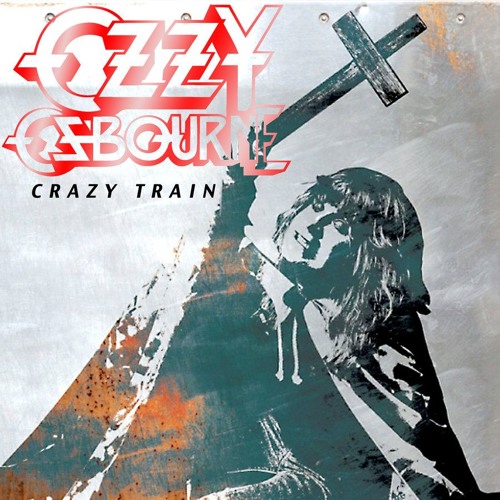
Ozzy Osbourne “Crazy Train” charted
 | Crazy TrainOzzy Osbourne |
Writer(s): Bob Daisley, Ozzy Osbourne, Randy Rhoads (see lyrics here) First Charted: September 13, 1980 Peak: 1 CL, 9 AR, 49 UK, 2 DF (Click for codes to charts.) Sales (in millions): 4.0 US, 0.2 UK Airplay/Streaming (in millions): -- radio, 62.3 video, 458.63 streaming |
Awards:Click on award for more details. 


|
About the Song:Ozzy Osbourne established himself as one of the premiere heavy-metal frontmen in the 1970s with Black Sabbath. After the band fired him for his problems with alcohol and drugs, he was “adrift and searching for a lifeline as he sought to form his own solo band. When that savior arrived in the form of guitarist Randy Rhoads, Ozzy was reportedly almost too messed up to see the light. Luckily, the determination of a friend and the sheer talent of Rhoads were able to cut through the haze and launch one of hard rock’s brightest (and sadly, briefest) collaborations.” UCR Dan Strum, a bassist who was originally slated to be a member of Ozzy’s solo band, convinced Rhoads to audition. The guitarist wasn’t a fan of Black Sabbath and was content in his role with Quiet Riot. Strum had to wake up the passed-out singer. Ozzy passed out on the controls and Strum said, “I was so frustrated that I cranked the volume of Randy’s amp really loud. He started playing power chords to warm up, and suddenly Ozzy’s face looked up.” UCR Ozzy said, “Tell the kid he’s got the job.” UCR They went into the studio to record Blizzard of Ozz. “No song on that fantastic album shines brighter than ‘Crazy Train,’” UCR the album’s lead single which lyrically dealt with the Cold War and the fear of annihilation. WK The title grew out of the chugging sound of the music and Rhoads’ hobby of collecting model trains. SF It “features Rhoads’ anthemic main guitar riff and soloing that merged his heavy metal and classical music influences to wonderful effect. Suddenly, Eddie Van Halen had a serious rival for the title of world’s favorite guitar hero.” UCR “The record soon helped establish Osbourne as a solo star perhaps even more popular than Black Sabbath itself, and though Rhoads’ life was cut short in 1982, ‘Crazy Train’ and other songs from the two albums he recorded with Ozzy remained the foundation of Osbourne’s concert setlists.” Now “we have the mighty ‘Crazy Train’ blasting out of every football stadium in the nation.” UCR Resources:
Related Links:
First posted 8/3/2022; last updated 3/14/2023. |
Friday, September 18, 1970
Black Sabbath released Paranoid
Paranoid |
|
Released: September 18, 1970 Peak: 12 US, 11 UK, 20 CN, 4 AU Sales (in millions): 4.0 US, 0.2 UK, 4.52 world (includes US and UK), 34.22 EAS Genre: heavy metal |

Tracks:Song Title [time] (date of single release, chart peaks) Click for codes to charts.
Total Running Time: 41:51 The Players:
|
Rating: 4.561 out of 5.00 (average of 23 ratings)
Quotable:“Paranoid defined the sound and style of heavy metal more than any other record in rock history.” – Steve Huey, AllMusic.comAwards:(Click on award to learn more).
|


About the Album:After Black Sabbath (originally called Polka Tulk Blues Band) TL recorded their debut self-titled album, they toured Europe for six weeks and then headed right back to the studio. Considering the negative reviews from the rock press, bassist Geezer Butler said, “it felt like the four of us against the world.” LW They didn’t realize what a loyal fan base they were developing in the U.S. Their main goal was to prove to their families that they weren’t wasting time on music. LWThe band’s second effort, Paranoid, is “the most influential album in the history of heavy metal.” CM “Metal is what it is now because of this very record.” PM It carved out “an essential metal template.” PF “Radical songwriting. Ear-shattering riffs. Unforgettable vocals. An all-time great rhythm section. Even a slower love song set in outer space. Paranoid had it all.“ NPR The Band“Paranoid transformed the landscape of metal” PM with “a dizzying onslaught of distortion and bass-heavy power chords” CS thanks to “Tony Iommi’s crushing, granite-fuzz guitar chords,” 500 “the weighty basslines of Geezer Butler and the pounding percussion of Bill Ward.” PMWith his “eruptive screech,” PM lead singer Ozzy Osbourne delivered vocals “in line with the eerie, apocalyptic nature of the music.” PM He sang “as if chained up somewhere down the corridor.” TB When he “screams, he sounds like he wants to drag you down to the bottom of the ocean and eat your brain.” VB He “would eventually be respected as one of rock’s great showmen and the father of heavy metal.” CS Their BackgroundThe band wouldn’t be the same without their factory hometown of Birmingham, England. Joel McIver, who wrote two books about them, says, “You cannot separate the environment of Black Sabbath from the music that they made.” NPR The town was ravaged by bombing in World War II and the future looked bleak for anyone born in the late 1940s, such as the members of Black Sabbath. As McIver said, “your future was 45 years on a factory assembly line.” NPRAbandoning the Book of Rock“Sabbath took the Book of Rock and handed it on with 90 percent of its pages missing: blues, psychedelia, hippie mysticism, soul basslines, folk, rock ‘n’ roll – you name it, Sabbath dumped it. And they were asexual, immune to the erotic pulse that dated back to Elvis’ gyrations.” TB Their songs weren’t about girls, cars, and partying but about death, doom, and destruction. Black Sabbath’s reinvention of rock and roll came to define heavy metal.The Big Three“Sabbath is rivaled only by Led Zeppelin and Deep Purple as the most important early metal act.” CS “The metal bands with huge libidos borrow from Led Zeppelin” TB but musically “Zeppelin incorporated a great deal of folk and blues into their songs.” CS “The flashy neo-progressives look up to Deep Purple” TB who were “as much progressive rock as it was metal.” CS However, Black Sabbath were “the first pure-metal band, with every song thunderous, weighty, and bordering on chaos.” CSThe Sound and Look of Heavy MetalBlack Sabbath owed its unique sound to Iommi who, because he’d lost the tips of two fingers while working in a sheet-metal factory, lowered his guitar tuning and fashioned prosthetic fingertips from bottle caps. Butler then also lowered his tuning to match Iommi. This practice of “downtuning” “became such standard practice in heavy metal that it has come to define the sound as much as the guitar’s distortion and the volume at which the songs are meant to be played.” CSThe band’s second effort, Paranoid, furthered the template Black Sabbath established with their self-titled debut. The band subdued the blues influences prevalent on their first album CQ by refining their “signature sound – crushingly loud, minor-key dirges loosely based on heavy blues-rock – and applied it to a newly consistent set of songs with utterly memorable riffs, most of which now rank as all-time metal classics.” AM It is “monolithic and primally powerful,” AM “heavier than seven lead elephants [and] metaller than a fork factory.” VB Quite simply, “Paranoid defined the sound and style of heavy metal more than any other record in rock history.” AM “Nearly every heavy-metal and extreme rock band of the last three decades…owes [it] a debt of worship.” 500 It “set the standard against which all heavy music would forever be judged.” GW It is “the landmark in the history of heavy metal.” CR The band’s followers created “an entire wardrobe of black leather, heavy jewelry, and brooding complexions that would come to define the world-weary posture of heavy-metal fandom.” CS By giving the music a defining sound and look, Black Sabbath would “launch heavy metal not just as a genre but also a veritable industry.” PF The Songwriting and RecordingThe songwriting was much more systematic than on the first album. Iommi would start the process with “one of his killer massive roaring riffs.” CR Ozzy would work on melodies for the vocals, Butler would pen most of the lyrics, and then Ward would “top it off with a pounding beat to complement Butler’s thunderous bass.” CR“Iommi’s stump-fingered leads and down-tuned riffs provided the perfect platform for songs about war-mongering generals, boots-wearing skinheads and nuclear fallout.” GW The album “perfectly captured the rage, confusion and, yes, paranoia of the Vietnam era” GW as well as “the struggles of Britain’s working class.” PM “The subject matter is unrelentingly, obsessively dark.” AM “Listeners hear their basic existential fears amplified so that they sound like the end of the world.” CM It’s as if “the band members were tasked to deliver warnings of doom to the world.” CR The themes “that we must atone for the inherent evil of mankind” TM came to define “the philosophical disposition of heavy metal” TM by becoming “the obsessions of every other band aspiring to hardness.” TM With only six days in the studio (an eternity compared to the one day they had for their first album), LW they recorded the songs as if playing a live concert. The songs had largely been written on the road while the band toured in support of Black Sabbath. SatanismThe band’s “alling was to express downer sentiments evoked by pentatonic riffs fit to make a television evangelist’s head revolve.” TB When the album was released, “the world was convinced that these working-class chums…were either satanists or an incredible facsimile.” TL Ozzy Osbourne’s biting-the-heads-off-bats incident didn’t come until he’d embarked on a solo career, but he had people nervous with his “declaration that he had sat through The Exorcist a gazillion times.” TLOzzy once told an interviewer, “We’ve never done anything really devilish. Perhaps Tony has sacrificed a few too many virgins in his time, but nothing you could really call wrong.” CS The SongsHere are insights into individual songs.“War Pigs” Lines like “Satan laughing spreads his wings” furthered the image of the band as Satanic, but it wasn’t about the devil at all. Butler said, “To me, war was the big Satan. It wasn’t about politics or government or anything. It was evil. So I was sying ‘Generals gathered in the masses / Just like witches at black masses’ to make an analogy.” LW It's also worth noting that the album was originally to be called War Pigs and the artwork had been designed with that in mind. As Tony Iommi said, “There’s a guy standing there with a shield and a sword, with the album title called Paranoid…’What’s that have to do with Paranoid?” Well, nothing really. But that’s how it was.” LW
“Iron Man” The song found a whole new audience as the title song for 2008’s super-hero movie, Iron Man, starring Robert Downey, Jr. Of course, the original had nothing to do with the Marvel Comics character. It is “a surreal fantasy” PF “about a man who travels to the future and sees the apocalyptic destruction on mankind.” CR When returning to the present, he is turned to steel by a magnetic field and is rendered mute, leaving him unable to warn anyone about the apocalypse. “He’s ostracized and ignored he lashes out, iron fists falling on the city with the weight of Iommi’s monstrous riff and Ward’s colossal Bonham drums.” PF
“Paranoid” Tony Iommi wrote the “simple riff that chugged, paused, and kept prowling, like a predator always in search of its next meal” PF while the rest of the band headed to the bar. PF The song “foregrounds an adolescent sort of worry – about being depressed and not understanding the symptoms or root of it, about crying when others laugh, about breaking up with someone because ‘she couldn’t help me with my mind.’” PF “Butler sounds like he’s using a brick for a plectrum, but the arrangement is perfectly balanced, taking in drum cracks, doom-laden feedback, and clusters of electric punctuation that dazzle by way of contrast. The song is a pocket symphony: an Old Testament that successors will always look to.” CM The record company, Vertigo, heard a hit and issued the “three-minute assault” PF as a single just six months after the band had released its debut album. Vertigo also pushed for renaming the album Paranoid (instead of the originally planned War Pigs) “to remind potential customers of the song they’d seen four long-haired weirdos headbang to on Top of the Pops.” PF
“Hand of Doom” “Ozzy’s horizon-reaching yowl was made for songs like ‘Hand of Doom,’ where the rhythm virtually demands that head banging be invented.” CM “Electric Funeral” The “churning, discombobulated riff that underpins ‘Electric Funeral’…takes psychedelia to new extremes.” CM “Rat Salad” “Fairies Wear Boots” “Planet Caravan” Notes:A 2009 deluxe edition added a second disc of the album in a quadrophonic mix and a third disc of instrumental versions and versions with alternate lyrics. A 4-CD deluxe edition was released in 2016 which included two live 1970 shows, one from Montreux and one from Brussels. |
Resources and Related Links:
Other Related DMDB Pages:

First posted 2/18/2008; last updated 11/10/2024. |
Subscribe to:
Posts (Atom)