Showing posts with label 52nd Street. Show all posts

Saturday, March 30, 2013

Phil Ramone: 1934-2013

Phil Ramone

1934-2013

Overview:

Nicknamed “The Pope of Pop,” producer Phil Ramone won 14 Grammys, including three for Album of the Year. He was born on January 5, 1934, in South Africa, but grew up in Brooklyn, New York. He was a child prodigy who started playing violin at age 3 and performed for Princess Elizabeth at age 10. He trained as a classical violinist at Juilliard in the late ‘40s. He opened his own recording studio before the age of 20 and became a naturalized U.S. citizen in 1953. He is considered a CD pioneer, as he was the producer for Billy Joel’s 52nd Street, the first album made available on compact disc. He has also produced concerts (Simon and Garfunkel: The Concert in Central Park), film (A Star Is Born, Flashdance), Broadway (Chicago, Seussical), and television productions.

As a record engineer and producer, he is most associated with Billy Joel, but also worked with Burt Bacharach, The Band, Ray Charles, Chicago, Bob Dylan, Gloria Estefan, Aretha Franklin, Elton John, Quincy Jones, B.B. King, Madonna, Barry Manilow, Paul McCartney, George Michael, Olivia Newton-John, Carly Simon, Paul Simon, Frank Sinatra, Rod Stewart, Barbra Streisand, James Taylor, Dionne Warwick, and Stevie Wonder.

He had a long chart history, first hitting Billboard’s Hot 100 in 1963 as an engineer on Lesley Gore’s “It’s My Party” all the way through to 2011’s “Body and Soul” by Tony Bennett and Amy Winehouse.

Ramone died on March 30, 2013, in Manhattan of a brain aneurysm. He was 79. He was married to Karen Ichiuji-Ramone. They had three sons.

Here is a select discography of some of the most-celebrated work (and some of their most noted awards) in which he had a hand:


Links:

Awards:

Lesley Gore “It’s My Party” (1963)
Quincy Jones produced this #1 hit with Ramone serving as an engineer. The song makes the RIAA’s 365 Songs of the Century list.

Stan Getz & João Gilberto Getz/Gilberto (1963)
Ramone served as engineer on the album, which won Grammys for Best Engineered Recording and Album of the Year. The DMDB ranks it as one of the top 1000 albums of all time and top 50 jazz albums of all time. It is also in the Grammy Hall of Fame. Read more on the DMDB page for this album.

“The Girl from Ipanema”
The album featured the song “The Girl from Ipanena” which won the Grammy for Record of the Year, is in the Grammy Hall of Fame, the National Recording Registry, and ranks in the DMDB’s top 1% songs of all time list as well as the RIAA’s 365 Songs of the Century list.

Procol Harum “A Whiter Shade of Pale” (1967)

This song is featured in the DMDB book The Top 100 Songs of the Rock Era and appears in the Rock and Roll Hall of Fame’s list of songs that shaped rock. The song is also in the Grammy Hall of Fame and is one of the world’s all-time best-selling songs. Read more on the DMDB page for this song.

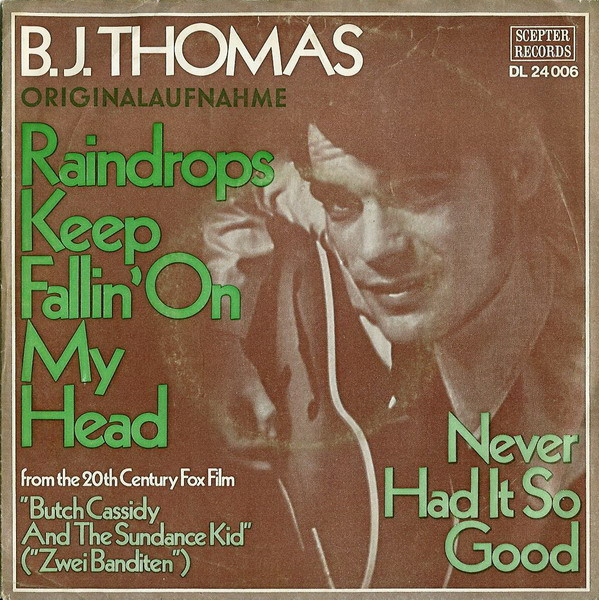
B.J. Thomas “Raindrops Keep Falling on My Head” (1969):
This Hal David and Burt Bacharach-penned tune was used as the theme for the Robert Redford/Paul Newman film Butch Cassidy and the Sundance Kid. The song ranks as one of DMDB’s top 1% songs of all time and shows up on the RIAA’s 365 Songs of the Century list. According to Billboard, this is the top-ranked song associated with Ramone. Read more on the DMDB page about this song.

Paul Simon Still Crazy After All These Years (1975)

The first of Ramone’s three wins for producing a Grammy winner for Album of the Year is another Grammy Hall of Fame entry. Read more on the DMDB page about this album.

“50 Ways to Leave Your Lover”
The #1 album also spawned the #1 hit “50 Ways to Leave Your Lover,” which the DMDB ranks as one of the top 100 singer/songwriter songs.

Bob Dylan Blood on the Tracks (1975)
Ramone served as the session engineer on Blood on the Tracks, which is featured in the DMDB book The Top 100 Albums of All Time and the Grammy Hall of Fame. Read more on the DMDB page about this album.

“Tangled Up in Blue”
The album features “Tangled Up in Blue” which ranks as one of DMDB’s top 1% songs of all time and appears in the Rock and Roll Hall of Fame’s list of songs that shaped rock.

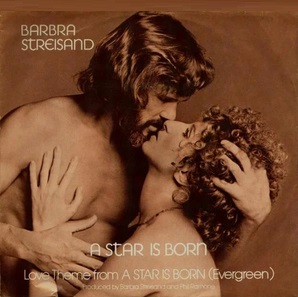
Barbra Streisand “Evergreen (Love Theme from A Star Is Born)” (1976):
This won the Grammy for Song of the Year and the Oscar for Best Song. The American Film Institute ranks it as one of the top 100 movie songs of all time. The soundtrack for A Star Is Born ranks as one of the DMDB’s top 100 soundtracks of all time.

Billy Joel The Stranger (1977)

The Stranger was the first Billy Joel album produced by Ramone. It is another Grammy Hall of Fame album and ranks in the DMDB’s list of the top 1000 albums of all time. The Rock and Roll Hall of Fame also named the album to its list of definitive albums. Read more on the DMDB page about this album.

“Just the Way You Are”
The album spawned the hit song, “Just the Way You Are,” which won the Grammys for Record and Song of the Year. It has also been inducted into the Grammy Hall of Fame and ranks as one of DMDB’s top 1% songs of all time. Read more on the DMDB page about this song.

Billy Joel 52nd Street (1978)
The second of Ramone’s three wins for producing a Grammy winner for Album of the Year. It was also named Billboard magazine’s Album of the Year. It is the top-ranked album associated with Ramone, according to Billboard. Read more on the DMDB page about this album.

Various Artists Flashdance soundtrack (1983)
Ramone served as the music supervisor for the 1983 Flashdance movie and was one of the producers for the soundtrack. It won a Grammy for Best Album of Original Score Written for a Motion Picture or a Television Special and ranks as one of the DMDB’s top 100 soundtracks of all time. It is also one of the top 100 All-Time World’s Bestsellers, fueled by the #1 hits “Flashdance…What a Feelin’” by Irene Cara and “Maniac” by Michael Sembello. Read more on the DMDB page about this album.

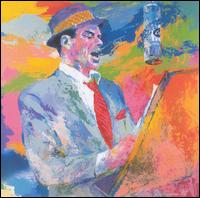
Frank Sinatra Duets (1993)
The album was notable for giving Sinatra a late-career boost. It peaked at #2 on the Billboard album chart and is the only Sinatra album to achieve triple platinum status. The album, which paired Sinatra with a host of guest stars, marked the first use of a fiber optics system to record tracks in real time from different locations.

Ray Charles Genius Loves Company (2004)
The third of Ramone’s three wins for producing a Grammy winner for Album of the Year. It also took home the Grammy for Pop Vocal Album of the Year and is yet another of the DMDB’s top 1000 albums of all time. The song “Here We Go Again,” which paired Charles with Norah Jones, won the Grammy for Record of the Year. Read more on the DMDB page about this album.

Resources and Related Links:


First posted 3/30/2013; last updated 1/5/2024.

Friday, October 1, 1982

The compact disc (CD) was introduced.

October 1, 1982

The compact disc (CD) introduced.

American physicist James Russell was an avid music listener. He was frustrated with how the stylus on a record player caused wear and tear on vinyl records. He realized he could eliminate the contact between the stylus and the record by using a light to read the music without actually touching the disk. He patented the first digital-to-optical recording and playback system in 1970. He could not, however, find any investors interested in developing it for the consumer market. HC

In 1975, Phillips Electronics representatives visited Russell’s lab and determined that his equipment would work for data storage, but not audio or video. They had just released a laser disc video player and were convinced it could only be done via analog technology. HC

However, by the late 1970s both Phillips and Sony were focused on developing new technology which would allow the digital storage and playback of audio and video. By 1979, they announced that they would jointly work to develop what would become the compact disc, or CD. Phillips focused on the physical design of the disc while Sony focused on how to convert analogue recordings to digital.

The compact disc was first manufactured in August 1982 and released in October 1982 in Japan. The standard CD was 4.7 inches in diameter and held up to 74 minutes of music. The length came about because of Sony’s insistence that Beethoven’s entire 9th symphony – which ran 74 minutes – should fit on a CD. DW The first CD ever created was The Visitors by Abba. Billy Joel’s 52nd Street was the first commercially available CD album. DW In the United States, the first disc players were available in the United States for about a thousand dollars. DT

By 1988, the CD overtook vinyl in sales, DT thanks to its smaller size, durability, and portability. By 1991, it had bested the cassette tape as well DT because of the ease with which one could jump back and forth between tracks. The CD would eventually become the music format of choice, reaching peak sales in 2008 before being overtaken by technology such as mp3s, iTunes, and Spotify.


For more important days in music history, check out the Dave’s Music Database history page.

Resources and Related Links:


First posted 9/29/2023.

Wednesday, March 12, 1980

Billy Joel’s Glass Houses released

Glass Houses

Billy Joel


Released: March 12, 1980


Peak: 16 US, 9 UK, 17 CN, 2 AU Click for codes to charts.


Sales (in millions): 7.0 US, 0.1 UK, 11.2 world (includes US and UK)


Genre: pop/rock singer-songwriter


Tracks:

Click on a song title for more details.
  1. You May Be Right
  2. Sometimes a Fantasy
  3. Don’t Ask Me Why
  4. It’s Still Rock and Roll to Me
  5. All for Leyna
  6. I Don’t Want to Be Alone
  7. Sleeping with the Television On
  8. C’Etait Toi (You Were the One)
  9. Close to the Borderline
  10. Through the Long Night

Total Running Time: 35:06

Rating:

4.003 out of 5.00 (average of 23 ratings)


Quotable:

“The closest Joel ever got to a pure rock album.” – Stephen Thomas Erlewine, AllMusic.com

Awards:

(Click on award to learn more).

About the Album

“The back-to-back success of The Stranger and 52nd Street may have brought Billy Joel fame and fortune, even a certain amount of self-satisfaction, but it didn’t bring him critical respect, and it didn’t dull his anger. If anything, being classified as a mainstream rocker – a soft rocker – infuriated him, especially since a generation of punks and new wave kids were getting the praise that eluded him.” AM

“Instead of turning out to be a fiery rebuttal to his detractors, the album is a remarkable catalog of contemporary pop styles, from McCartney-esque whimsy (Don’t Ask Me Why) and arena rock (All for Leyna) to soft rock (C’etait Toi [You Were the One]).” AM

“Comparatively a harder-rocking album than either of its predecessors, with a distinctly bitter edge, Glass Houses still displays the hallmarks of Billy Joel the pop craftsman and Phil Ramone the world-class hitmaker. Even its hardest songs, including the top-10 hit “You May Be Right” and top-40 hit “Sometimes a Fantasy,” “have bold, direct melodies and clean arrangements, ideal for radio play.” AM

The Stranger and 52nd Street were fine albums in their own right, but it’s nice to hear Joel scale back his showman tendencies and deliver a solid pop/rock record… [that is] the closest Joel ever got to a pure rock album.” AM

The Songs

Here’s a breakdown of each of the individual songs.

You May Be Right

Billy Joel

Writer(s): Billy Joel


Released: 3/7/1980 (single), Glass Houses (1980), Greatest Hits Volume I & II (1985), The Ultimate Collection (2000), The Essential (2001), The Hits (2010)


B-side: “Close to the Borderline”


First Charted: 3/14/1980


Peak: 7 BB, 8 CB, 2 GR, 7 HR, 2 RR, 48 AC, 2 CL, 64 UK, 6 CN, 28 AU, 2 DF Click for codes to charts.


Sales (in millions): 1.0 US


Airplay/Streaming (in millions): -- radio, 38.5 video, 110.97 streaming

Awards:

(Click on award to learn more).

About the Song:

After becoming a Grammy-winning artist with his top-10 hit “Just the Way You Are” and his 1978 album 52nd Street, Billy Joel still wasn’t satisfied. He was angry that “critics still lumped him in with the middle-of-the-road-soft-rock balladeers of the era.” SG With his 1980 album Glass Houses, Joel intended to “throw a rock at the image people had” FB of him and “show that he could rock as hard as anyone else.” SG

The first sound on the album in the lead song “You May Be Right” is of breaking glass. It corresponded with the album cover depicting Joel about to throw a rock at an all-glass house. It was a statement to his critics that people in glass houses shouldn’t throw stones. SF “The snarl of the motorcycle-riding You May Be RightDB made it clear this would be a harder-rocking album than its two predecessors.

The song is sung from the perspective of a man being told he is reckless. The character “confirms the suspicion, admitting that he is crazy and extolling the virtues of a more carefree, but dangerous existence.” SF Cash Box called the song “witty, urbane, and energetic.” WK It features hard guitar playing “reminiscent of Chuck Berry and the Rolling Stones.” WK Record World said “Joel’s rock energy blends well with his pop melodies on this smashing cut.” WK

The song gave Joel another top-10 hit and was the first of four top-40 hits from the Glass Houses album. Joel himself considers it one of his top 5 songs. SF

Sometimes a Fantasy

Billy Joel

Writer(s): Billy Joel


Released: 10/11/1980 (single), Glass Houses (1980)


B-side: “All for Leyna”


First Charted: 10/11/1980


Peak: 36 BB, 40 CB, 39 HR, 22 RR, 12 CL, 29 UK, 21 CN, 23 DF Click for codes to charts.


Sales (in millions): --


Airplay/Streaming (in millions): -- radio, 2.6 video, 15.17 streaming


About the Song:

“The terrifically paranoid Sometimes a FantasyDB is what Billboard magazine called a “melodic, fast paced rocker” WK that “starts with a telephone ring and a rockabilly vocal.” WK Record World called it a “pulsating rocker for AOR-pop.” WK It gave Glass Houses its fourth top-40 hit.

“The lyrics are about a sexually frustrated man who tries to convince his significant other to have phone sex. He explains that he is lonely since they are far away from each other (which is implied by the fact that his phone call is long distance).” WK

Don’t Ask Me Why

Billy Joel

Writer(s): Billy Joel


Released: 7/24/1980 (single), Glass Houses (1980), Greatest Hits Volume I & II (1985), The Ultimate Collection (2000), The Essential (2001)


B-side:C’Etait Toi (You Were the One)


First Charted: 8/2/1980


Peak: 19 BB, 21 CB, 17 HR, 10 RR, 12 AC, 8 CL, 73 UK, 4 CN, 4 DF Click for codes to charts.


Sales (in millions): 0.5 US


Airplay/Streaming (in millions): -- radio, 4.80 video, 42.75 streaming


About the Song:

Joel offers “McCartney-esque whimsy” AM on “Don’t Ask Me Why,” the album’s third top-20 hit. “The track contains all acoustic and Latin percussion instruments performing in an Afro-Cuban rhythmic style. An eclectic, instrumental Latin Ballroom piano solo, played over the bridge section after the second verse, is also featured in part of the song.” WK

Billboard said the song was “catchy” WK while Record World called it “one of [Joel’s] easy rollin’ romantic piano ballads that often become pop standards.” WK Cash Box said the lyrics deal with “themes of success and chance” WK backed by a “crisp pop/Latin/rock rhythm.” WK

It’s Still Rock and Roll to Me

Billy Joel

Writer(s): Billy Joel


Released: 5/12/1980 (single), Glass Houses (1980), Greatest Hits Volume I & II (1985), The Ultimate Collection (2000), The Essential (2001), Piano Man: The Very Best of (2004), The Hits (2010)


B-side: “Through the Long Night”


First Charted: 5/13/1980


Peak: 12 BB, 13 CB, 14 GR, 14 HR, 14 RR, 45 AC, 1 CL, 14 UK, 13 CN, 10 AU, 1 DF Click for codes to charts.


Sales (in millions): 4.0 US, 0.20 UK, 4.41 world (includes US + UK)


Airplay/Streaming (in millions): -- radio, 39.50 video, 311.61 streaming

Awards:

(Click on award to learn more).

About the Song:

Joel “saw the kind of press that punk and new wave bands were getting, and he decided that there wasn’t actually anything new about these new bands.” SG In railing against the new sound, however, he ended up embracing it. In fact, “thanks to his innate brattiness and gift for stylistic wandering, Joel was able to pull it off better than just about anyone.” DB “You May Be Right,” the first single from Glass Houses, was “basically an Elvis Costello/Joe Jackson new-wave rave-up.” SG

The follow-up single, “It’s Still Rock and Roll to Me,” “is a sharp, well-written song” SG that “works in the same mode…but with some angry snark in the mix, as well.” SG With a sound that “ironically Joel showed on the “Cars-imitating It’s Still Rock and Roll to MeDB that it “came naturally to him.” DB

His first #1 found him “sarcastically raging against the idea that he should have to switch his style up, to adapt to a new sound…even as he… [does] exactly what he complains that he shouldn’t have to do.” SG Interestingly, even Rolling Stone critic Marsh acknowledged that the song “redeemed the project commercially.” FB

Musically, it “is more mannered than ‘You May Be Right.’…It’s a controlled and locked-in rockabilly shuffle – as if Joel is proving how old these new sounds are by making them sound as old as possible.” SG “At times, it nods in the direction of Bruce Springsteen, Joel’s fellow tri-state beach-town road warrior; Richie Cannata’s saxophone solo is a straight-up Clarence Clemons bite. But Joel never tries to wail his way into transcendence, the way Springsteen always did. Joel is more concerned with airing out petty grievances.” SG

All for Leyna

Billy Joel

Writer(s): Billy Joel


Released: February 1980 (UK single), 10/11/1980 (B-side of “Sometimes a Fantasy”), Glass Houses (1980), The Ultimate Collection (2000)


Peak: 17 CL, 40 UK, 35 DF Click for codes to charts.


Sales (in millions): --


Airplay/Streaming (in millions): -- radio, 2.9 video, 14.61 streaming


About the Song:

“All For Leyna” was released as the lead single for Glass Houses in the UK, but not in the U.S. “The lyrics tell the story of the protagonist who meets a girl named Leyna, and, after a one-night stand, becomes obsessed with her.” WK

I Don’t Want to Be Alone

Billy Joel

Writer(s): Billy Joel


Released: Glass Houses (1980)


Peak: -- Click for codes to charts.


Sales (in millions): --


Airplay/Streaming (in millions): -- radio, -- video, 3.90 streaming

Sleeping with the Television On

Billy Joel

Writer(s): Billy Joel


Released: Glass Houses (1980)


Peak: -- Click for codes to charts.


Sales (in millions): --


Airplay/Streaming (in millions): -- radio, -- video, 7.98 streaming

C’était Toi (You Were the One)

Billy Joel

Writer(s): Billy Joel


Released: 7/24/1980 (B-side of “Don’t Ask Me Why”), Glass Houses (1980)


Peak: -- Click for codes to charts.


Sales (in millions): --


Airplay/Streaming (in millions): -- radio, -- video, 2.78 streaming

Close to the Borderline

Billy Joel

Writer(s): Billy Joel


Released: Glass Houses (1980)


Peak: 25 CL Click for codes to charts.


Sales (in millions): --


Airplay/Streaming (in millions): -- radio, -- video, 2.22 streaming

Through the Long Night

Billy Joel

Writer(s): Billy Joel


Released: Glass Houses (1980)


Peak: -- Click for codes to charts.


Sales (in millions): --


Airplay/Streaming (in millions): -- radio, -- video, 2.16 streaming

Resources/References:

  • AM AllMusic.com review by Stephen Thomas Erlewine
  • FB Fred Bronson (2003). The Billboard Book of Number One Hits (5th edition). Billboard Books: New York, NY. Page 527.
  • DB David Browne (6/07). Blender magazine. Pages 114-5.
  • SF Songfacts page for “You May Be Right”
  • SG Stereogum (3/30/2020). “The Number Ones” by Tom Breihan
  • WK Wikipedia page for “All for Leyna”
  • WK Wikipedia page for “You May Be Right”
  • WK Wikipedia page for “It’s Still Rock and Roll to Me”
  • WK Wikipedia page for “Don’t Ask Me Why”
  • WK Wikipedia page for “Sometimes a Fantasy”


Related DMDB Pages:


First posted 3/6/2011; last updated 2/11/2026.