


Pieces of Eight |
|
Released: 9/1/1978 Peak: 6 US, -- UK, -- CN, 70 AU, 15 DF Click for codes to charts. Sales (in millions): 3.0 US Genre: classic arena rock |

Tracks:Click on a song titled for more details.
Total Running Time: 42:18 The Players:
|
Rating: 3.913 out of 5.00 (average of 24 ratings)
Awards:(Click on award to learn more).
|


Following a Top-Ten, Multi-Platinum AlbumStyx became an arena rock favorite with their seventh album, 1977’s The Grand Illusion. It became their first top-10 album and was a multi-platinum seller on the strength of hits “Come Sail Away” and “Fooling Yourself.” Pieces of Eight followed suit and became the band’s second multi-platinum top-10 album, also fueled by a pair of top-40 hits.ProductionLike The Grand Illusion, “Pieces of Eight’s overall production credit was again given to the entire band…with engineering by longtime collaborators Barry Mraz and Rob Kingsland. Po8 was recorded at Paragon Studios in Chicago.” SWSongwritingLike its predecessor, Pieces of Eight was “a tour de force for the band’s trio of songwriters…with the superb backing of the Panozzo rhythm section.” UCR Tommy Shaw helmed the album’s major hits, including “Blue Collar Man” and “the frolicking romp of Renegade.” AM Dennis DeYoung said, “After eight albums I felt musically bankrupt as a composer…I never liked my contribution. I think that was Tommy Shaw’s finest work in Styx.” LSStyx’s Last Hurrah for Prog Rock?“While the writing may stray slightly from what Styx provided on The Grand Illusion, Pieces of Eight kept their established rock formula intact quite firmly.” AM Some considered Pieces of Eight to be the band’s last album “with significant progressive rock leanings” WK or “their final great pomp rock moment.” LS“Sing for the Day, Lords of the Ring, and Aku-Aku all contain slightly more complex instrumental foundations, and are lyrically reminiscent of the material from albums like The Serpent Is Rising or Man of Miracles, but not as intricate or instrumentally convoluted.” AM The aforementioned “Lords of the Ring” as well as “DeYoung’s title track…provided more majestic pomp rock highlights, and JY simply brought the house down with Great White Hope and (with DeYoung) the simply sublime Queen of Spades.” UCR ThemeIt’s also considered a theme album focused on “uniform, isolation, disappointment, frustration, mistrust and duplicity.” LS Dennis DeYoung explained that it was about “not giving up your dreams just for the pursuit of money and material possessions.” WKJames “JY” Young said, “There was never an intentional theme…Five young men had finally gained success. We achieved our goal and finally the money and all its trappings were rolling in for us. By the age of 30 we were doing well for ourselves. You always dream about how your life will change when you become successful but in reality going from having very little to having lots is a transition that affects you personally, professionally and emotionally in ways that you didn’t expect – and in a way those sentiments are reflected in the title of the record.” LS The CoverThe album cover was done by “Hipgnosis — the British company known for creating instantly memorable album-package artwork for Pink Floyd, Led Zeppelin, UFO, 10cc, and scores of other bands.” SW “The design and positioning of the ‘mature’ female heads…is patterned after the monolithic stone statues that appear all throughout Easter Island in the Valparaiso region of Chile.” SWAubrey “Po” Powell explained, “When we thought of the idea of Pieces of Eight, automatically…you think of treasure — doubloons, and other stuff pirates would have like that – so we wanted to move as far away from that as possible.” SW It was master designer Storm Thorgerson who said, “Why don’t we create something like a strange cocktail party with a housewives-from-Phoenix kind of context?” SW While they initially wanted to shoot the background on Easter Island, it was difficult to get there in those days so they opted for “a collage of these very conservative, upmarket, rich women attending a cocktail party…and they all had to be wearing those Aku-Aku earrings.” SW He admitted that the image had very little to do with Styx or their music but hoped it was “an image that’s…impactful enough that people…take note.” SW “At that time in the ’70s, in the record emporiums like Tower Records…you wanted to create something that was a little different…When an album like Pieces of Eight went up on the wall, it would garner people’s attention.” SW ReissueA 2012 DVD featured Styx performing The Grand Illusion and Pieces of Eight albums live in their entirety.The SongsHere’s a breakdown of each of the individual songs. |
Great White HopeStyx |
Writer(s): Dennis DeYoung Released: Pieces of Eight (1978) Peak: 12 DF Click for codes to charts. Sales (in millions): -- Airplay/Streaming (in millions): -- radio, -- video, 1.31 streaming About the Song:“The record opens with the rollicking ‘Great White Hope,’ another classic JY rocker that sets the thematic tone for the rest of the album.” LS |
I’m O.K.Styx |
Writer(s): Dennis DeYoung, James Young Released: Pieces of Eight (1978) Peak: 12 DF Click for codes to charts. Sales (in millions): -- US, -- UK, -- world (includes US + UK) Airplay/Streaming (in millions): -- radio, -- video, 1.63 streaming About the Song:Dennis DeYoung’s “I’m O.K.” “is a stark confessional, neatly summarising his on-and-off bouts of self-doubt and disillusion during the preceding years.” LS As he said, “So many times I write songs to remind myself what I should be thinking when I’m certainly not. I went through a very difficult period in 1976, 1977 and parts of 1978 where I suffered from depression and anxiety. This song was really me trying to remind myself that I was fine.” LS“The absolutely brilliant pipe-organ solo performed by keyboardist/vocalist Dennis DeYoung in the middle…was recorded at the St. James Cathedral, which is located at the corner of Huron and Wabash Streets in Chicago. It is the oldest Episcopal Church in the United States, having been founded in 1834 and completed in 1857.” SW |
 |
Sing for the DayStyx |
Writer(s): Tommy Shaw Released: October 1978 as a single, Pieces of Eight (1978) Peak: 41 BB, 41 CB, 38 GR, 39 HR, 17 CL, 27 CN, 9 DF Click for codes to charts. Sales (in millions): -- Airplay/Streaming (in millions): -- radio, -- video, 1.93 streaming About the Song:This “acoustic-driven treasure” SW was the third single from Pieces of Eight. It just missed the top-40. It was still an impressive personal accomplishment for Tommy Shaw as all three singles were penned by him.“The ‘Hannah’ whom Tommy namechecks throughout the song is meant to be the representative embodiment of the mutual respect between the band and their substantive female following.” SW It “is a tribute to the audience and their belief in, and support of, Styx’s music.” LS
|
The MessageStyx |
Writer(s): Dennis DeYoung Released: Pieces of Eight (1978) Peak: -- Click for codes to charts. Sales (in millions): -- Airplay/Streaming (in millions): -- radio, -- video, -- streaming About the Song:This is just a short instrumental piece by DeYoung, somewhat following the pattern of previous albums with an instrumental leading into a bombastic effort at an epic (“Prelude 12” and “Suite Madame Blue” on Equinox and “Clair de Lune” and “Ballerina” on Crystal Ball). |
Lords of the RingStyx |
Writer(s): Dennis DeYoung Released: Pieces of Eight (1978) Peak: 20 DF Click for codes to charts. Sales (in millions): -- Airplay/Streaming (in millions): -- radio, -- video, 0.82 streaming About the Song:The song “has nothing whatsoever to do with JRR Tolkien but is…an acerbic observation on the cult of stardom.” LS DeYoung said, “It was really about the silliness and the façade of being a rock star, of the realisation that success, in all of its manifestations, was not really going to give me fulfilment.” LSJames Young said, “Originally, Dennis was going to sing it and I was slated to sing ‘I’m OK.’ But that song was such a personal statement about himself that he ended up singing it and putting me on ‘Lords of the Ring.’” LS |
 |
Blue Collar Man (Long Nights)Styx |
Writer(s): Tommy SHaw Released: 9/9/1978 as a single, Pieces of Eight (1978), Caught in the Act (live, 1984), Classics (compilation, 1987) Peak: 21 BB, 21 CB, 22 HR, 21 R, 4 CL, 9 CN, 98 AU, 2 DF Click for codes to charts. Sales (in millions): -- Airplay/Streaming (in millions): -- radio, -- video, 35.31 streaming |
Awards:(Click on award to learn more).
|


About the Song:The band’s “feisty, straightforward brand of album rock is represented best by Blue Collar Man (Long Nights), …an invigorating keyboard and guitar rush — hard and heavy, yet curved by Tommy Shaw's emphasized vocals.” AM The “hard rock nugget” LS features “Dennis DeYoung on very angry Hammond organ and lyrics that pay homage to the working man.” LSShaw said, “I originally wrote that song on an acoustic guitar…It was quite a dark acoustic song. Once again, we electrified it and brought the growly organ in, which was a last-minute thing. We had to fight Barry Mraz on that, because as an engineer he was such a purist, and we kept turning it up to get more distortion. Dennis played that part on a really nice B3 organ.” LS Toto guitarist and singer Steve Lukather says “Blue Collar Man” is his favorite Styx song. SW
|
Queen of SpadesStyx |
Writer(s): Dennis DeYoung, James Young Released: Pieces of Eight (1978) Peak: 21 DF Click for codes to charts. Sales (in millions): -- Airplay/Streaming (in millions): -- radio, -- video, 2.10 streaming About the Song:“’Queen of Spades,’ a thinly veiled comment about the lure of gambling, navigates a quiet start before erupting into pomp rock glory, finally returning to the mysterious melody that it started with in the first instance.” LS“’That was a co-write with JY,’ notes Dennis. ‘My involvement amounted to singing the melody while JY was responsible for everything else, all the chords and the lyrics. Those are his lyrics.’” LS |
 |
RenegadeStyx |
Writer(s): Tommy Shaw (see lyrics here) Released: 1/9/1979 as a single, Pieces of Eight (1978), Classics (compilation, 1987) Peak: 16 BB, 18 CB, 22 HR, 17 RR< 1 CL, 10 CN, 1 DF Click for codes to charts. Sales (in millions): -- Airplay/Streaming (in millions): -- radio, 34.5 video, 238.52 streaming |
Awards:(Click on award to learn more).
|


About the Song:I consider 1979 – when I was in sixth grade – to be my musical birth. That’s when I started to pay attention to music for the first time. One of my first favorite songs was “Renegade” by Styx. It came out in the spring of that year, but my exposure to it came that summer. I was at a camp and about a half dozen of us bonded and hung out together a lot. The other guys kept singing “Renegade” and by the end of the camp I loved the song despite never actually having heard the original version.When I started buying music, I started with eight track. My first purchase was a K-Tel collection called High Energy. I bought it primarily because of four songs – Blondie’s “Heart of Glass,” Chic’s “Le Freak,” Foreigner’s “Double Vision,” and Styx’s “Renegade.” It probably isn’t surprising that three of the four songs rank among my top 100 favorites to this day (sorry Foreigner). 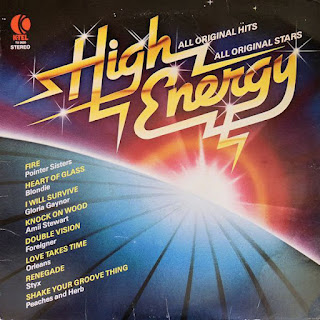 What still grabs me to this day is the song’s a cappella opening, first with just Tommy Shaw’s voice. A faint drumbeat emerges between lines and then the rest of the band chimes in, melding their voices beautifully. Then comes the scream – and the song lurches forward into a full-on rock tune, “the eternal barnburner.” SW. Lyrically, it is a first-person account of being on the run from the law, knowing when he’s caught he’ll be hung. Styx was unique in that three of its players wrote and sang. Dennis DeYoung sang on most of the band’s biggest hits (“Babe,” “Come Sail Away,” “The Best of Times,” “Mr. Roboto,” “Don’t Let It End”) while Shaw tackled more rock-oriented fare such as this one as well as “Fooling Yourself,” “Blue Collar Man (Long Nights),” and “Too Much Time on My Hands.” Guitarist James Young would typically contribute a rocker to each album as well. Typically, Shaw and Young would play lead on their own songs, but Young asked to play lead on this one. Shaw obliged and Young returned the favor on “Half Penny, Two Penny” from the band’s 1981 Paradise Theatre album. WK Dennis DeYoung said “Renegade” wasn’t originally intended to be a single. He explained that the label released “Sing for the Day” as the second single with “Renegade” on the B-side. Radio programmers, however, flipped the single and played “Renegade.” LS |
Pieces of EightStyx |
Writer(s): Dennis DeYoung Released: Pieces of Eight (1978) Peak: 5 DF Click for codes to charts. Sales (in millions): -- US, -- UK, -- world (includes US + UK) Airplay/Streaming (in millions): -- radio, -- video, 2.74 streaming About the Song:This is “another Dennis DeYoung confessional.” LS Tommy Shaw said, “It’s one of my favourite Dennis DeYoung songs of all time…It had all the great Styx elements to it: a great lyric, beautiful melody line, big three-part harmony chorus and a melodic guitar solo.” LS |
Aku AkuStyx |
Writer(s): Tommy Shaw Released: Pieces of Eight (1978) Peak: 34 DF Click for codes to charts. Sales (in millions): -- Airplay/Streaming (in millions): -- radio, -- video, 0.57 streaming About the Song:The “final sign off [is] an instrumental titled ‘Aku-Aku,’ composed by Shaw, providing a neat and serene conclusion to the album. Named after a somewhat controversial book, titled Aku-Aku: The Secret Of Easter Island written by Norwegian archaeological explorer Thor Heyerdahl in 1958, the piece provides a contemplative, dare we say, progressive conclusion.” LS |
Resources/References:
Related DMDB Pages:


First posted 3/24/2008; last updated 8/12/2025. |


