Showing posts with label Pieces of Eight. Show all posts

Thursday, February 18, 2021

Dennis DeYoung: Artist Profile

Dennis DeYoung:

Artist Profile


Born: February 18, 1947
Where: Chicago, Illinois


Known As: rock singer/songwriter and keyboardist


Significant Bands:
  • Styx (1971-1984, 1990-99)

Awards:

The Albums:

Hover over an album for the name and year of release. Click to see its DMDB page.


Compilations:


Live Albums:


Key Tracks:
  • Lady (Styx, 1972)
  • Light Up (Styx, 1975)
  • Lorelei (Styx, 1975)
  • Suite Madame Blue (Styx, 1975)
  • Come Sail Away (Styx, 1977)
  • Babe (Styx, 1979)
  • The Best of Times (Styx, 1981)
  • Rockin’ the Paradise (Styx, 1981)
  • Mr. Roboto (Styx, 1983)
  • Don’t Let It End (Styx, 1983)
  • Desert Moon (1984)
  • Don’t Wait for Heroes (1984)
  • Call Me (1986)
  • This Is the Time (1986)
  • Harry’s Hands (1989)
  • Show Me the Way (Styx, 1990)
  • Love at First Sight (Styx, 1990)
  • Paradise (Styx, 1997)
  • While There’s Still Time (Styx, 1999)
  • With Every Heartbeat (2003)
  • One Hundred Years from Now (2007)
  • To the Good Old Days (with Julian Lennon, 2020)
  • Isle of Misanthrope (2021)

Click here to see the top 100 songs of Styx et al.

Early Years (1963-1972):
“Growing up in the Roseland neighborhood in Chicago, Illinois, DeYoung’s career as a vocalist started in 1963 at the age of 16 when he teamed up with his 15 year old neighbors, Chuck and John Panozzo, in a three-piece combo. The trio later added guitarist James Young and John Curulewski to form the band Tradewinds in the late 1960s. The band renamed itself TW4 in 1968 before becoming Styx in 1970.” WK

“Before the band met with success, DeYoung spent time as an elementary school teacher in the southern suburbs of Chicago, where he taught music at Springfield School in Midlothian, Illinois. During this period, the band played a number of small venues and school auditoriums refining their craft.” WK

The Wooden Nickel Years (1972-1974):
Styx released four studio albums with the Wooden Nickel. They got their big break when Lady was picked up by a radio station in 1974, more than a year after its parent album, Styx II, was released. The song became a top-ten hit and launched the band. DeYoung, a self-taught keyboardist, served as the lead vocalist and songwriter and creative force behind the band.

The Rise of Styx (1975-1977):
Styx was signed to the major label A&M. They released Equinox in 1975, Crystal Ball in 1976, and The Grand Illusion in 1977. The latter album was a top-10, multi-platinum seller, fueled by another DeYoung-helmed top-ten hit Come Sail Away.

The Giants of Rock and Roll (1977-1983):
The Grand Illusion was Styx’s first of four consecutive top-10, multi-platinum albums – a feat never accomplished before. They led the way in what has been called arena rock or corporate rock. The band landed its first #1 hit in 1979 with Babe, another song written and sung by DeYoung.

Their 1981 Paradise Theater became the band’s first #1 album. Once again, it was DeYoung out front for the #3 hit The Best of Times from that album. On the follow-up, Kilroy Was Here, DeYoung gave the band two more top-10 hits with Mr. Roboto and Don’t Let It End.

The Solo Years (1984-1989):
“With Styx in limbo following [bandmate Tommy] Shaw’s 1984 departure, DeYoung began a solo career of modest success. His first solo album, Desert Moon, generated a top 10 hit, Desert Moon, and the follow-up single, Don’t Wait for Heroes, cracked the Billboard Top 40 as well.” WK

DeYoung made two more solo albums in the ‘80s featuring gems such as Call Me, This Is the Time, and Harry’s Hands, but none of his songs or albums would be as successful as his first solo album, much less his work with Styx.

Styx Reunites (1990-1992):
“In 1990, Styx (minus Tommy Shaw, who was replaced by guitarist/singer-songwriter Glen Burtnik) returned to the studio for the album Edge of the Century. Show Me the Way, a track written by DeYoung for his son Matthew, received extensive radio play, peaking at #3 on the Billboard Hot 100 singles chart…particularly after a number of radio stations mixed it with voice tracks of parents headed off to fight in the first Persian Gulf War. This success made the band one of only a handful of bands/artists to have a top ten single under four different Presidents in the United States. The group toured North America extensively before A&M Records…dropped the group from its roster in 1992; the group broke up again shortly afterwards.” WK

DDY on the Theater Stage (1992-1995):
“In 1993, DeYoung, a devout Roman Catholic, joined a touring revival of the stage musical Jesus Christ Superstar. He appeared in about 200 performances across North America as Pontius Pilate. The experience inspired him to record his 1994 album of Broadway standards, 10 on Broadway, and to begin work on a musical of his own based on The Hunchback of Notre Dame.

Styx, Together Again (1995-1999):
“Styx reunited once more in 1995, this time including Shaw but minus a terminally ill John Panozzo (who died a short time later in July 1996), and recorded a new version of the DeYoung-penned ‘Lady’ for their 1995 Styx Greatest Hits album. The group toured in 1996 and 1997, and returned to the recording studio in 1998 to begin work on Brave New World, their first studio album in nearly a decade.” WK

“Creative differences between the band members, and a chronic fatigue syndrome-like disorder affecting DeYoung’s trigeminal nerve – which left him overly sensitive to bright light and sound, making performing on stage nearly impossible” WK – led to a less than amicable split. This time, however, Styx soldiered on with Shaw and without DeYoung.

“A lawsuit between DeYoung and his former bandmates was settled in 2001, with the group being allowed to keep the name ‘Styx’ and DeYoung able to use the name in descriptive phrases such as ‘the music of Styx’ or ‘formerly of Styx’ (but not ‘the voice of Styx’).” WK

Back to the Solo World (2000-:
“In February 2000, DeYoung was approached to perform a concert featuring his many songs from Styx, as well as his solo works and his 1997 stage musical The Hunchback of Notre Dame, with an orchestra. The show, performed at the Rosemont Theatre in DeYoung’s hometown of Chicago, was a family affair for DeYoung. His wife Suzanne,” WK to whom he had been married since even before Styx’s success, “and sister-in-law Dawn Marie Feusi sang backup, his daughter Carrie Ann, was in charge of publicity, while his son Matthew designed the stage lighting. The concert was well received and formed the basis for a touring version of the show, and eventually an 2004 album, The Music of Styx – Live with Symphony Orchestra.” WK “Unlike many musical families, the growing family toured together throughout DeYoung’s career in order to provide stability for the couple’s young children.” WK

“On June 19, 2007, DeYoung released in Canada, One Hundred Years from Now, his fifth solo album, which marks a return to his rock roots. The first single, the title track, is a duet with Québécois singer Éric Lapointe. The single reached #1 on the Québec Radio Single and Soundscan charts. The album was released in the U.S. on April 14, 2009 with slightly different tracks.” WK

“On May 8, 2008, a DeYoung-written musical of The Hunchback of Notre Dame premiered at the Bailiwick Repertory Theatre in Chicago.” WK

After a 13-year hiatus from the recording studio, Dennis returned with the solo album 26 East Volume 1 in 2020. It was followed by 26 East Volume 2 in 2021. He says it is the last album he’ll make.


Resources and Related Links:

First posted 11/20/2011; updated 6/5/2021.

Sunday, June 27, 2010

The Styx Defense


Sparked by a Facebook post, I gloriously came to the defense of my first favorite band – Styx. In the world of musical journalism, professing a love of Styx is somewhat akin to telling the science world that evolutionism is bogus.

To be fair, in his original post on his Todays Song Is ... fan page, Michael Crawley acknowledges the dichotomy of fan love vs. critical drubbing. In picking Styx’s “Suite Madame Blue” as the song of the day, he says it “is steeped in the Yes/Zeppelin fusion that was attractive early on but got old right about the time ‘Blue Collar Man’ hit the airwaves. I do love this song, but it’s sorta like an old girlfriend who later went around the block a few too many times.”


My response: “Critics be damned. Styx was my first favorite band and I’ll always like them.” I’d posted a similar sentiment as far back as September 5, 2009: “Styx may get mocked for being at the forefront of the late-‘70s/early ‘80s stadium rock movement, but they were my first favorite band and Paradise Theater was my first favorite album. You never get that out of your system!”


Click photo for more about ‘Paradise Theater’.


Michael was one of my first fans when I started my Dave’s Music Database Facebook page. Between our comments on each other’s pages, I’ve probably shared more musical dialogue with Michael than anyone in the last six months. We share a mutual respect for passion over music and, so far, have not come to cyberspace blows over musical opinions.

Having said all that, I still felt like a dagger had been plunged into my soul (okay, in reality I only winced slightly) with his comment that “from Pieces of Eight on they kinda sucked IMHO.” I declined retaliating that “Babe”, off the follow-up 1979 Cornerstone album, was my first “official” favorite song. Such an admission would have required 1) confessing that I liked such an unabashedly saccharine song and, 2) acknowledging that oh-so-many-years-ago I launched my own weekly music chart and that “Babe” was the maiden chart topper.


Iinstead I boldly and loudly proclaimed that Paradise Theater was one of my top 5 favorite albums. Okay, truth be told, I followed my declaration with “bows head in shame.”

I didn’t advocate that “The Best of Times”, “Too Much Time on My Hands”, and “Rockin’ the Paradise” have become deserved album rock classics since airplay doesn’t equal critical acclaim. I didn’t respond that this was a #1 album (their solitary chart-topper, in fact) and fourth consecutive triple-platinum album. That might win an argument over the album’s commercial success, but it doesn’t go far in proving its critical worth.

Since great artwork doesn’t equal great music, I also didn’t gush about the album packaging with a front picture of Chicago’s Paradise Theater in its prime paired with a back cover of it long past its glory days. Similarly, while I was originally intrigued by the album’s theme – a lament about abandoning the old in favor of the new – I realize now how loose and unoriginal the concept was.

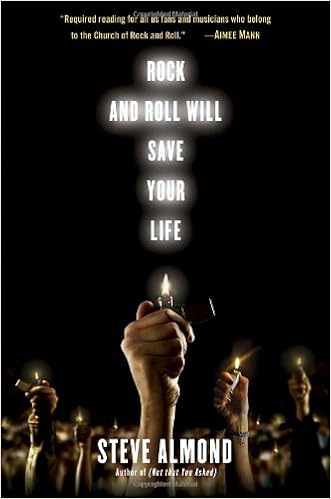
Instead, I quoted from Steve Almond’s Rock and Roll Will Save Your Life, a book from a self-proclaimed “Drooling Fanatic” and an inspiration for a previous DMDB blog entry (“The Musical Hierarchy Ladder”). Among his humorous essays is a defense of Paradise Theater in which he admits “I loved Styx and...still love Styx and not ironically either.” He says that even though “Styx has become the mullet of bands”, he still feels good when he listens to Paradise Theater.


Buy the book.


So do I. That’s the thing about loving a band – you love them regardless of their critical status or commercial clout. You love them because – well, just because you love them. Almond suggests that critics would do well to be more open-minded, stating that “if the human ear is given a chance, not cowed into snobbery, it can find rewards in almost any form of music.”

The discussion Michael and I started on his Facebook page carried over to mine when I professed my love of Tears for Fears’ Songs from the Big Chair. In defending the album, I said I’d use “the Styx defense”, my earlier declaration that one likes what one likes, critics be damned. On Michael’s page, I originally quoted another Almond line, which should be the mantra for all people ever faced with defending music that they love: “you can’t tell someone his or her ears are wrong.”

To Michael’s credit, this was his response on his page to my defense of Styx: “I close this with a tidbit from Cole or Dylan Sprouse when they played Julian on the movie Big Daddy – Styx is the greatest band in the world and they only got a bad rep because most critics are cynical A$$holes!”

That’s good enough for me. I’ll close with that, too.

This essay, “The Musical Hierarchy Ladder”, and more are included in the book ‘No One Needs 21 Versions of ‘Purple Haze’…And Other Essays from a Musical Obsessive’. Click for more info.


Resources and Related Links:


Saturday, March 17, 1979

Styx charted with “Renegade”

Renegade

Styx

This post has been moved here.

Saturday, September 30, 1978

Styx charted with Pieces of Eight

Pieces of Eight

Styx


Released: 9/1/1978


Peak: 6 US, -- UK, -- CN, 70 AU, 15 DF Click for codes to charts.


Sales (in millions): 3.0 US


Genre: classic arena rock


Tracks:

Click on a song titled for more details.
  1. Great White Hope [4:22]
  2. I’m O.K. [5:41]
  3. Sing for the Day [4:57]
  4. The Message [1:08]
  5. Lords of the Ring [4:33]
  6. Blue Collar Man (Long Nights) [4:05]
  7. Queen of Spades [5:38]
  8. Renegade [4:13]
  9. Pieces of Eight [4:44]
  10. Aku Aku [2:57]

Total Running Time: 42:18


The Players:

  • Dennis DeYoung (vocals, keyboards)
  • Tommy Shaw (vocals, guitar)
  • James “J.Y.” Young (guitar, vocals)
  • Chuck Panozzo (bass)
  • John Panozzo (drums)

Rating:

3.913 out of 5.00 (average of 24 ratings)


Awards:

(Click on award to learn more).

Following a Top-Ten, Multi-Platinum Album

Styx became an arena rock favorite with their seventh album, 1977’s The Grand Illusion. It became their first top-10 album and was a multi-platinum seller on the strength of hits “Come Sail Away” and “Fooling Yourself.” Pieces of Eight followed suit and became the band’s second multi-platinum top-10 album, also fueled by a pair of top-40 hits.

Production

Like The Grand Illusion, “Pieces of Eight’s overall production credit was again given to the entire band…with engineering by longtime collaborators Barry Mraz and Rob Kingsland. Po8 was recorded at Paragon Studios in Chicago.” SW

Songwriting

Like its predecessor, Pieces of Eight was “a tour de force for the band’s trio of songwriters…with the superb backing of the Panozzo rhythm section.” UCR Tommy Shaw helmed the album’s major hits, including “Blue Collar Man” and “the frolicking romp of Renegade.” AM Dennis DeYoung said, “After eight albums I felt musically bankrupt as a composer…I never liked my contribution. I think that was Tommy Shaw’s finest work in Styx.” LS

Styx’s Last Hurrah for Prog Rock?

“While the writing may stray slightly from what Styx provided on The Grand Illusion, Pieces of Eight kept their established rock formula intact quite firmly.” AM Some considered Pieces of Eight to be the band’s last album “with significant progressive rock leanings” WK or “their final great pomp rock moment.” LS

Sing for the Day, Lords of the Ring, and Aku-Aku all contain slightly more complex instrumental foundations, and are lyrically reminiscent of the material from albums like The Serpent Is Rising or Man of Miracles, but not as intricate or instrumentally convoluted.” AM The aforementioned “Lords of the Ring” as well as “DeYoung’s title track…provided more majestic pomp rock highlights, and JY simply brought the house down with Great White Hope and (with DeYoung) the simply sublime Queen of Spades.” UCR

Theme

It’s also considered a theme album focused on “uniform, isolation, disappointment, frustration, mistrust and duplicity.” LS Dennis DeYoung explained that it was about “not giving up your dreams just for the pursuit of money and material possessions.” WK

James “JY” Young said, “There was never an intentional theme…Five young men had finally gained success. We achieved our goal and finally the money and all its trappings were rolling in for us. By the age of 30 we were doing well for ourselves. You always dream about how your life will change when you become successful but in reality going from having very little to having lots is a transition that affects you personally, professionally and emotionally in ways that you didn’t expect – and in a way those sentiments are reflected in the title of the record.” LS

The Cover

The album cover was done by “Hipgnosis — the British company known for creating instantly memorable album-package artwork for Pink Floyd, Led Zeppelin, UFO, 10cc, and scores of other bands.” SW “The design and positioning of the ‘mature’ female heads…is patterned after the monolithic stone statues that appear all throughout Easter Island in the Valparaiso region of Chile.” SW

Aubrey “Po” Powell explained, “When we thought of the idea of Pieces of Eight, automatically…you think of treasure — doubloons, and other stuff pirates would have like that – so we wanted to move as far away from that as possible.” SW It was master designer Storm Thorgerson who said, “Why don’t we create something like a strange cocktail party with a housewives-from-Phoenix kind of context?” SW While they initially wanted to shoot the background on Easter Island, it was difficult to get there in those days so they opted for “a collage of these very conservative, upmarket, rich women attending a cocktail party…and they all had to be wearing those Aku-Aku earrings.” SW

He admitted that the image had very little to do with Styx or their music but hoped it was “an image that’s…impactful enough that people…take note.” SW “At that time in the ’70s, in the record emporiums like Tower Records…you wanted to create something that was a little different…When an album like Pieces of Eight went up on the wall, it would garner people’s attention.” SW

Reissue

A 2012 DVD featured Styx performing The Grand Illusion and Pieces of Eight albums live in their entirety.

The Songs

Here’s a breakdown of each of the individual songs.

Great White Hope

Styx

Writer(s): Dennis DeYoung


Released: Pieces of Eight (1978)


Peak: 12 DF Click for codes to charts.


Sales (in millions): --


Airplay/Streaming (in millions): -- radio, -- video, 1.31 streaming


About the Song:

“The record opens with the rollicking ‘Great White Hope,’ another classic JY rocker that sets the thematic tone for the rest of the album.” LS

I’m O.K.

Styx

Writer(s): Dennis DeYoung, James Young


Released: Pieces of Eight (1978)


Peak: 12 DF Click for codes to charts.


Sales (in millions): -- US, -- UK, -- world (includes US + UK)


Airplay/Streaming (in millions): -- radio, -- video, 1.63 streaming


About the Song:

Dennis DeYoung’s “I’m O.K.” “is a stark confessional, neatly summarising his on-and-off bouts of self-doubt and disillusion during the preceding years.” LS As he said, “So many times I write songs to remind myself what I should be thinking when I’m certainly not. I went through a very difficult period in 1976, 1977 and parts of 1978 where I suffered from depression and anxiety. This song was really me trying to remind myself that I was fine.” LS

“The absolutely brilliant pipe-organ solo performed by keyboardist/vocalist Dennis DeYoung in the middle…was recorded at the St. James Cathedral, which is located at the corner of Huron and Wabash Streets in Chicago. It is the oldest Episcopal Church in the United States, having been founded in 1834 and completed in 1857.” SW

Sing for the Day

Styx

Writer(s): Tommy Shaw


Released: October 1978 as a single, Pieces of Eight (1978)


Peak: 41 BB, 41 CB, 38 GR, 39 HR, 17 CL, 27 CN, 9 DF Click for codes to charts.


Sales (in millions): --


Airplay/Streaming (in millions): -- radio, -- video, 1.93 streaming


About the Song:

This “acoustic-driven treasure” SW was the third single from Pieces of Eight. It just missed the top-40. It was still an impressive personal accomplishment for Tommy Shaw as all three singles were penned by him.

“The ‘Hannah’ whom Tommy namechecks throughout the song is meant to be the representative embodiment of the mutual respect between the band and their substantive female following.” SW It “is a tribute to the audience and their belief in, and support of, Styx’s music.” LS

The Message

Styx

Writer(s): Dennis DeYoung


Released: Pieces of Eight (1978)


Peak: -- Click for codes to charts.


Sales (in millions): --


Airplay/Streaming (in millions): -- radio, -- video, -- streaming


About the Song:

This is just a short instrumental piece by DeYoung, somewhat following the pattern of previous albums with an instrumental leading into a bombastic effort at an epic (“Prelude 12” and “Suite Madame Blue” on Equinox and “Clair de Lune” and “Ballerina” on Crystal Ball).

Lords of the Ring

Styx

Writer(s): Dennis DeYoung


Released: Pieces of Eight (1978)


Peak: 20 DF Click for codes to charts.


Sales (in millions): --


Airplay/Streaming (in millions): -- radio, -- video, 0.82 streaming


About the Song:

The song “has nothing whatsoever to do with JRR Tolkien but is…an acerbic observation on the cult of stardom.” LS DeYoung said, “It was really about the silliness and the façade of being a rock star, of the realisation that success, in all of its manifestations, was not really going to give me fulfilment.” LS

James Young said, “Originally, Dennis was going to sing it and I was slated to sing ‘I’m OK.’ But that song was such a personal statement about himself that he ended up singing it and putting me on ‘Lords of the Ring.’” LS

Blue Collar Man (Long Nights)

Styx

Writer(s): Tommy SHaw


Released: 9/9/1978 as a single, Pieces of Eight (1978), Caught in the Act (live, 1984), Classics (compilation, 1987)


Peak: 21 BB, 21 CB, 22 HR, 21 R, 4 CL, 9 CN, 98 AU, 2 DF Click for codes to charts.


Sales (in millions): --


Airplay/Streaming (in millions): -- radio, -- video, 35.31 streaming

Awards:

(Click on award to learn more).

About the Song:

The band’s “feisty, straightforward brand of album rock is represented best by Blue Collar Man (Long Nights), …an invigorating keyboard and guitar rush — hard and heavy, yet curved by Tommy Shaw's emphasized vocals.” AM The “hard rock nugget” LS features “Dennis DeYoung on very angry Hammond organ and lyrics that pay homage to the working man.” LS

Shaw said, “I originally wrote that song on an acoustic guitar…It was quite a dark acoustic song. Once again, we electrified it and brought the growly organ in, which was a last-minute thing. We had to fight Barry Mraz on that, because as an engineer he was such a purist, and we kept turning it up to get more distortion. Dennis played that part on a really nice B3 organ.” LS

Toto guitarist and singer Steve Lukather says “Blue Collar Man” is his favorite Styx song. SW

Queen of Spades

Styx

Writer(s): Dennis DeYoung, James Young


Released: Pieces of Eight (1978)


Peak: 21 DF Click for codes to charts.


Sales (in millions): --


Airplay/Streaming (in millions): -- radio, -- video, 2.10 streaming


About the Song:

“’Queen of Spades,’ a thinly veiled comment about the lure of gambling, navigates a quiet start before erupting into pomp rock glory, finally returning to the mysterious melody that it started with in the first instance.” LS

“’That was a co-write with JY,’ notes Dennis. ‘My involvement amounted to singing the melody while JY was responsible for everything else, all the chords and the lyrics. Those are his lyrics.’” LS

Renegade

Styx

Writer(s): Tommy Shaw (see lyrics here)


Released: 1/9/1979 as a single, Pieces of Eight (1978), Classics (compilation, 1987)


Peak: 16 BB, 18 CB, 22 HR, 17 RR< 1 CL, 10 CN, 1 DF Click for codes to charts.


Sales (in millions): --


Airplay/Streaming (in millions): -- radio, 34.5 video, 238.52 streaming

Awards:

(Click on award to learn more).

About the Song:

I consider 1979 – when I was in sixth grade – to be my musical birth. That’s when I started to pay attention to music for the first time. One of my first favorite songs was “Renegade” by Styx. It came out in the spring of that year, but my exposure to it came that summer. I was at a camp and about a half dozen of us bonded and hung out together a lot. The other guys kept singing “Renegade” and by the end of the camp I loved the song despite never actually having heard the original version.

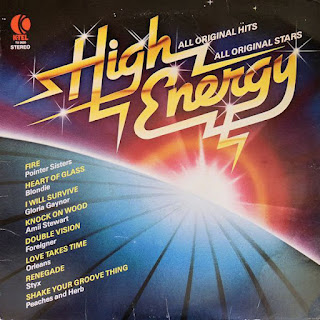
When I started buying music, I started with eight track. My first purchase was a K-Tel collection called High Energy. I bought it primarily because of four songs – Blondie’s “Heart of Glass,” Chic’s “Le Freak,” Foreigner’s “Double Vision,” and Styx’s “Renegade.” It probably isn’t surprising that three of the four songs rank among my top 100 favorites to this day (sorry Foreigner).

What still grabs me to this day is the song’s a cappella opening, first with just Tommy Shaw’s voice. A faint drumbeat emerges between lines and then the rest of the band chimes in, melding their voices beautifully. Then comes the scream – and the song lurches forward into a full-on rock tune, “the eternal barnburner.” SW. Lyrically, it is a first-person account of being on the run from the law, knowing when he’s caught he’ll be hung.

Styx was unique in that three of its players wrote and sang. Dennis DeYoung sang on most of the band’s biggest hits (“Babe,” “Come Sail Away,” “The Best of Times,” “Mr. Roboto,” “Don’t Let It End”) while Shaw tackled more rock-oriented fare such as this one as well as “Fooling Yourself,” “Blue Collar Man (Long Nights),” and “Too Much Time on My Hands.” Guitarist James Young would typically contribute a rocker to each album as well. Typically, Shaw and Young would play lead on their own songs, but Young asked to play lead on this one. Shaw obliged and Young returned the favor on “Half Penny, Two Penny” from the band’s 1981 Paradise Theatre album. WK

Dennis DeYoung said “Renegade” wasn’t originally intended to be a single. He explained that the label released “Sing for the Day” as the second single with “Renegade” on the B-side. Radio programmers, however, flipped the single and played “Renegade.” LS

The song became the Pittsburgh Steelers’ “defensive rally song.” UCR Mike Marchinsky, a team marketing assistant, suggested it in 2001 when the team moved into its new stadium at Heinz Field. That season, the song was played during a playoff game when the Steelers were down 24-7 against the Cleveland Browns. The song ignited the Steelers and they came back to win. Since then, it has become routine to play it during a particular moment in the second half when the defense needs to stop an offensive drive. A video is broadcast on the jumbotron, building the crowd to a frenzy by the time the scream comes in. SF It has become such a tactical tool that the coach sometimes calls for the song in key situations. SF Shaw said he’s not the biggest sports fan, but “I have stood there in one of the boxes and looked out and seen 80,000 people waving the Terrible Towels while ‘Renegade’ is playing... It’s a very welcoming environment for me.’” UCR

Pieces of Eight

Styx

Writer(s): Dennis DeYoung


Released: Pieces of Eight (1978)


Peak: 5 DF Click for codes to charts.


Sales (in millions): -- US, -- UK, -- world (includes US + UK)


Airplay/Streaming (in millions): -- radio, -- video, 2.74 streaming


About the Song:

This is “another Dennis DeYoung confessional.” LS Tommy Shaw said, “It’s one of my favourite Dennis DeYoung songs of all time…It had all the great Styx elements to it: a great lyric, beautiful melody line, big three-part harmony chorus and a melodic guitar solo.” LS

Aku Aku

Styx

Writer(s): Tommy Shaw


Released: Pieces of Eight (1978)


Peak: 34 DF Click for codes to charts.


Sales (in millions): --


Airplay/Streaming (in millions): -- radio, -- video, 0.57 streaming


About the Song:

The “final sign off [is] an instrumental titled ‘Aku-Aku,’ composed by Shaw, providing a neat and serene conclusion to the album. Named after a somewhat controversial book, titled Aku-Aku: The Secret Of Easter Island written by Norwegian archaeological explorer Thor Heyerdahl in 1958, the piece provides a contemplative, dare we say, progressive conclusion.” LS

Resources/References:


Related DMDB Pages:


First posted 3/24/2008; last updated 8/12/2025.