Showing posts with label biggest Billboard hits. Show all posts

Monday, September 29, 2008

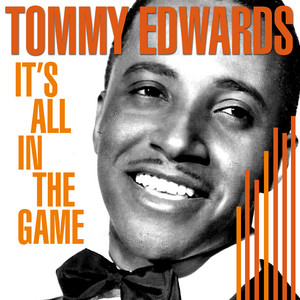
50 years ago: “It’s All in the Game” hit #1

It’s All in the Game

Tommy Edwards

Writer(s): Charles G. Dawes (music), Carl Sigman (lyrics) (see lyrics here)


First Charted: September 15, 1951


Peak: 16 US, 15 CB, 16 HR, 13 RB, 13 UK, 13 CN, 11 AU (Click for codes to singles charts.)


Sales (in millions): 1.0 US


Airplay/Streaming (in millions): -- radio, 11.34 video, 10.72 streaming

Awards:

Click on award for more details.

About the Song:

Charles Gates Dawes was the Vice President of the United States under Calvin Coolidge from 1925 to 1929. He is the only person to achieve that lofty position and write a #1 hit. In 1912, Dawes composed a melody called “Melody in A Major.” Nearly 40 years later, songwriter Carl Sigman, who translated foreign songs and wrote lyrics for existing melodies, BD penned words for it, resulting in the song “It’s All in the Game.” FB The song was recorded in 1951 by Carmen Cavallaro, Sammy Kaye, and Dinah Shore.

The only chart version, however, belonged to Tommy Edwards. He was a black R&B singer/songwriter born in Viriginia in 1922 who had a radio show in the 1940s. He followed his dream to write songs and went to New York in 1950. He got signed to MGM, but more for his singing voice. His first chart entry, “The Morning Side of the Mountain,” reached #24 in 1951. PM The follow-up was “It’s All in the Game.”

In 1951, the song peaked at #18. However, he re-recorded the song as a rock and roll ballad seven years later. “In its day, you could slow-dance to it or jitterbug…You will not hear arrangements like this these days...It [is] layered with counterpoint parts on the strings, and communal voices filling in the gaps…The arrangers’ names weren’t put on the songs…but it was someone who certainly would take no backseat to Nelson Riddle.” BD

The new version hit #1 for six weeks. HT All told, Edwards had 21 chart entries from 1951 to 1960, but the closest he came to matching the success of “Game” was hitting #11 in 1959 with another re-recording – this time of “Please Mr. Sun.”


Resources:

  • DMDB encyclopedia entry for Tommy Edwards
  • FB Fred Bronson (2003). The Billboard Book of Number One Hits (5th edition). Billboard Books: New York, NY. Pages 243-5.
  • BD Bob Dylan (2022). The Philosophy of Modern Song. New York, NY: Simon & Schuster. Pages 65-67.
  • PM Joel Whitburn (1986). Pop Memories 1890-1954. Menomonee Falls, WI; Record Research, Inc. Page 146.
  • HT Joel Whitburn (2009). Top Pop Singles 1955-2015. Menomonee Falls, WI; Record Research, Inc. Page 278.
  • WK Wikipedia


First posted 11/5/2022.

Saturday, September 15, 2007

Soulja Boy Tell’Em “Crank That (Soulja Boy)” hit #1 for 1st of 7 weeks

Crank That (Soulja Boy)

Soulja Boy Tell’em

Writer(s): DeAndre Way (see lyrics here)


Released: May 2, 2007


First Charted: June 30, 2007


Peak: 17 US, 8 RR, 13 BA, 15 DG, 3 RB, 2 UK, 3 AU, 5 CN, 14 DF (Click for codes to charts.)


Sales (in millions): 5.08 US, 0.6 UK, 5.81 world (includes US + UK)


Airplay/Streaming (in millions): 0.2 radio, 528.99 video, 467.81 streaming

Awards:

Click on award for more details.

About the Song:

Rapper DeAndre Way, better known as Soulja Boy Tell ‘Em, was born in Chicago in 1990. Before he’d even turned fifteen, he started posting MP3s to SoundClick, “a briefly popular social-media platform that allowed listeners to post their own songs.” BR He had a knack for “catchy and memorable” BR novelty songs and soon gravitated to other social-media programs like MySpace and YouTube in their relative infancy. He was also among the first to write his own Wikipedia bio, “boasting of his…not-yet-existent buzz.” BR He understood that “virality wasn’t merely a component of success in an Internet era; it was the entire story.” BR

At 15 years old, he wrote “Crank That (Soulja Boy),” another “entry in the age-old dance-craze tradition.” BR Part of the song’s charm came in Soulja Boy’s “strange way with words.” AMG The lyrics about bragging and dancing included such memorable lines as “Why me crank that Robocob?” sit[ting] next to nonsensical called-out dance instructions.” AMG

He told HipHoxDX.com that he created the song in just an hour on the computer, using the Fruity Loops computer system. SF The song is notable for its looping steel pan riff. WK Steel drums originated from the West Indian islands of Trinidad and Tobago, generally being made from 55 gallon oil drums. SF The Beach Boys’ 1988 #1 hit “Kokomo” also used the instrument. SF

In 2007, it “became a kind of Internet-underground sensation” BR with teens posting videos of themselves doing the dance. A rap producer named Collipark signed Soulja Boy to his label and they made a video that told “a stylized version of the whole origin story.” BR The video, directed by Dale Resteghini, featured Chris Brown, Bow Wow, and other notable rappers and R&B performers. BET ranked it the top video of 2007. WK Various parodies of the video have been made featuring Michael Jackson, Barney, and others. WK

The song debuted on the Billboard Hot 100 the same day Way turned 17. It went on to top the charts for 7 weeks, making Soulja Boy the youngest artist to write and produce his own chart-topper. BR It became the biggest pop hit of the year HT the most downloaded song of the year SF and, with four million + in sales, was the third most downloaded song in the U.S. all-time. WK


Resources:


First posted 6/30/2012; last updated 6/24/2023.

Saturday, July 31, 1993

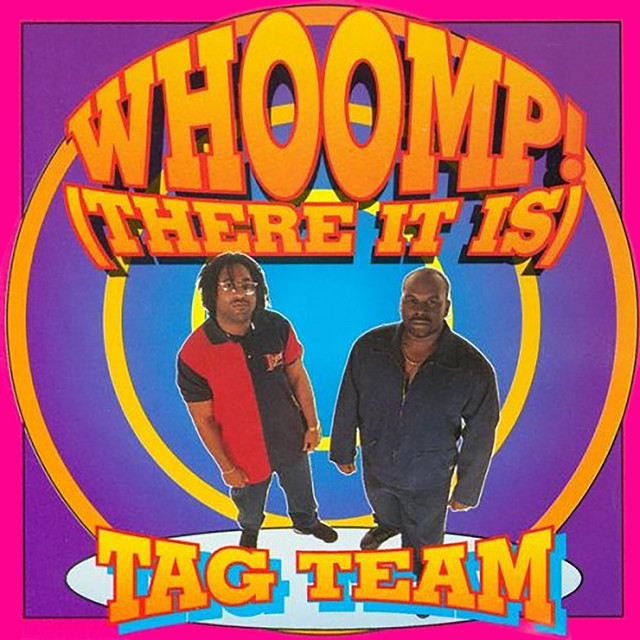
7/31/1993: Tag Team hit #2 with “Whoomp! There It Is”

Whoomp! There It Is

Tag Team

Writer(s): Stephen Gibson, Cecil Glenn (see lyrics here)


Released: May 7, 1993


First Charted: May 22, 1993


Peak: 2 US, 2 CB, 30 GR, 20 RR, 11 RB, 34 UK, 19 AU, 2 DF (Click for codes to charts.)


Sales (in millions): 4.04 US


Airplay/Streaming (in millions): -- radio, 39.3 video, 38.26 streaming

Awards:

Click on award for more details.

About the Song:

Tag Team formed in Atlanta in 1990. The rap duo is comprised of Cecil Glenn (DC the Brain Supreme) and Steve Gibson (Steve Rollin). While they released four albums from 1993 to 2015, only the first one, 1993’s Whoomp! (There It Is) reached the Billboard album chart, peaking at #39 and going gold.

The album produced the duo’s only Billboard Hot 100 hit. The title cut was released in May 1993 and by the end of July got to #2, where it sat for five weeks behind UB40’s cover of “Can’t Help Falling in Love” before slipping to #3 for a couple of weeks and then returning to the runner up position for two more weeks behind Mariah Carey’s “Dreamlover.” “Whoomp!” broke records at the time for most consecutive weeks (21) in the top 10. Even after it slipped out, it found its way back to the top 10 for three more weeks, not leaving the upper eschelon for good until January 1994. It ranked as Billboard’s #2 song of 1993, behind Whitney Houston’s “I Will Always Love You.” WK

The phrase “Whoomp! There It Is” was coined by strippers in Atlanta, according to Glenn, SF who was a DJ at an Atlanta strip club. It referred to a woman’s butt, but Tag Team repurposed the phrase to mean “look at that!” and “anything that one agrees with on a positive level.” WK

The song “was part of the club-driven, hip-hop-wise style of bass that was springing out of both Atlanta and Miami, and manages perfectly to encapsulate the frenetic energy of the genre.” TB Atlanta magazine called it “da bomb party song” of the 1990s. WK

Tag Team recorded the song in August 1992 and Glenn, who was working as a DJ in Atlanta, introduced the song at the club Magic City. It became requested so often in the following months, that it was clear the song had hit potential. However, it was rejected by multiple record labels because executives weren’t sure if southern bass could fin an audience nationwide. With $2500 from his parents, Glenn pressed eight hundred copies of the record, which sold out quickly. WK

The one-hit wonder has become “a pop culture staple” WK being regularly featured in movies, television, advertisements, and sporting events. Regarding the latter, it is especially popular at baseball games when the home team gets a key hit. The song was featured on the first Jock Jams compilation in 1995. SF


Resources:


First posted 3/16/2023; last updated 3/26/2023.

Saturday, June 2, 1979

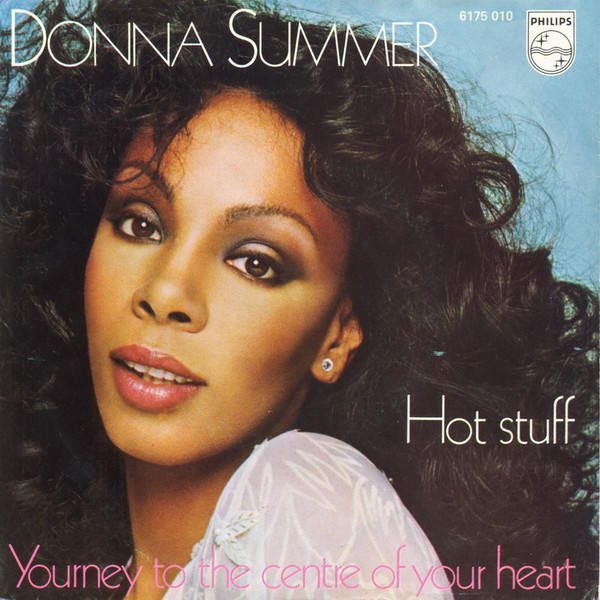
Donna Summer “Hot Stuff” hit #1

Hot Stuff

Donna Summer

Writer(s): Pete Bellotte, Harold Faltermeyer, Keith Forsey (see lyrics here)


Released: April 21, 1979


First Charted: April 20, 1979


Peak: 13 US, 14 CB, 13 GR, 15 HR, 12 RR, 3 RB, 11 UK, 12 CN, 11 AU, 7 DF (Click for codes to charts.)


Sales (in millions): 2.0 US, 0.2 UK, 2.35 world (includes US + UK)


Airplay/Streaming (in millions): -- radio, 82.8 video, 301.66 streaming

Awards:

Click on award for more details.

About the Song:

Summer’s earlier top-ten hits “Love to Love You Baby” and “I Feel Love” “introduced the world to the synthetic-psychedelic Euro-disco sound.” SG and established her as “the reigning queen of disco.” SG By 1979, she was “starting to get sick of disco” SG and “wanted to sing a rock song.” SG Neil Bogart, the head of her Casablanca label, suggested they give the resulting “Hot Stuff” to Cher, FB but Summer insisted on recording it herself “and she did it with a vengeance.” SS It was “one of the hardest-rocking singles of the 1970s” SS and even won a Grammy for best rock female vocal.

Of course, “Hot Stuff” “still sounded a whole hell of a lot like a disco song” SG and ended up “a classic of the disco era.” DJ Although “Summer wasn’t an especially wild woman in real life, she could play one on record.” SG This was “one of the most salaciously sexually” SS songs of the decade. It “is a song about absolutely needing sex right now, about being so horny that you’re practically climbing the walls. Summer sells the hell out of it.” SG She’s “all feverish urgency.” SG

The groove on ‘Hot Stuff’ is just a monster. The beat is a slowed-down panther-stalk version of the disco boom. The synth hook whines and nags, pushing the intensity further while also providing one more sticky hook.” SG At the end, Jeff “Skunk” Baxter of the Doobie Brothers and formerly with Steely Dan, “shows up to play a guitar solo that’s all spiky, discordant edges, growling just as hard as Summer.” SG

It was the lead single from Bad Girls, the “last, biggest, and best” SG of a run of six studio albums in the last half of the ‘70s. Rolling Stone called it “the only great disco album other than Saturday Night Fever.” SG


Resources:


First posted 1/23/2023.