Showing posts with label ahmet ertegun. Show all posts

Wednesday, January 26, 2022

The Top 50 Music Executives of All Time

Executives:

Top 100

Here’s the top 50 music executives. The record companies with which they were associated are shown in parentheses after each name. This list, as always with DMDB lists, was determined by an aggregation of multiple lists.

See other lists of Acts/Music Makers by Categories.

1. Berry Gordy, Jr. (Motown)
2. Sam Phillips (Sun)
3. Leonard Chess (Chess)
4. Clive Davis (Columbia, Arista)
5. David Geffen (Asylum, Geffen, DGC, Dreamworks SKG)
6. Herb Alpert (A&M)
7. Ahmet Ertegun (Atlantic)
8. Jerry Wexler (Atlantic)
9. Nesuhi Ertegun (Atlantic)
10. Jac Holzman (Elektra, Nonesuch)

11. Jim Stewart (Stax)
12. Jimmy Iovine (Interscope)
13. Antonio “L.A.” Reid (LaFace, Arista, Def Jam Island, Epic)
14. Irving Azoff (manager for Christina Aguilera, Bon Jovi, the Eagles, Dan Fogelberg, Journey, Maroon 5, No Doubt, Steely Dan, and Van Halen)
15. Mo Ostin (Verve, Reprise, Warner Bros., DreamWorks SKG)
16. Jerry Moss (A&M)
17. Dr. Dre (Death Row, Aftermath)
18. Tommy Mottola (Sony Music)
19. Phil Chess (Chess)
20. Rick Rubin (Def Jam, American Recordings, Columbia)

21. Milt Gabler (Commodore, Decca)
22. Bill Graham (concert promotor, Fillmore Auditorium)
23. Arif Mardin (Atlantic, Manhattan)
24. Clarence Avant (Venture, Sussex)
25. Seymour Stein (Sire, Warner Bros.)
26. Chris Strachwitz
27. Norman Granz (Clef, Norgran, Down Home, Verve, Pablo)
28. Goddard Lieberson (Columbia)
29. Kenneth Gamble (Philadelphia International)
30. Leon Huff (Philadelphia International)

31. Chris Blackwell (Island)
32. Puff Daddy/P. Diddy (Bad Boy Entertainment)
33. Art Rupe (Speciality)
34. Suge Knight (Death Row)
35. Lou Pearlman (Trans Continental)
36. Syd Nathan (King)
37. Mathew Knowles (manager of Destiny’s Child)
38. Swizz Beatz (Full Surface)
39. Neil Bogart (Casablanca, Boardwalk)
40. Rick Hall (FAME Studios)

41. Willie Mitchell (Hi, Waylo)
42. Simon Cowell (Pop Idol, American Idol)
43. Kanye West (Roc-A-Fella)
44. Smokey Robinson (Motown)
45. Scooter Braun (School Boy Records, Raymond-Braun Media Group)
46. Jerry Ross (Heritage)
47. Jay-Z (Roc-A-Fella)
48. R. Kelly (Rockland)
49. Madonna (Maverick)
50. Miles Copeland III (I.R.S.)


Resources/Related Links:


First posted 5/24/2017; last updated 1/26/2022.

Friday, August 14, 2015

Today in Music (1965): Sonny & Cher hit #1 with “I Got You Babe”

I Got You Babe

Sonny & Cher

Writer(s): Sonny Bono (see lyrics here)


First Charted: July 10, 1965


Peak: 13 US, 12 CB, 13 GR, 14 HR, 19 RB, 12 UK, 11 CN, 3 AU, 2 DF (Click for codes to charts.)


Sales (in millions): 1.37 US, 0.77 UK, 2.14 world (includes US + UK)


Airplay/Streaming (in millions): 2.0 radio, 44.74 video, 185.84 streaming

Awards:

Click on award for more details.

About the Song:

In 1963, Salvatore “Sonny” Bono was working as the West Coast promotion man for Phil Spector hiring musicians and backup singers. He met a 16-year-old Cherilyn Sarkisian at a coffee shop in Hollywood RC and brought her in as a backup singer to work on classics like the Crystals’ “Da Doo Ron Ron,” the Ronettes’ “Be My Baby,” and the Righteous Brothers’ “You’ve Lost That Lovin’ Feelin’.” FB

Spector produced one obscure single for Cher (as Bonnie Jo Mason on “Ringo I Love You”) but wasn’t interested beyond that so Bono borrowed some money and produced a session for her. She was nervous so she asked him to sing with her on “Baby Don’t Go.” Legendary label mogul Ahmet Ertegun was interested in the duo and they were signed to Atco, a division of Atlantic Records. Their first single was the ballad “Just for You,” which failed to chart. However, the follow-up, “I Got You Babe,” turned the pair into stars. FB

Bono wrote the song late at night in the basement of the couple’s Laurel Canyon home WK on a piece of cardboard. SF Cher told Billboard magazine “Sonny woke me up in the middle of the night to…sing it. And I didn’t like it and just said, ‘OK, I’ll sing it and then I’m going back to bed.’” SF After Bono changed to key to the bridge to better suit her voice, she loved it. SF

However, when they sent it to Ertegun, he wasn’t sold on it either, instead wanting to release “It’s Gonna Rain” as the single. Convinced that it was “Babe” that was the hit, Bono took it to Hollywood radio station KHJ. He made a deal with program director Ron Jacobs that he could have exclusive rights if he played the song once an hour. FB The reaction to the song convinced Ertegun to release “I Got You Babe” as the single. SF

It became Sonny & Cher’s signature song and “a defining record of the early hippie countercultural movement.” WK The “hippie-lovers duet” TB veers “into protest song territory [as the] two mid-sixties long-hairs shrug away the world’s antipathy by reminding one another it doesn’t matter what anyone else says about the length of their hair or the cut of their clothes. They have each other and that’s all that matters.” DT

Sure, those proclamations of love from the “doltish Sonny and cloddish Cher” DM are “noisy and misshapen…[but] they’re also and essence of what rock and roll brought to pop music that hadn’t been there before: a sense of…fun and possibility, a willingness to reach for effects and worry about decorum later, an understanding of where to find the sublime amidst the trivial.” DM In 2011, Billboard and Rolling Stone magazines both named it one of the greatest duets of all time. WK


Resources:


First posted 3/15/2021; last updated 4/26/2024.

Tuesday, December 11, 2012

The Rock and Roll Hall of Fame 2013 Inductees Announced

clockwise, from top left: Public Enemy, Albert King, Randy Newman, Rush, Heart, Donna Summer; image from Billboard

The 2013 Rock and Roll Hall of Fame inductees were announced on December 11, 2012 by Flea, the bassist of the Red Hot Chili Peppers (a 2012 inductee). The announcement was made at Los Angeles’ Nokia Theater where the induction ceremony will be held April 18. The inductees are Lou Adler, Heart, Quincy Jones, Albert King, Randy Newman, Public Enemy, Rush, and Donna Summer.


Lou Adler Induction category: Ahmet Ertegun Award for Lifetime Achievement

Adler was an American record producer (Sam Cooke, Carole King, The Mamas & the Papas), manager (Jan & Dean), director, and an owner of the famous Roxy Theater. He founded Dunhill Records in 1964 and Ode Records in 1967. He helped produce the Monterey International Pop Festival and cult classic The Rocky Horror Picture Show. Carole King’s Tapestry, which he produced, won the Grammy for Album of the Year and rates as one of the top 100 albums of all time. See DMDB music maker encyclopedia entry for more.


Heart Induction category: Performer

Heart was a rarity in the male-dominated world of classic rock in the ‘70s – a band led by women – sisters Ann and Nancy Wilson. Ann said, “Some people have an idea of what the shape of rock & roll is supposed to look like. We’re not really it. Personally that’s why I think it’s taken quite a while…So this kind of acknowledgement is really sweet.” RS The band made a name for themselves with classic-rock staples like “Magic Man,” “Crazy on You,” and “Barracuda” before getting a second life in the mid-‘80s as a mainstream pop group with #1 hits “These Dreams” and “Alone.” See DMDB music maker encyclopedia entry for more.


Quincy Jones Induction category: Ahmet Ertegun Award for Lifetime Achievement

Jones started as an R&B/jazz musician and bandleader, but made his name as a producer. He ranks as one of the top 50 producers of all time. His most notable work was with Michael Jackson on Thriller, which tops the list of the best-selling albums of all time. That album, as well as Jones’ own Back on the Block, snagged Grammys for Album of the Year. See DMDB music maker encyclopedia entry for more.


Albert King Induction category: Performer

One of two posthumous inductees (the other is Donna Summer), King already ranked as one of the top 100 blues acts of all time and one of the top 100 greatest guitarists. He was previously inducted into the Blues Hall of Fame. His 1967 album Born Under a Bad Sign ranks as one of the top 1000 albums of all time. See DMDB music maker encyclopedia entry for more.


Randy Newman Induction category: Performer

Newman is already an inductee in the Songwriters Hall of Fame and ranks as oe of the top 100 songwriters of the rock era. Of his induction into the Rock Hall, he said, “I thought maybe I’d have to die before they let me in.” RS He also said, “They’re always a little doctinate about what’s rock & roll and what isn’t rock & roll. It’s nice they opened up a little to let me in.” RS His albums 12 Songs (1970) and Sail Away (1972) rank in the top 1000 albums of all time list. See DMDB music maker encyclopedia entry for more.


Public Enemy Induction category: Performer

They are the fourth hip-hop act to be inducted into the Hall, following Grandmaster Flash & the Furious Five (2007), Run-D.M.C. (2009), and the Beastie Boys (2012). Their songs “Rebel without a Pause” and “Fight the Power” both rank in the top 100 rap songs of all time; the latter is also in the top 1000 songs of all time list. Their 1988 album It Takes a Nation of Millions to Hold Us Back ranks as one of the top 100 albums of all time. See DMDB music maker encyclopedia entry for more.


Rush Induction category: Performer

Fan loyalty for this classic prog-rock Canadian trio is rivaled only by KISS fans when it comes to lobbying for enshrinement into the Hall. This year, fans were allowed to vote and the results were counted as one of the six-hundred-something ballots. Rush was the overwhelming favorite. Geddy Lee, th band’s singer and bassist, expressed gratitude to the band’s hardcore fans. “It was a cause they championed. I’m very relieved for them and we share this honor with them, for sure.” RS Alex Lifeson, the band’s guitarist, said, “It’s a privilege to be able to play music…and it’s an even greater privilege to have such a fantastic audience.” BB The band’s albums 2112 (1976), Permanent Waves (1980), and Moving Pictures all rank in the top 1000 albums of all time list. Among their best-known songs are “Closer to the Heart,” “The Trees,” “Freewill,” “Limelight,” and “Tom Sawyer,” a song ranked as one of the top 100 classic rock songs of all time. See DMDB music maker encyclopedia entry for more.


Donna Summer Induction category: Performer

Sometimes known as the Queen of Disco, Donna Summer was hugely successful in the ‘70s and early ‘80s. Her songs “Last Dance” and “Hot Stuff” rank in the DMDB’s top 1000 songs of all time. When she died last May, the DMDB blog featured a tribute to her in which her top 20 songs were ranked (“Last Dance for Donna Summer, the Queen of Disco: May 17, 2012”). See DMDB music maker encyclopedia entry for more.


Resources and Related Links:

Monday, June 13, 2011

Clyde McPhatter: An R&B Legend


Clyde McPhatter, 1932-1972


June 13, 1972: One of R&B’s greatest singers, Clyde McPhatter, died of a heart attack in a New York hotel room. Only 39, he had struggled for years with alcoholism and depression and was, according to Jay Warner’s On This Day in Music History, “broke and despondent over a mismanaged career that made him a legend but hardly a success.”

McPhatter fronted two of the most influential groups in R&B history, helping to make him one of the top 1000 music makers of all time according to Dave’s Music Database. From 1950 to 1953, he was a member of the Dominoes. “Sixty Minute Man” was the biggest R&B hit of 1951, AMG topping the Billboard R&B charts for 14 weeks. All Music Guide called it “the first identifiable rock & roll record…by a black group to make the jump from the R&B to the pop charts.”


It was sung by Bill Brown, but generally McPhatter handled lead vocals, such as on 1952 #1 R&B hit “Have Mercy Baby.” With the group at one point billed as Billy Ward and His Dominoes, Ward collected the lion’s share of the profits. McPhatter wasn’t making enough to live on and quit. Atlantic Records’ co-founder Ahmet Ertegun offered him a chance to form a new group and the Drifters, a name suggested by McPhatter, were born. Ertegun once proclaimed them “the all-time greatest Atlantic group.”

The Drifters became a Rock and Roll Hall of Fame inductee which, as their Rock Hall bio says, “epitomized the vocal group sound of New York City.” McPhatter saw two more long stays at #1 on the R&B charts with “Money Honey” and “Honey Love,” which was the biggest R&B hit of 1954. AMG


By 1955, McPhatter left for a solo career, landing R&B #1 songs with 1956’s “Treasure of Love”, 1957’s Long Lonely Nights”, and 1958’s “A Lover’s Question.” The latter was a top 10 U.S. pop hit as well.


The monstrous success of Motown groups like the Temptations, the Four Tops, and the Miracles owe a debt to the blueprint McPhatter forged. Significantly, McPhatter’s own ex-groups enjoyed success with and without him. The Dominoes landed a dozen top ten R&B hits in the 1950s with five different singers. The Drifters used six singers on 25 top ten R&B hits over a twenty-year chart run. The group’s most notable frontmen were fellow DMDB top 1000 music makers Jackie Wilson, who helmed two top ten R&B hits for the Dominoes (“You Can’t Keep a Good Man Down”, “Rags to Riches”), and Ben E. King, who sang lead with the Drifters from 1959-61 on six top ten R&B hits, including “There Goes My Baby” and “Save the Last Dance for Me.”

Both men also enjoyed solo success on the R&B and pop charts. Wilson’s “Lonely Teardrops” and “(Your Love Keeps Lifting Me) Higher and Higher” were both top 10 pop hits. King pulled off the same feat with “Spanish Harlem” and “Stand by Me.” The latter makes the book The Top 100 Songs of the Rock Era, 1954-1999.

Like so many gifted musicians, McPhatter led a troubled life. However, his legacy remains in tact, thanks to the music and influence he left behind.


For more information, including special recognitions for acts, songs, and albums, check out individual entries in the DMDB music makers’ encyclopedia for the Dominoes, the Drifters, Ben E. King, Clyde McPhatter, and Jackie Wilson.


Saturday, June 12, 2004

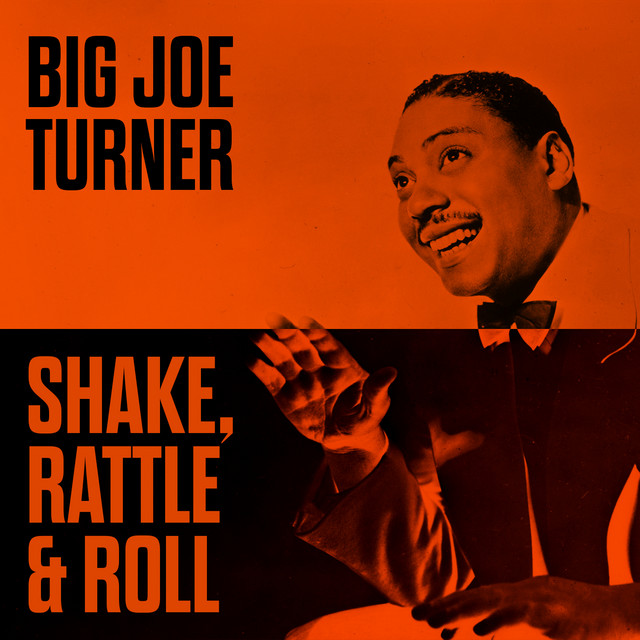
50 years ago: Big Joe Turner “Shake, Rattle and Roll” topped the R&B chart

Shake, Rattle and Roll

Big Joe Turner

Writer(s): Charles Calhoun (words & music) (see lyrics here)


Released: April 1954


First Charted: May 8, 1954


Peak: 22 US, 13 RB, 3 DF (Click for codes to charts.)


Sales (in millions): --


Airplay/Streaming (in millions): -- radio, 6.6 video, 9.52 streaming

Awards:

Click on award for more details.

About the Song:

Big Joe Turner was 43 years old and had been in the music industry for a decade and a half when he broke through with “Shake, Rattle and Roll.” He was a Kansas City-born blues shouter who worked with boogie-woogie piano man Pete Johnson, jazz pianist Art Tatum, and Count Basie’s Orchestra. Ahmet Ertegun, the founder of Atlantic Records in 1947, saw Turner performing with Basie and signed him. Ertegun formed the business because, as he said, “I wanted to make records like the records I loved, which were real blues records.” TB

Ertegun actually provided backing vocals on Turner’s version of “Shake, Rattle and Roll,” a song written by Atlantic songwriter Jesse Stone under the pseudonym “Charles E. Calhoun.” TB He wore multiple hats for Altantic, but his most important role may be that “he realized that white kids would listen to R&B as long as it had a rhythm they could dance to.” SS Ertegun said Stone “did more to develop the basic rock & roll sound than anyone else.” SS

Indeed “Shake, Rattle and Roll” (a phrase Stone heard at a poker game) SS not only became a #1 R&B hit, but a pivotal song in shaping the early history of rock ‘n’ roll. Author Don Tyler said that song “along with ‘Rock Around the Clock’…launched the rock and roll craze that dominated popular music for the second half of the 20th century.” TY2

Bill Haley was not only the artist who recorded the chart-topping version of “Rock Around the Clock,” but a top-10, million-selling pop version of “Shake, Rattle and Roll.” Having white artists “clean up” the lyrics to R&B songs to make them into white hits became common practice in the early days of rock and roll. Music writer Dave Marsh argues that this is one of the songs that make “the strongest arguments for the idea that prudes really did have something to fear from rock and roll.” DM In “Shake,” we hear Turner “leer and drool with an indelicacy that would be comic if it weren’t so intense.” DM It became one of the most important components in giving early rock and roll its rebellious image.


Resources:


First posted 3/23/2023.

Saturday, January 12, 1974

Steve Miller Band “The Joker” hit #1

The Joker

Steve Miller Band

Writer(s): Eddie Curtis, Ahmet Ertegun, Steve Miller (see lyrics here)


First Charted: October 20, 1973


Peak: 11 BB, 11 CB, 11 GR, 11 HR, 2 RR, 1 CL, 12 UK, 2 CN, 8 AU, 3 DF (Click for codes to charts.)


Sales (in millions): 5.0 US, 0.4 UK


Airplay/Streaming (in millions): 1.0 radio, 38.5 video, 457.76 streaming

Awards:

Click on award for more details.

About the Song:

The Steve Miller Band formed in 1966 in San Francisco. Their first two albums “combined straight-ahead blues with seamlessly produced, Beatlesque rock suites.” FB They spent “the early ‘70s playing some of the best rock music ever recorded, founded in the blues, grand-scaled and harmonically rich.” FB While Miller “developed an enthusiastic following, he remained a relative unknown.” FB Rolling Stone once dubbed Steve Miller “the man without a face.” FB

They released seven albums before they really caught on with the mainstream in 1973. They’d never had an album chart in the top 20 and only two singles reached the Billboard Hot 100 – “Living in the U.S.A.” (#94, 1968) and “Going to the Country” (#69, 1970). Their fortunes changed dramatically, however, with “The Joker.” The 1973 single went all the way to #1, sold five million copies, and propelled the album of the same name to #2 and platinum status.

Miller said, “I never thought ‘The Joker’ was going to be a hit…I said, ‘Okay, it’s got to be-two-and-a-half minutes long and it’s got to play on top 40 radio, and it’s got to follow a soul-disco symphony.” FB He explained that before it became a hit, “I knew every vaudeville hall in the United States and was playing each one of them three times a year...Then ‘The Joker” was the #1 record in the country, and we were playing 3000 seat halls” DT because we’d already scheduled the next tour became a hit.

The song reached its peak in the United States in early 1974, but it would 16 more years before it ascended to the throne in the UK. A television ad for for Levi’s 501 jeans boosted the song’s status, leading to its reissue and eventual #1 slot on the UK charts. KL There was some controversy, however, in that “The Joker” and Deee-lite’s “Grrove Is in the Heart” tied in sales, but the latter was listed at #1 because of a rule that, in the event of a tie, the song with the biggest gain from the previous week would get the nod. KL By hitting #1, “The Joker” set a record for the longest time between a song hitting #1 in the United States and the UK. WK

The song famously uses the made-up word “pompatus” which came from Miller mishearing lyrics for “The Letter” by the Medallions. Writer Vernon Green used the word “puppetutes,” itself a made-up word meaning “a paper-doll erotic fantasy figure.” WK Miller first used the word in his 1968 song “Gangster of Love.” WK


Resources:

  • DMDB encyclopedia entry for Steve Miller Band
  • FB Fred Bronson (2003). The Billboard Book of Number One Hits (5th edition). Billboard Books: New York, NY. Page 353.
  • KL Jon Kutner and Spencer Leigh (2005). 1000 UK Number One Hits. Omnibus Press: London, UK. Page 359.
  • DT Dave Thompson (2011). 1000 Songs That Rock Your World. Krause Publications: Iola, WI. Page 287.
  • WK Wikipedia


First posted 1/6/2024.