Showing posts with label atlantic records. Show all posts

Friday, January 18, 2019

50 years ago: Dusty Springfield released Dusty in Memphis

First posted 4/8/2008; updated 12/1/2020.

Dusty in Memphis

Dusty Springfield


Released: January 18, 1969


Charted: March 15, 1969


Peak: 99 US


Sales (in millions): --


Genre: blue-eyed soul


Tracks:

Song Title (date of single release, chart peaks) Click for codes to singles charts.

  1. Just a Little Lovin’ (Barry Mann, Cynthia Weil) [2:19]
  2. So Much Love (Gerry Goffin, Carole King) [3:33]
  3. Son of a Preacher Man (John Hurley, Ronnie Wilkins) [2:28] (11/30/68, 10 US, 9 UK)
  4. I Don’t Want to Hear It Anymore (Randy Newman) [3:12]
  5. Don’t Forget about Me (Goffin, King) [2:54] (3/1/69, 64 US)
  6. Breakfast in Bed (Eddie Hinton, Donnie Fritts) [2:59] (4/12/69, 91 US)
  7. Just One Smile (Newman) [2:44]
  8. The Windmills of Your Mind (Alan Bergman, Marilyn Bergman, Michel Legrand) [3:54] (5/3/69, 31 US, 3 AC)
  9. In the Land of Make Believe (Burt Bacharach, Hal David) [2:34] (10/4/69, 27 AC)
  10. No Easy Way Down (Goffin, King) [3:11]
  11. I Can’t Make It Alone (Goffin, King) [4:01]


Total Running Time: 33:31

Rating:

3.807 out of 5.00 (average of 14 ratings)


Quotable: “The All-time rock-era torch record” – Robert Christgau


Awards: (Click on award to learn more).

About the Album:

“The idea of taking England’s reigning female soul queen to the home of the music she had mastered was an inspired one.” RW That “home” was specifically the American Sound Studio in Memphis where Elvis Presley, Aretha Franklin, Wilson Pickett, and others had recorded. Although she’d self-produced her earlier albums, she went with outside producers this time around using Atlantic Records’ Jerry Wexler, Tom Dowd, and Arif Mardin to create what critic Robert Christgau called “the perfect instance of how a production team should work.” WK

Springfield had “very real anxiety about being compared with the soul greatest who had recorded in the same studios.” WK She had recorded R&B songs before, but this was the first time she committed to an entire album’s worth. WK The “production and engineering team picked mostly perfect songs, and those that weren’t so great were salvaged by Springfield’s marvelous delivery and technique.” RW

She was backed by the house band, the Memphis Cats, who had worked with Elvis Presley, Wilson Pickett, and King Curtis. She covered songs written by the famed writing teams of Gerry Goffin and Carole King, Barry Mann and Cynthia Weil, and Burt Bacharach and Hal David. “This set has definitive numbers in So Much Love, Son of a Preacher Man, Breakfast in Bed, Just One Smile, I Don't Want to Hear About It Anymore, and Just a Little Lovin'.” RW

The album didn’t perform well initially, peaking at #99 in the US and failing to reach the UK top 40. Music journalist Peter Robinson said the album stalled Springfield’s career, but eventually became “a popcultural milestone [and] timeless emotional reference point.” WK Entertainment Weekly’s Tony Scherman called it “one of the greatest pop records ever recorded.” WK Christgau called it “the all-time rock-era torch record.” WK “It’s truly a disc deserving of its classic status.” RW


Notes: A reissue added three bonus tracks including a cover of Willie and Laura Mae Jones’ That Old Sweet Roll (Hi-De-Ho) and an unreleased version of What Do You Do When Love Dies from the original Memphis sessions.

A 25-song Rhino reissue included those three songs as well as “songs left over from sessions for the unfairly underrated Gamble- and Huff-produced Brand New Me album, and the unissued 1971 Jeff Barry-produced sides for a never-released third Atlantic album.” BE Also featured are “covers of David Gates' Make It with You and Carole King’s You’ve Got a Friend, the gospel-flavored Love Shine Down, and the hard-rocking Natchez Trace.” BE

Resources and Related Links:

Saturday, May 28, 2016

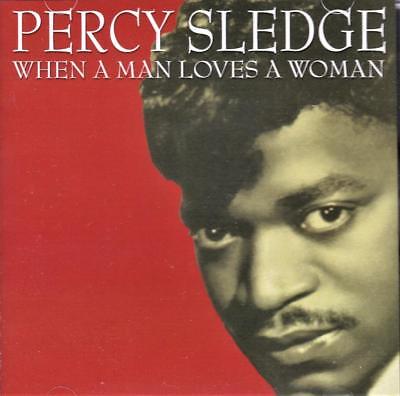
50 years ago: Percy Sledge hit #1 with “When a Man Loves a Woman"

When a Man Loves a Woman

Percy Sledge

Writer(s): Cameron Lewis, Arthur Wright (see lyrics here)


First Charted: April 9, 1966


Peak: 12 US, 12 CB, 13 GR, 12 HR, 14 RB, 2 UK, 11 CN, 1 DF (Click for codes to charts.)


Sales (in millions): 1.0 US


Airplay/Streaming (in millions): 7.0 radio, 121.5 video, 104.91 streaming

When a Man Loves a Woman

Michael Bolton


First Charted: August 31, 1991


Peak: 13 US, 12 CB, 13 GR, 13 RR, 14 AC, 8 UK, 4 CN, 100 AU, 10 DF (Click for codes to charts.)


Sales (in millions): --


Airplay/Streaming (in millions): 7.0 radio, 195.5 video, 174.13 streaming

Awards (Sledge):


Awards (Bolton):

About the Song:

Percy Sledge was born in 1940 in Alabama. He had been an amateur boxer and was working as a hospital orderly when he got his music break. SS After his music teacher asked him to sing at a Christmas party, he resumed singing at local clubs as part of the Esquires Combo. SS One night, thanks to what Sledge called “a happy accident,” FB the song “When a Man Loves a Woman” was born.

The group was touring the South RS500 and Sledge was so distraught from a break-up that one night he couldn’t do the regular setlist. HL He asked bassist Cameron Lewis and organist Andrew Wright to improvise something to which he could sing along. SJ The descending riff created by the pair HL gave Sledge an outlet from which to pour out his soul HL over his “real-life romantic woes.” SS

Percy later polished up the song (originally called “Why Did You Leave Me”) SS and won over Quin Ivy, who was “one of the movers and shakers in the music industry in Alabama.” FB Ivy was a DJ who owned a record store and a recording studio. SS Percy recorded the song – his first recording ever – SS at Fame studios under producer Rick Hall, who would put Muscle Shoals, Alabama, on the map, establishing it as the world headquarters for deep soul music. PA

Atlantic Records’ Jerry Wexler was sent a copy. He called it “a holy love hymn” SS but wanted a new recording done at the expense of Atlantic TB because Sledge was off-key and the horn section was out of tune on the original. TB After much time and expense, a new version was created, but a mix-up led to Atlantic releasing the original version instead. TB

It didn’t matter. The “soulful to the max” KX song was a hit in any rendition. Sledge “works himself into such an ecstasy of passion that, until a full horn section jumps in at the last moment, it’s easy to forget that there’s anybody on earth except him, his girl, and you.” DM It was the song that put Muscle Shoals on the map. SS

Thanks to its use in a UK TV commercial for Levi’s,” HL the song recharted in England in 1987 at #2, besting its original #4 peak. In 1991, Michael Bolton topped the U.S. pop & AC charts and won a Grammy with his version. When Bolton’s version hit #1 on the Billboard Hot 100, it marked only the seventh time in chart history that two different recording acts took the same song to the pinnacle.

Although this “titanic soul ballad” SS has generated millions in royalties, Percy has likely seen very little of it TB having given the writing credit to Lewis & Wright.


Resources:


First posted 4/9/2013; last updated 4/5/2023.

Saturday, January 28, 2012

Aretha Franklin held her first Atlantic Records recording session: January 27, 1967


Aretha Franklin launched her recording career in 1960, releasing her first single for Columbia when she was 18. The song, “Today I Sing the Blues”, reached #10 on the R&B charts and led to a handful of other hits, including two more top tens (“Won’t Be Logn” and “Operation Heartbreak”).

However, she opted not to resign with Columbia when her contract expired in 1966. She’d made nine albums with the company, but didn’t have any money to show for it. Jerry Wexler of Atlantic Records quickly signed her and took her to Alabama’s legendary FAME Studios for her first recording session with the new company on on January 27, 1967. Along with the famed Muscle Shoals Rhythm Section, Aretha was joined by Stax Records’ Chips Moman and Tommy Cogbill. While she had largely covered standards while with Columbia, Atlantic would help her forge a new direction which allowed her to display her gospel roots and become one of the most important acts in R&B history.

One of her first endeavors at forging her new direction was a blues ballad called “I Never Loved a Man the Way I Love You”. The song topped the R&B charts for eight weeks, peaked at #9 on the pop charts, and gave Aretha her first gold single. During Aretha’s Atlantic stint, she sent more than 30 songs into the top ten of the R&B charts; 17 of those went to #1.

Aretha’s 1967 album I Never Loved a Man the Way I Love You also featured the classic “Respect”, a #1 pop and R&B song. The album comprised those first legendary recording sessions as well as recording she did in New York City. The “Queen of Soul” had been born.


Awards for Aretha Franklin:

Resources and Related Links:

Monday, June 13, 2011

Clyde McPhatter: An R&B Legend


Clyde McPhatter, 1932-1972


June 13, 1972: One of R&B’s greatest singers, Clyde McPhatter, died of a heart attack in a New York hotel room. Only 39, he had struggled for years with alcoholism and depression and was, according to Jay Warner’s On This Day in Music History, “broke and despondent over a mismanaged career that made him a legend but hardly a success.”

McPhatter fronted two of the most influential groups in R&B history, helping to make him one of the top 1000 music makers of all time according to Dave’s Music Database. From 1950 to 1953, he was a member of the Dominoes. “Sixty Minute Man” was the biggest R&B hit of 1951, AMG topping the Billboard R&B charts for 14 weeks. All Music Guide called it “the first identifiable rock & roll record…by a black group to make the jump from the R&B to the pop charts.”


It was sung by Bill Brown, but generally McPhatter handled lead vocals, such as on 1952 #1 R&B hit “Have Mercy Baby.” With the group at one point billed as Billy Ward and His Dominoes, Ward collected the lion’s share of the profits. McPhatter wasn’t making enough to live on and quit. Atlantic Records’ co-founder Ahmet Ertegun offered him a chance to form a new group and the Drifters, a name suggested by McPhatter, were born. Ertegun once proclaimed them “the all-time greatest Atlantic group.”

The Drifters became a Rock and Roll Hall of Fame inductee which, as their Rock Hall bio says, “epitomized the vocal group sound of New York City.” McPhatter saw two more long stays at #1 on the R&B charts with “Money Honey” and “Honey Love,” which was the biggest R&B hit of 1954. AMG


By 1955, McPhatter left for a solo career, landing R&B #1 songs with 1956’s “Treasure of Love”, 1957’s Long Lonely Nights”, and 1958’s “A Lover’s Question.” The latter was a top 10 U.S. pop hit as well.


The monstrous success of Motown groups like the Temptations, the Four Tops, and the Miracles owe a debt to the blueprint McPhatter forged. Significantly, McPhatter’s own ex-groups enjoyed success with and without him. The Dominoes landed a dozen top ten R&B hits in the 1950s with five different singers. The Drifters used six singers on 25 top ten R&B hits over a twenty-year chart run. The group’s most notable frontmen were fellow DMDB top 1000 music makers Jackie Wilson, who helmed two top ten R&B hits for the Dominoes (“You Can’t Keep a Good Man Down”, “Rags to Riches”), and Ben E. King, who sang lead with the Drifters from 1959-61 on six top ten R&B hits, including “There Goes My Baby” and “Save the Last Dance for Me.”

Both men also enjoyed solo success on the R&B and pop charts. Wilson’s “Lonely Teardrops” and “(Your Love Keeps Lifting Me) Higher and Higher” were both top 10 pop hits. King pulled off the same feat with “Spanish Harlem” and “Stand by Me.” The latter makes the book The Top 100 Songs of the Rock Era, 1954-1999.

Like so many gifted musicians, McPhatter led a troubled life. However, his legacy remains in tact, thanks to the music and influence he left behind.


For more information, including special recognitions for acts, songs, and albums, check out individual entries in the DMDB music makers’ encyclopedia for the Dominoes, the Drifters, Ben E. King, Clyde McPhatter, and Jackie Wilson.