Showing posts with label Thunder Road. Show all posts

Saturday, February 18, 2023

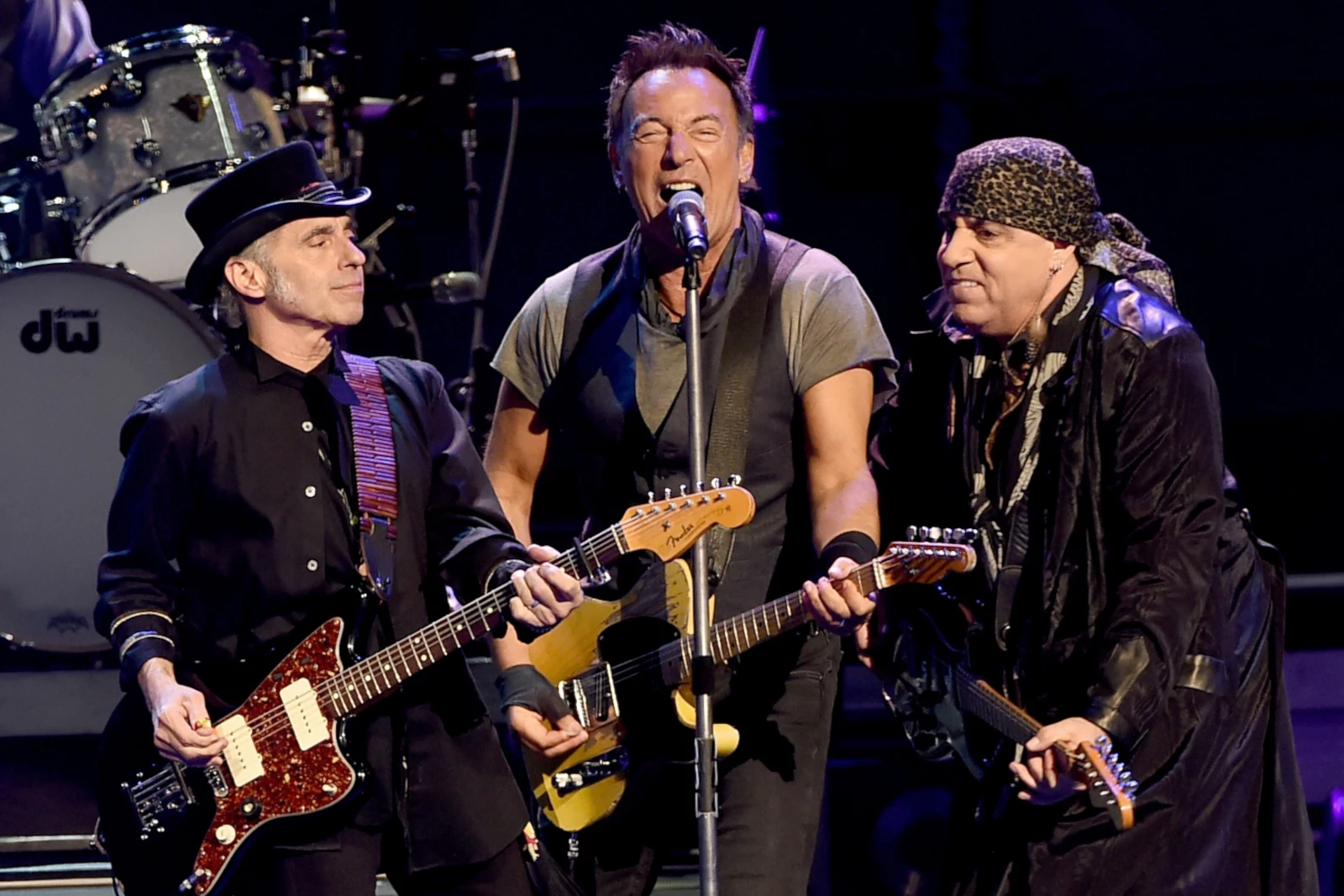
In Concert: Bruce Springsteen & the E Street Band

Bruce Springsteen & the E Street Band

T-Mobile Center in Kansas City, MO on 2/18/2023

image from UltimateClassicRock.com


The E Street Band:

  • Bruce Springsteen (vocals, guitar, harmonica)
  • Roy Bittan (piano, synthesizer, accordion)
  • Nils Lofgren (guitar, background vocals)
  • Patti Scialfa (background vocals, acoustic guitar, tambourine)
  • Garry Tallent (bass, background vocals)
  • Steven Van Zandt (guitar, background vocals)
  • Max Weinberg (drums)

Additional Players:

  • Anthony Almonte (percussion, congos, bongos, backing vocals)
  • Jake Clemons (saxophone, percussion, background vocals) – missed Kansas City show because of Covid-19
  • Barry Danielan (trumpet, percussion)
  • Charles Giordano (organ, accordion, electronic glockenspiel)
  • Ed Manion (saxophone, percussion)
  • Ozzie Melendez (trombone, percussion)
  • Curt Ramm (trumpet, percussion)
  • Soozie Tyrell (violin, acoustic guitar, percussion, background vocals)
  • Ada Dyer, Curtis King Jr., Lisa Lowell, Michelle Moore (backing vocals, percussion)

Review:

This is my second time to see Bruce Springsteen live. The first time was in 2000. You can click here to read about that show. It’s worth noting that the two shows had seven songs in common: “Badlands,” “Born to Run,” “Candy’s Room,” “Out in the Street,” “The Promised Land,” “Tenth Avenue Freeze-Out,” and “Thunder Road.” Those songs are all from 1980 or earlier. Fourteen of the songs in the 2023 were from those same years.

“Last Man Standing” and show closer “I’ll See You in My Dreams” were both from Springsteen’s most recent studio album of new material, 2020’s Letter to You. He also dipped into his 2022 R&B covers album Only the Strong Survive with a performance of the Commodores 1985 hit “Night Shift.”

live from Dallas, 2/10/2023

Those comprised three of only seven songs in the show which are new since the show I attended in 2000. Understandably the setlist relied on the classics, but I’ve been such a follower of The Boss that I would have been content with a show that leaned largely on his 21st century material. Singles such as “We Take Care of Our Own” and “Radio Nowhere” are strong latter-day rockers that would have worked well and, while I certainly didn’t expect them, I would have loved hearing some of my favorite album cuts like “Empty Sky,” “Sundown,” and “Rocky Ground.”

live from Orlando, 2023

Of course, the crowd favorites were understandably concert staples such as “Born to Run” and “Thunder Road.” The songs that best showcased Springsteen and the band’s showmanship, however, were the more obscure album cuts – most notably “Kitty’s Back” and “The E Street Shuffle.” Both songs were originally on Springsteen’s 1973 sophomore album The Wild, the Innocent, & the E Street Shuffle. Their appearances in the setlist showed Springsteen’s faith in even the deepest corners of his catalog. His faith wasn’t misplaced – those songs let the band cut lose with extended, crowd-pleasing jams that left me convinced Springsteen could put together an entire setlist of his least familiar material and still leave fans satisfied.

live from Atlanta, 2/3/2023

There were also touching tributes to some of Springsteen’s former bandmates. During “Tenth Avenue Freeze-Out,” there were photos of saxophonist Clarence Clemons, Springsteen’s longtime bandmate and friend who died in 2011. He introduced the song “Last Man Standing” with a history into his first experiences in rock bands, including playing in the Castilles in the mid-‘60s with George Theiss. He died in 2018 which left Springsteen the “last man standing” from the Castilles.

Click here to see other concerts I’ve attended.


The Set List:

1. No Surrender 8
2. Ghosts 21
3. Prove It All Night 5
4. Letter to You 21
5. The Promised Land 5
6. Out in the Street 6
7. Candy’s Room 5
8. Kitty’s Back 2
9. Night Shift 22
10. The E Street Shuffle 2
11. Johnny 99 7
12. Last Man Standing 21
13. Backstreets 3
14. Because the Night 4
15. She’s the One 3
16. Wrecking Ball 18
17. The Rising 13
18. Badlands 5
19. Thunder Road 3
20. Born to Run 3
21. Rosalita 2
22. Glory Days 8
23. Dancing in the Dark 8
24. Tenth Avenue Freeze-Out 3
25. I’ll See You in My Dreams 21


Discography:

1 Greetings from Asbury Park, N.J. (1973)
2 The Wild, the Innocent, & the E Street Shuffle (1973)
3 Born to Run (1975)
4 The Promise (archives, 1976-78)
5 Darkness on the Edge of Town (1978)
6 The River (1980)
7 Nebraska (1982)
8 Born in the U.S.A. (1984)
9 Tunnel of Love (1987)
10 Human Touch (1992)
11 Lucky Town (1992)
12 The Ghost of Tom Joad (1995)
13 The Rising (2002)
14 Devils & Dust (2005)
15 We Shall Overcome: The Seeger Sessions (covers, 2006)
16 Magic (2007)
17 Working on a Dream (2009)
18 Wrecking Ball (2012)
19 High Hopes (2014)
20 Western Stars (2019)
21 Letter to You (2020)
22 Only the Strong Survive (2023)


Resources and Related Links:


First posted 2/19/2023.

Tuesday, August 26, 1975

Bruce Springsteen’s “Thunder Road” released on Born to Run

Thunder Road

Bruce Springsteen

This post has been moved here.

Monday, August 25, 1975

Bruce Springsteen Released Born to Run

Born to Run

Bruce Springsteen


Released: August 25, 1975


Peak: 3 US, 17 UK, 31 CN, 7 AU Click for codes to charts.


Sales (in millions): 6.0 US, 0.3 UK, 10.4 world (includes US and UK)


Genre: classic rock


Tracks:

Click on a song titled for more details.
  1. Thunder Road [4:49]
  2. Tenth Avenue Freeze-Out [3:10]
  3. Night [3:00]
  4. Backstreets [6:30]
  5. Born to Run [4:30]
  6. She’s the One [4:30]
  7. Meeting Across the River [3:18]
  8. Jungleland [9:35]


Total Running Time: 39:23


The Players:

  • Bruce Springsteen (vocals, guitar, harmonica, percussion)
  • Roy Bittan (keyboards)
  • Clarence Clemons (saxophone, tambourine, backing vocals)
  • Dann Federici (keyboards)
  • Garry Tallent (bass)
  • Max Weinberg (drums)
  • Steven Van Zandt (guitar, backing vocals, horn)

Rating:

4.590 out of 5.00 (average of 22 ratings)


Quotable:

“No one before or since has tried to pack as much of the American experience into 39 minutes, and no one has come as close to succeeding.” – Josh Tyrangiel/ Alan Light, Time magazine

Awards:

(Click on award to learn more).

The Make-or-Break Third Album

The rock singer/songwriter Bruce Springsteen emerged in the early 1970s, “a time when many believed that rock was in need of new lifeblood.” NRR When he was signed to CBS in 1972 by John Hammond, TB he was billed as “the next Bob Dylan.” NRR Such hype could have killed his career, but Springsteen turned out to be “just what audiences needed – a fresh face with a guy-next-door persona who sang about common people with their common hopes and fears.” CS He became “the undisputed poet laureate of the working class.” CS

At this point in his career, however, Springsteen hadn’t yet attained that kind of status. He was a seasoned performer who’d played in a number of bar bands and had “seven years of songwriting behind him.” TB He would start to build a reputation for his energetic and passionate live performances. However, he wouldn’t be anointed as rock’s savior on the covers of Time and Newsweek magazine simultaneously until 1975.

He released two albums in 1973. They were ”noted for the feral, jazz-like musicianship of his E Street Band and his own brand of quirky, urban street poetry” CQ but were commercial failures “made for modest sums at a suburban studio.” AM It set up Born to Run as his “make-or-break third album” AM as his record label was on the verge of dropping him. This was his “last chance to craft a commercially viable record, and this go-for-broke outlook infects everything on the album.” CQ

The Recording

Springsteen started work on his third album in August 1974. As with his first two albums, Springsteen started recording at 914 Sound Studios at Blauvelt in New York State. However, he was dissatisfied with the “technical quality of the studio” CC and a gulf was widening between him and manager Mike Appel. CC Springsteen had found “a soul mate” in journalist Jon Landau, who’d famously written in 1974, “I saw the rock ‘n’ roll future and its name is Bruce Springsteen.” TB Landau suggested moving recording to New York’s Record Plant CC where the album “was cut on a superstar budget.” AM

This was Springsteen’s first collaboration (but definitely not his last) with Landau as his producer. “Jimmy Iovine (then a recording engineer, now the head of Interscope Records) took care of hiding stacks of overdue bills from the record label.” TL Meanwhile Appel would eventually take legal action, upset about being muscles out of the picture, and it would stall Springsteen’s follow-up to Born to Run for three years. CC

The E Street Band

Born to Run featured a “revamped lineup of the dynamic E Street Band.” NRR “His two virtuoso players, keyboardist David Sancious and drummer Vini Lopez, [were] replaced by the professional but less flashy Roy Bittan and Max Weinberg.” AM “Danny Federici and Roy Bittan’s dueling organ and keys lend a celebratory and church-like quality to just about everything.” CQ The band also featured “Miami” Steve Van Zandt on guitar, Garry Tallent on bass, and Clarence Clemons, whose “saxophone slices into the shadows of every song.” CQ

In a review of a live performance after the release of Born to Run, Bud Scoppa said, “What a band. Even without The Boss they’d be one of the best in the business; with him, they’re practically unrivalled.” CS

New Sound

Landau helped Springsteen attain the “full, highly produced” AM “Wall of Sound atmosphere for which the singer yearned.” CQ The effect “required months of studio tinkering to perfect” TL as the album is filled with “layers of guitar, layers of echo on the vocals, lots of keyboards, thunderous drums.” AM It was the first album in which Springsteen “fully realized the sound that would earn him the title of ‘the Boss.’” NRR It “represented a sonic leap from his first two.” AM

Springsteen later described “the sound he wanted for his third record” TL “as ‘Roy Orbison singing Bob Dylan produced by Phil Spector,’” TL the producer known for the Wall of Sound. By all accounts, Springsteen succeeded, delivering and album of “epic grandeur and big screen rock’n’ roll that hadn’t been heard since Phil Spector’s teen symphonies of the early Sixties.” CC

Bruce Springsteen, Storyteller

Born to Run had a big sound, and Springsteen wrote big songs to match it.” AM “Most of what makes the record great is the lyrical theme running through the album, the romantic spinnings of urban outcasts, their girls and their cars.” PK “It dramatizes the romantic longings of urban life, offering snapshots of tenements, streets, and highways, where radios blare through summer windows, bikers pose with their machines, and lovers make out on the beach.” TB “If Lou Reed represents the dark side of New York, full of sexual ambiguity and drugs, Springsteen’s New Jersey offers us the romantic counterpoint, a pseudo-nostalgic world populated by drag races instead of drag queens, fast cars instead of speed.” PK

Springsteen “distilled his music into something cohesive and relatable, a love letter to every loser and working class anti-hero from Jersey and beyond. Whereas his previous lyrics had been rooted in imagery and little else, Born to Run had stories to tell, stories that painted everyday people with broad strokes and high stakes, giving the record a sense of epic narrative that had never been heard in American rock and roll.” CQ

“Springsteen took everyday characters, incidents and locations and transformed them into myth” CC via ‘mini-operas for the alleys.” CM “Songs like ‘Thunder Road,’ ‘Backstreets,’ and the bombastic title track are really just about bored kids hanging out and wanting to escape their town, but with lyrics like, ‘The ghosts in the eyes of all the boys you sent away/ They haunt this dusty beach road and the skeleton frames of burned out Chevrolets,’ you’d think Springsteen was filming his own Spaghetti Western.” CQ

“The overall theme of the album was similar to that of The E Street Shuffle; Springsteen was describing, and saying farewell to, a romanticized teenage street life. But where he had been affectionate, even humorous before, he was becoming increasingly bitter. If Springsteen had celebrated his dead-end kids on his first album and viewed them nostalgically on his second, on his third he seemed to despise their failure, perhaps because he was beginning to fear he was trapped himself. Nevertheless, he now felt removed, composing an updated West Side Story with spectacular music that owed more to Bernstein than to Berry.” AM

Springsteen said of the writing process, “I wrote it and I rewrote it and I rewrote it. What I kept stripping away was cliché, cliché, cliché. I just kept stripping it down until it started to feel emotionally real.” CM He was asking big questions like “What do you do when your dreams come true? What do you do when they don’t? Is love real?” CM

An Embodiment of the American Dream

Born to Run “declared its own greatness with songs and a sound that lived up to Springsteen’s promise.” AM With “an unapologetically romantic vision and a strong blue-collar work ethic” VB he delivered a “breakthrough album, starring optimistic tramps and engine-revving sax solos, [that] is the greatest living embodiment of the American dream.” EW’12Born to Run dares you to leave your youth behind and embrace the reachable horizon resting before you.” PM “No one before or since has tried to pack as much of the American experience into 39 minutes, and no one has come as close to succeeding.” TL

The Songs

Here’s a breakdown of each of the individual songs.

Thunder Road

Bruce Springsteen

Writer(s): Bruce Springsteen (see lyrics here)


Recorded: April 18-19, 1975; 4/23/1975; July 15-16, 1975 (?) at the Record Plant in New York


Released: Born to Run (1975), Live 1975/1985 (live box set, 1986), In Concert/MTV Plugged (live, 1993), Greatest Hits (1995), The Essential (2003), Greatest Hits (2009), The Collection (2012), The Essential (2015), Best of (2024)


Peak: 1 CL, 1 DF Click for codes to charts.


Sales (in millions): 1.0 US


Airplay/Streaming (in millions): -- radio, 5.20 video, 178.45 streaming


Covered by: Melissa Etheridge (1995, live with Bruce Springsteen), Bob Walkenhorst (2006)

Awards:

(Click on award to learn more).


Awards (Melissa Etheridge, unplugged):

About the Song:

Springsteen tears into this opening, “full-throated rocker” CC with “the tenacity of a terrier with a leg of lamb.” CC While never a single, it has become one of Springsteen’s most-beloved songs, establishing itself as a staple at classic rock radio and in concert. In 2004, WXPN, the University of Pennyslvania’s public radio station, ranked it #1 on their list of all-time greatest songs. WK

The song started out in 1972 as “Angelina” and re-emerged in October 1974 later as “Chrissie’s Song.” Over the next three months, Springsteen combined that and lyrics from “Walking in the Street” to create a new song. WK The song was tentatively titled “Wings for Wheels” before being “rightly renamed after a New Jersey drag strip,” TC inspired by a poster of the 1958 Robert Mitchum film of the same name, although Springsteen didn’t see the movie. SF

In his autobiography, Springsteen said he envisioned the Born to Run album as a collection of vignettes following its character throughout the day. As the opener, “Thunder Road” was “an epic like he used to do, but it’s stripped back, less jazzy and more forceful.” TC It opens the album with a harmonica that suggested the beginning of the new day and invited listeners to the album. WK Vocally, Springsteen was inspired by Roy Orbison, who he references in the line “the radio plays Roy Orbison singing for the lonely.” SF Keyboardist Roy Bittan said Bruce “wanted a record where the singing sounded like Roy Orbison and the music sounded like Phil Spector.” TC The lyrics discuss Mary and her boyfriend and their “one last chance to make it real,” WK “two people acknowledging their imperfections, abandoning romance and also looking back to the ‘50s.” TC

Springsteen wrote “The Promise” as a sequel to “Thunder Road.” It was performed during his 1978 tour but didn’t see release until 1999 when a re-recorded version appeard on 18 Tracks and then again in 2010 on the album The Promsie, which was a collection of unreleased material from the Darkness on the Edge of Town era (1977-78).

In 1995, Melissa Etheridge brought Bruce Springsteen out as a surprise guest for her Unplugged special after telling the audience a story about how much he inspired her. She has cited her performance with Springsteen as the highlight of her career. RS They had to start the performance a second time because she was so nervous she flubbed the words on the first run-through. RS It was taped February 2, 1995, and aired on MTV on March 21, 1995.

Tenth Avenue Freeze-Out

Bruce Springsteen

Writer(s): Bruce Springsteen


Recorded: 5/5/1975 and 5/16/1975 at the Record Plant in New York


Released: January 1976 as a single, Born to Run (1975), Live 1975/1985 (live box set, 1986), Live in New York City (2000), The Essential (2015), Best of (2024)


Peak: 83 BB, 63 CB, 5 CL, 82 CN, 6 DF Click for codes to charts.


Sales (in millions): --


Airplay/Streaming (in millions): -- radio, 8.29 video, 45.06 streaming


About the Song:

This is “updated Stax soul” TB and “one of those Big Apple melodramas that Springsteen can churn out by the yard.” CC It features “strong-fisted brass from Clarence Clemons (whose joining the E Street Band features in the third verse), plus top-rated session men the Brecker brothers and saxophonist David Sanborn.” CC

Night

Bruce Springsteen

Writer(s): Bruce Springsteen


Recorded: 5/10/1975 at the Record Plant in New York


Released: Born to Run (1975)


About the Song:

This feels similarities to “Factory,” which appeared on 1978’s Darkness on the Edge of Town. “Outside the factory gates, the only freedom lies in the highway, and the life lived outside working hours, managing to survive until the weekend.” CC

Backstreets

Bruce Springsteen

Writer(s): Bruce Springsteen


Recorded: 4/25/1975, 5/19/1975, 5/23/1975, 7/6/1975, and 7/18/1975 at the Record Plant in New York


Released: Born to Run (1975), Live 1975/1985 (live box set, 1986)


Peak: 12 CL, 18 DF Click for codes to charts.


About the Song:

This “is one of those big songs that fuel Born to Run.” CC In The Review, Clarke Speicher even called Backstreets an ode to Bob Dylan’s “Like a Rolling Stone.” RV This was Springsteen writ large, the sort of rock ‘n’ roll record that hadn’t been heard on the airwaves since they had bounced off Phil Spector’s Wall of Sound a decade before. The piano and organ of Bittan…usher in Clemon’s sultry saxophone and Springsteen’s raw-throated vocal. All the Springsteen hallmarks are here: the intense infatuation, the precision of location, the street gangs, the loyalty, the cars.” CC

Born to Run

Bruce Springsteen

Writer(s): Bruce Springsteen (see lyrics here)


Recorded: 5/21/1974 and 8/6/1974 at 914 Sound Recordings Studio in Blauvelt, NY


Released: 8/25/1975 as a single, Born to Run (1975), Live 1975/1985 (live box set, 1986), Greatest Hits (1995), Live in New York City (2000), The Essential (2003), Greatest Hits (2009), The Collection (2012), The Essential (2015), Chapter and Verse (2016), Best of (2024)


B-side: “Meeting Across the River”


Peak: 23 BB, 17 CB, 27 GR, 22 HR, 26 RR, 1 CL, 16 UK, 53 CN, 38 AU, 1 DF Click for codes to charts.


Sales (in millions): 2.0 US, 0.2 UK, 2.2 world (includes US + UK)


Airplay/Streaming (in millions): -- radio, 62.60 video, 432.78 streaming


Covered by: Frankie Goes to Hollywood (1984), Melissa Etheridge (2001), Bob Walkenhorst (2010)

Awards:

(Click on award to learn more).

About the Song:

Springsteen took six months to write TB-S and 3 ½ to record RS500 his bonafide classic. The song underwent fifty pages of fine-tuning in his notebook TB-S as he crafted his tale of the ficticious Wendy KN and the “young lovers on the highways of New Jersey.” RS500 However, as he told Rolling Stone, “I don’t know how important the settings are…It’s the idea behind the settings. It could be New Jersey, it could be California, it could be Alaska.” RS500

Indeed, “Born to Run” was more about a philosophy than a place. It served as more than just The Boss’ signature song – it was his declarative anthem about outwardly rebelling against whatever held back those young, romantic New Jersians. It is “an ode to the road that rambles on like a man trying to outrun his past.” It is “the ultimate song of escape, of liberation from life’s weary tedium, with a simple four-note octave riff that takes the towering chorus towards a delirious, unforgettable high.” CC

Part of the reason the song became such a touchstone for people, though, is because of “an equally powerful melancholy; the future seems so bright largely because the present’s so dismal.” DM The song’s protagonist is “the age-old symbol of the solitary man struggling against all the forces of society to find his own way. He is fearful of what might happen in the effort to escape, but more fearful still of the consequences of not trying.” SS

Beyond the lyrics, though, this was also Springsteen’s ode to the musical giants who’d shaped him. The song’s opening guitar riff was inspired by Duean Eddy’s “Because They’re Young” SS and features “Dylanesque lyrics, Roy Orbison vocal histrionics, ...Stones-style rhythm section, [and a] King Curtis sax break.” DM It’s all stitched together with a Phil Spector-esque Wall of Sound – “strings, glockenspiel, multiple keyboards – and more than a dozen guitar tracks.” RS500 The result is a song with “the audible ambition of recapitulating the first twenty-some years of rock and roll.” DM Music historian Steve Sullivan said, “it is an extraordinary vision that is at once deeply personal and all-eoncmpassingly universal.” SS It is “the ultimate epic of rock ‘n’ roll.” SS “Know this song, and you know rock and roll.” SS

Springsteen had released two albums to critical acclaim, but low sales. “Born to Run” was what he called his “shot at the title…at the greatest rock ’n’ roll record ever.” TB-S Paste magazine’s Matt Mitchell called this “the greatest title-track of all time.” PM “Few rock ‘n’ roll songs can match the exhilaration and the sheer, resurgent magnificence of ‘Born to Run’” CC with “its Duane Eddy riff and unpredictable twisting and turning bridge.” TB

His first live performance of the song convinced rock critic Jon Landau, who became Bruce’s manager. When Landau caught The Boss opening for Bonnie Raitt on May 9, 1974, he wrote in the Real Paper out of Boston: “ I saw rock and roll’s future – and its name is Bruce Springsteen.” Landau was right. After the Born to Run album was released, Bruce Springsteen became the first musician to simultaneously appear on the covers of Time and Newsweek. It was also the first album to be officially certified as platinum. SS

She’s the One

Bruce Springsteen

Writer(s): Bruce Springsteen


Recorded: March to May, 1975 and July 24-25, 1975 at the Record Plant in New York


Released: January 1976 as the B-side of “Tenth Avenue Freeze-Out,” Born to Run (1975)


Peak: 12 CL, 31 DF Click for codes to charts.

Covered by: Bob Walkenhorst (2006)


About the Song:

This “love song of fierce, possessive intensity…[isn’t] up there with the all-time best-ever Springsteen songs,” CC but leans on Bo Diddley as “the main rhythm reference.” TB Springsteen also borrowed from his own song “Hey Santa Anna” and said he wrote “She’s the One” “because I wanted to hear Clarence play the sax in that solo.” CC

Meeting Across the River

Bruce Springsteen

Writer(s): Bruce Springsteen


Recorded: 5/28/1975 and July 1975 at the Record Plant in New York


Released: 8/25/1975 as the B-side of “Born to Run,” Born to Run (1975)


Peak: 21 CL Click for codes to charts.


About the Song:

“A cool jazz influence breathes through the wistful Meeting Across the River.” TB It is an “instrumentally sparse and stripped down,” CC an “uncharacteristic Springsteen song.” CC While this lacks “the urgency of Lou Reed’s ‘Waiting for the Man,’ ‘Meeting Across the River’ is nonetheless a more considered depiction of a drug deal.” CC

Jungleland

Bruce Springsteen

Writer(s): Bruce Springsteen


Recorded: 4/18/1975, 4/23/1975, 4/23/1975, 7/14/1975, July 19-20, 1975 at the Record Plant in New York


Released: Born to Run (1975), Live in New York City (2000), The Essential (2003)


Peak: 4 CL, 3 DF Click for codes to charts.


About the Song:

“The nearly 10-minute closing track…still holds the title for the most lush, grandiose thing The Boss has ever recorded.” CQ Clarence Clemons’ saxophone solo alone took 16 hours to record. CM Jungleland “acts as a mini-suite, starting off with the tear-filled croon of Suki Lahav’s violin before each instrument twinkles in one by one, detailing the downfall of The Rat, a common street hood looking for a little romance.” CQ

“As a gang war erupts, the lyrics and instrumentation explode into a diesel-fueled anthem that could fill a hundred stadiums. By the end of the song, The Rat is gunned down with the whisper of Bittan’s piano (the only instrument still playing before the band kicks back in for the finale): ‘The streets are on fire in a real death waltz.’ We end exhausted, having been through a whirlwind of stories.” CQ “This was Springsteen’s opera out on the Turnpike.” CC

Awards:

(Click on award to learn more).

Notes:

The 30th anniversary edition added a live DVD of a performance at London's Hammersmith Odeon in November 1975.

Resources/References:


Related DMDB Pages:


First posted 3/23/2008; last updated 8/2/2025.