Showing posts with label Peter Frampton. Show all posts

Friday, May 17, 2024

The Top 50 Live Albums of All Time

Live Albums:

The Top 50

On March 9, 2010, I posted a list of the top 20 live albums of all time on the DMDB Facebook page. I expanded the list to a top 50 a and have since updated it several times on the DMDB blog. The list was compiled by aggregating 38 lists (see resources at bottom of page) focused specifically on the best live albums of all time.

Check out other best-of-genre/category lists here.

1. James Brown Live at the Apollo Volume 1 (1962)
2. The Allman Brothers At Fillmore East (live, 1971)
3. Johnny Cash At Folsom Prison (1968)
4. Nirvana MTV Unplugged in New York (recorded live 1993, released 1994)
5. Peter Frampton Frampton Comes Alive! (1975)
6. Eric Clapton Unplugged (1992)
7. The Who Live at Leeds (1970)
8. The MC5 Kick Out the Jams (1968)
9. B.B. King Live at the Regal (1964)
10. Grateful Dead Live/Dead (1969)

11. Johnny Cash At San Quentin (1969)
12. U2 Rattle and Hum (studio/live, 1988)
13. Bob Marley Live! (At the Lyceum) (1975)
14. Kiss Alive! (1975)
15. The Rolling Stones Get Yer Ya-Ya’s Out (1969)
16. Judy Garland Judy at Carnegie Hall (1961)
17. Deep Purple Made in Japan (1972)
18. Talking Heads Stop Making Sense (live soundtrack, recorded 1983, released 1984)
19. Cheap Trick At Budokan (1978)
20. Bob Dylan The Royal Albert Hall Concert (The Bootleg Series Volume 4) (1966)

21. U2 Under a Blood Red Sky (1983)
22. Jimi Hendrix Band of Gypsys/Live at Fillmore East (1970)
23. Jackson Browne Running on Empty (1977)
24. Muddy Waters At Newport (1960)
25. Bruce Springsteen Live 1975/1985 (live box: 1975-85, released 1986)
26. Benny Goodman The Complete Legendary Carnegie Hall Concert (1938)
27. Cream Wheels of Fire (live/studio, 1968)
28. Motorhead No Sleep ‘Til Hammersmith (1981)
29. Eagles Hell Freezes Over (live/studio, 1994)
30. Garth Brooks Double Live (1998)

31. various artists Woodstock (1969)
32. The Band The Last Waltz (1976)
33. Thin Lizzy Live and Dangerous (1977)
34. Sam Cooke Live at the Harlem Square Club (1963)
35. Erroll Garner Concert by the Sea (1955)
36. Duke Ellington At Newport (1956)
37. Crosby, Stills, Nash & Young 4 Way Street (1970)
38. Quicksilver Messenger Service Happy Trails (1969)
39. Little Feat Waiting for Columbus (1978)
40. Jerry Lee Lewis Live at the Star Club, Hamburg (1964)

41. Led Zeppelin How the West Was Won (recorded 1972, released 2003)
42. James Brown Sex Machine (1970)
43. Bill Evans Trio Waltz for Debby (1961)
44. Neil Young Live Rust (1979)
45. Bill Evans Trio Sunday at the Village Vanguard (1961)
46. Luciano Pavarotti/Placido Domingo/Jose Carreras The Three Tenors in Concert/Mehta (1990)
47. Simon & Garfunkel The Concert in Central Park (1981)
48. Van Morrison It’s Too Late to Stop Now (1974)
49. The Quintet (Charlie Parker, Dizzy Gillespie, Bud Powell, Charles Mingus, & Max Roach) Jazz at Massey Hall (1953)
50. George Harrison et al The Concert for Bangladesh (1971)


Resources and Related Links:


First posted 3/18/2012; last updated 5/17/2024.

Monday, April 27, 1987

David Bowie Never Let Me Down album released

Never Let Me Down

David Bowie


Released: April 27, 1987


Peak: 34 US, 6 UK, 6 CN, 19 AU


Sales (in millions): 0.5 US, 0.1 UK, 2.5 world (includes US and UK)


Genre: classic rock


Tracks:

Song Title (Writers) [time] (date of single release, chart peaks) Click for codes to singles charts.

  1. Day-In Day-Out [5:36] (4/4/87, 21 US, 3 AR, 3 CO, 17 UK, 33 AU)
  2. Time Will Crawl [4:18] (5/2/87, 7 AR, 10 CO, 33 UK)
  3. Beat of Your Drum [5:03]
  4. Never Let Me Down (Alomar/Bowie) [4:05] (8/8/87, 27 US, 15 AR, 4 CO, 34 UK, 63 AU)
  5. Zeroes [5:44]
  6. Glass Spider [5:30]
  7. Shining Star (Makin’ My Love) [5:04]
  8. New York’s in Love [4:31]
  9. ’87 and Cry [4:18]
  10. Too Dizzy (Bowie/Kizilcay) [4:30]
  11. Bang Bang (Pop) [4:28] (5/23/87, 38 AR, 31 CO)

Songs written by David Bowie unless indicated otherwise.


Total Running Time: 49:12


The Players:

  • David Bowie (vocals)
  • Carlos Alomar (guitar)
  • Carmine Rojas (bass)
  • Erdal Kızılçay (keyboards, drums, bass, trumpet, violins, backing vocals)
  • Peter Frampton (guitar, sitar)
  • Philippe Saisse (piano)
  • Stan Harrison (alto saxophone)
  • Steve Elson (baritone saxphone)
  • Lenny Pickett (tenor saxophone)
  • Earl Gardner (flugelhorn)
  • Laurie Frink (trumpet)
  • Errol “Crusher” Bennett (percussion)
  • Sid McGinnis (guitar on “Day-In Day-Out,” “Time Will Crawl,” and “Bang Bang”)
  • Mickey Rourke (rap on “Shining Star”)
  • Robin Clark, Lani Groves, Diva Gray, Gordon Grody (backing vocals)

Rating:

2.444 out of 5.00 (average of 25 ratings)

About the Album:

David Bowie stayed busy after 1984’s Tonight with soundtrack work, recording music for Absolute Beginners, The Falcon and the Snowman, When the Wind Blows, and Labrynth, in which he starred. His cover of “Dancing in the Street” with Mick Jagger was also a top-10 hit.

Once he was back in the studio, Bowie focused on what he considered a return to rock and roll music WK after two albums of more dance-oriented mainstream pop. To that end, he assembled a small rock group like he’d had early in his career that included guitarist Peter Frampton. Bowie himself said it was an effort to “reestablish what I used to do, which was a guitar-oriented album.” WK

He also played instruments again after focusing exclusively on vocals on the previous two albums. The result was “a jumbled mix of loud guitar rockers and art rock experiments like the failed Glass Spider,” AMG a mythological story Bowie based on a documentary he saw about black widows lay the skeletons of their prey on their webs. WK

Bowie wrote the opening song and first single, Day-In Day-Out, about his concerns about how the homeless were treated in the United States. Time Will Crawl was inspired by the Chernobyl disaster and Bowie said the vocals were inspired by Neil Young. The title track was about Coco Schwab, Bowie’s long-time personal assistant. He attributed his vocal performance to John Lennon. It has been called “one of his most underrated songs.” AMG

Bowie called Beat of Your Drum a Lolita song because it was a “reflection on young girls” being viewed as sexual entities. WK Rolling Stone called Zeroes “the most heartening and successful track on the album.” WK

Bowie described Shining Star (Makin’ My Love) as a song about people “trying to get together in the race of…disasters and catastrophes…never knowing if they’re going to survive it.” WK He sang it in a high voice, which he compared to Smokey Robinson, because it was what the song needed. WK

New York’s in Love was “a sarcastic song about the vanity of big cities.” WK ’87 and Cry was about then-UK Prim Minister Margaret Thatcher and the “distinction between the authoritarian government and the citizens.” WK

Too Dizzy was written as an homage to the 1950s. Bowie called the song a “throwaway” and deleted it from reissues of the album. The final song on the album was a cover of Iggy Pop’s Bang Bang. Bowie said, “Iggy’s done so many good songs that people never get to hear…I think it’s one of his best songs.” WK

The subsequent Glass Spider tour was “the biggest, most theatrical and elaborate tour he had undertaken in his career,” WK but, like the album, it “was commercially successful but critically panned.” WK Bowie himself was critical of the album, even expressing a desire to remake it. After his death, a remixed version of the album was released on the Loving the Alien box set.

“While it’s not as consistent as Tonight, it’s far more interesting.” AMG Spin said it was “an inspired and brilliantly crafted work” WK while Rolling Stone called it “the noisiest, sloppiest Bowie album ever.” WK Creem’s Roy Tarkin said it represented a creative low point for Bowie WK while Billboard stated it was “arguably the year’s most underrated release.” WK


Notes: B-sides “Julie” and “Girls”, along with the title track from the soundtrack of When the Wind Blows, were added to the Virgin Records CD reissue. In 2018, a remixed version of the album was released on the Loving the Alien box set.

Resources and Related Links:

First posted 2/20/2008; last updated 8/2/2021.


Saturday, June 19, 1976

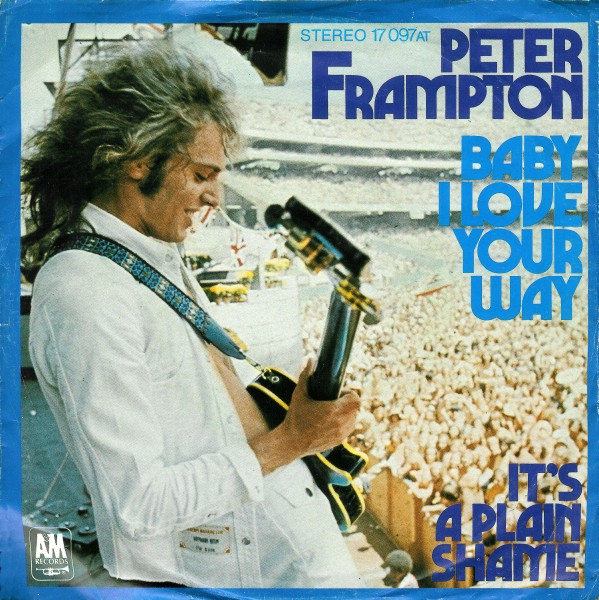
Peter Frampton “Baby I Love Your Way” live version charted

Baby I Love Your Way

Peter Frampton

Writer(s): Peter Frampton (see lyrics here)


Released: September 1975


First Charted: June 19, 1976


Peak: 12 US, 16 CB, 16 HR, 9 RR, 28 AC, 2 CL, 43 UK, 65 CN, 3 AU, 1 DF (Click for codes to singles charts.)


Sales (in millions): -- US, 0.4 UK


Airplay/Streaming (in millions): -- radio, 33.1 video, 82.03 streaming

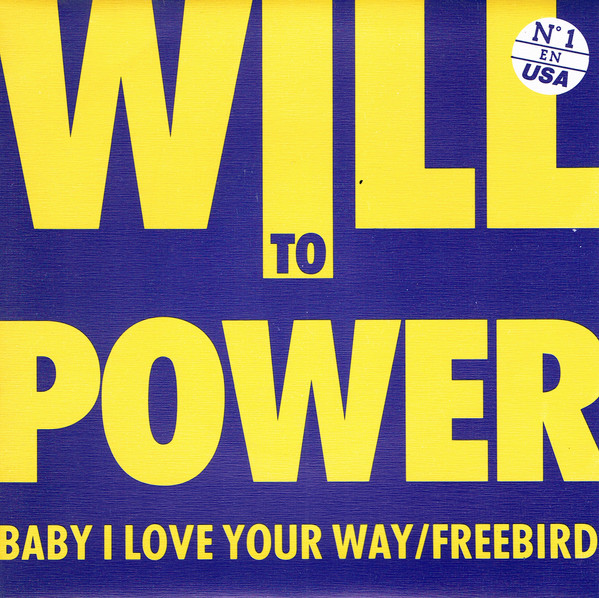
Baby I Love Your Way/Free Bird Medley

Will to Power


Released: August 1988


First Charted: September 10, 1988


Peak: 11 US, 11 CB, 12 RR, 2 AC, 6 UK, 11 CN, 20 AU, 9 DF (Click for codes to singles charts.)


Sales (in millions): 0.5 US


Airplay/Streaming (in millions): -- radio, 23.2 video, 34.05 streaming

Baby I Love Your Way

Big Mountain


Released: February 1, 1994


First Charted: February 25, 1994


Peak: 6 US, 2 CB, 2 RR, 10 AC, 2 UK, 2 CN, 4 AU (Click for codes to singles charts.)


Sales (in millions): 0.5 US, 0.2 UK


Airplay/Streaming (in millions): -- radio, 4.5 video, 204.52 streaming

Awards:

Click on award for more details.

About the Song:

British guitarist Peter Frampton had made eight studio albums – four with Humble Pie and four more as a solo artist – before becoming a superstar with his blockbuster live album Frampton Comes Alive. As a solo artist, he never even dented the Billboard Hot 100 until the live version of “Show Me the Way” reached #6 in 1976.

That opened the door for Frampton. He followed it up with a live take on “Baby I Love Your Way.” Like “Show Me the Way,” the song was featured on Frampton Comes Alive but had previously been released as a single in support of his last studio album, 1975’s Frampton.

In the “romantic love ballad, Frampton is telling his girl that he loves everything about her and wants to be with her day and night.” SF Billboard described “Baby I Love Your Way” as an “easy rocker” with “an effective hook.” WK Cash Box called it “an excellent tune” that “Frampton sings with sensitivity over the soft backing.” WK

Frampton’s version was bested twice on the charts. In 1988, the pop group Will to Power recorded the song as a medley with Lynyrd Skynyrd’s “Free Bird” and took it all the way to #1 in the United States. In 1994, the American reggae/pop band Big Mountain climbed to #6 with a cover of the song from the Reality Bites soundtrack. The song was also featured in the 2000 movie High Fidelity. John Cusack’s character hates the song until he hears Lisa Bonet sing it.


Resources:


Related Links:


First posted 7/27/2022.

Saturday, April 10, 1976

Frampton Comes Alive! hit #1 for first of 10 weeks

Frampton Comes Alive!

Peter Frampton


Recorded: live: March 24, 1975 to November 22, 1975


Released: January 6, 1976


Charted: January 31, 1976


Peak: 110 US, 6 UK, 117 CN, 8 AU, 11 DF


Sales (in millions): 8.0 US, 0.1 UK, 17.0 world (includes US and UK)


Genre: classic rock


Tracks:

Song Title (date of single release, chart peaks) Click for codes to charts.

  1. Something’s Happening
  2. Doobie Wah
  3. Show Me the Way (2/21/76, 6 US, 10 UK)
  4. It’s a Plain Shame
  5. All I Want to Be Is by Your Side
  6. Wind of Change
  7. Baby, I Love Your Way (6/26/76, 12 US, 28 AC, 43 UK)
  8. I Wanna Go to the Sun
  9. Penny for Your Thoughts
  10. I’ll Give You Money
  11. Shine On
  12. Jumpin’ Jack Flash
  13. Lines on My Face
  14. Do You Feel Like We Do (9/18/76, 10 US, 39 UK)


Total Running Time: 78:06

Rating:

4.295 out of 5.00 (average of 19 ratings)


Awards:

(Click on award to learn more).

About the Album:

“If you were challenged to name five rock albums that epitomized the ‘70s, Frampton Comes Alive! should probably top the list.” AZ After stints with Herd and Humble Pie, Frampton had ventured out on his own. He made “four solo albums with little commercial success.” WK It wasn’t until a collection of some of those tracks were recorded live “and released as Frampton Comes Alive! that he became a household name.” AZ In fact, there’s a joke in the movie Wayne’s World 2 that if you lived in the suburbs at the time, you were automatically issue the album. WK

It was recorded during the summer and fall of 1975, primarily at San Francisco’s Winterland venue and New York’s Long Island Arena. Recordings from four different shows went into the making of the album. WK Consequently, “one must take this all with a grain of salt as a concert document.” AMG Not only did work have to be done to splice the songs together into seemingly one show, but “there was considerable studio doctoring of the raw live tapes, a phenomenon that set the stage for such unofficial hybrid works as Bruce Springsteen’s Live/1975-85 and countless others.” AMG

When initially released, the album “was an anomaly, a multi-million-selling (mid-priced) double LP by an artist who had previously never burned up the charts with his long-players in any spectacular way. The biggest-selling live album of all time” AMG offered “buoyant pop, sentimental ballads, arena rock – this album has it all.” AZ

It’s easy to see why the album did so well. Frampton “packed one hell of a punch on-stage – where he was obviously the most comfortable – and, in fact, the live versions of Show Me the Way, Do You Feel Like I Do, Something’s Happening, Shine On, and other album rock staples are much more inspired, confident, and hard-hitting than the studio versions.” AMG

The 1999 reissue offered “a considerable improvement over the original double CD or double LP in terms of sound – the highs are significantly more lustrous, the guitars crunch and soar, and the bottom end really thunders, and so you get a genuine sense of the power of Frampton’s live set, at least the heavier parts of his set, rather than the compressed and flat sonic profile of the old double-disc version.” AMG “Frampton and the band sound significantly closer as well, even on the softer songs such as Wind of Change, and the disc is impressive listening even a quarter century later.” AMG

Resources and Related Links:


First posted 1/6/2012; last updated 11/30/2022.

Saturday, February 28, 1976

Peter Frampton “Show Me the Way” live version released this month

Show Me the Way

Peter Frampton

Writer(s): Peter Frampton (see lyrics here)


Released: June 1975


First Charted: July 12, 1975


Peak: 6 US, 4 CB, 6 HR, 5 RR, 1 CL, 10 UK, 4 CN, 25 AU, 1 DF (Click for codes to singles charts.)


Sales (in millions): -- US, -- UK, -- world (includes US + UK)


Airplay/Streaming (in millions): -- radio, 40.6 video, 114.98 streaming

Awards:

Click on award for more details.

About the Song:

Guitarist Peter Frampton was born in England in 1950. He was in a band called the Little Ravens by the age of 12. By 18, he had joined forces with Steve Marriott of the Small Faces to form Humble Pie. That group had a #4 hit in the UK with “Natural Born Bugie” in 1969 and a couple of minor hits in the U.S.

After four solo albums with Humble Pie, Frampton went solo. He released three albums with minimal success. His fourth album, simply called Frampton, reached #32 in the U.S. and went gold. “Show Me the Way” was released in June 1975 as a single, but – like the rest of Frampton’s solo output up to that point – failed to chart.

His fortunes changed, however, with a live recording released the following year. It soared into the top 10 and made the guitarist a superstar. Suddenly, “girls across the globe were gazing upon the bronzed, shirtless blonde that was pinned up on their bedroom walls.” UCR The song was lifted from his 1976 live album Frampton Comes Alive, which spent 10 weeks atop the Billboard album chart on its way toward being the biggest album of the year. It went on to sell more than 8 million copies in the U.S. alone.

“Show Me the Way” is marked by vague lyrics about a protagonist seeking guidance – “a drowning man looking for someone to throw him a life preserver.” SF Frampton kept it vague on purpose, but did admit he’d met someone who gave him confidence and his life “completely changed. All the lyrics in that song are about me and her.” SF

The song was also characterized by its use of a talkbox, “a device hooked up to his guitar that allowed him to create amplified, distorted vocal sounds with his mouth.” SF It created a sensation and many musicians bought or made talkboxes as a result. SF


Resources:


Related Links:


First posted 7/27/2022.