


 |
Originally posted 1/22/2021. In honor of the 10th anniversary of the DMDB blog on January 22, 2019, Dave’s Music Database launched its own Hall of Fame. This is the ninth set of song inductees. From 1973 to 1982, there were four major charts which tracked U.S. pop songs: Billboard (1898-), Cashbox (1950-1996), Hit Records (1954-1982), and Radio & Records (1973-). 106 songs topped all four charts during that time. (See “USA #1 Pop Songs: 1890-present”). When narrowed down further, there were only 12 songs which combined for 20 or more weeks on top of those four charts. |
Bee Gees “Night Fever” (1977)Inducted January 2021 as “Song with 20+ weeks atop 4 pop charts” |
| “How Deep Is Your Love” was the first single from the Saturday Night Fever soundtrack and “Stayin’ Alive” is the one which endured to become the most iconic, but “Night Fever” was the biggest hit at the time. In the U.S., the first two spent a combined 7 weeks atop the chart, but “Night Fever” stayed there for a whopping 8 weeks. It was the biggest #1 of the year. Read more. |  |
Bee Gees “Stayin’ Alive” (1977)Inducted January 2021 as “Song with 20+ weeks atop 4 pop charts” |
| For better or worse, there are few songs more associated with disco than “Stayin’ Alive.” BB100 “Confident, cocky, streetwise and upbeat,” LW the song perfectly complements John Travolta’s character in Saturday Night Fever, the movie from which the song came. LW The song was not intended as a single, but after fans saw trailers for the movie, they swamped radio stations and RSO Records with calls for the song. WK Read more. |  |
Blondie “Call Me” (1980)Inducted January 2021 as “Song with 20+ weeks atop 4 pop charts” |
| Composer and producer Giorgio Moroder, best known for his work with Donna Summer, approached Blondie about writing the theme song for the movie American Gigolo. BB Debbie Harry, the lead singer, said the band jumped at the chance “to work with their hero…‘He was the king of disco…And we were still the anti-establishment invaders.’” RS After seeing a rough cut of the film, BR1 she wrote lyrics in just a few hours from the perspective of a male prostitute – the main character of the film. WK The song’s six weeks atop the Billboard Hot 100 chart earned it the distinction of the magazine’s top song of the year. Read more. | 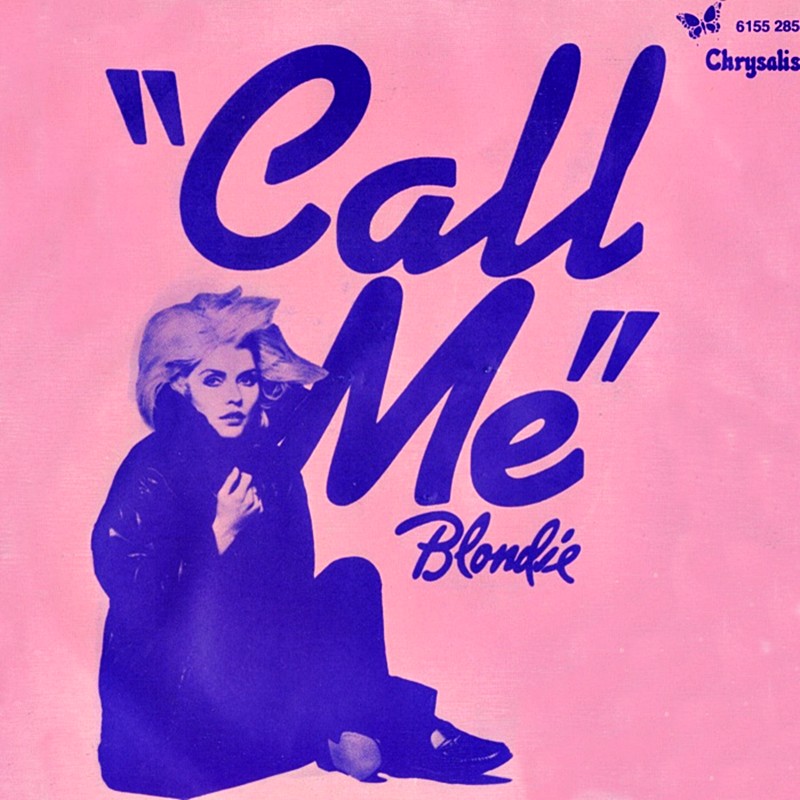 |
Debby Boone “You Light Up My Life” (1977)Inducted January 2021 as “Song with 20+ weeks atop 4 pop charts” |
| Director Joe Brooks commissioned Debby Boone, the daughter of legendary singer Pat Boone, to record a new version of his song “You Light Up My Life” initially featured in the 1977 movie of the same name. Her version became the biggest #1 Billboard Hot 100 hit of the 1970s. Its 10 weeks on top of the chart made it the biggest #1 since Elvis Presley topped the charts for 11 weeks in 1956 with his double A-side hit “Don’t Be Cruel” and “Hound Dog.” Read more. | :format(jpeg):mode_rgb():quality(40)/discogs-images/R-3892779-1434226873-4190.jpeg.jpg) |
Kim Carnes “Bette Davis Eyes” (1981)Inducted January 2021 as “Song with 20+ weeks atop 4 pop charts” |
| Songwriter Donna Weiss wrote the lyrics while Jackie DeShannon, whose “What the World Needs Now Is Now” and “Put a Little Love in Your Heart” were both top tens, wrote most of the music. BR1 DeShannon recorded a honky-tonk version of the song for her 1975 album New Arrangement. When Carnes was given the song, she wasn’t convinced it had hit potential. BR1 However, when her synthesizer player, Bill Cuomo, reworked the track into a new-wavish pop song, BB100 Carnes was sold. So was the record buying public – it hit #1 in 31 countries WK and topped 1981’s year-end Hot 100 in the U.S. BB100 Read more. |  |
Chic “Le Freak” (1978)Inducted January 2021 as “Song with 20+ weeks atop 4 pop charts” |
| “Le Freak” became the best-selling single in the history of Atlantic Records. BR1 It came about when Chic members Nile Rodgers and Bernard Edwards were invited to New York City’s famed disco club Studio 54 by Grace Jones on New Year’s Eve in 1977. However, she forgot to notify the staff and the pair and the doorman told them to “fuck off” as he slammed the door on them. They used it in a song, changing it to “freak out” after realizing radio would never play it otherwise. WK Read more. |  |
Andy Gibb “Shadow Dancing” (1978)Inducted January 2021 as “Song with 20+ weeks atop 4 pop charts” |
| The Gibb brothers (Barry, Maurice, Robin, and Andy) dominated the top of the Billboard Hot 100 chart in 1978. Andy’s brothers – the Bee Gees – had three #1 songs from the Saturday Night Fever soundtrack while “Shadow Dancing” was Andy’s third #1 song, making him the first solo artist in the U.S. pop chart history to have his first three releases hit #1. WK “Shadow Dancing” was also named the biggest song of the year by Billboard magazine. Read more. |  |
The Knack “My Sharona” (1979)Inducted January 2021 as “Song with 20+ weeks atop 4 pop charts” |
| The New York Times called “My Sharona” “an emblem of the new wave era in rock.” WK Doug Fieger, the lead singer of the Knack, fell for the real-life Sharona Alperin when she was in a relationship with someone else. He wrote the song in about 15 minutes, saying she “sparked something and I started writing a lot of songs feverishly in a short amount of time.” WK The song “compressed a sense of teenage sexual frustration into its stutter beat built on simple rock and roll.” BR1 They eventually ended up together and even became engaged, but his alcoholism and rock n’ roll lifestyle led to their breakup. Read more. |  |
Lionel Richie & Diana Ross “Endless Love” (1981)Inducted January 2021 as “Song with 20+ weeks atop 4 pop charts” |
| In 2002, Richie told Billboard magazine, “When I put out ‘Endless Love’…during the days of disco, the reaction was, ‘Are you nuts?’” BB100 However, this unforgettable ballad from the completely forgettable Brooke Shields and Tom Cruise movie of the same name was the biggest hit Motown had up to that time, not to mention the biggest soundtrack single and most successful duet. BR1 Richie and Ross both had numerous #1’s with their groups the Supremes and the Commodores respectively and as solo acts, but this was the biggest hit for both of them. Read more. | :format(jpeg):mode_rgb():quality(40)/discogs-images/R-9121703-1475151118-1251.jpeg.jpg) |
Kenny Rogers “Lady” (1980)Inducted January 2021 as “Song with 20+ weeks atop 4 pop charts” |
| In 1980, Kenny Rogers’ record label wanted a Greatest Hits package to ring in the Christmas season. Rogers turned to the Commodores’ Lionel Richie for new material to add to the collection. Rogers said, “The idea was that Lionel would come from R&B and I’d come from country, and we’d meet somewhere in the middle.” BR1 The resulting “Lady” became Rogers’ fourth million-selling single and his first #1 on the pop charts. BB100 It was also the biggest pop song of 1980 WHC and the first song of the decade to hit Billboard’s pop, country, adult contemporary, and R&B charts, BR1 hitting #1 on the first three. Read more. |  |
Rod Stewart “Tonight’s the Night (Gonna Be Alright)” (1976)Inducted January 2021 as “Song with 20+ weeks atop 4 pop charts” |
| Some radio programmers, the BBC, and Jesse Jackson’s People United to Save Humanity all saw this song as too sexually explicit, but public demand won out in the end and the song became the biggest #1 of 1976 WHC and the best-sellig song in the United States the following year. WK Its eight weeks on top made it the biggest #1 since the Beatles’ “Hey Jude” in November 1968. It was also the biggest hit of Stewart’s career. In 2018, Billboard ranked the song the 19th biggest in the history of the Hot 100. Read more. |  |
Rod Stewart “Da Ya Think I’m Sexy?” (1978)Inducted January 2021 as “Song with 20+ weeks atop 4 pop charts” |
| According to Carmine Appice, who had recently joined Stewart’s band and co-wrote the song, Stewart “was always looking at the charts and listening. He was a big fan of the Rolling Stones…so he wanted to do some kind of disco-y song, something like ‘Miss You.’” SF Some fans and critics thought his “defection to disco was unforgivable” BR1 but “Da Ya Think I’m Sexy” gave Stewart his third chart-topping hit after “Maggie May” in 1971 and “Tonight’s the Night” in 1976. Read more. |  |


