
DavesMusicDatabase.com is devoted to ranking, rating, and reviewing music of all genres and eras. The DMDB blog serves up album and song reviews, best-of lists, music history snapshots, and music-related essays.

|

|

|

|

|

|

|

|

|

|

|

|
Showing posts with label Biko. Show all posts
Showing posts with label Biko. Show all posts
Monday, February 13, 2012
The Top Songs of Peter Gabriel and Genesis
This list has been consolidated with the list of Genesis and Phil Collins songs as well as songs by Mike + the Mechanics and Tony Banks. You can see the results here.


Tuesday, May 2, 1989
Simple Minds’ Street Fighting Years released
| First posted 7/9/2010; updated 10/9/2020. |
Street Fighting Years |
 |
Released: May 2, 1989 Peak: 70 US, 11 UK, 24 CN, 11 AU Sales (in millions): -- US, 0.6 UK, 2.44 world (includes US and UK) Genre: alternative rock |
Tracks: Song Title (date of single release, chart peaks) Click for codes to singles charts.
Total Running Time: 61:13 The Players:
|
Rating:  3.550 out of 5.00 (average of 9 ratings)
Awards:
|
About the Album: Simple Minds built a following in the U.K. during the early ‘80s, but didn’t have their U.S. breakthrough until 1985’s #1 pop hit “Don’t You Forget about Me.” Before the year was out, the band followed that up with their most successful album to date, the top 10, gold-selling Once Upon a Time. Then, other than an interim live album, the group disappeared from the scene for four years. The band was now officially a trio, comprised of founding members Jim Kerr and Charlie Burchill, as well as Mick MacNeil, who’d joined in 1978. Mel Gaynor, who’d drummed with the band since 1982, was demoted to a session player after disagreements with producer Trevor Horn. John Giblin, who’d joined the band on bass in 1985, left during the sessions. Horn maintained the “arena rock sense of scale and drama which the band had developed since the mid’1980s,” WK but added “soundtrack atmospherics and a new incorporation of acoustic and Celtic-folk music-related ingredients.” WK The new approach made for a “decidedly, noncommercial follow-up. Street Fighting Years is a moody, dark affair. The music is yearning and most of the songs are politically charged lyrically.” TD Kerr noted that “every song seemed to be about conflict.” WK The lyrics covered topics such as “the Poll Tax, the Soweto townships, the Berlin Wall, and the stationing of nuclear submarines on the Scottish coast.” WK It made for mixed reviews. Rolling Stone’s Mark Coleman said the album “stands as an unfortunate example of politicized rock at its most simple-minded.” WK On the other side, though, Q magazine’s David Sinclair said the band “had finally produced a record to justify their reputation.” WK “Noteworthy tracks include a version of the Peter Gabriel classic Biko and the soaring Mandela Day.” TD “The title track takes some dramatic turns that give the gentle melody added thrust. Take a Step Back pulsates and Wall of Love rocks with conviction. Slower tracks like the brooding Let It All Come Down and a spirited run through the traditional Belfast Child are well done.” TD The latter was the lead single in the UK and went to #1, as did the album. In the U.S., however, the album was a commercial failure. This Is Your Land, with a guest spot from Lou Reed, was released as the lead single in America. It made the album rock and mainstream rock charts, but failed to dent the Billboard Hot 100. Overall, “Street Fighting Years is an artistic and elegant album that might lack immediate choruses but draws in the listener.” TD “It might not have satisfied the band’s newly won fans, but Street Fighting Years is an interesting, enjoyable album with some truly lovely moments.” TD |
Resources and Related Links:
|

Monday, February 6, 1989
Simple Minds “Mandela Day” released
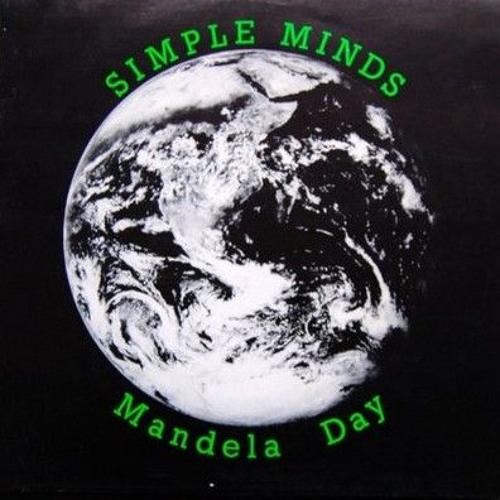 | Mandela DaySimple Minds |
Writer(s): Jim Kerr, Charlie Burchill, Mick MacNeil (see lyrics here) Released: February 6, 1989 First Charted: April 1, 1989 Peak: 17 MR, 12 AU, 1 DF (Click for codes to singles charts.) Sales (in millions): -- US, -- UK, -- world (includes US + UK) Airplay/Streaming (in millions): -- radio, 13.1 video, -- streaming |
Awards:Click on award for more details. 

|
About the Song:The Scottish rock band Simple Minds released their debut album, Life in a Day, in 1979. It wasn’t until their sixth album, 1982’s New Gold Dream, that they achieved top-10 status in the UK. They wouldn’t reach that benchmark for three more years in the United States. Hot on the heels of the #1 song “Don’t You Forget About Me” 1985’s Once Upon a Time was the band’s only gold-selling album in the U.S. and far exceeded the chart peak of anything else they released. In the UK, the band continued to find success after 1985, notably achieving their fourth consecutive #1 album in 1989 with Street Fighting Years. The album was preceded by the Ballad of the Streets EP, which featured a cover of Peter Gabriel’s “Biko” alongside original songs “Mandela Day” and “Belfast Child.” It was the most successful of eight top-10 singles in the UK, going all the way to #1. The trio of songs all made strong political statements. “Mandela Day” referenced South African activist Nelson Mandela, who was imprisoned in 1962 for his efforts in fighting against the racial segregation system known as apartheid in South Africa. He was finally freed in 1990 and became the country’s first president and black head of state from 1994 to 1999. While he was still in prison in 1988, a concert celebration in honor of his 70th birthday was held at Wembeley Stadium in London on June 11. The concert, known as the Free Nelson Mandela Concert, was broadcast to 67 countries and an audience of 600 million. The bill included the Bee Gees, Tracy Chapman, Dire Straits, Eurythmics, Peter Gabriel, Whitney Houston, George Michael, Salt-N-Pepa, Simple Minds, Sting, UB40, and Stevie Wonder. The Simple Minds’ set included familiar hits such as “Alive and Kicking,” “Sanctify Yourself,” and “Waterfront” as well as a cover of “Biko” alongside Peter Gabriel and Youssou N’Dour. They also premieried a new song known as “Mandela Day,” written specifically for the event. The song referenced Mandela’s quarter century in prison and celebrated the coming day when he would be free. Resources:
Related Links:

First posted 9/3/2022. |
Monday, August 18, 1980
Peter Gabriel “Biko” released
 | BikoPeter Gabriel |
Writer(s): Peter Gabriel (see lyrics here) Released: August 18, 1980 First Charted: August 23, 1980 Peak: 18 CL, 5 CO, 38 UK (Click for codes to singles charts.) Sales (in millions): -- Airplay/Streaming (in millions): -- radio, 8.6 video, -- streaming |
Awards (Peter Gabriel):Click on award for more details. 


Awards (Simple Minds):
Awards (Playing for Change):
|
About the Song:“Biko” was written as “an anti-apartheid protest song” WK inspired by Bantu Stephen Biko, a black South African anti-apartheid activist. Biko founded the South African Students’ Organization in 1968 and the Black People’s Convention in 1972. In 1973, the South African government banned him from “leaving his hometown, meeting with more than one person, publishing his writing, and speaking in public.” WK He was arrested in August 1977 for breaking that order. He died during police custody on September 12, 1977. All Music Guide’s Stewart Mason called the song Gabriel’s “first masterpiece” AMG and “a stunning achievement for its time.” AMG Gabriel wrote it after hearing about Biko’s death via the BBC WK and reading three biographies about Biko. SF The lyrics described Biko’s death and the violence perpetrated by the apartheid government. Gabriel said, “It seemed impossible to me that the South Africans had let him be killed when there had been so much international publicity about his imprisonment.” SF Mason said it was “one of the few rock songs to treat a political martyr with dignity but not mawkishness.” AMG After the release of the song as a single, Gabriel donated the proceeds to the Black Consciousness Movement in South Africa. The song has been credited with evoking “resistance to apartheid part of western popular culture.” WK Scholar Ingrid Byerly said it was the “right song written at the right time by the right person.” WK The South African government banned the song because they viewed it as a security threat. WK Musically, Gabriel incorporated his growing interest in African musical styles by using “a sparse two-tone beat played on Brazilian drum and vocal percussion, in addition to a distorted guitar, and a synthesized bagpipe sound.” WK “Biko” also used excerpts of recordings of songs, including “Ngomhia sibuyaho” and “Senzeni Na?,” which were sung at Biko’s funeral. WK Personal favorite cover versions of the song include one by Simple Minds in 1989 and the collaborative project known as Playing for Change which recorded the song in 2010. Resources:
Related Links:

First posted 6/9/2022; last updated 12/23/2022. |
Subscribe to:
Comments (Atom)