Showing posts with label Songs That Shaped Rock. Show all posts

Saturday, February 27, 1993

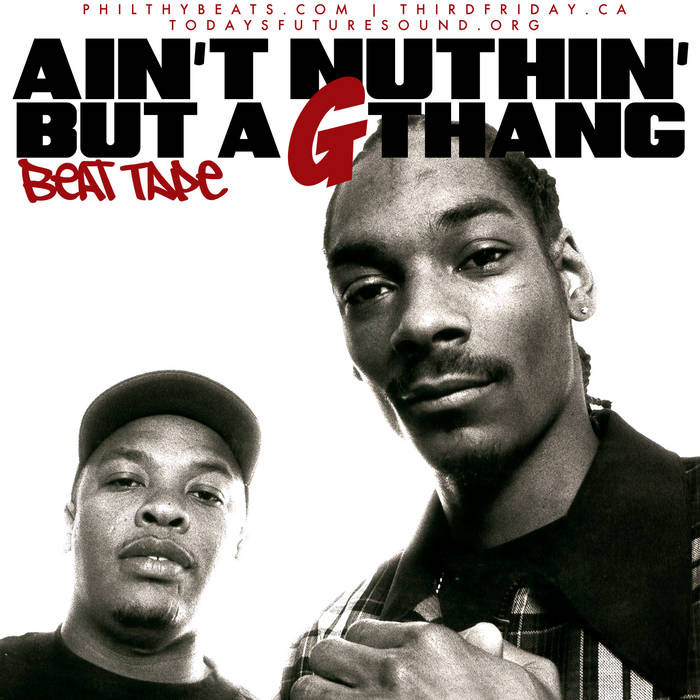
Dr. Dre & Snoop Dogg “Nuthin’ But a ‘G’ Thang” tops R&B chart

Nuthin’ But a ‘G’ Thang

Dr. Dre & Snoop Dogg

Writer(s): Tracy Curry, Calvin Broadus, Otha Haywood (see lyrics here)


Released: November 19, 1992


First Charted: January 23, 1993


Peak: 2 US, 2 CB, 24 RR, 12 RB, 31 UK, 63 AU, 24 DF (Click for codes to charts.)


Sales (in millions): 1.3 US, 0.2 UK, 1.5 world (includes US + UK)


Airplay/Streaming (in millions): -- radio, 79.82 video, 274.37 streaming

Awards:

Click on award for more details.

About the Song:

Rapper Dr. Dre (born Andre Young) started out with the World Class Wreckin’ Cru and then was part of the gangsta rap group N.W.A. before releasing his debut solo effort, The Chronic, in 1992. The album reached #3 on the Billboard album chart and sold more than five million copies, fueled by top-ten hits “Nuthin’ But a ‘G’ Thang” and “Dre Day” as well as top 40-hit “Let Me Ride.”

With “Nuthin’” Dre “brought his innovative G-Funk sound to the mainstream.” TB It was “a West Coast rap classic” TC about gangster life and getting laid. It’s ultimately a “piece of misogynistic nonsense,” TC that “reads like the patter between two adolescent boys” TC which explains why “gangsta rap essentially appealed to teenage males.” TC

The song is built around a sample from seventies funk artist Leon Haywood’s “I Want’a Do Something Freaky to You.” “All the hallmarks of his best work are here: the Funkadelic-inspired beats, the stop-start liquid bass, the subtle funk guitar, and the heavy-breathing backing vocals.” TB

The song didn’t just establish Dr. Dre as a commercially-viable solo artist, but as “one of the most clued-up talent spotters around.” TB “Nuthin’” introduced Snoop Dogg (then known as Snoop Doggy Dogg) to the mainstream; in fact, Snoop actually does most of the rapping on the song. TC The pair previously collaborated on “Deep Cover” in 1992, a #46 R&B hit from the soundtrack of the same name. Snoop’s Dr. Dre-produced debut solo album, Doggystyle, dropped the next year. It hit #1 on the Billboard album chart, sold nearly seven million copies in the United States, and produced two top-ten hits.

With those two albums, Dre “developed a sound that was so funky and fat that he quickly became one of the most inventive and powerful of rap producers; ” TC in fact, “the most important hip-hop producer of the 1990s.” TB He produced and guested on Blackstreet’s chart-topping hit “No Diggity” and would also work with Tupac Shakur, Eminem, and Mary J. Blige.


Resources:


Related Links:


First posted 6/18/2023.


Saturday, October 29, 1983

John Mellencamp “Pink Houses” charted

Pink Houses

John (Cougar) Mellencamp

This post has been moved here.

Monday, August 18, 1980

Peter Gabriel “Biko” released

Biko

Peter Gabriel

Writer(s): Peter Gabriel (see lyrics here)


Released: August 18, 1980


First Charted: August 23, 1980


Peak: 18 CL, 5 CO, 38 UK (Click for codes to singles charts.)


Sales (in millions): --


Airplay/Streaming (in millions): -- radio, 8.6 video, -- streaming

Awards (Peter Gabriel):

Click on award for more details.


Awards (Simple Minds):


Awards (Playing for Change):

About the Song:

“Biko” was written as “an anti-apartheid protest song” WK inspired by Bantu Stephen Biko, a black South African anti-apartheid activist. Biko founded the South African Students’ Organization in 1968 and the Black People’s Convention in 1972. In 1973, the South African government banned him from “leaving his hometown, meeting with more than one person, publishing his writing, and speaking in public.” WK He was arrested in August 1977 for breaking that order. He died during police custody on September 12, 1977.

All Music Guide’s Stewart Mason called the song Gabriel’s “first masterpiece” AMG and “a stunning achievement for its time.” AMG Gabriel wrote it after hearing about Biko’s death via the BBC WK and reading three biographies about Biko. SF The lyrics described Biko’s death and the violence perpetrated by the apartheid government. Gabriel said, “It seemed impossible to me that the South Africans had let him be killed when there had been so much international publicity about his imprisonment.” SF

Mason said it was “one of the few rock songs to treat a political martyr with dignity but not mawkishness.” AMG After the release of the song as a single, Gabriel donated the proceeds to the Black Consciousness Movement in South Africa. The song has been credited with evoking “resistance to apartheid part of western popular culture.” WK Scholar Ingrid Byerly said it was the “right song written at the right time by the right person.” WK The South African government banned the song because they viewed it as a security threat. WK

Musically, Gabriel incorporated his growing interest in African musical styles by using “a sparse two-tone beat played on Brazilian drum and vocal percussion, in addition to a distorted guitar, and a synthesized bagpipe sound.” WK “Biko” also used excerpts of recordings of songs, including “Ngomhia sibuyaho” and “Senzeni Na?,” which were sung at Biko’s funeral. WK

Personal favorite cover versions of the song include one by Simple Minds in 1989 and the collaborative project known as Playing for Change which recorded the song in 2010.


Resources:


Related Links:


First posted 6/9/2022; last updated 12/23/2022.