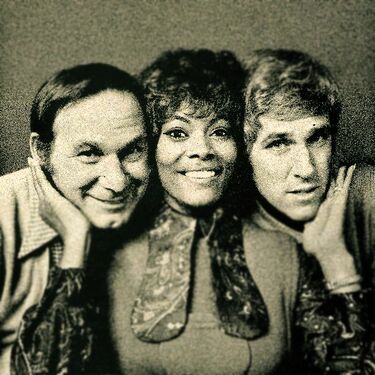
Showing posts with label Burt Bacharach. Show all posts

Wednesday, March 20, 2024

Library of Congress Gershwin Prize for Popular Song

Gershwin Prize:

2007-2024

The Gershwin Prize for Popular Song was created by the Library of Congress in 2007. As explained on the site, it is given to celebrate “the work of an artist whose career reflects lifetime achievement in promoting song as a vehicle of musical expression and cultural understanding. The styles in which these works are composed reflect myriad contemporary traditions like rock, jazz, country, pop, blues, folk, and gospel. The recipient – whether composer, singer/songwriter, or interpreter – is recognized for entertaining and informing audiences, for drawing upon the acknowledged foundations of popular song, and for inspiring new generations of performers on their own professional journeys.” The Library of Congress selects the recipient in consultation with a board consisting of members which may include music critics, performers, producers, scholars, and songwriters. The award was named after the brother/composer team of George and Ira Gershwin. Here are the recipients:

See other lifetime achievement awards.


Resources:


First posted 12/13/2012; last updated 3/20/2024.

Saturday, September 16, 2023

Doja Cat “Paint the Town Red” hit #1

Paint the Town Red

Doja Cat

Writer(s): Burt Bacharach, Hal David, Isaac Earl Bynum, Jean-Baptiste Kouame, Karl Rubin, Ryan Buendia (see lyrics here)


Released: August 4, 2023


First Charted: August 19, 2023


Peak: 13 BB, 11 BA, 12 DG, 11 ST, 31 A40, 18 RB, 15 UK, 16 CN, 110 AU (Click for codes to charts.)


Sales (in millions): -- US, 0.6 UK, 2.68 world (includes US + UK)


Airplay/Streaming (in millions): -- radio, 360.10 video, 1202.18 streaming

Awards:

Click on award for more details.

About the Song:

Amala Ratna Zandile Dlamini, better known as Doja Cat, is a rapper and singer born in Los Angeles in 1995. Her 2018 debut, Amala, stalled at #138 on the album chart, but her next two albums were top-ten, double-platinum releases. She also landed a #1 hit in with “Say So” from her Hot Pink album and three more top tens from 2021’s Planet Her.

Her fourth album, 2023’s Scarlet, gave Doja Cat her second #1 song with “Paint the Town Red.” In addition to topping the charts in the United States, the song soared to the top of the charts in 18 other charts. It became the fastest song by a solo female rapper to reach 100 million streams on Spotify. WK The song also received a Grammy nomination for Best Pop Solo Performance.

The “pop-rap track with a jazz-influenced beat” WK samples Dionne Warwick’s 1964 top-ten hit “Walk on By.” The phrase “paint the town red” means “to go out and celebrate without inhibition by having a noisy and disorderly spree.” SF It was first used in the 1870s as a reference to red-light districts. SF The song has been interpreted as a message to haters – both critics and fans – that she will go out and enjoy herself, living her life the way she wants to.

The song may be a specific response to reaction to Doja Cat shaving her head and eyebrows in August 2022. The move spurred negative comments from fans on social media who thought it made her look demonic. In the video, Doja Cat appears to be playing up the image, dressed in red and keeping company with the devil. There’s also a scene in which she peels out her eyeball and it falls into hell. The message is potentially that messing with Doja Cat could get bloody. SF


Resources:


First posted 1/7/2024; last updated 10/17/2024.

Friday, February 10, 2023

Burt Bacharach's Top 50 Songs

Burt Bacharach

Top 50 Songs

Burt Bacharach is a pianist, composer, and producer born May 12, 1928, in Kansas City, MO. He died on 2/8/2023. Frequently partnered with lyricist Hal David. Through 2006, Bacharach had written 70 Top 40 hits in the U.S. and 52 Top 40 hits in the U.K. For a complete list of this act’s DMDB honors, check out the DMDB Music Maker Encyclopedia entry.

For a complete list of this act’s DMDB honors, check out the DMDB Music Maker Encyclopedia entry.

Click here to see other acts’ best-of lists.


Spotify Podcast:

Check out the Dave’s Music Database podcast episode Remembering Burt Bacharach: His Top 10 Songs, based on this list. Debut: February 10, 2023, at 7pm CST. New episodes based on Dave’s Music Database lists are posted every Tuesday at 7pm CST.

Awards:


Top 50 Songs


Dave’s Music Database lists are determined by song’s appearances on best-of lists, appearances on compilations and live albums by the featured act, and songs’ chart success, sales, radio airplay, streaming, and awards. Songs which hit #1 on various charts are noted. (Click for codes to charts.)

DMDB Top 1%:

1. That's What Friends Are For (Dionne Warwick with Elton John, Gladys Knight, & Stevie Wonder, 1985) #1 US, AC, RB, CN, AU
2. Raindrops Keep Falling on My Head (B.J. Thomas, 1969) #1 US, CB, HR, AC, CN
3. They Long to Be Close to You (Carpenters, 1970) #1 US, CB, HR, AC, CN, AU

DMDB Top 2%:

4. Walk on By (Dionne Warwick, 1964)
5. Arthur’s Theme (Best That You Can Do) (Christopher Cross, 1981) #1 US, CB, HR, RR, AC
6. I Say a Little Prayer (Aretha Franklin, 1968)
7. This Guy’s in Love with You (Herb Alpert, 1968) #1 US, CB, HR, AC, CN, AU

DMDB Top 5%:

8. On My Own (Patti LaBelle with Michael McDonald, 1986) #1 US, CB, RR, RB, CN
9. Always Something There to Remind Me (Naked Eyes, 1983)
10. What the World Needs Now Is Love (Jackie DeShannon, 1965) #1 CN

DMDB Top 10%:

11. Baby It’s You (The Shirelles, 1961)
12. The Look of Love (Dusty Springfield, 1967)
13. Heartlight (Neil Diamond, 1982) 31 AC
14. Magic Moments (Perry Como, 1957) #1 UK

DMDB Top 20%:

15. I’ll Never Fall in Love Again (Dionne Warwick, 1969) #1 AC
16. Wishin’ and Hopin’ (Dusty Springfield, 1964)
17. I Just Don’t Know What to Do with Myself (The White Stripes, 2003)
18. Any Day Now (Ronnie Milsap, 1982) #1 AC, CW
19. What’s New Pussycat? (Tom Jones, 1965) #1 CN
20. One Less Bell to Answer (The 5th Dimension, 1970) #1 AC

21. Twenty-Four Hours from Tulsa (Gene Pitney, 1963)
22. Only Love Can Break a Heart (Gene Pitney, 1962) #1 AC
23. Do You Know the Way to San Jose? (Dionne Warwick, 1968)
24. Wives and Lovers (Jack Jones, 1963)
25. Blue on Blue (Bobby Vinton, 1963) #1 HR
26. I Say a Little Prayer (Diana King, 1997)
27. Trains and Boats and Planes (Billy J. Kramer & the Dakotas, 1965)
28. Baby It’s You (The Beatles, 1963)
29. Don’t Make Me Over (Dionne Warwick, 1962)
30. Love Power (Dionne Warwick with Jeffrey Osborne, 1987) #1 AC

31. Anyone Who Had a Heart (Dionne Warwick, 1963)
32. I Say a Little Prayer (Dionne Warwick, 1967)
33. Always Something There to Remind Me (Sandie Shaw, 1964)
34. Make It Easy on You (Jerry Butler, 1962)
35. What the World Needs Now/Abraham, Martin and John (Tom Clay, 1971)
36. The Look of Love (Sergio Mendes & Brasil ’66, 1968)
37. A House Is Not a Home (Brook Benton, 1964)

DMDB Beyond the Top 20%:

38. Walk on By (The Stranglers, 1978)
39. Casino Royale (Herb Alpert & the Tijuana Brass, 1967) #1 AC
40. Alfie (Stevie Wonder as Eivets Rednow, 1968)

41. I Just Don’t Know What to Do with Myself (Gary Puckett, 1970)
42. Don’t Make Me Over (Sybil, 1989)
43. I Say a Little Prayer/By the Time I Get to Phoenix (Glen Campbell & Anne Murray, 1971)
44. Anyone Who Had a Heart (Cilla Black, 1964)
45. My Little Red Book (Love, 1966)
46. Blue Guitar (Richard Chamberlina, 1963)
47. Making Love (Roberta Flack, 1982)
48. Walk on By (Average White Band, 1979)
49. Love Always (El DeBarge, 1986)
50. Walk on By (Isaac Hayes, 1969)


Resources and Related Links:


First posted 12/15/2019; updated 2/10/2023.

Friday, June 14, 2019

Bruce Springsteen released Western Stars

Western Stars

Bruce Springsteen


Released: June 14, 2019


Peak: 2 US, 11 UK, 4 CN, 11 AU


Sales (in millions): 0.07 US, 0.1 UK, 0.24 world (includes US and UK)


Genre: rock


Tracks:

Song Title [time] (date of single release, chart peaks) Click for codes to singles charts.

  1. Hitch Hikin’ [3:37]
  2. The Wayfarer [4:18]
  3. Tucson Train [3:31] (5/30/2019, --)
  4. Western Stars [4:41] (6/14/2019, --)
  5. Sleepy Joe’s Café [3:14]
  6. Drivin’ Fast (The Stuntman) [4:16]
  7. Chasin’ Wild Horses [5:03]
  8. Sundown [3:17]
  9. Somewhere North of Nashville [1:52]
  10. Stones [4:44]
  11. There Goes My Miracle [4:05] (5/17/2019, --)
  12. Hello Sunshine [3:56] (4/26/2019, 23 AA)
  13. Moonlight Motel [4:16]

All songs written by Bruce Springsteen.


Total Running Time: 51:00

Rating:

3.658 out of 5.00 (average of 16 ratings)


Quotable: “A gorgeous love letter to the idea of songs providing salvation” – Maura Johnston, Entertainment Weekly


Awards: (Click on award to learn more).

About the Album:

Bruce Springsteen’s last studio album, 2014’s High Hopes, was “a loose assemblage of covers, unreleased tracks, and new versions of already-existing songs,” CS more “a collection of odds and ends” CS Since then, Bruce wrote his Born to Run memoir and a sort-of companion run of sold-out Broadway shows in which he revisited his past via stories and songs. Western Stars therefore stands as Springsteen’s first “proper” album since 2012’s Wrecking Ball. It marks his return to “his mastery of the long form on wax.” CS It “is a gorgeous love letter to the idea of songs providing salvation, a credo that has animated his four-decade-plus recording career.” EW

Wrecking Ball, High Hopes, and Western Stars were produced by Ron Aniello, who also “plays bass, keyboard, and other instruments. Patti Scialfa provides vocals and contributes vocal arrangements on four tracks. The musical arrangements include strings, horns, pedal steel and contributions from more than 20 other players including Jon Brion (who plays celeste, Moog, and farfisa), as well as guest appearances by David Sancious, Charlie Giordano, and Soozie Tyrell.” AZ Springsteen did most of the recording at his home studio in New Jersey, but some additional work was done in California and New York. AZ

Comparison to Previous Works

“After a decade of albums that aimed for bigger targets and wrapped their intentions in songs that sometimes didn't fit their messages, and vice versa, Western StarsUCR is “an album with the consistency in theme and tone” CS that “yields some of the most charming material of the venerable star’s career.” EQ “The California country-tinged, cinematic endeavor sees the Boss reflecting, embracing the dark corners of his mind while introducing a slew of West Coast personas and an army of strings and horns.” EQ

The album is anchored by “the 69-year-old’s weathered burr — still one of American music’s most singular instruments, but a bit gnarled by time.” EW He also employs a “spare but emotional vocal style here [that] uncovers shades he hasn't used in years or sometimes ever before.” UCR “When the album coalesces, as it often does, it’s Springsteen's most satisfying since 2002’s The Rising.” UCR “On their own, the album’s songs are good, but together they gain more meaning and resonance.” UCR It “conjures a specific place and time – especially in its orchestrations.” UCR

Springsteen called this “a return to my solo recordings featuring character driven songs and sweeping, cinematic orchestral arrangements.” AZ While Western Stars shares the “bleakness [that] runs through solo albums Nebraska and The Ghost of Tom Joad,” EQ this is “a lush, gorgeous record that sounds unlike anything Springsteen has recorded in the past.” UCR It differs from his previous solo efforts which are “a take on the early 60s folk revival” GN with him assuming the role of an “acoustic balladeer who tries to channel the spirit of Woody Guthrie, with political references updated but affected twang intact.” SL

Late ‘60s/Early ‘70s Southern California Pop

“Springsteen has long been a master of nostalgia and here he shifts his sonic touchpoints back to the sounds that floated through his early years.” EQ He channels late ‘60s/early ‘70s Southern California pop – “not the widely mimicked Laurel Canyon folk-rock style, but the more orchestrated, Nashville-influenced manner of Jimmy Webb and Glen Campbell, with dashes of Harry Nilsson and Burt Bacharach.” SL “But because it’s Springsteen, both the arrangements and the character-driven stories possess a cinematic sweep that’s far more dramatic than the music of his reference points.” CS

Orchestration

The “luscious orchestrations [are] heavy on the strings and French horn, cooing female backing vocals, guitars that shimmer and quiver with tremolo effects, mournful pedal steel.” GN The arrangements are “unlike anything in his catalog. Springsteen albums are usually grand affairs but he’s never made one that sounds so vast and luxurious throughout.” PF The orchestration “is more panoramic than emotionally demonstrative [which] leads Springsteen in pleasantly unfamiliar directions, but seldom so far afield as to be jarring.” SL These “purposefully anachronistic arrangements – recalling jukeboxes, FM radios, sepia-toned montages, faded memories – carry an elegiac tone. It’s been a long time since popular music sounded like this, and it ties these characters to an era as much as a place.” PF

Themes

“Placing intricately detailed portraiture on massive musical backdrops has been a Springsteen trademark for years, of course, and Western Stars continues this legacy, transforming the enormous into the intimate.” EW “A press release characterized the songs as encompassing a “range of American themes, of highways and desert spaces, of isolation and community and the permanence of home and hope.” AZ Hot Press’s Pat Carty described the album as a “heartbreaking yet life-affirmingly beautiful record – both elegiac and warm, a trick few others, if any, could pull off.” WK

“Geographically, Western Stars is closest to The Boss’ last solo(ish) record, 2005’s Devils & Dust. But where that album turned its gaze toward Southwestern people and places to convey a sense of despair,” CS Western Stars conjures “the Utopian romance of the Western frontier, but, because this is a Bruce Springsteen album, it’s encountered mainly in brokenness and loss.” SL The album is populated by “a ghost town of broken male narrators” PF “who haunt its mountains and canyons” PF and “find themselves run over by a world that’s long-since sped past.” EQ They are “old and restless, lost and wandering,” PF “in search of or, more often, on the run from their dreams.” SL These men are “alone with their never-ending work and shortening timelines,” PF “ruminating on how things have changed, not just for the worse, but in ways none of them anticipated.” GN

“Hitch Hikin’”

Slate’s Carl Wilson considers the song reminiscent of Tom Waits “Ol’ ’55,” “with the music loping along like a pickup truck rolling through town.” SL Sung from the persona of “a drifter with nowhere to go,” PF the song celebrates “a time when a young person could trust that thumbing it on the highway was a safe and benign way to get from point A to point B and discover a little of America along the way.” SL

This “slow-burner” EW “becomes epic” CS thanks to the ”gradually swelling orchestration adding gravitas to the images the narrator collects during his travels.” EQ We are invited “into the backseats of three cars, whose drivers stand in for the pillars of Springsteen’s career. There’s a father, a trucker headed toward a big open highway, and a solitary racer in a vintage model from 1972, which also happens to be the year that Springsteen scored his record deal with Columbia.” PF

“The Wayfarer”

This song “depicts an almost identical narrator, [but] it stands out for its acceleration in momentum” CS and “tragic-triumphant conclusion.” PF “Springsteen reframes his wanderlust in a series of confessions. He acknowledges that put in his position most people would be happy with what they have. He knows his worries are nothing new.” PF

“Springsteen powers the orchestration with the E Street staples of organ, palm-muted guitar, and sun-dappled piano from actual former E Streeter David Sancious,” CS “who played the virtuosic piano solo in 1973’s ‘New York City Serenade.’” PF “His jazzy touch on the keys offsets the thump of Springsteen’s acoustic guitar and the earthy twang of his baritone, as open-hearted and desperate as it has ever sounded.” PF Springsteen’s “wife and frequent collaborator, Patti Scialfa, lifts the song even higher with her arrangement of celestial backing vocals.” CS

“Tucson Train”

“The lush arrangements of…the heart-eyed ‘Tuscon Train’” EW make for “an immediately classic-sounding Springsteen tale of yearning.” SL The protagonist “may be struggling with a pill addiction, but the joyous clatter of steam-engine percussion and horns that sound birthed from the Grand Canyon are enough to convince [the listener] that he and his life partner are going to be alright in their new town.” CS

He fled to “San Francisco to operate a crane in Arizona anticipating – with excitement and perhaps trepidation – the arrival of his ex-lover on the 5:15 train. He’s found some kind of contentment working hard in the Southwest, and here comes the person with whom he ‘fought hard over nothing…till nothing remained.’ Has he actually changed enough to handle it? The song ends on the ominous ticking of the clock.” SL

“Western Stars”

The pun of the “lamenting” EQ title track “refers not only to the nocturnal sky out past the Rockies but to celebrities from TV and movie Westerns.” SL The protagonist was once “a bit player in cowboy movies” CS who has been “reduced to hawking Viagra on TV and retelling his stories for anyone who’ll buy him a drink.” GN He “will likely die with that fact that he was once ‘shot by John Wayne’ [in a movie] as his most memorable claim to fame.” EQ

“On weekends he likes to head out to the desert to watch Mexican charros compete in rodeo events – another kind of ‘Western stars.’ Other nights he might flirt with some ‘lost sheep from Oklahoma’ in an L.A. bar, animal imagery that intersects menacingly with the previous line about a coyote crossing the narrator’s front porch “with someone’s Chihuahua in its teeth.” SL

“Sleepy Joe’s Café”

The album “works, almost without exception,” EQ although the “boot-scooting” EW “‘Sleepy Joe’s Café’ might ring a touch too whimsical for anyone who hoped another Springsteen solo effort would mean a return to the haunted prairies of Nebraska and The Ghost of Tom Joad.” CS The song “understandably tries to break up the torrent of poignancy with something more upbeat,” SL but it contrasts with the rest of the album cuts.

It “is a vaguely Latin-style accordion groover” SL that recall Springsteen’s “party-setting throwback songs” UCR populated by “hope-filled characters.” EW A “World War II vet…opens a restaurant outside of San Bernardino,” CS “an idealized oasis…where working folk of all stripes can dance their cares away.” SL “It’s a concept similar to The Rising’s ‘Mary’s Place,’ but the milquetoast world music arrangement and bland lyric make it eminently skippable.” SL “The E Street Band could have turned it into something more driving and potent.” GN

“Drive Fast (The Stuntman)”

Western Stars is marked by “moments of transcendent loveliness…[such as] the shivering instrumental coda” GN of the “simmering ‘Drive Fast (The Stuntman).’” EW The narrator, a former stuntman, has been “beaten up by the job and the life it affords.” EQ He waxes “wistful about his long-past daredevil glories and the girl who got away.” SL He “‘was looking for anything, any kind of drug to lift me up off this ground’ and found love on a B-movie set.” EW

The song starts and ends with “a couplet that’s one of Springsteen’s recent best:” SL “I got two pins in my ankle and a busted collarbone/ A steel rod in my leg, but it walks me home.”

“Chasin’ Wild Horses”

This song “prescribes its title as a means of counterbalancing pain; the arrangement grows more romantic as the chorus hardens into a routine.” PF

“Sundown”

“For those wild spirits who worked 9 to 5 and somehow survived till the night, there’s ‘Sundown,’ a tour through a bittersweet twilight where you long for companionship.” PF

Springsteen embraces an “occasional tendency towards schmaltz.” GN On songs like “There Goes My Miracle” and “Sundown,” “he slathers on the high-camp strings and transforms his voice into a croon, denuded of the usual Springsteen grit.” GN

“Somewhere North of Nashville”

This “sparse miniature” SL “sounds unfinished” UCR when put in the context of an “artist famed for his highway-spanning, syllable-spilling epics and his marathon concerts.” SL It “is among the shortest, starkest things that Springsteen has ever recorded: an acknowledgment of how quickly a song – and life – can pass by.” PF

His rasp is “in full Steve Earle effect” SL as he sings “in a defeated growl” PF about “a failed country songwriter wondering if any of the sacrifices he made in his youth were worth it.” PF He gave up “love to pursue fame in Music City, where he fails more or less instantly.” SL (“I traded you for this song.”) Now he’s splitting town with ‘nothing but this melody, and time to kill,’ and precious few prospects of recovering what he’s squandered.” SL

“Stones”

“The coda of ‘Stones’ gives his stoic vocals an emotional counterpoint by way of a twisty, insistent violin solo.” EW

“There Goes My Miracle”

“The brokenhearted, string-laden ‘There Goes My Miracle’ certainly recall the era of Bacharach and Webb” EW although it can be viewed as a “schmaltzy” EQ song which “wandered in by accident from Working on a Dream, Springsteen’s misfired attempt a decade ago to catch up with more current pop. While the melody has potential, the repetitively anodyne lyrics should be ashamed to keep company with the other songs on this album. And Springsteen strains for a bravura vocal that he maybe (maybe) could have managed in the 1980s, but not with his more worn and surgically compromised instrument in this century.” SL

“Hello Sunshine”

The album’s lead single “epitomizes the record’s California country template.” SL The “hardened narrator” PF “looks for redemption on barren streets.” EW The song “recalls ‘Good Time Charlie’s Got the Blues,’ the 1972 hit by the otherwise little-known singer-songwriter Danny O’Keefe. But Springsteen’s take is a reversal” SL as he “considers how to escape the isolation he can’t help cultivating” EQ (“You fall in love with lonely, you end up that way”) instead of “contracting an addiction to melancholy.” SL

It “seems to be about transcending the severe depression Springsteen went through several years ago, and the destabilizing effects of his own chronic restlessness.” SL (“You know I always liked that empty road/No place to be and miles to go/But miles to go is miles away.”) He told Esquire, “I have come close enough to [mental illness] where I know I am not completely well myself…I’ve had to deal with it a lot over the years, and I am on a variety of medications that keep me on an even keel; otherwise I can swing rather dramatically and…the wheels can come off a little bit.” EQ “In this sense, it serves as the bridge between the album’s broader themes and his personal life.” SL

“Moonlight Motel”

The album closer is “an understated, fingerpicked ballad in which weekends of youthful erotic trysts at a stop ‘on a blank stretch of road/ Where nobody travels and nobody goes’ give way to years of ‘bills and kids and kids and bills.’” SL The “forlorn protagonist rouses himself from his ‘lonely bed’” SL and finds himself taking “a bottle of Jack out of a paper bag” SL and “glumly surveying the boarded-up” GN motel which was “an old rendezvous spot for him and an ex.” EQ

The song evokes the line “It’s better to have loved” from “Ulysses,” a 19th-century Tennyson poem from which Springsteen has previously drawn. PF The title of Western Stars also appears in the poem. “It’s easy to see why Springsteen finds resonance in these…defining works by a grief-stricken poet wondering if our brief, complicated lives are worth the legacy we leave behind. ‘Ulysses’ is narrated by a hero approaching old age, returning from a long journey only to realize he felt more fulfilled on the road. So he heads out again, ‘to strive, to seek, to find, and not to yield.’ And stay alive, if he can.” PF

Resources and Related Links:


Other Related DMDB Pages:


First posted 6/19/2019; last updated 2/5/2022.

Wednesday, March 8, 2017

Carole Bayer Sager: Top 40 Songs

First posted 12/15/2019.

Songwriter Carole Bayer was born 70 years ago on this day in 3/8/1947 in Brooklyn, NY. She was married to record-producer Andrew Sager from 1970 to 1978 and has also been romantically linked to songwriters Marvin Hamlisch and Burt Bacharach (married 1985 to 1991). She won an Academy Award (“Arthur’s Theme” by Christopher Cross) and Grammy Award (“That’s What Friends Are For,” Dionne & Friends). For a complete list of this act’s DMDB honors, check out the DMDB Music Maker Encyclopedia entry.


Top 40 Songs

Dave’s Music Database lists are determined by song’s appearances on best-of lists as well as chart success, sales, radio airplay, streaming, and awards. In the event of songs which have been recorded more than once, only the top-ranked song is included in the list. Songs which hit #1 on the following charts have been noted: Billboard Hot 100 pop charts (US), Cashbox (CB), Hit Records (HR), Radio & Records (RR), Billboard R&B chart (RB), Billboard country chart (CW), United Kingdom pop chart (UK), Canadian pop chart (CN), and Australian pop chart (AU).

DMDB Top 1%:

1. That's What Friends Are For (Dionne Warwick with Elton John, Gladys Knight, & Stevie Wonder, 1985) #1 US, AC, RB, CN, AU

DMDB Top 5%:

2. Arthur’s Theme (Best That You Can Do) (Christopher Cross, 1981) #1 US, CB, HR, RR, AC
3. A Groovy Kind of Love (Phil Collins, 1988) #1 US, CB, RR, AC, UK, CN
4. On My Own (Patti LaBelle with Michael McDonald, 1986) #1 US, CB, RR, RB, CN
5. Nobody Does It Better (Carly Simon, 1977) #1 RR, AC
6. When I Need You (Leo Sayer, 1977) #1 US, CB, HR, RR, AC, UK, CN
7. A Groovy Kind of Love (The Mindbenders, 1966) #1 CB, HR

DMDB Top 10%:

8. Heartlight (Neil Diamond, 1982) #1 AC
9. Don’t Cry Out Loud (Melissa Manchester, 1978)

DMDB Top 20%:

10. It’s My Turn (Diana Ross, 1980)
11. Love Power (Dionne Warwick with Jeffrey Osborne, 1987) #1 AC

Beyond the DMDB Top 20%:

12. Midnight Blue (Melissa Manchester, 1975) #1 AC
13. You’re Moving Out Today (Carole Bayer Sager, 1977) #1 AU
14. You’re the Only One (Dolly Parton, 1979) #1 CW
15. Making Love (Roberta Flack, 1982)
16. Heartbeaker (Dolly Parton, 1978) #1 CW
17. Try It on My Own (Whitney Houston, 2002)
18. You’re Moving Out Today (Bette Midler, 1977)
19. Fly Away (Peter Allen, 1981)
20. Ever Changing Times (Aretha Franklin with Michael McDonald, 1991)

21. Looking Through Your Eyes (LeAnn Rimes, 1998)
22. I’d Rather Leave While I’m in Love (Rita Coolidge, 1979)
23. On the Way to the Sky (Neil Diamond, 1981)
24. Front Page Story (Neil Diamond, 1982)
25. Turn Around (Neil Diamond, 1984)
26. Through the Eyes of Love (Melissa Manchester, 1979)
27. The Prayer (Andrea Bocelli with Celine Dion, 1998)
28. Break It to Me Gently (Aretha Franklin, 1977)
29. Some Changes Are for Good (Dionne Warwick, 1981)
30. Over You (Natalie Cole with Ray Parker, Jr.; 1988)

31. Love Always (El DeBarge, 1986)
32. A Chance for Heaven (Christopher Cross, 1984)
33. Stronger Than Before (Carole Bayer Sager, 1981)
34. Finder of Lost Loves (Dionne Warwick with Glenn Jones, 1985)
35. Take Good Care of You and Me (Dionne Warwick with Jeffrey Osborne, 1989)
36. That’s What Friends Are For (Rod Stewart, 1982)
37. I Never Loved You Anyway (The Corrs, 1997)
38. Night Shift (Quarterflash, 1991)
39. Someone Else’s Eyes (Aretha Franklin, 1991)
40. It’s the Falling in Love (Michael Jackson with Patti Austin, 1979)


Awards:


Saturday, September 1, 2012

In Memory of Hal David: His Top 40 Songs

First posted 12/15/2019.

Hal David with Dionne Warwick and Burt Bacharach, image from haldavid.movie.com

R.I.P. songwriter Hal David. He was born Harold Lane David on 5/25/1921 in New York, NY. He died 9/1/2012. Frequently worked with Burt Bacharach. They were one of the songwriting teams who worked out of the legendary Brill Building.For a complete list of this act’s DMDB honors, check out the DMDB Music Maker Encyclopedia entry.


Top 40 Songs

Dave’s Music Database lists are determined by song’s appearances on best-of lists as well as chart success, sales, radio airplay, streaming, and awards. In the event of songs which have been recorded more than once, only the top-ranked song is included in the list. Songs which hit #1 on the following charts have been noted: Billboard Hot 100 pop charts (US), Cashbox (CB), Hit Records (HR), Radio & Records (RR), Billboard R&B chart (RB), Billboard country chart (CW), United Kingdom pop chart (UK), Canadian pop chart (CN), and Australian pop chart (AU).

DMDB Top 1%:

1. Raindrops Keep Falling on My Head (B.J. Thomas, 1969) #1 US, CB, HR, AC, CN
2. They Long to Be Close to You (Carpenters, 1970) #1 US, CB, HR, AC, CN, AU

DMDB Top 5%:

3. Walk on By (Dionne Warwick, 1964)
4. I Say a Little Prayer (Aretha Franklin, 1968)
5. This Guy’s in Love with You (Herb Alpert, 1968) #1 US, CB, HR, AC, CN, AU
6. Always Something There to Remind Me (Naked Eyes, 1983)

DMDB Top 10%:

7. What the World Needs Now Is Love (Jackie DeShannon, 1965) #1 CN
8. Magic Moments (Perry Como, 1957) #1 UK

DMDB Top 20%:

9. I’ll Never Fall in Love Again (Dionne Warwick, 1969) #1 AC
10. Twenty-Four Hours from Tulsa (Gene Pitney, 1963)

11. Wives and Lovers (Jack Jones, 1963)
12. Only Love Can Break a Heart (Gene Pitney, 1962) #1 AC
13. Do You Know the Way to San Jose? (Dionne Warwick, 1968)
14. One Less Bell to Answer (The 5th Dimension, 1970) #1 AC
15. Trains and Boats and Planes (Billy J. Kramer & the Dakotas, 1965)
16. The Look of Love (Dusty Springfield, 1967)
17. Don’t Make Me Over (Dionne Warwick, 1962)
18. Anyone Who Had a Heart (Dionne Warwick, 1963)
19. Wishin’ and Hopin’ (Dusty Springfield, 1964)
20. Blue on Blue (Bobby Vinton, 1963) #1 HR

21. A House Is Not a Home (Brook Benton, 1964)
22. Make It Easy on You (Jerry Butler, 1962)
23. I Just Don’t Know What to Do with Myself (Gary Puckett, 1970

Beyond the DMDB Top 20%:

24. My Little Red Book (Love, 1966)
25. Alfie (Stevie Wonder as Eivets Rednow, 1968)
26. What’s New Pussycat? (Tom Jones, 1965) #1 CN
27. American Beauty Rose (Eddy Howard, 1950)
28. To Wait for Love (Herb Alpert, 1968)
29. You’ll Never Get to Heaven if You Break My Heart (Dionne Warwick, 1964)
30. The Story of My Life (Marty Robbins, 1957) #1 CW

31. Blue Guitar (Richard Chamberlina, 1963)
32. Who Is Gonna Love Me? (Dionne Warwick, 1968)
33. True Love Never Runs Smooth (Gene Pitney, 1963)
34. Saturday Sunshine (Burt Bacharach, 1963)
35. Reach Out for Me (Dionne Warwick, 1964) #1 RB
36. The Man Who Shot Liberty Valance (Gene Pitney, 1962)
37. Promises, Promises (Dionne Warwick, 1968)
38. The Windows of the World (Dionne Warwick, 1967)
39. I’m a Better Man for Having Loved You (Engelbert Humperdinck, 1969)
40. The April Fools (Dionne Warwick, 1969)


Awards:


Saturday, January 18, 1986

“That’s What Friends Are For” hit #1

That’s What Friends Are For

Dionne & Friends (Elton John, Gladys Knight, & Stevie Wonder)

Writer(s): Burt Bacharach, Carole Bayer Sager (see lyrics here)


First Charted: November 9, 1985


Peak: 14 US, 13 CB, 12 RR, 12 AC, 13 RB, 16 UK, 11 CN, 11 AU, 4 DF (Click for codes to singles charts.)


Sales (in millions): 1.0 US, -- UK, 1.1 world (includes US + UK)


Airplay/Streaming (in millions): 2.0 radio, 80.74 video, 92.71 streaming

Awards:

Click on award for more details.

About the Song:

Burt Bacharach and Carole Bayer Sager, two of history’s most celebrated songwriters, combined their talents for the music for 1982’s Night Shift. The five songs they wrote for the movie were recorded by Bacharch, Al Jarreau, the Pointer Sisters, Quaterflash, and Rod Stewart. Despite the impressive talent roster, the soundtrack failed to produce a top 40 hit.

Sager had hopes for “That’s What Friends Are For,” the song recorded by Stewart. As she said, “It felt like Rod could put a little edge on the song that might make it very attractive.” FB However, she adds, “the record company didn’t want to consider it as a single for Rod because they thought it was too soft. The song quietly disappeared into oblivion.” FB

In 1983, television producer Aaron Spelling tapped Sager and Bacharach to write the theme song for Finder of Lost Loves. At Spelling’s suggestion, Bacharach reached out to Dionne Warwick to record the song. They hadn’t spoken in ten years, but Warwick had been the go-to artist to record compositions for Bacharach and then-songwriting-partner Hal David, recording 33 chart hits from 1962 to 1971 which were penned by the duo. FB

The reunion led to Bacharach and Sager producing material for Warwick in 1985. She and Stevie Wonder had just worked together on The Woman in Red soundtrack and Sager suggested the pair record “That’s What Friends Are For.” On the day of recording, Neil Simon and Elizabeth Taylor visited the studio. Sager knew what an AIDS activist Taylor was and proposed the proceeds from the song be donated to AIDS research. Warwick suggested they add Gladys Knight as a singer and Clive Davis, President of Arista Records (the company which released the single), suggested adding Elton John as well. FB In addition to singing, John and Wonder lent their respective piano and harmonica-playing skills to the song. WK

The result was a massive hit, topping the Billboard pop, adult contemporary, and R&B charts and being named the magazine’s Song of the Year. It also won the Grammy for Song of the Year. It raised $3 million for American Foundation for AIDS Research WK at a time when the disease carried a stigma for anyone even willing to discuss it. SF


Resources:


Related Links:


First posted 12/15/2019; last updated 10/28/2022.