Showing posts with label Andrew Wood. Show all posts

Tuesday, August 27, 1991

Pearl Jam Released Ten

Ten

Pearl Jam


Released: August 27, 1991


Peak: 2 US, 18 UK, 2 CN, 14 AU, 14 DF


Sales (in millions): 13.0 US, 0.6 UK, 18.9 world (includes US and UK)


Genre: rock > grunge


Tracks:

Song Title (Writers) [time] (date of single release, chart peaks) Click for codes to charts.

  1. Once [3:51] (7/7/91, 17 DF)
  2. Even Flow [4:53] (4/6/92, 3 AR, 21 MR, 27 UK, 74 CN, 22 AU, 6 DF)
  3. Alive [5:40] (7/7/91, 16 AR, 18 MR, 16 UK, 9 AU, 2 DF)
  4. Why Go (Ament/ Vedder) [3:19] (35 DF)
  5. Black [5:48] (12/26/92, 3 AR, 20 MR, 6 DF)
  6. Jeremy (Ament/ Vedder) [5:18] (1/2/92, 79 BB, 70 BA, 5 AR, 5 MR, 15 UK, 32 CN, 68 AU, 1 DF)
  7. Oceans (Ament/ Gossard/ Vedder) [2:41] (4/6/92, 28 DF)
  8. Porch (Vedder) [3:30] (38 DF)
  9. Garden (Ament/ Gossard/ Vedder) [4:58] (31 DF)
  10. Deep (Ament/ Gossard/ Vedder) [4:18] (40 DF)
  11. Release (Ament/ Gossard/ Krusen/ McCready/ Vedder) [6:30] (21 DF)

Songs written by Gossard/ Vedder unless noted otherwise.


Total Running Time: 53:20


The Players:

Rating:

4.401 out of 5.00 (average of 35 ratings)


Quotable:

“A flawlessly crafted hard rock masterpiece” – Steve Huey, AllMusic.com

Awards:

(Click on award to learn more).

About the Album:

“In retrospect, it’s easy to see why Pearl Jam clicked with a mass audience – they weren’t as metallic as Alice in Chains or Soundgarden, and of Seattle’s Big Four, their sound owed the greatest debt to classic rock.” AM2 “Pearl Jam’s rhythm section links the majestic brawn of Led Zeppelin to the righteous fervor of the Who to the visceral, distorted, frayed-nerve guitar attack that made Seattle famous.” TM Ten embraces “the structured guitar work of Jimi Hendrix over Nirvana's buzz saw leads.” RV Pearl Jam’s album was marked by Eddie Vedder’s “urgent, highly distinctive timbre” GW and “shaky, agonized growl” 500 not to mention “intricately arranged guitar textures and expansive harmonic vocabulary.” AM2

“Though they rock hard, Pearl Jam is too anti-star to swagger, too self-aware to puncture the album’s air of gravity.” AM2 They tackle “weighty topics – abortion, homelessness, childhood traumas, gun violence, rigorous introspection – with an earnest zeal unmatched since mid-‘80s U2, whose anthemic sound they frequently strive for.” AM2 “Vedder’s impressionistic lyrics often make their greatest impact through the passionate commitment of his delivery rather than concrete meaning.” AM2 “His stories don’t always unfold in linear fashion or end with a tidy summary.” TM As McCready said of Vedder, “He’s a man full of conviction. That comes in his singing and writing, and hopefully our music backs that up.” GW

Grunge Pioneers

Ten, Pearl Jam’s debut album, “didn’t explode out of the box.” GW It reached its commercial peak nearly a year after its release. However, it eventually found itself “in a grunge popularity contest” 500 with Nirvana’s Nevermind although the two “had very little in common, beyond a raw, raging power that had been missing from rock for too long.” TB They also both offered “a message to a disillusioned generation, a salve for their feeling of isolation” GW’21 and “a cathartic purging of pain and loss.” GW’21

Nevermind got the lion’s share of credit for breaking grunge and alternative to the mainstream, AM2 but it may surprise people to know that Ten was certified for more sales by the Recording Industry Association of America (13 million to Nevermind’s 11 million).

The appeal of Nevermind “wasn’t universal; rock radio still viewed them as too raw and punky, and some hard rock fans dismissed them as weird misfits.” AM2 However, Pearl Jam were “the latest manifestation of the primeval power than galvanizes rock whenever it gets complacent.” PR It didn’t just help in legitimizing grunge, but “in reshaping hard rock” 500 with its “ferocious synthesis of hard rock and punk to articulate the pain and frustration of a generation.” PR Even Nirvana’s Kurt Cobain insisted that Pearl Jam could hardly be considered “alternative,” given that they featured such prominent guitar leads. GW’21 “Radio programmers in search of acceptable grunge to to play alongside Led Zeppelin, U2 and Guns N’ Roses” GW discovered Pearl Jam “songs that sounded great anytime, anywhere.” GW

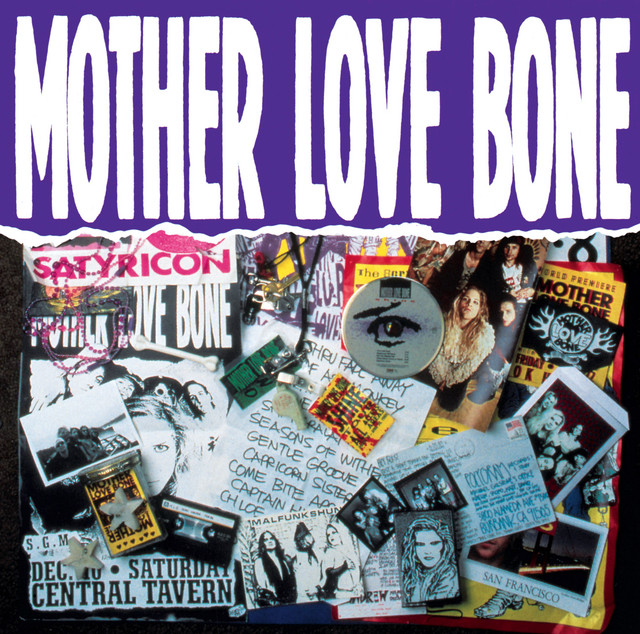
Mother Love Bone

Pearl Jam’s origins can be traced back to Green River, a mid-‘80s grunge band featuring guitarist Stone Gossard and bassist Jeff Ament. The band can almost be considered ground zero for grunge as other members Mark Arm and Steve Turner would go on to form Mudhoney, another pioneering grunge group. While Arm was more about the DIY ethic of punk bands like Black Flag, Gossard and Ament drew inspiration from more commercial hard rock acts like AC/DC and Kiss. GW’21

When Green River broke up, Gossard and Ament went on to form Mother Love Bone with singer Andrew Wood. However, tragedy struck when he died of an accidental heroin overdose on March 19, 1990 – just weeks before the band released their debut album, Apple. GW’21

Mookie Blaylock

That summer, Gossard and Ament started jamming with guitarist Mike McCready. With the help of Soundgarden drummer Matt Cameron, they put together some instrumental which they sent out in a search for a lead singer and permanent drummer. Eddie Vedder, a surfer and singer from San Diego, responded with lyrics and vocals for a song called “Alive,” based on the instrumental “Dollar Short” from the tape sent out by Gossard and company. GW’21 Vedder had been with a band called Bad Radio for four years, but left because they didn’t match his level of ambition. GW’21

The band originally called themselves Mookie Blaylock after the New Jersey Nets basketball player. They changed the name to Pearl Jam, supposedly after a hallucinogenic jam which Vedder’s great grandmother made, but the story is probably made up. The band did maintain a reference to Blaylock on the debut by calling it Ten, which was Blaylock’s jersey number. GW’21

Temple of the Dog

Just as Mookie Blaylock were coming together, another project inspired by Andrew Wood’s death surfaced. Chris Cornell, the lead singer of Soundgarden and one-time roommate of Wood’s, wrote the songs “Say Hello 2 Heaven” and “Reach Down” in response to Wood’s death. While Matt Cameron was working with the future members of Pearl Jam on their initial demo tape, he played Cornell’s songs for them. Ament called Cornell and suggested they make an entire album. The project took on the name “Temple of the Dog” after a line in the Mother Love Bone song “Man of Golden Words.” GW’21

Most of the lyrics and music were written by Cornell, but Gossard contributed “Pushin’ Forward Back,” “Four Walled World,” and “Times of Trouble.” Vedder also sang backup on a few tracks and even sang lead alongside Cornell on “Hunger Strike.”


The Songs

Here are some more detailed insights into some of the songs.

“Alive”
After sessions for Temple of the Dog ended, Mookie Blaylock returned to the studio three months later in January 1991. They produced their first EP, which featured “Alive,” “Wash,” and “I’ve Got a Feeling.” They recorded the rest of the album in sessions between March 27 and April 26.

“Alive” was a “twin-guitar-powered rocker” TB “interpreted as an anthem by many.” WK However, Vedder explained that the song was semi-autobiographical in that he was raised thinking his stepfather was his real dad. At 17, she informed him that his biological father had died. GW’21 The song also has a creepy vibe in that in her grief, the mother tries “to sexually embrace her son, who strongly resembles the biological father.” WK As Vedder said, “the song’s protagonist ‘is still dealing with the death of [his] father’” and feels “puzzled and burdened by the knowledge that ‘I’m still alive.’” TM When Vedder gave the song to Gossard and Ament, it struck a chord for them because of its theme about loss. GW’21

“Even Flow”
“Even Flow” was released as the second single from the album. It encompassed Vedder’s sympathy for the homeless. GW’21

“Jeremy”
“Virtually everything…on this rousing debut, goes straight for the jugular.” TM For example, Jeremy told the true story of “a seriously disturbed 16-year-old student at Richardson High School in Dallas, Texas, who had shot himself dead in front of his class.” TB Vedder combined the story of Jeremy Wade Delle with his memory of a San Diego junior high classmate who took a gun to school and went “on a shooting spree, though with less disastrous results.” TB It “gave voice to a generation of children ignored and abused.” RV The video won MTV’s award for Video of the Year.

“Black”
Meanwhile “the poignancy of Black made it all right, even for indie rockers, to feel heartsick.” RV This was another song Vedder wrote lyrics for after hearing the already recorded demos, this time specifically for a song called “E Ballad.” GW’21

Other Songs
Vedder wrote Why Go about a friend who was hospitalized after he was caught smoking pot. GW’21 Release was a message to the father he never knew. GW’21 Ocean was based on people Vedder knew. GW’21 Still, “no matter how cathartic Ten’s tersely titled songs got,” AM2 they were “just cryptic enough to get you thinking and not so brainy that it forgets to rock.” TM “They were never abrasive enough to affect the album’s accessibility,” AM2 which was aided by its “warm, rich sound.” GW “The result is a flawlessly crafted hard rock masterpiece.” AM2


Notes:

Ten was reissued in 2009 as a two-CD set with bonus tracks “Brother,” “Just a Girl,” “Breath and a Scream,” “State of Love and Trust,” 2000 Mile Blues,” and “Evil Little Goat.” “Pearl Jam brought in their longtime producer Brendan O’Brien to remix Ten from the ground up, to strip away the studio affectations of producer Rick Parashar and mixer Tim Palmer that made it a bright, shiny anomaly during the dingy heyday of grunge and make the album sound more like the rest of the band's work.” AM1

That was “followed by a triple-disc set that adds a DVD of the band's 1992 performance for MTV Unplugged and then there's a gargantuan, frankly ludicrous, collectors edition that has all that plus four slabs of vinyl containing the two mixes of the album plus a 1992 live show, one cassette that replicates the original demo Eddie Vedder turned in as his audition, and assorted memorabilia that retails for $200.00.” AM1

Resources:


Related DMDB Links:


First posted 3/22/2008; last updated 11/27/2024.

Tuesday, April 16, 1991

Temple of the Dog release only album

Temple of the Dog

Temple of the Dog

Released: April 16, 1991


Peak: 5 US, -- UK, 11 CN, 56 AU, 12 DF


Sales (in millions): 1.0 US, -- UK, 1.1 world (includes US + UK)


Genre: grunge rock


Tracks:

Song Title (Writers) [time] (date of single release, chart peaks) Click for codes to charts.

  1. Say Hello 2 Heaven [6:22] (11/7/92, 5 AR, 9 DF)
  2. Reach Down [11:11]
  3. Hunger Strike [4:03] (7/18/92, 4 AR, 7 MR, 51 UK, 50 CN, 7 DF)
  4. Pushin’ Forward Back (Ament/ Cornell/ Gossard) [3:44] (single, 28 DF)
  5. Call Me a Dog [5:02]
  6. Times of Trouble (Cornell/ Gossard) [5:41]
  7. Wooden Jesus [4:09]
  8. Your Saviour [4:02]
  9. Four Walled World (Cornell/ Gossard) [6:53]
  10. All Night Thing [3:52]
Songs written by Chris Cornell unless noted otherwise.


Total Running Time: 54:59


The Players:

Rating:

3.871 out of 5.00 (average of 11 ratings)


Awards:

(Click on award to learn more).

About the Album:

The grunge-rock group Mother Love Bone had churned out an EP and an album before their lead singer, Andrew Wood, died of a heroin overdose in 1990. Former roommate Chris Cornell, who fronted Soundgarden, approached Mother Love Bone members Stone Gossard and Jeff Ament on working together. They also recruited Soundgarden drummer Matt Cameron and newbies Mike McCready on guitar and Eddie Vedder for background vocals.

This collective produced only one album before Cornell and Cameron returned to Soundgarden. In the fall of 1991, they reached its widest audience yet with their double-platinum breakthrough, Badmotorfinger, and “helped set the stage for Soundgarden’s mainstream breakthrough with Superunknown” SH in 1994. Meanwhile, the rest of Temple of the Dog formed Pearl Jam and their 1991 debut Ten became one of the biggest albums of the decade and now consistently lands in lists of the best albums of all time. The success of those bands cast a spotlight on Temple of the Dog and in 1992, more than a year after its initial release, the album found an audience to the tune of a top five, million-selling album.

The album has largely been seen as a tribute to Wood, but only Reach Down and Say Hello 2 Heaven were specifically written with him in mind. However, the album and band title also derived from Wood, specifically the lyrics in the Mother Love Bone song “Man of Golden Words” – “seems I’ve been living in the temple of the dog.” The rest of the material originated from songs Cornell was working on before Wood’s death. WK and then developed out of the new collective’s “natural chemistry.” SH It came together quickly; they only took 15 days during November and December of 1990 to record the album. WK Gossard described it as a “non-pressure filled” situation and “the easiest and most beautiful record that we’ve ever been involved with.” WK

“As a result, there’s a very loose, jam-oriented feel to much of the album, and while it definitely meanders at times, the result is a more immediate emotional impact. The album’s strength is its mournful, elegiac ballads, but thanks to the band’s spontaneous creative energy and appropriately warm sound, it’s permeated by a definite, life-affirming aura.” SH Entertainment Weekly’s David Brown said, “maybe because the musicians avoid the often-labored anthems they play with their own bands, the songs sound relaxed and airy without losing any of the crunch or drive of the best arena rock.” WK

“Keeping in mind that Soundgarden’s previous album was the overblown metallic miasma of Louder Than Love, the accessibly warm, relatively clean sound of Temple of the Dog is somewhat shocking, and its mellower moments are minor revelations in terms of Cornell’s songwriting abilities.” SH This album also offered “the first glimpse of Chris Cornell’s more straightforward, classic rock-influenced side.” SH “It isn’t just the band, either – he displays more emotional range than ever before, and his melodies and song structures are (for the most part) pure, vintage hard rock. In fact, it’s almost as though he's trying to write in the style of Mother Love Bone.” SH

The album also understandably “sounds like a bridge between Mother Love Bone’s theatrical ‘70s-rock updates and Pearl Jam’s hard-rocking seriousness. What is surprising, though, is that Cornell is the dominant composer, writing the music on seven of the ten tracks (and lyrics on all).” SH

One of those songs, Hunger Strike, became a duet between Cornell and Vedder, giving Vedder his first lead vocal work in a recording studio. WK The song was a natural first choice to plug the album that featured the now well-known groups. Rolling Stone magazine’s David Fricke said that for that song and “Reach Down”, “Temple of the Dog deserves immortality; those songs are proof that the angst that defined Seattle rock in the 1990s was not cheap sentiment.” WK

Fricke also points out “the irony of an album, made in great sadness, kick-starting the last great pop mutiny of the twentieth century.” WK “Consider the adage that funerals are more for the living than the dead; Temple of the Dog shows Wood's associates working through their grief and finding the strength to move on.” SH


Notes:

In 2016, a deluxe edition of the album was released which included alternate mixes, demos, outtakes, and live recordings.

Resources and Related Links:


Other Related DMDB Pages:


First posted 7/2/20/2011; last updated 12/14/2023.

Monday, March 20, 1989

Mother Love Bone “Chloe Dancer/Crown of Thorns” released

Chloe Dancer/Crown of Thorns

Mother Love Bone

Writer(s): -- (see lyrics here)


Released: March 20, 1989 (album cut)


First Charted: --


Peak: 3 DF (Click for codes to charts.)


Sales (in millions): --


Airplay/Streaming (in millions): -- radio, 9.8 video, 19.94 streaming

Awards:

Click on award for more details.

About the Song:

“Chloe Dancer/Crown of Thorns” was grunge before grunge was a thing – or least before the term became widespread as shorthand for “rock bands from Seattle dressed in flannel.” In reality, grunge can be dated back to as early as 1984 and the birth of Green River, a band who was a predecessor to Mother Love Bone.

When Green River disbanded in 1988, singer Mark Arm and guitarist Steve Turner went on to form Muhoney while bassist Jeff Ament, guitarist Stone Gossard, and guitarist Bruce Fairweather formed Mother Love Bone with singer Andrew Wood and drummer Greg Gilmore. In 1989, the group released the Shine EP which featured “Chloe Dancer/Crown of Thorns.”

The song is about Wood’s heroin addiction and Xana La Fuente, his fiancé. To support the pair while he tried to break into the music industry, she took a job at a strip club (hence the title “Chloe Dancer”) but only lasted an hour. She said the song “is about a relationship ruined by drugs. He wrote it about our near breakup and how I tried to control him and the drugs.” SF

Wood seemingly got it under control for four months, but on March 19, 1990, he took heroin again and died from an overdose. His death meant the demise of Mother Love Bone right on the cusp of the release of their debut album, Apple. However, Ament and Gossard would go on to form Pearl Jam in 1991 and would also be part of Temple of the Dog, a tribute project for Wood.

Mother Love Bone wouldn’t get much attention until the grunge movement had kicked into high gear in 1992 because of Nirvana, Pearl Jam, Soundgarden and others. Because Temple of the Dog merged members of the latter two bands, it gained attention and that subsequently raised the profile of Andrew Wood and Mother Love Bone. “Chloe Dancer/Crown of Thorns” specifically emerged as the go-to song for the band when it was included on the 1992 soundtrack for Singles, a Cameron Crowe-directed film set to the backdrop of the then-emerging Seattle music scene.


Resources:


Related Links:


First posted 12/16/2023.