Showing posts with label sticky fingers. Show all posts

Tuesday, April 26, 2011

Aural Fixation: The Art of the Album Cover

Aural Fixation:

The Art of the Album Cover

Aural Fixation” is a music-themed column I wrote for PopMatters.com from 2011-2013. They are no longer online there, but I have reformatted them here at the DMDB blog with additional videos, photos, and links, such as where to buy referenced albums. I have also used the title “Aural Fixation” for any essays I have written outside of PopMatters.com as well. To see the essays, check out the Dave’s Music Database Aural Fixation page. You can also purchase the essays in book format here.

Eons ago during my college days, I had a buddy named Don. We ended up as roommates down the line, but when we first became friends he was living with a guy named Tyrone. The two of them were pretty different. Their musical tastes pretty well summed it up – Don was a fan of Manhattan Transfer and Linda Ronstadt while I recall Ty listening to more hair bands and heavy metal.

One afternoon I trekked up to the third floor of our dorm to visit Don. He wasn’t home. I hung out with Ty poring over his albums. And yes, I mean LPs – complete with large, square cardboard covers which could also properly house artwork on the front, back, and insides. We ended up rating his albums – not based on the music, but on the cover art. We devised categories, which I’ll recall here to the best of my ability. On a scale of 1 to 5, albums merely emblazoned with band logos and album names rated the worst (1). Bon Jovi’s Slippery When Wet is a prime example – especially when one considers that the originally planned cover (see here) was, while crude and sexist, at least more interesting to look at.

Dull band and artist photos which looked like publicity stills also got thumbs-down ratings (2). How many times can Phil Collins plaster his less-than-model-beautiful face on the front of an album? Garth Brooks may be one of the best-selling album artists in history, but are his fans clamoring for all his multi-platinum efforts to be splashed with uninspiring shots of him hiding his balding head with an ever-present cowboy hat? Couldn’t No Fences at least have been infused with a bit of humorous irony by having him pose against a fence?

In all fairness, these covers aren’t tragedies. They are just uninteresting. If you’re looking for the truly awful – covers that evoke gasps of disbelief or make you throw up in your mouth a little – there are sites devoted to just such endeavors. For covers like the one below, check out worstalbumcovers.org, coverbrowser.com, or this page at superdps.com.

To continue with the Ty-and-Dave rating system, a photo of a band done in at least some semi-interesting or amusing fashion garnered a passing grade (3 out of 5). Only the completely prudish would stifle a chuckle at the Who’s Next album cover.

Albums got kudos when they were bold enough to forego an image of the band altogether in favor of interesting photos or imagery (4) such as Pink Floyd’s Wish You Were Here.

Best of all were fully commissioned works of art which one would consider hanging on the wall (5). These were albums which made the buyer feel like they’d made a decent investment even if the music sucked. Roger Dean made a name for himself as the artist for Yes and Asia album covers.

A poll by MusicRadar.com forced me to revisit what makes for great album art. The Ty-and-Dave scale celebrated the effort put into a cover’s creation. However, upon surfing the Web for best-covers-of-all-time lists, my resulting aggregate DMDB list proved that an album falling anywhere on the scale could make the cut. Sadly, this diversity of album effort is largely predicated on the reality that to achieve classic album art status first requires attaining classic album status. While the idea of a classic collection of music housed in a classic exterior is appealing, the hope was that this list would turn up inspired works of album art, regardless of what was within. A full 39 of 100 albums on the best-covers list also make the DMDB’s list of the top 100 albums of all time. Of the 62 albums left, another 46 made the DMDB top 1000 albums list. This left a mere sixteen albums to boast of classic packaging that had nothing to do with what was tucked inside the cardboard.

That means this list is populated with album covers that in some cases are more iconic than great. As the bestselling album of all-time, Michael Jackson’s Thriller is inescapable. It follows that the packaging for such an album would be roughly as recognizable to anyone who lived through the 1980s as would be a picture of President Ronald Reagan. However, that doesn’t mean the Thriller album cover is a great work of art. On the Ty-and-Dave scale, this thing is merely a promo photo, which would land it a miserable 2 on a scale of 5.

The Ty-and-Dave scale was frequently trumped with iconic imagery trumping effort. The Beatles’ White Album, Metallica’s Black Album, and AC/DC’s Back in Black made the list precisely because of their absence of artwork. Never Mind the Bollocks, Here’s the Sex Pistols would rate a 1 on the Ty-and-Dave scale, but its logo has become so iconic it lands the album in the top 10. Pink Floyd’s The Wall is nothing more than a brick wall with the title scrawled upon it, but it has become one of the most recognizable album covers of all time.

Simple band or artist photos of the Beatles (With the Beatles), Fleetwood Mac (Rumours), Bruce Springsteen (Born to Run), Prince (Purple Rain), Patti Smith (Horses), and the Ramones (self-titled debut) didn’t hamper them from making the cut.

The Beatles’ Abbey Road, Elvis Presley’s 50,000,000 Elvis Fans Can’t Be Wrong, David Bowie’s Aladdin Sane, U2’s The Joshua Tree, the Police’s Synchronicity, and N.W.A.’s Straight Outta Compton, all make the list with photos depicting them in more interesting ways than the standard band shots. Some of these images have reached iconic status, such as Annie Leibovitz’s twist on the shot of the artist with her photo’s focus of Bruce Springsteen’s butt on Born in the U.S.A.. The Queen II cover was immortalized when the group revisited the image in the video of “Bohemian Rhapsody” a couple albums later. It has practically become the still shot to represent the band.

Some albums stuck with depictions of the artists, but eschewed photography as the medium of choice. Guns N’ Roses’ Appetite for Destruction, the Beatles’ Revolver, Cream’s Disraeli Gears, the Rolling Stones’ Some Girls, Elton John’s Captain Fantastic and the Brown Dirt Cowboy, and Frank Sinatra’s In the Wee Small Hours all opted for this approach.

Upping the game a bit were those covers abandoning any reference to the artist in favor of representative photos. Supertramp’s Breakfast in America was a straightforward but clever interpretation of the album title while the Doors’ Strange Days captured a fittingly odd circus-on-the-sidewalk shot. The Rolling Stones generated controversy with their image of a toilet and its surrounding graffiti. New Order went with a beautiful picture of roses to contradict the Power, Corruption and Lies album title. Sometimes the image evoked puzzlement. What’s with the crab on the cover of the Prodigy’s Fat of the Land or the shot of the cow on Pink Floyd’s Atom Heart Mother? How about that odd sheep dog jumping a hurdle on Beck’s Odelay? At other times, the image was pretty straightforward. DJ Shadow’s Endtroducing was just a shot of browsers in a record store.

A whole subset of the non-band-photo technique emerged via the “provocative” cover (i.e., covers which featured nudity or came close). Roxy Music’s Country Life, the Cars’ Candy-O, the Pixies’ Surfer Rosa, and Bow Wow Wow’s roll-off-the-tongue title See Jungle! See Jungle! Go Join Your Gang, Yeah. City All Over! Go Ape Crazy! all gave horny teens drooling material. The latter was an homage to Edouard Manet’s 1863 painting “Le déjeuner sur l’herbe (The Lunch on the Grass),” but since Annabella Lwin was only 15 when photographed sans clothing, the album art had to be reworked in some markets.

The Strokes’ Is This It, with its close-up profile of a woman’s hip, and Jimi Hendrix’s Electric Ladyland, with a bevy of nude women lying entwined amongst each other, also required reworks before they could hit the U.S. market. Jane’s Addiction mocked the whole thing with their cover of Nothing’s Shocking. Its picture of conjoined twins sitting in a double rocker with their hair on fire was more disturbing than arousing. In that same vein, Marilyn Manson’s body suit with breasts confirmed the image people already had of him as an oddity. While Manson’s suit had nothing in the nether region, David Bowie’s cover art for Diamond Dogs painted him as an unquestionably male canine. The tamest of all was Herb Alpert’s Whipped Cream and Other Delights, although in 1965 it evoked a stir with its suggestiveness.

Joy Division’s Unknown Pleasures, Primal Scream’s Screamadelica, Mike Oldfield’s Tubular Bells, and Velvet Underground’s debut all proved that simple imagery could make for impactful art. VU’s banana cover, created by famed pop artist Andy Warhol, has become one of the most iconic covers in music history.

Of course, the Velvet album was also notable for innovative packaging. Early versions of the album inticed the buyer to “peel slowly and see” – an invitation to see the flesh-colored banana beneath the banana skin. Warhol also conceived the Rolling Stones’ Sticky Fingers album cover, which featured a close-up of a blue-jeaned crotch and a working zipper. Unzipping it would show the inside of the album – a close-up of the model in briefs. Bob Marley’s original album for Catch a Fire was a picture of a Zippo lighter. One opened the album from the top, much as one would flip open a lighter. Public Image Ltd.’s Metal Box was originally packaged as three 12” 45 RPM’s in a metal canister.

The Band’s Music from Big Pink, the Stone Roses’ debut, Duran Duran’s Rio, Coldplay’s Viva La Vida, and King Crimson’s In the Court of the Crimson King (in all its disturbing glory) all went with paintings for their covers. Mati Klarwein, who painted the 1961 “Annunciation” (below) which served as the cover for Santana’s Abraxas, also lent his paintbrush to the classic cover for Miles Davis’ Bitches Brew.

On the lighter side, some albums used cartoons for their covers. Amongst the most prominent are Green Day’s Dookie, Big Brother and the Holding Company’s Cheap Thrills, the Mothers of Invention’s Weasels Ripped My Flesh, and Sonic Youth’s Goo.

Finally, there are some albums whose cover art has become as iconic as the albums they decorate. The naked baby swimming after a dollar on Nirvana’s Nevermind, the reworked version of Elvis Presley’s debut (itself an entry on the best-album-cover list) for the Clash’s London Calling, and the gathering of cardboard cut-out celebrities for the Beatles’ Sgt. Pepper’s Lonely Hearts Club Band all have entrenched themselves into pop culture. Topping them all, however, is the prism on Pink Floyd’s Dark Side of the Moon. That one would rate a 5 on the Ty-and-Dave scale.


For more “Aural Fixation” essays, check out the Dave’s Music Database Aural Fixation page page.

Resources and Related Links:


First posted 4/26/2011; updated 10/27/2023.

Saturday, May 29, 1971

The Rolling Stones hit #1 with “Brown Sugar”

Brown Sugar

The Rolling Stones

Writer(s): Mick Jagger, Keith Richards (see lyrics here)


Released: April 16, 1971


First Charted: April 24, 1971


Peak: 12 US, 2 CB, 3 GR, 13 HR, 1 CL, 2 UK, 13 CN, 5 AU, 1 DF (Click for codes to singles charts.)


Sales (in millions): -- US, 0.45 UK, 0.45 world (includes US + UK)


Airplay/Streaming (in millions): 3.0 radio, 36.9 video, 149.06 streaming

Awards:

Click on award for more details.

About the Song:

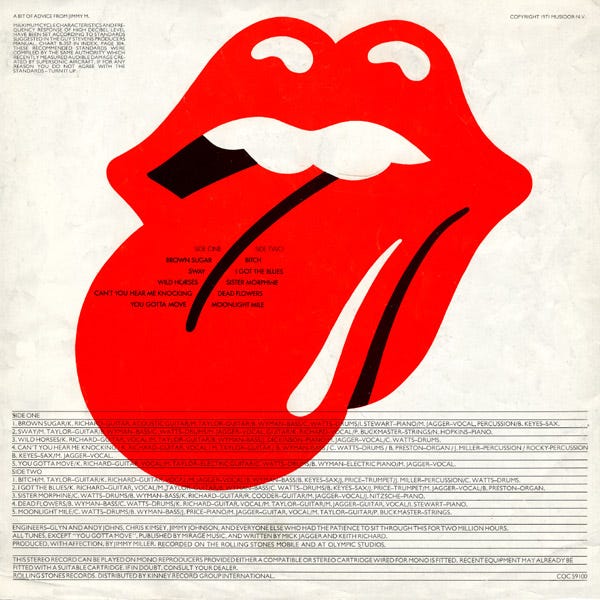
In 1971, the Rolling Stones launched their own label. “Once reviled as too scruffy and dirty for decent folk, they became the ruling rock elite, gentlemen of leisure, members of the international jet set.” FB They rolled out a new “immediately identifiable image” FB of a red mouth with a tongue sticking out as their logo. Their new album, Sticky Fingers, sported one of rock history’s most famous covers – an Andy Warhol-designed close-up shot of the crotch of a man’s jeans complete with a zipper.

The first song released under this new incarnation was “Brown Sugar.” It is “a muscular rock song made special by [Bobby] Keys’ and [Keith] Richards’ driving riffs and [Mick] Jagger’s steamy lyrics.” LW It was their sixth trip to the top of the Billboard Hot 100 and reached #2 in the UK. The song was written in 1969 and recorded at Muscle Shoals Sound Studio in Alabama that December. They debuted it live at the infamous Altamont Speedway concert in which a fan was stabbed to death.

The lyrics are about “slaves from Africa who were sold in New Orleans and raped by their white masters. The subject matter is quite serious, but the way the song is structured, it comes off as a fun rocker about a white guy having sex with a black girl.” SF The song understandably generated controversy for misogyny and racism. WK

In his book Up and Down with the Rolling Stones, Tony Sanchez suggests “all the slavery and whipping is a double meaning for the perils of being ‘mastered’ by Brown Heroin or ‘Brown Sugar.’” SF Mick Jagger said the song was a “dual combination of drugs and girls.” WK It was “essentially a pastiche of…taboo subjects, including slavery, rape, interracial sex, cunnillingus, sadomasochism, lost virginity, and heroin.” WK In a 1995 Rolling Stone interview, he said it was “a mishmash [of] all the nasty subjects in one go…I never would write that song now.” WK


Resources:

  • DMDB encyclopedia entry for The Rolling Stones
  • FB Fred Bronson (2003). The Billboard Book of Number One Hits (5th edition). Billboard Books: New York, NY. Page 292.
  • LW Alan Lewens (2001). Popular Song – Soundtrack of the Century. Billboard Books: New York, NY. Page 132.
  • SF Songfacts
  • WK Wikipedia


Related Links:


First posted 2/10/2021; last updated 11/22/2022.

Friday, April 23, 1971

The Rolling Stones released Sticky Fingers

Sticky Fingers

The Rolling Stones


Released: April 23, 1971


Charted: May 8, 1971


Peak: 14 US, 15 UK, 15 CN, 12 AU, 14 DF


Sales (in millions): 3.0 US, 0.3 UK, 7.5 world (includes US and UK)


Genre: classic rock


Tracks:

(Click for codes to charts.)
  1. Brown Sugar [3:48] (4/16/71, 1 BB, 2 CB, 3 GR, 1 HR, 1 CL, 2 UK, 1 CN, 5 AU, 1 DF)
  2. Sway [3:50] (6/12/71, 46 CL, 26 DF)
  3. Wild Horses [5:42] (6/12/71, 28 BB, 18 CB, 32 GR, 21 HR, 2 CL, 5 DF)
  4. Can't You Hear Me Knocking [7:14] (4 CL, 15 DF)
  5. You Gotta Move (Fred McDowell, Gary Davis) [2:32] (26 CL)
  6. Bitch [3:38] (4/16/71, 6 CL, 2 UK, 15 DF)
  7. I Got the Blues [3:54] (36 DF)
  8. Sister Morphine (Jagger, Richards, Marianne Faithfull) [5:31] (35 CL, 21 DF)
  9. Dead Flowers [4:03] (9 CL, 16 DF)
  10. Moonlight Mile [5:56] (12 CL, 16 DF)

All tracks written by Mick Jagger and Keith Richards unless noted otherwise.


Total Running Time: 46:25


The Players:

  • Mick Jagger (vocals)
  • Keith Richards (guitar)
  • Mick Taylor (guitar)
  • Bill Wyman (bass)
  • Charlie Watts (drums)

Rating:

4.705 out of 5.00 (average of 32 ratings)


Quotable: “They were called the World’s Greatest Rock ‘n’ Roll Band for entierely too long, but if that designation ever applied, it was here.” – Mark Richardson, Pitchfork


Awards:

(Click on award to learn more).

About the Album:

“Few bands represent…the move from the relative innocence of the mid-‘60s into the hedonism and burnout of the ‘70s better than the Rolling Stones.” PF “Stoned, rich, and long since morally bankrupt, the greatest rock ‘n’ roll band in the world spent 1971 bathing in decadence and flirting with death. Interestingly, such preoccupations resulted not only in some of the meanest, nastiest music ever recorded, but also some of the prettiest.” VB

Their performance at the Altamont Speedway, during which a group of Hell’s Angels killed a man, has often been held up as a “symbolic end of the peace-and-love ‘60s.” PF With 1971’s Sticky Fingers, “the Rolling Stones came back nastier and more assured than ever.” TL It “proved that the endless summer of the 1960s was over, but that the Stones would rock just as hard in the following decade.” CD

In Colin Larkin’s All Time Top 1000 Albums, he says of the #10 ranked album that “dirty rock like this has still to be bettered, and there is still no rival in sight.” WK A Q magazine review said this was “the Stones at their assured, showboating peak.” WK

“The key to the album…[is] the utter weariness of the songs.” AM In addition to the aftermath of Altamont, Mick Jagger was dealing with his breakup with Marianne Faithfull while Keith Richards was worried about his newborn son Marlon. CD “Well over half the songs explicitly mention drug use.” AM “Where they once sounded like English boys doing their version of the blues, now their songs felt as lived-in as their inspirations.” PF Chicago Tribune’s Lynn Van Matre said the album captured the band “at their raunchy best” WK as the band delves into “familiar Stones terrain: sex…drugs…the blues…and dirty rock and roll all over.” FP

The Big Four

The album was “their biggest seller to date,” TL coming during “one of the great four-album runs in pop music history.” PF The Stones “rise to their own artistic challenge – the run of [1968’s] Beggars Banquet and [1969’s] Let It Bleed.” AD While those albums “might have had higher highs…both also had their share of tossed-off tracks.” PF

Similarly, Sticky Fingers “doesn’t have the sprawl and mood of their next release, [1972’s] Exile on Main Street,” TL “the underground music’s fan’s favorites, but it never had the broader cultural impact of its predecessor.” PF

“If you have to pick just one album, then Sticky FingersCM “truly captures the Stones at the peak of their game.” TL

Recording the Album

Sticky Fingers found the band digging even depper into rootsy veins of Americana, with bohemian, good-vibes producer Jimmy Miller at the helm.” TB He came on board with Beggars Banquet and was, as Bill Wyman said, “a great producer who, for the first time, the band actually listened to.” CM

The band did some recording at the legendary Muscle Shoals studio in Alabama at the close of their 1969 U.S. tour.. Even though only three songs (“Brown Sugar,” “Wild Horses,” and “You Gotta Move”) UD were recorded there, “the Muscle Shoals feel permeates the album.” CM Drummer Charlie Watts said it was “a great studio to work in, a very hip studio…you wanted to be there because of all the guys who had worked in the same studio.” TS

In 1970, the band also recorded at their mobile studio in Jagger’s Stargroves mansion in England – TD the same location where Led Zeppelin would record Houses of the Holy. FP Engineer Andy Johns said it “was ideally suited because it was a big mansion and a grand hall with a gallery around with bedroom doors and a staircase.” CMJagger echoed a similar sentiment, describing it as “a big hall with a high ceiling, which was my optimum kind of room.” TS

Additional recording was done at Olympic Sound Studios in London in 1969 and 1970.

The Album’s Sound

The album is marked by “a loose, ramshackle ambience.” AMSticky Fingers moves as far from pop as the band would ever stray.” RV It is “a slow, bluesy affair, with a few country touches thrown in for good measure.” AM “Richards’ riffs and melodies were in full flower” PF and “Jagge’s voice never sounded richer or fuller than it does here.” PF The album also “displayed the improvisational talents of guitarist Mick Taylor,” FP who’d come on board during Let It Bleed to replace Brian Jones and here is “fully a Rolling Stone.” AD

There are also “the spicy horn arrangements of saxophonist Bobby Keys and trumpet player Jim Price. The use of horns in the Stones’ repertoire seemed inevitable – when they kick in during ‘Brown Sugar’ and ‘Bitch,’ it’s as if Keith’s guitar is rebirthed in brass.” CD

New Label and Logo

This was also the band’s first release on their new label, Rolling Stones Records. Since 1963, they’d been with Decca Records in the UK and London Records in America. This was also the first studio album from the Stones to not feature any contributions from Brian Jones, the band’s founder, who died at age 27 on July 3, 1969.

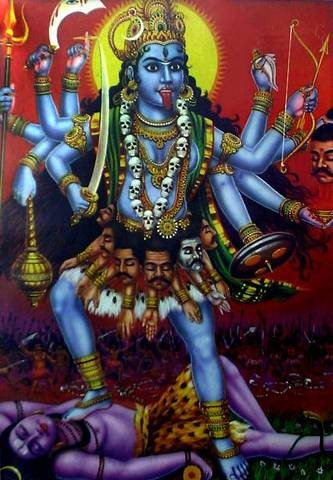
Sticky Fingers was also the first Rolling Stones’ album to feature the now iconic lips logo. John Pasche designed it in 1970 after Jagger suggested copying the outstuck tongue of the Hindu goddess Kali. WK

Kali, the Hindu goddess

It “recast the band in a new light: a rock and roll brand.” FP Critic Sean Egan says it “quickly and deservedly became the most famous logo in the history of popular music.” WK

back cover of album

Album Package

“The whole thing was wrapped up in a brilliant packaging concept by Andy Warhol” PF which “emphasizes the suggestive innuendo of the Sticky Fingers title.” TD The cover “expresses the essence of Rolling Stones at their peak: salacious, impossible to ignore, and rough around the edges.” FP In 2003, VH1 ranked Sticky Fingers as the greatest album cover of all time. FP

It featured a close-up shot of the crotch of a man in tight jeans which, at Jagger’s suggestion, FP featured a working zipper. When pulled down, it revealed a pair of cotton briefs. Warhol suggested the idea to Jagger at a party in 1969. FP Warhol conceived the cover and Billy Name and Craig Braun, members of his art collective, The Factory, photographed and designed it respectively. WK Contrary to popular belief, the crotch in the photo does not belong to Jagger. Several men were photographed during the shoot and Warhol never revealed which model was actually used for the cover. TD

There were, however, problems with the zipper. When the albums were stacked for shipping, the zipper would press into the vinyl and damage it. The solution was to pull the zipper down manually so that it would hit the center disc label and not damage the vinyl. As Braun said, “It worked, and it was even better to see the zipper pulled halfway down.” FP

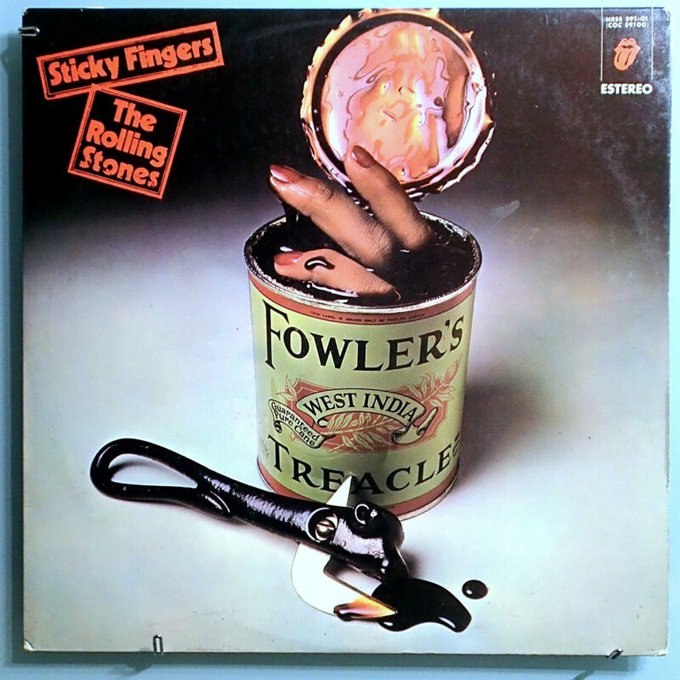
The album cover was censored in Spain so a second cover was created which featured what would seemingly be more controversial – severed fingers in a can of Fowler’s Treacle. KR

alternate cover


The Songs

Here are thoughts on the individual songs from the album.

“Brown Sugar”
With its “sloppy-rock groove,” TBBrown Sugar is dirty, sexy... an instant classic Stones single.” AD It “begins with some magical raunch chords…in the tradition of…[The Kinks’] ‘All Day and All of the Night,’ [and the Stones’ own] ‘Nineteenth Nervous Breakdown,’ and ‘Satisfaction.’” RS “As if to prove their minds were still as dirty as their music,” AZ “with its quintessential blues-rock riff” PF is “a gleeful tune about slavery, interracial sex, and lost virginity,” AM not to mention heroin use. PM

It was the first time Jagger wrote a song completely on his own. CM Of the questionable lyrics, he said it was “all the nasty subjects in one go” PF and that he’d “never write that song now. I would probably censor myself.” TS He’s also said that this was the first riff he wrote. TS He said, “at the end of the ‘60s I had a little more time to sit around and play my guitar, writing songs rather than just lyrics for the first time.” TS He wrote it while on the set of filming Ned Kelly in Australia. TS

“Sway”
“The lazy, yet together Sway…[is] so loose it sounds like it’s about to fall apart at any moment.” AD “The sound is characteristic Rolling Stones messiness…[but] lacks intensity…it remains a series of riffs whose lack of content is obscured by prolonged and indifferent guitar semi-solos and a fine string arrangement that suddenly enters towards the end.” RS The “midtempo rocker…would sound orchestral even without Paul Buckmaster’s climactic string arrangement.” AZ

The song features “fantastic lead vocals from Mr. Jagger, very soulful” AD and he even plays guitar. Watts said Jagger “plays very strange rhythm guitar…very much how Brazilian guitarists play, on the upbeat. It is very much like the guitar on a James Brown track; for a drummer it’s great to play with.” CM

There is also “amazing” AD guitar work from Taylor. Richards contributes some additional vocals, but doesn’t play guitar on the track. AD Of Taylor’s performance, Richards said, “acoustically he’s got a nice touch.” TS Pete Townshend and Ronnie Lane come on board to provide backing vocals. TD

“Wild Horses”
The “gorgeous” ADWild Horses is their first non-ironic stab at a country song, and it is a beautiful, heart-tugging masterpiece;” AM it “is as tender as the Stones can get.” TL “The longing of the song’s lyrics coupled with its ultimate hope constitute as much of a theme as there is on this record.” RS Richards said the song “was about the usual thing of not wanting to be on the road being a million miles from where you want to be.” TS Specifically, the band was headed out on the road again and Richards didn’t want to be away from Marlon, his newborn son. TS

According to Richards, the song came about from him playing around with tunings on a twelve-string. The chorus was written in the bathroom at Muscle Shoals. He also said, “If there is one classic way of Mick and I working together, this is it. I had the riff and the chorus line. Mick got stuck into the verses.” TS

The band worked with Gram Parsons on the song. TS He was hanging out with Keith Richards quite a bit and Parsons’ band, the Flying Burrito Brothers, actually released a version of “Wild Horses” before the Stones’ version came out.

“Can’t You Hear Me Knocking”
“The laid-back tone of the album gives ample room for…Taylor to stretch out, particularly on the extended coda” AM of “the near-dangerous electrified Can’t You Hear Me Knocking.” CD “The song ebbs and flows and the guitars of Richards and Taylor combine so well, the sound of a genuine love of playing together shines through.” AD Richards said, “We were just rambling and they kept the tape rolling…Basically we realized we had two bits of music. There’s the song and there’s the jam.” TS It is one of the Stones’ “most dexterous instrumental displays, slowly building up into a triumphant guitar-and-sax-led frenzy before end on an abrupt high note.” PM It “has become one of the great shocases of the band’s musicality.” CM

In his 2016 book Never a Dull Moment, David Hepworth suggested that Taylor’s “Latin-flavored guitar solo” was influenced by the 1970 Santana album, Abraxas. WK Jagger himself called the song “slightly Carlos-Santana-like. Mick Taylor plays a bit of that style.” TS

“You Gotta Move”
Critic Robert Christgau said this Mississippi Fred McDowell cover is on par with the band’s previous covers of “Prodigal Son” and “Love in Vain.” WK Taylor said they used to play it all the time in the studio. Jagger echoes that, saying, “We used to mess around doing it in rehearsals or in a hotel room…and we decided to record it…This sort of stuff is very hard to recreate. Fred McDowell’s version is full of emotion. But I think we managed to pull it off.” TS

“Taylor’s electric slide guitar is absolutely exquisite.” RS “Combined with Richard’s fine work on the acoustic they create one of the album’s few real moments. Charlie Watts’ bass drum holds it together perfectly, while Richard’s harmony smoothes off the more outrageous edges of Jagger’s lead vocal. In the end, all the pieces fit. A small but important triumph.” RS

“Bitch”
The “mean-spirted” AM “rocker BitchAZ “nearly stands up to the album opener.” PM Jagger assumes “one of his most popular poses: demonic. here he flaunts naughty words and naughty thoughts as if he still thought they were naughty.” RS Jagger said, “to my mind there was never anything written that was offensive in that.” TS

“The arrangement is straight-ahead” RS on this “crunchy boogie” PF which Jagger says is “a guitar song, but it’s also somewhat dependent on the horn lines.” TS Indeed, “the horns sound great here as they are used primarily for purposes of syncopation and rhythm. The bass and drums…burns like a bitch.” RS Jagger called it one of the band’s “groove tunes.” TS

“I Got the Blues”
“In the tradition of the earlier R&B imitations,” RS this “ravished, late-night classic” AM offers “heartbreakingly beautiful vocals” AD within a“swelling Otis Redding-style R&B” PF song “that ranks among their very best blues.” AM “This is the first time they actually added Stax horns.” RS “It’s far and away the best pure R&B song that the Rolling Stones ever recorded.” CM

Jagger said, “When you get really slow tunes like this, it’s hard to keep the tempo…but this one holds the tempo. It’s kind of wrenching. You can only get that by doing it really slow and this one comes off.” TS

“Sister Morphine”
“The noirish” RV and “terrifyingly spare Sister MorphineCD “is a horrifying narrative of heroin and cocaine addiction told from a hospital bed.” RV It is “one of the most vivid, horrifying songs about drug abuse ever recorded.” AZ However, Jagger said, “It’s about a man after an accident, really. It’s not about being addicted to morphine so much as that.” TS

The song was actually recorded during sessions for Let It Bleed in March 1969 WK and features Ry Cooder on slide guitar. TD Jagger and Richards wrote it for Marianne Faithfull to record. CM Jagger says she claimed she wrote the song, although he says she only contributed a couple of lines. TS

“Dead Flowers”
“The tongue-in-cheek honky tonk” PF of “the countryish Dead FlowersAZ is “a definitive comedy of decadence.” TL Jagger said, “It’s a sort of joke.” TS “I love country music, but I find it very hard to take it seriously.” TS “The actual music is played completely straight, but it’s me who’s not going legit with the whole thing, because I think I’m a blues singer, not a country singer.” TS “The harmonic thing is very different from the blues. It doesn’t bend notes in the same way, so I suppose it’s very English, really. Even though it’s been very Americanized, it feels very close to me, to my roots, so to speak.” TS

“Moonlight Mile”
“The gorgeous” AM closer is “sad, yearning, drug-addled, and beautiful;” AM “a masterpiece.” RS It is “quite unlike anything else in the Rolling Stones’ canon.” CM

Richards said he had nothing to do with the song. “Moonlight Mile was all Mick’s.” TS “I was very out of it by the end of the album.” TS Because of his steadily growing heroin habit, insider Jo Bergman said, “I didn’t think Keith was going to live through the ’70 tour of Europe.” CM

Jagger said he wrote some of the early lyrics in the summer of 1970, probably while they were on a train and the moon was out. “The feeling I had at that moment was how difficult it was to be toruing and how I wasn’t looking forward to going out and doing it again. It’s a very lonely thing, and my lyrics reflected that.” TS

“Grandiose strings” AM “push the intensity level constantly upwards…The energy becomes unmistakably erotic.” RS “There is something soulful here, something deeply felt.” RS It “has a defiant aloneness to it.” CM It is “a coked-out, somnambulant drift through an era’s last days.” TD It is Jagger’s “best performance on the album – the only thing that compares with his singing of ‘Gimme Shelter.’” It “is a perfect closure,” AM “a beautiful end to a beautiful journey.” TD


Notes:

In 2015, Sticky Fingers was reissued with a bonus disc featuring five alternate versions of songs and five songs performed live at the Roundhouse on March 14, 1971. A super deluxe edition featured a complete show performed at the University of Leeds on March 13, 1971.

Review Sources:


Other Related DMDB Pages:


First posted 3/23/2008; last updated 8/17/2024.