Showing posts with label doo-wop. Show all posts

Monday, May 4, 2009

Today in Music (1959): The Flamingos “Eyed” the charts

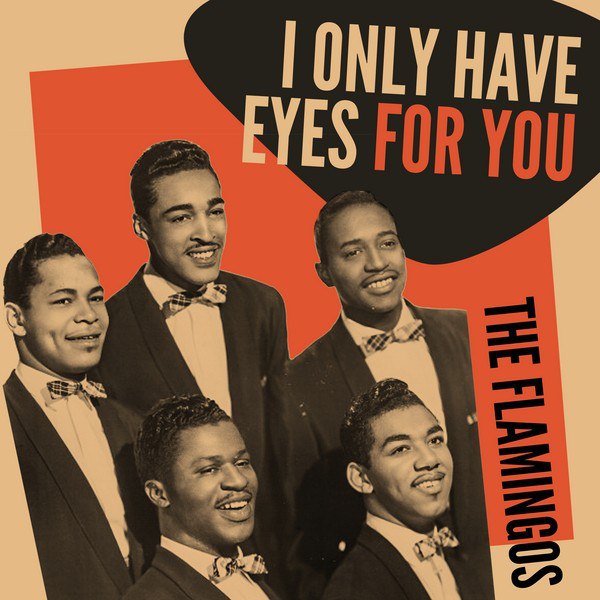
I Only Have Eyes for You

The Flamingos

Writer(s): Harry Warren (m)/Al Dubin (l) (see lyrics here)


First Charted: May 4, 1959


Peak: 11 US, 10 CB, 5 GR, 11 HR, 3 RB, 2 DF (Click for codes to charts.)


Sales (in millions): --


Airplay/Streaming (in millions): -- radio, 19.76 video, 81.39 streaming

Awards:

Click on award for more details.

About the Song:

This Tin Pan Alley standard dates back to 1934 when it was introduced in the Busby Berkeley movie musical Dames by Dick Powell and Ruby Keeler. Cabaret singer Mary Cleere Haran called the song “one of the loveliest love songs written about big-city romance.” SS Ben Selvin took the song to #2 and Eddy Duchin and Jane Froman also charted that year with #4 and #20 versions respectively. PM A quarter century later, the Flamingos’ recorded it ““with elegant vocalizations and the otherworldly doo-bop-sh-bop.” RS500 It became “one of the most memorable hits of the doo-wop era.” TB

“There’s nothing about [their version of] this record that really relates to Ben Selvin’s or anybody else’s.” DM The song is marked by “its warm, ethereal backing vocals, the gently nagging, piano-led arrangement, and, most importantly, [Sollie] McElroy’s lilting lead vocal about a love that ‘must be a kind of blind love.’” TB

“Dubbed ‘The Sultans of Smooth,’ this Chicago quintet” RS500 formed in 1950, becoming “one of the greatest vocal groups of the doo-wop era.” RS500 In fact, in the liner notes for Rhino’s Doo-Wop Box, Bob Hyde said they were “possibly the finest R&B vocal group ever to record.” SS They displayed broad influences including “gospel..and the silken pop harmonices of the Mills Brothers and Four Freshmen as well as R&B-oriented groups.” DM By the end of the ‘50s, they’d “honed their onstage dance routines in the manner of 1960s groups like the Temptations” TB and, in fact, were a “clear influence on the Motown Sound” TB of that decade.

In 1975, Art Garfunkel recorded a version which hit the top 20 on the Billboard Hot 100 and was a #1 song on the adult contemporary chart and in the UK. It was also recorded by George Benson, Jerry Butler, the Lettermen, Johnny Mathis, and Frank Sinatra. The Fugees sampled the song on “Zealots” for their 1996 album The Score. SF


Resources:


First posted 4/13/2020; last updated 1/17/2024.

Saturday, August 7, 2004

50 years ago: The Crew-Cuts Hit #1 with “Sh-Boom”

Sh-Boom

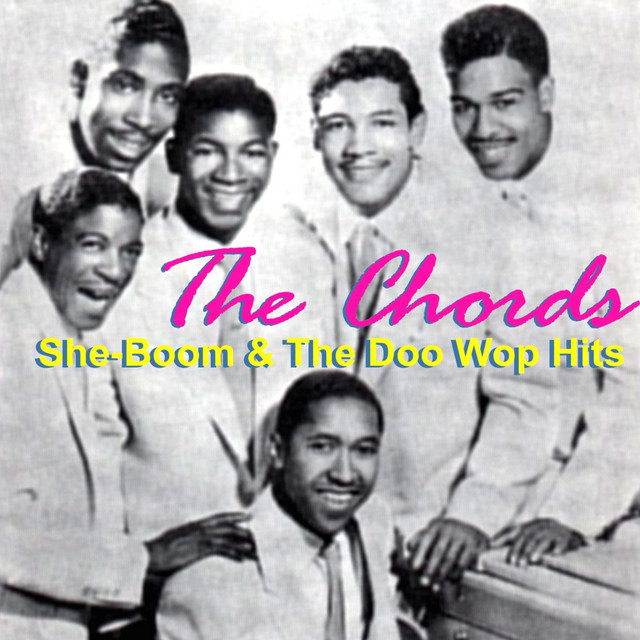
The Chords

Writer(s): William Edwards, Carl Feaster, Claude Feaster, James Keyes, Floyd McRae (see lyrics here)


First Charted: July 3, 1954


Peak: 5 US, 3 HP, 17 CB, 2 RB, 1 DF (Click for codes to charts.)


Sales (in millions): --


Airplay/Streaming (in millions): -- radio, 17.84 video, 93.02 streaming

Sh-Boom

The Crew Cuts


First Charted: July 10, 1954


Peak: 19 US, 3 HP, 17 CB, 3 HR, 12 UK, 14 AU (Click for codes to charts.)


Sales (in millions): 1.0 US, -- UK, 1.0 world (includes US + UK)


Airplay/Streaming (in millions): -- radio, 16.7 video, -- streaming

Awards (The Chords’ version):

Click on award for more details.


Awards (The Crew Cuts’ version):

About the Song:

“Doo-wop classic” DJ “Sh-Boom” “seems fated to have been stumbled across on a street corner or in a subway station.” DM Member James Keyes destroys the myth, however, saying, “we never sang on the street corner, period. The Chords rehearsed at each other’s houses and over at P.S. 99 in the Bronx.” SJ

Still, in the history of doo-wop, The Chords, came closer than any other group to being discovered on a street corner. Joe Glaser, who worked with leading black talent agency Associated Booking, saw them harmonizing as they walked into a subway station. DM He gave them a card and when they came to his office, his associate, Oscar Cohen, took them over to Atlantic Records. SJ

Atlantic Records’ Ahmet Ertegun and Jerry Wexler “immediately snapped the group up, because its harmony style seemed tailor-made for the new style of R&B then finding a market among white teenagers.” DM The group had worked together several years DM and expressed a fondness for “any good singers,” SJ basing their sound on R&B harmony groups like the Ravens and the Orioles, but also on white jazz and swing groups like the Modernaires and Four Freshmen. SJ

Still, when it came to “Sh-Boom,” everyone at Atlantic reportedly hated the song. AH It was only recorded at the insistence of the Chords and released as a B-side. Then it started to hit with DJ’s. It’s hard to imagine now that the record company didn’t embrace the song at first. “Sh-Boom” “is, in many ways, an absolutely typical doo-wop song.” AH The genre “was basically an extension of the Ink Spots’ style. You have at least four singers, one of whom is a very prominent bass vcaolist who sings nonsense words like ‘doo wop’ or ‘bom bom da bom,’ another of whom is a high tenor who takes most of the leads, and the rest sing harmonies in the middle.” AH

The genre was significant for introducing black artists to white audiences in the early days of rock and roll. However, in a time when racism was prevalent on the charts, record companies typically turned to white artists to produce sanitized versions of the original songs that were “appropriate” for the pop charts. In the case of “Sh-Boom,” the Crew-Cuts, “a white group with the closely cropped hair,” TY1 were the offenders, even getting credited with “the first rock and roll number 1 hit.” DJ It topped the Billboard Best Sellers, Disc Jockey Hits, and Jukebox Hits charts.

However, the Chords’ original could not be denied. It still went top 5 on the pop charts – an “unprecedented achievement.” SJ In fact, it was the first R&B record by a black artist or group to reach the Billboard pop charts’ top 10. AH


Resources:


First posted 8/7/2011; last updated 4/1/2023.