Showing posts with label box set. Show all posts

Tuesday, November 17, 1998

The Complete Wailers released

The Complete Wailers

The Wailers


Released: March 17, 1998


Recorded: 1967-1970


Charted: --


Peak: -- US, -- UK, -- CN, -- AU


Sales (in millions): -- US, -- UK, -- world (includes US and UK)


Genre: reggae


Disc 1: Rock to the Rock (1968): *

Song Title (date of single release, chart peaks) Click for codes to singles charts.

  1. Rock to the Rock
  2. Steady
  3. How Many Times
  4. Touch Me
  5. Mellow Mood
  6. There She Goes
  7. Rebel
  8. Put It On
  9. Chances Are
  10. Love
  11. Bend Down Low
  12. The World Is Changing
  13. Nice Time (1967, --)
  14. Treat You Right
  15. What Goes Around Comes Around (6/8/96, 42 UK)

Total Running Time: 48:35


Disc 2: Selassie Is the Chapel (1968-1970): *

Song Title (date of single release, chart peaks) Click for codes to singles charts.

  1. Don’t Rock My Boat
  2. The Lord Will Make a Way Somehow
  3. Chances Are
  4. Selassie Is the Chapel
  5. Tread Oh
  6. Alright
  7. Rhythum
  8. Rocking Steady
  9. Adam and Eve
  10. Wisdom
  11. This Train
  12. Thank You Lord (6/81, --)
  13. Give Me a Ticket
  14. On the Road Again
  15. Black Progress

Total Running Time: 46:20


Disc 3: The Best of the Wailers (1969-1970): *

Song Title (date of single release, chart peaks) Click for codes to singles charts.

  1. Sugar, Sugar
  2. Stop the Train
  3. Cheer Up
  4. Soon Come
  5. Soul Captive
  6. Go Tell It on the Mountain
  7. Can't You See (alternate)
  8. Give Me a Ticket (alternate)
  9. Hold on to This Feeling
  10. Chatterbox (alternate)
  11. Soul Shakedown Party (9/70, --)

Total Running Time: 36:33


The Players:

  • Bob Marley
  • Peter Tosh
  • Bunny Wailer
  • Other vocalists: Junior Braithwaite, Cherry Smith, Beverley Kelso, Constantine “Vision” Walker, Rita Marley, Marcia Griffiths, Judy Mowatt
  • Musicians: Aston “Family Man” Barrett, Carlton Barrett, Earl Lindo, Tyrone Downie, Alvin “Seeco” Patterson, Al Anderson, Earl “Chinna” Smith, Donald Kinsey, Junior Marvin

Rating:

4.00 out of 5.00 (average of 11 ratings)


Quotable: A “living testament to the birth of the legend.” – Vibe magazine

About the Album:

Marley’s pre-major-label work has been repackaged and regurgitated to the point of market suffocation. While it isn’t complete, as the title suggests, this three-disc collection, along with two other Jad/Koch box sets released in 1998-99, is is fairly definitive in covering “Marley’s first important signing outside the local scene,” VB< the span between Studio One (1963-66) and the Wailers’ major label debut in 1973. It “may be as close as we ever get to that elusive portrait of the world’s greatest reggae band.” AZ

“Compiled by Marley-ologist Roger Steffens, this exhaustive archive is the culmination of many years' work trying to get at Marley tunes which lay dormant in record company vaults around the world.” AMG The set includes “copious” VB but “hard-to-follow” AZ “liner notes by reggae historians Bruno Blum and Roger Steffens, rare photos, and unheard instrumental ‘versions.’” VB

Amazon.com says the collection is “hampered by clumsy packaging,” AZ while AllMusic.com calls it “impeccable.” AMG In any event, “these recordings sound light-years better than most of the scratchy, poorly recorded early Wailers material previously available.” AZ This is “a necessary addition to any Marley collection.” AMG Vibe calls it a “living testament to the birth of the legend.” VB

The first installment, covered on this page, consisted of a 3-CD box set “of 47 tracks, 28 of which were previously unreleased outside Jamaica.” VB “We discover… a band reaching to find its own voice.” AZ “The collection brims with the influence of old American soul, gospel, and R&B hits that were popular in Jamaica at the time.” VB The Wailers “only begin to hint at the soul power they would find in reggae.” AZ “Also included are early versions of original tunes that eventually became big hits.” VB

“Despite the tentative feel on many of these songs, the undeniable talent of the ‘proto’ Wailers is unmistakable. Rita Marley appears as the rock solid force supporting the platform from which Peter Tosh and Bob Marley sprung. Tosh, for his part, is the real surprise here, already showing the jaunty, take-no-prisoners delivery that made him so unique. Marley is all over the stylistic map – trying on pop, love songs, standards, anything to try to capture the sense of urgency that would later become the band’s hallmark. An interesting historical marker.” AZ

“Alternate versions and dub versions of well-known classics, plus a few previously unreleased tracks, make this a must-have for fans of this most fertile period for Jamaica's greatest trio. Previously hard-to-find gems like The Lord Will Make a Way, Tread Oh, Feel Alright and Rhythm are all included, plus many more. There’s even a cover of Sugar Sugar.” AMG

“Perhaps of greatest interest to longtime Marley fans is the release of Selassie Is the Chapel, which was first printed in 1968 on a tiny edition of only 26.” AMG


Notes: This was the first box set in a set of three covering the years 1967-1972 over 11 discs. The three discs in this collection (Rock to the Rock, Selassie Is the Chapel, and Best of the Wailers were also released individually. The latter, originally released in 1970, also included “Back Out and “Do It Twice,” which are not on this box set. Also – this collection included alternate versions of songs which are not covered in the track listings on this page.

Resources and Related Links:

Last updated 5/6/2021.

Tuesday, March 3, 1998

Prince Crystal Ball box set

Crystal Ball

Prince


Released: March 3, 1998


Peak: 62 US, 91 RB, --UK, -- CN, -- AU Click for codes to charts.


Sales (in millions): 0.13 US, -- UK, 0.3 world (includes US and UK)


Genre: R&B/funk/pop


Tracks, Disc 1:

  1. Crystal Ball
  2. Dream Factory
  3. Acknowledge Me
  4. Ripopgozazippa
  5. Love Sign (Shock G’s Silky Remix)
  6. Hide the Bone
  7. 2morrow
  8. So Dark
  9. Movie Star
  10. Tell Me How U Wanna Be Done

Tracks, Disc 2:

  1. Interactive
  2. Da Bang
  3. Calhoun Square
  4. What’s My Name
  5. Crucial
  6. An Honest Man
  7. Sexual Suicide
  8. Cloreen Bacon Skin
  9. Good Love
  10. Strays of the World

Tracks, Disc 3:

  1. Days of Wild (live)
  2. Last Heart
  3. Poom Poom
  4. She Gave Her Angels
  5. 18 & Over
  6. The Ride (live)
  7. Get Loose
  8. P Control (remix)
  9. Make Your Mama Happy
  10. Goodbye
Click on individual song titles for more details, including songwriters, recording and release dates, chart peaks, versions recorded by other artists, and basic information aobout the song.

Total Running Time: 2:29:27


Other Songs from This Era:

Rating:

3.081 out of 5.00 (average of 13 ratings)

About the Album

IMHO, this is when Prince lost the plot. When it comes to artist vs. record company battles, it’s pretty hard to side against the artist, but in 1998 Prince seemed to be trying as hard as possible to show exactly why record companies have value.

Prince signed to Warner Bros. in 1977 when he was 18 years old. There were some growing pains, but by the mid-‘80s, it was clear they’d landed a superstar. Prince reached the top ten on the Billboard Hot 100 in 1983 with “Little Red Corvette” and “Delirious” from his top-ten, four-times platinum album 1999. The follow-up, 1984’s Purple Rain, spent 24 weeks at #1 and sold 26 million copies worldwide.

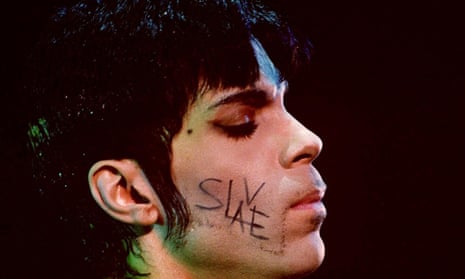
This gave Prince leverage to set up his own label, Paisley Park. From 1985 to 1992, he released eight albums in partnership with Warner. Then the battle began. Despite being signed to a $100 million contract, Prince publicly claimed it was the equivalent of forced servitude because he didn’t own the master recordings or have creative control. He infamously took to appearing in public with “Slave” scrawled on his face.

photograph by Brian Rasic/Rex Features as posted at TheGuardian.com

Prince also changed his name to an unpronounceable symbol () under the argument that the record company owned the name “Prince.” Considering the symbol he’d adopted as his new moniker was unpronounceable, the press – at a loss as to how to refer to him – took to calling him “the Artist Formerly Known as Prince.”

image from NPG Records as posted at Variety.com

Despite the very public split, Prince still owed Warner Bros. several albums. This resulted in several archival releases, including 1993’s The Hits/The B-sides, 1994’s Come, 1994’s The Black Album (which had originally been slated for release in 1987), 1995’s The Gold Experience, and 1996’s Chaos and Disorder.

The Gold Experience was actually jointly released by Warner and Prince’s newly formed label, NPG (New Power Generation), which he formed to replace Paisley Park. The first full-fledged release with NPG came in 1996 with Emancipation. Right out of the gate, Prince was testing his audience. Double albums are typically viewed as sprawling, over-the-top affairs that could be whittled down to one solid album instead. However, he’d had both commercial success and critical acclaim with 1987’s Sign ‘O’ the Times so maybe another multi-disc set could fly.

Of course, this was more than a two-album set. It was a three disc collection. However, it seemed his faithful were still on board as the album reached #11 on the Billboard Hot 100 and was certified as double platinum.

It’s then, however, pushed his audience’s loyalty a step too far. One could forgive the excess of Prince celebrating his newfound freedom with a bloated multi-disc collection. But would they go for two such projects back-to-back? The answer was “NO.”

1998’s Crystal Ball was a FIVE-disc set upon its initial release. The Truth was an album of new material by Prince and Kamasutra was recorded by Prince with the NPG Orchestra. Both have since been made available as individual albums. The other three discs were a dip into the archives from 1983 to 1996. The artist who so publicly lashed out at his former record company for taking advantage of him was now arguably taking advantage of his audience.

To be fair, it’s hard to argue against any artist having the right to own his or her own material and maintaining creative control over the work they create. Certainly record companies have a long history of taking advantage of their signees, whether they be superstars or new artists with no clout. However, Prince’s obliviousness or outright apathy toward his audience and their budgetary constraints made it hard not to see him as an out-of-touch artist obsessed with only creating the art and not considering how it might be consumed by its patrons.

The Songs

Here are insights into some of the individual tracks. They are presented in order of when they were released instead of the album’s track listing. The songs “Sexual Suicide,“ “Dream Factory,“ “Last Heart,“ “Movie Star,“ “Crystal Ball,” “Crucial,” and “Good Love” are not featured on this page but on the page for the aborted albums Dream Factory, Camille, and Crystal Ball. Here’s a breakdown of each of the individual songs. They are presented chronologically based on when they were originally recorded.

Cloreen Bacon Skin

Prince

Writer(s): Prince


Recorded: 3/27/1983 at Sunset Sound in Los Angeles


Released: Crystal Ball (box set, 1998)

An Honest Man

Prince

Writer(s): Prince


Recorded: 12/17/1985 at Sunset Sound in Los Angeles


Released: Crystal Ball (box set, 1998)

Make Your Mama Happy

Prince

Writer(s): Prince


Recorded: August 7-8, 1986 at Galpin Boulevard Home Studio in Chanhassen, MN


Released: Crystal Ball (box set, 1998)

Tell Me How U Wanna B Done

Prince

Writer(s): Prince


Recorded: January 1992 at Paisley Park in Chanhassen, MN


Released: Crystal Ball (box set, 1998)

What’s My Name

Prince

Writer(s): Prince


Recorded: May 1993 at Paisley Park in Chanhassen, MN


Released: Crystal Ball (box set, 1998)

Strays of the World

Prince

Writer(s): Prince


Recorded: May 1993 at Paisley Park in Chanhassen, MN


Released: Crystal Ball (box set, 1998)

Calhoun Square

Prince

Writer(s): Prince


Recorded: 6/15/1993 at Paisley Park in Chanhassen, MN


Released: Crystal Ball (box set, 1998)

Interactive

Prince

Writer(s): Prince


Recorded: June 1993 at Paisley Park in Chanhassen, MN


Released: Crystal Ball (box set, 1998)

Acknowledge Me

Prince

Writer(s): Prince


Recorded: October 1993 at Paisley Park in Chanhassen, MN


Released: Crystal Ball (box set, 1998)

Ripopgozazippa

Prince

Writer(s): Prince


Recorded: October 1993 at Paisley Park in Chanhassen, MN


Released: Crystal Ball (box set, 1998)

Love Sign

Prince & Nona Gaye

Writer(s): Prince


Recorded: January 1994 at Paisley Park in Chanassen, MN; 1994 at the Record Plant in Sausalito, CA


Released: 1-800-NEW-FUNK (1994), Shock G’s Silky Remix: Crystal Ball (box set, 1998)

P. Control

Prince

Writer(s): Prince


Recorded: 7/25/1994 at Paisley Park in Chanhassen, MN


Released: Crystal Ball (box set, 1998), Anthology: 1995-2010 (2018)

So Dark

Prince

Writer(s): Prince


Recorded: 1/2/1993 and 1994 at Paisley Park in Chanhassen, MN


Released: Crystal Ball (box set, 1998)

18 & Over

Prince

Writer(s): Prince


Recorded: 1994 at Paisley Park in Chanhassen, MN


Released: Crystal Ball (box set, 1998)

Get Loose

Prince

Writer(s): Prince


Recorded: February 1993 and 1994 at Paisley Park in Chanhassen, MN


Released: Crystal Ball (box set, 1998)

The Ride (live)

Prince

Writer(s): Prince


Recorded: 10/29/1995 at Paisley Park in Chanhassen, MN


Released: Crystal Ball (box set, 1998)

Hide the Bone

Prince

Writer(s): Prince


Recorded: November 1993 at Studios Davout in Paris; 1994-95 at Paisley Park in Chanhassen, MN


Released: Crystal Ball (box set, 1998)

Da Bang

Prince

Writer(s): Prince


Recorded: 1995 at Larrabee Sound Studios in Los Angeles


Released: Crystal Ball (box set, 1998)

Poom Poom

Prince

Writer(s): Prince


Recorded: 1995 at Paisley Park in Chanhassen, MN


Released: Crystal Ball (box set, 1998)

Goodbye

Prince

Writer(s): Prince


Recorded: December 1991, 1995 at Paisley Park in Chanhassen, MN; December 1994 at Ocean Way Recording in Los Angeles


Released: Crystal Ball (box set, 1998)

Days of Wild (live)

Prince

Writer(s): Prince


Recorded: 12/9/1995 live at Paisley Park in Chanhassen, MN; overdubs 1995-96


Released: Crystal Ball (box set, 1998), 6/27/2002 as a single

2morrow

Prince

Writer(s): Prince


Recorded: November 1996 at Paisley Park in Chanhassen, MN


Released: Crystal Ball (box set, 1998)

She Gave Her Angels

Prince

Writer(s): Prince


Recorded: 1996 at Paisley Park in Chanhassen, MN


Released: Crystal Ball (box set, 1998)

Notes:

--

Resources/References:

  • AM AllMusic.com review
  • BC Benoit Clerc (2022). Prince: All the Songs – The Story Behind Every Track. Octopus Publishing Group Ltd.: Great Britain
  • PV PrinceVault.com
  • WK Wikipedia


Related DMDB Pages:


First posted 7/27/2025; last updated 7/28/2025.


Tuesday, November 3, 1992

Hitsville USA box set released

First posted 12/1/2009; updated 11/16/2020.

Hitsville U.S.A.: The Motown Singles Collection 1959-1971

Various Artists


Released: November 3, 1992


Recorded: 1959 to 1971


Peak: -- US, -- UK, -- CN, -- AU


Sales (in millions): 0.5 US, -- UK, 0.5 world (includes US and UK)


Genre: R&B/pop


Tracks:

Song Title by Act [time] (date of single release, chart peaks) Click for codes to singles charts.

Tracks, Disc 1:

  1. Money (That’s What I Want) [BARRETT STRONG] (1/25/60, 23 US, 2 RB)
  2. Shop Around [MIRACLES] (12/12/60, 2 US, 1 RB)
  3. Please Mr. Postman [MARVELETTES] (9/4/61, 1 US, 1 RB)
  4. Jamie [EDDIE HOLLAND] (1/13/62, 30 US, 6 RB)
  5. The One Who Really Loves You [MARY WELLS] (3/24/62, 8 US, 2 RB)
  6. Do You Love Me? [CONTOURS] (8/11/62, 3 US, 1 RB, 24 AC, sales: 1 million)
  7. Beechwood 4-5789 [MARVELETTES] (8/11/62, 17 US, 7 RB)
  8. You Beat Me to the Punch [MARY WELLS] (8/11/62, 9 US, 1 RB)
  9. Stubborn Kind of Fellow [MARVIN GAYE] (7/23/62, 46 US, 8 RB)
  10. Two Lovers [MARY WELLS] (12/1/62, 7 US, 1 RB)
  11. You’ve Really Got a Hold on Me [MIRACLES] (12/8/62, 8 US, 1 RB)
  12. Come and Get These Memories [MARTHA & THE VANDELLAS] (2/22/63, 29 US, 6 RB)
  13. Pride and Joy [MARVIN GAYE] (4/18/63, 10 US, 2 RB)
  14. Fingertips (Part 2) [STEVIE WONDER] (6/22/63, 1 US, 1 RB)
  15. Heat Wave [MARTHA & THE VANDELLAS] (7/10/63, 4 US, 1 RB)
  16. Mickey’s Monkey [MIRACLES] (8/17/63, 8 US, 3 RB)
  17. Leaving Here [EDDIE HOLLAND] (2/8/64, 76 US, *76 RB)
  18. The Way You Do the Things You Do [TEMPTATIONS] (2/29/64, 11 US, 11 RB)
  19. My Guy [MARY WELLS] (4/4/64, 1 US, 5 UK, 1 RB)
  20. Devil with the Blue Dress [SHORTY LONG]
  21. Every Little Bit Hurts [BRENDA HOLLOWAY] (5/2/64, 13 US, 13 RB)
  22. Baby, I Need Your Loving [FOUR TOPS] (8/15/64, 11 US, 11 RB)
  23. Dancing in the Street [MARTHA & THE VANDELLAS] (7/31/64, 2 US, 4 RB, 2 RB, sales: 1 million)
  24. My Smile Is Just a Frown (Turned Upside Down) [CAROLYN CRAWFORD] (2/13/65, 39 RB)
  25. Needle in a Haystack [VELVELETTES] (10/17/64, 45 US, 45 RB)
  26. Baby Love [SUPREMES] (10/3/64, 1 US, 1 UK, 1 RB, sales: 1 million)
  27. Come See about Me [SUPREMES] (11/14/64, 1 US, 27 UK, 3 RB)
  28. How Sweet It Is to Be Loved by You [MARVIN GAYE] (11/4/64, 6 US, 49 UK, 4 RB)

Tracks, Disc 2:
  1. My Girl [TEMPTATIONS] (1/16/65, 1 US, 2 UK, 1 RB, 27 AC, sales: 2 million)
  2. He Was Really Sayin’ Somethin’ [VELVELETTES] (1/30/65, 64 US, 21 RB)
  3. Ask the Lonely [FOUR TOPS] (2/6/65, 24 US, 9 RB)
  4. Shotgun [JR. WALKER & THE ALL STARS] (2/13/65, 4 US, 1 RB)
  5. Nowhere to Run [MARTHA & THE VANDELLAS] (2/2/65, 8 US, 26 UK, 5 RB)
  6. When I’m Gone [BRENDA HOLLOWAY] (3/6/65, 25 US, 12 RB)
  7. Ooo Baby Baby [MIRACLES] (3/27/65, 16 US, 4 RB)
  8. I Can’t Help Myself (Sugar Pie, Honey Bunch) [FOUR TOPS] (5/15/65, 1 US, 23 UK, 1 RB)
  9. First I Look at the Purse [CONTOURS] (8/14/65, 57 US, 12 RB)
  10. The Tracks of My Tears [MIRACLES] (7/10/65, 16 US, 2 RB)
  11. It’s the Same Old Song [FOUR TOPS] (7/31/65, 5 US, 34 UK, 2 RB)
  12. Love Makes Me Do Foolish Things [MARTHA & THE VANDELLAS] (7/26/65, 70 US, 22 RB)
  13. Take Me in Your Arms (Rock Me) [KIM WESTON] (10/9/65, 50 US, 4 RB)
  14. Uptight (Everything’s Alright) [STEVIE WONDER] (12/18/65, 3 US, 14 UK, 1 RB)
  15. Don’t Mess with Bill [MARVELETTES] (1/15/66, 7 US, 3 RB)
  16. Darling Baby [ELGINS] (2/19/66, 72 US, 4 RB)
  17. This Old Heart of Mine [ISLEY BROTHERS] (2/19/66, 12 US, 3 UK, 6 RB)
  18. Greetings (This Is Uncle Sam) [MONITORS] (4/16/66, 100 US, 21 RB)
  19. Function at the Junction [SHORTY LONG] (9/24/66, 97 US, 42 RB)
  20. I’m a Road Runner [JR. WALKER & THE ALL STARS] (4/9/66, 20 US, 12 UK, 4 RB)
  21. Ain’t Too Proud to Beg [TEMPTATIONS] (5/28/66, 13 US, 21 UK, 1 RB, sales: 1 million)
  22. What Becomes of the Brokenhearted [JIMMY RUFFIN] (8/6/66, 7 US, 4 UK, 6 RB)
  23. How Sweet It Is to Be Loved by You [JR. WALKER & THE ALL STARS] (7/30/66, 18 US, 22 UK, 3 RB)
  24. Love’s Gone Bad [CHRIS CLARK] (10/29/66, 41 RB)
  25. You Can’t Hurry Love [SUPREMES] (8/13/66, 1 US, 3 UK, 1 RB)
  26. Beauty Is Only Skin Deep [TEMPTATIONS] (8/20/66, 3 US, 18 UK, 1 RB, sales: 1 million)
  27. Heaven Must Have Sent You [ELGINS] (9/24/66, 50 US, 3 UK, 9 RB)

Tracks, Disc 3:
  1. Reach Out (I’ll Be There) [FOUR TOPS] (9/3/66, 1 US, 1 UK, 1 RB, sales: 1 million)
  2. I Know I’m Losing You [TEMPTATIONS] (11/19/66, 8 US, 19 UK, 1 RB)
  3. Standing in the Shadows of Love [FOUR TOPS] (12/17/66, 6 US, 6 UK, 2 RB)
  4. It Takes Two [MARVIN GAYE/KIM WESTON] (12/2/66, 14 US, 16 UK, 4 RB)
  5. The Hunter Gets Captured by the Game [MARVELETTES] (1/21/67, 13 US, 2 RB)
  6. Jimmy Mack [MARTHA & THE VANDELLAS] (2/3/67, 10 US, 21 UK, 1 RB)
  7. Bernadette [FOUR TOPS] (3/11/67, 4 US, 8 UK, 3 RB)
  8. Ain’t No Mountain High Enough [MARVIN GAYE/TAMMI TERRELL] (4/20/67, 19 US, 3 RB)
  9. More Love [MIRACLES] (6/17/67, 23 US, 5 RB)
  10. I Heard It Through the Grapevine [GLADYS KNIGHT & THE PIPS] (10/21/67, 2 US, 47 UK, 1 RB)
  11. I Second That Emotion [MIRACLES] (11/4/67, 4 US, 27 UK, 1 RB)
  12. I Wish It Would Rain [TEMPTATIONS] (1/13/68, 4 US, 45 UK, 1 RB, sales: 1 million)
  13. I Can’t Give Back the Love I Feel for You [RITA WRIGHT]
  14. Does Your Mama Know About Me [BOBBY TAYLOR/VANCOUVERS] (4/20/68, 29 US, 5 RB)
  15. Ain’t Nothing Like the Real Thing [MARVIN GAYE/TAMMI TERRELL] (3/28/68, 8 US, 34 UK, 1 RB)
  16. Love Child [SUPREMES] (10/19/68, 1 US, 15 UK, 2 RB)
  17. For Once in My Life [STEVIE WONDER] (11/2/68, 2 US, 3 UK, 2 RB)
  18. Cloud Nine [TEMPTATIONS] (11/16/68, 6 US, 15 UK, 2 RB, sales: 1 million)
  19. I Heard It Through the Grapevine [MARVIN GAYE] (11/30/68, 1 US, 1 UK, 1 RB)
  20. Baby, Baby Don’t Cry [MIRACLES] (1/4/69, 8 US, 3 RB)
  21. Twenty-Five Miles [EDWIN STARR] (2/15/69, 6 US, 36 UK, 6 RB)
  22. My Whole World Ended the Moment You Left Me [DAVID RUFFIN] (2/15/69, 9 US, 2 RB)
  23. What Does It Take to Win Your Love? [JR. WALKER & THE ALL STARS] (5/17/69, 4 US, 13 UK, 1 RB)
  24. I Can’t Get Next to You [TEMPTATIONS] (8/16/69, 1 US, 13 UK, 1 RB, sales: 2 million)
  25. Baby, I’m for Real [ORIGINALS] (9/27/66, 14 US, 1 RB)
  26. Up the Ladder to the Roof [SUPREMES] (3/7/70, 10 US, 6 UK, 5 RB, 28 AC)

Tracks, Disc 4:
  1. I Want You Back [JACKSON 5] (11/15/69, 1 US, 2 UK, 1 RB)
  2. The Bells [ORIGINALS] (2/7/70, 12 US, 4 RB)
  3. Get Ready [RARE EARTH] (3/14/70, 4 US, 20 RB)
  4. ABC [JACKSON 5] (3/14/70, 1 US, 8 UK, 1 RB)
  5. Ball of Confusion (That’s What the World Is Today) [TEMPTATIONS] (5/23/70, 3 US, 7 UK, 2 RB)
  6. The Love You Save [JACKSON 5] (5/30/70, 1 US, 7 UK, 1 RB)
  7. Signed, Sealed, Delivered, I’m Yours [STEVIE WONDER] (6/27/70, 3 US, 15 UK, 1 RB)
  8. War [EDWIN STARR] (7/11/70, 1 US, 3 UK, 3 RB)
  9. It’s a Shame [SPINNERS] (7/25/70, 14 US, 4 RB)
  10. Ain’t No Mountain High Enough [DIANA ROSS] (8/8/70, 1 US, 6 UK, 1 RB, 6 AC)
  11. Still Water (Love) [FOUR TOPS] (8/29/70, 11 US, 10 UK, 4 RB)
  12. I’ll Be There [JACKSON 5] (9/19/70, 1 US, 4 UK, 1 RB)
  13. The Tears of a Clown [MIRACLES] (10/17/70, 1 US, 1 UK, 1 RB)
  14. Stoned Love [SUPREMES] (11/7/70, 7 US, 3 UK, 1 RB, 24 AC)
  15. If I Were Your Woman [GLADYS KNIGHT & THE PIPS] (11/28/70, 9 US, 1 RB)
  16. Just My Imagination Running Away with Me [TEMPTATIONS] (2/6/71, 1 US, 8 UK, 1 RB, 33 AC, sales: 2 million)
  17. What’s Going On [MARVIN GAYE] (1/21/71, 2 US, 1 RB)
  18. Never Can Say Goodbye [JACKSON 5] (4/3/71, 2 US, 33 UK, 1 RB)
  19. Nathan Jones [SUPREMES] (5/8/71, 16 US, 5 UK, 8 RB, 29 AC)
  20. I Don’t Want to Do Wrong [GLADYS KNIGHT & THE PIPS] (6/5/71, 17 US, 2 RB)
  21. Smiling Faces Sometimes [UNDISPUTED TRUTH] (6/26/71, 3 US, 2 RB, 34 AC)
  22. Mercy Mercy Me (The Ecology) [MARVIN GAYE] (6/10/71, 4 US, 1 RB, 34 AC)
  23. I Just Want to Celebrate [RARE EARTH] (7/17/71, 7 US, 30 RB)


Total Running Time: 5:03:03

Rating:

4.591 out of 5.00 (average of 12 ratings)


Quotable: “A definitive overview and introduction to one of the most groundbreaking labels in pop music history” – Stephen Thomas Erlewine, All Music Guide


Awards:

About the Album:

“A well-assembled box set containing just some of Motown's most golden and definitive classics. Nobody knew Motown Records was going to take off in the way it did. Berry Gordy intended to use his artists to break down the then racial barriers, intending to encapsulate a golden and distinct sound that would not only please a black audience but would too appeal to whites. Berry Gordy’s visions for the company paid off. Key artists like Diana Ross, Marvin Gaye, Smokey Robinson and Stevie Wonder attracted a huge following from both blacks and whites.” IP “Motown remains a key landmark in the history of black music and also made a significant impact in pop music all together. Never has there been a record label that has managed to capture and encapsulate such a unique, distinct sound with such a wide range of diverse singing talents.” IP

“The golden Motown sound ceased to exist after its headquarters move from Detroit to L.A.,” IP but they “did so many things well in the ‘60s and early ‘70s” RW that, even at four discs and 103 songs, “collectors could have used a more comprehensive set.” STE

“There are a handful of wonderful lesser-known songs here, such as the Contours’ First I Look at the Purse” STE and “surprisingly rare features on here such as a version of I Can’t Give Back the Love I Feel for You by Rita Wright (later covered by Diana Ross on her Surrender album) and some offerings from the over-looked Brenda Holloway.” IP However, “the main strength of the 103-track box is that it features all of the biggest songs from Motown’s golden era in one place.” STE

Things kick off with “the effective, bluesey Money (That’s What I Want) by Barret Strong, Motown’s debut release. There is a raw, earthy feel to the classic that has stood the test of time impecably well. There is a strong injection of rock and roll on Motown’s early releases though they found a more commercially favorable sound with vast elements of pop neatly blended into the production with The Marvelettes famous classic, Please Mr. Postman,” IP the first #1 hit for Motown.

“A vast selection of Martha Reeves’ finest recordings turn up here from the sassy Come and Get These Memories, the pop masterpiece Heat Wave…and the rolling Dancing in the Streets.” IP Of course, there’s also “the unforgetable classic, Nowhere to Run.” IP “Just listening to the sheer volume and power of Reeves voice makes you appreciate her often over-looked vocal talents.” IP

While Martha & the Vandellas overshadowed the Marvelettes, they were, in turn, “overshadowed by Motown’s biggest act, Diana Ross and the Supremes.” IP “Ross had a much softer soprano which had soulful qualities, oozing heavy emotion and genuine feeling that showed subtle hints of a raw vulnreability in her vocal delivery and neatly surfboarded along Motowns complex musical arrangements.” IP Early number ones like Baby Love, Come See About Me, and You Can’t Hurry Love are featured, although there are other major #1’s from the Supremes which don’t make the cut (“Stop! In the Name of Love,” “You Keep Me Hanging On”). There seems to be more emphasis on later hits of their career, such as “the raw, gritty Love Child and their breathtakingly beautiful ballad, Someday We’ll Be Together.” IP There’s also Stoned Love, “possibly their best post-Ross recording featuring Jean Terrell as lead vocalist.” IP

“There is oddly only one offering from Diana Ross’ solo career with the absolutley magnificent, golden soul classic, Ain’t No Mountin High Enough. Ashford and Simpson always knew how to make good records for Diana Ross and that tracks is one of the many landmarks in her career. You just get goose bumps as that exalting and rip-roaring climax builds and Diana effectivley talks through the verses, emphasising her truly sensual vocal style.” IP

“Holland-Dozier-Holland was the main driving force behind a lot of Motowns most golden classics. They wrote and assembled some of the most remarkable pieces of music for both Diana Ross [and the Supremes] and the fantasic Four Tops.” IP “Lead singer of The Four Tops Levi Stubbs’ rocketing voice was just amazing and even managed to give you goose bumps. Several of their most famous classics turn up here including their pair of U.S chart toppers, I Can’t Help Myself and the hauntingly atmospheric Reach Out (I’ll Be There).” IP

“The Temptations were one of Motown’s hottest and most versatile acts. The splitting of lead vocal duties between the smooth, sensuous sound of Eddie Kendricks falsetto combined with the explosive volume of David Ruffins more forceful delivery marked an interesting transistion in their work. Tracks like the jamming Get Ready and My Girl respectivley show up on this box set though also highlights some of their most exciting work from the early ‘70s with the undertones of hot, pulsating funk on Cloud Nine, which saw Dennis Edwards being lead vocalist after the swift departure of David Ruffin and the utterly fantastic classic, Ball of Confusion, divulging into contemporary social issues.” IP

While the Temptations performed the song, “My Girl” was also a showcase for Smokey Robinson, “a key artist at Motown who wrote some timeless music and was generally an all-round and highly versatile entertainer.” IP He also lent his skills to Mary Wells’ My Guy and other major Motown hits. “Some of his most enthralling work [with his own group, the Miracles], is on here such as the infectious sounds of The Tears of a Clown and the breathtakingly beautiful, The Tracks of My Tears.” IP

“Stevie Wonder was a sheer genius and some of his greatest work is included here, from the masterpiece production of Fingertips to the playful funk of Signed, Sealed, Delivered, I’m Yours.” IP Of course, the real gems of Wonder’s career were yet to come after the years covered by this box with funkier songs like “Superstition” and “Higher Ground” and socially-conscious hits like “Living for the City” and “You Haven’t Done Nothin’.”

“Marvin Gaye was another one of Motowns definitive artists. His work progresed from the formulaic sounds of Motown on tracks like Stubborn Kind of Fellow to the masterpiece of I Heard It Through the Grapevine to the profound political statements expressed on the timeless What’s Going On that is deservedly included on here.” IP

“Amongst other familiar classics are the fantastic and the at-the-time controversial nature of Edwin Starr’s rip-roaring War, the beautiful This Old Heart of Mine by the highly underated The Isley Brothers, the sensational Shotgun by Junior Walker and the All Stars who bought a unique touch of Jazz to their mainstream sound of Soul/R&B/Pop, …[and] ABC by The Jackson 5 (featuring a young, nasal sounding Michael Jackson).” IP

“That the running order begins with…‘Money (That’s What I Want)’ and ends with Marvin Gaye’s statement of concern Mercy Mercy Me (The Ecology) says a lot about how far the company moved in its golden decade – but no more so than what the same two cuts’ differences in sound get across. The company was able to blend the smooth and the harsh in ways that few other pop entities have ever mastered, thereby getting over not only to the feet and the wallet, but to the heart.” RW

“The box itself could have been packaged with a little more care (there are no artists listed on the back of the individual discs, only songs), but Hitsville USA stands as a definitive overview and introduction to one of the most groundbreaking labels in pop music history.” STE Hitsville USA “is both superb and timeless but also essential to any serious Soul/R&B collection.” IP


Notes: A second box set was released a year after this one to cover the years 1972 to 1992.

Resources and Related Links:

Monday, September 30, 1991

Crosby, Stills & Nash released the CSN box set

CSN

Crosby, Stills & Nash


Recorded: 1968-1991


Released: September 30, 1991

Peak: 109 US, -- UK, -- CN, -- AU Click for codes to charts.


Sales (in millions): 1.0 US


Genre: folk rock/classic rock


Click on a song title for more details.

Tracks, Disc 1:

(1) Suite: Judy Blue Eyes (2) Helplessly Hoping (3) You Don’t Have to Cry (4) Wooden Ships (5) Guinnevere (6) Marrakesh Express (7) Long Time Gone (8) Blackbird (9) Lady of the Island (10) Song with No Words (Tree with No Leaves) (11) Almost Cut My Hair (12) Teach Your Children (13) Horses Through a Rainstorm (14) Déjà Vu (15) Helpless (16) 4 + 20 (17) Laughing (18) Carry On/Questions

Tracks, Disc 2:

(1) Woodstock (2) Ohio (3) Love the One You’re With (4) Our House (5) Old Times Good Times (6) The Lee Shore (7) Music is Love (8) I’d Swear There Was Somebody Here (9) Man in the Mirror (10) Black Queen (11) Military Madness (12) Urge for Going (13) I Used to Be a King (14) Simple Man (15) Southbound Train (16) Change Partners (17) My Love Is a Gentle Thing (18) Word Game (19) Johnny’s Garden (20) So Begins the Task (21) Turn Back the Pages

Tracks, Disc 3:

(1) See the Changes (2) It Doesn’t Matter (3) Immigration Man (4) Chicago / We Can Change the World (5) Homeward Through the Haze (6) Where Will I Be? (7) Page 43 (8) Carry Me (9) Cowboy of Dreams (10) Bittersweet (11) To the Last Whale… (12) Prison Song (13) Another Sleep Song (14) Taken at All (15) In My Dreams (16) Just a Song Before I Go (17) Shadow Captain (18) Dark Star (live) (19) Cathedral

Tracks, Disc 4:

(1) Wasted on the Way (2) Barrel of Pain (Half-Life) (3) Southern Cross (4) Daylight Again (5) Thoroughfare Gap (6) Wild Tales (7) Dear Mr. Fantasy (8) Cold Rain (9) Got It Made (10) Tracks in the Dust (11) As I Come of Age (12) 50/50 (13) Drive My Car (14) Delta (15) Soldiers of Peace (16) Yours and Mine (17) Haven’t We Lost Enough? (18) After the Dolphin (19) Find the Cost of Freedom

Total Running Time: 297:19


The Players:

Rating:

4.509 out of 5.00 (average of 13 ratings)


Awards:

(Click on award to learn more).

About the Album

This four-disc box set covered the CSN albums as well as each artist’s solo work. Rather than feeling like filler, the generous amount of solo recordings paints a sort of alternate picture of what CSN’s history might have looked like if they’d recorded more albums together. The box also contains a fair amount of previously unreleased material.

The Songs

This page covers songs not featured on any of Crosby, Stills & Nash (and sometimes) Young’s studio albums. That means these are largely solo songs not featured on any other DMDB pages. For the CSN/Y songs on their albums, click on the song titles to go to the appropriate pages.

The songs on this page are presented chronologically by recording dates. There are a few songs on this page that were not featured on the CSN box set but were featured on other CSN/Y compilations.

Songs Recorded in 1970

Old Times Good Times

Stephen Stills

Writer(s): Stephen Stills


Recorded: early 1970


Released: Stills: Stephen Stills (1970); CSNY: CSN (box set, 1991)


Peak: -- Click for codes to charts.


Sales (in millions): --


Airplay/Streaming (in millions): -- radio, -- video, -- streaming


About the Song:

Stephen Stills: “Hendrix and I cut a bunch of stuff together; this is one of the few things that surfaced. He was a very dear friend of mine, we were lonely in London together and hung out a lot. I left England suddenly, and years later I learned from Mitch Mitchell that Jimi had been looking for me everywhere – wanted me to join the Experience as the bass player, which would have been my greatest dream in life! It had something to do with a manager deciding it was a wrong career move and said, ‘we don’t know where he is.’ I learned to play lead guitar from Jimi he showed me the scales and said things like, ‘You begin by thinking about the chord position and base your improvisations on that.’ Or he’d make some little remark like, ‘F sharp is really cool,’ and we’d develop a jam around that. We’d make up songs, play the blues. He’d improvise until the inspiration began to ebb, then he’d look at me and say, ‘You drive.’ You had to hear that cat play acoustic guitar! We once jammed for about five days, one long marathon session in my beach house in Malibu. The sheriff’s deputy overheard our guitar playing. When he found out it was us he asked permission to park his police car directly outside the house so he could listen in while he fielded radio calls. Told us not to worry about a thing, he’d be looking out for us.”

Love the One You’re With

Stephen Stills

Writer(s): Stephen Stills


Recorded: March 1970


Released: Stills: Stephen Stills (1970); CSNY: 4 Way Street (live, 1971), Replay (compilation, 1980), CSN (box set, 1991), Carry On (compilation, 1991)


Charted: December 4, 1970


Peak: 14 BB, 16 CB, 6 GR, 10 HR, 32 AC, 5 CL, 37 UK, 6 CN, 1 DF Click for codes to charts.


Sales (in millions): --


Airplay/Streaming (in millions): -- radio, -- video, -- streaming


About the Song:

Stephen Stills: “This song has been very good to me. The title came from a party with Billy Preston. I asked him if I could pinch this line he had, and he said, ‘Sure. ‘ So I took the phrase and wrote a song around it. It’s a good times song, just a bit of fun. My favorite part is the steel drums. I played them before a little bit but I just kept diddling around till I found the right notes.” LN

Ohio

Crosby, Stills, Nash & Young

Writer(s): Neil Young


Recorded: May 15, 1970


First Charted: June 20, 1970


Released: So Far (compilation, 1974), CSN (box set, 1991), Carry On (compilation, 1991)


B-Side: “Find the Cost of Freedom”


Peak: 14 BB, 14 CB, 25 GR, 13 HR, 2 CL, 16 CN, 44 AU, 1 DF Click for codes to charts.


Sales (in millions): --


Airplay/Streaming (in millions): -- radio, 24.25 video, 120.89 streaming

Awards:

(Click on award to learn more).

About the Song:

“ CSNY recorded Ohio, a song written by Young in response to the killing of four students at Kent State University by National Guardsmen during an antiwar protest. Of the political content that marked many of their songs, Nash has said: ‘In speaking for ourselves, [listeners] recognized that we were speaking for them, too.’” RH

David Crosby: “The way I recall it, I was with Neil at a friend’s house and handed him Life magazine with the Kent State photos. He was silent for a long time, then picked up his guitar and twenty minutes later had this song. I called Stephen and Graham, and we immediately booked a studio. We gave the master to Ahmet Ertegun who flew it to New York the next day and it was released within the week. ‘Teach Your Children’ was heading straight for Number One, and we knocked it right off the charts with our own song, and Nash never said one word about it, to his great credit. He knew how important it was that this song be out there. For me ‘Ohio’ was a high point of the band, a major point of validity. There we were, reacting to reality, dealing with it on the highest level we could – relevant, immediate. It named names and pointed the finger. It said ‘Nixon. ‘ I was so moved by it that I completely lost it at the end of the song, in the recording studio, screaming ‘ ... Four ... Why? ... ‘How many more?” LN

Find the Cost of Freedom

Crosby, Stills, Nash & Young

Writer(s): Stephen Stills


Released: So Far (compilation, 1974), CSN (box set, 1991), Carry On (compilation, 1991)


Peak: 44 CL, 6 DF Click for codes to charts.


Sales (in millions): --


Airplay/Streaming (in millions): -- radio, -- video, 12.43 streaming

About the Song:

This may be CSNY’s peak when it comes to four-part harmony.

Stephen Stills: “I wrote it at the request of Dennis Hopper for the final scene in Easy Rider, where the dude gets blown away as his motorcycle burns and the camera pans way up in the sky. I played it for Dennis but he was in a fog and just didn’t get it. I was depressed about that for years. The song is about what it says it’s about: the cost of freedom, Abraham Lincoln, Medgar Evers, John F. Kennedy, Martin Luther King, Robert Kennedy. And a million others whose names we’ll never know. All the martyrs for this fragile thing called democracy, which we are always in danger of having taken away, never more so than today.”

“We ended every CSNY concert with this song. After a long evening and raucous electric set, we’d come back out with acoustic guitars, sit quietly on stools, and play this song. Leave everybody in a quiet space together. We came out of the sixties with a lot of crap but a few wonderful ideals, and one was the sense of community. It’s a positive legacy. The song is a tombstone.” LN

Black Queen

Stephen Stills

Writer(s): Stephen Stills


Recorded: June 7, 1970


Released: Stills: Stephen Stills (1970); CSNY: 4 Way Street (live, 1971), CSN (box set, 1991)


Peak: -- Click for codes to charts.


Sales (in millions): --


Airplay/Streaming (in millions): -- radio, -- video, -- streaming


About the Song:

Guitarist Michael Hedges: “I got everything I know from Stephen Stills. Those people who thought Clapton was God hadn’t heard Stills play acoustic guitar.”

Man in the Mirror

Graham Nash

Writer(s): Graham Nash


Recorded: June 7, 1970


Released: Nash: Songs for Beginners; CSNY: CSN (box set, 1991)


Peak: -- Click for codes to charts.


Sales (in millions): --


Airplay/Streaming (in millions): -- radio, -- video, -- streaming


About the Song:

Graham Nash: “It appeared on my first solo album, Songs for Beginners. It was a period of retreat and re-evaluation. I went to the Chateau Marmont in Los Angeles for two nights and stayed for months. I had a little Wurlitzer piano in one room. I’d order room service and only come out at night. I wrote this tune there. I was very proud of Songs for Beginners because it stretched my awareness of who I am a bit further. The title for the album implied a beginning, since it was my first solo effort, but it also implied beginning, meaning songs for people who act, begin things. Because people think a lot but then don’t act on their thoughts.” LN

Simple Man

Graham Nash

Writer(s): Graham Nash


Recorded: July 24, 1970


Released: Nash: Songs for Beginners; CSNY: CSN (box set, 1991)


Peak: -- Click for codes to charts.


Sales (in millions): --


Airplay/Streaming (in millions): -- radio, -- video, -- streaming


About the Song:

Graham Nash: “The day before the Fillmore East show in June of 1970 I broke up with Joni Mitchell and my whole world fell apart. The afternoon of that show I wrote this song and that evening I performed it live for the first time, with Joni sitting in the audience. I don’t know how got through that.” LN

Music Is Love

David Crosby

Writer(s): David Crosby


Recorded: autumn 1970


Released: Crosby: If I Could Only Remember My Name (1971); CSNY: CSN (box set, 1991)


First Charted: April 24, 1971


Peak: 95 BB, 96 CB, 76 HR, 44 CL Click for codes to charts.


Sales (in millions): --


Airplay/Streaming (in millions): -- radio, -- video, -- streaming


About the Song:

David Crosby: “‘Music Is Love’ is Nash’s and Neils’ fault. I improvised the tune, we were fooling around, it was a jam, and when it was over I thought ‘That’s nice,’ but I didn’t see it as too impressive. Then Nash and Neil stole the tape. They added congas, vibes, and harmonies, brought the tape back to me and said, ‘This is going on your album, don’t give us any shit.’ They were very firm about it. I learned a long time ago it doesn’t work to say no to Nash or Neil.”

I’d Swear There Was Somebody Here

David Crosby

Writer(s): David Crosby


Recorded: early autumn 1970


Released: Crosby: If I Could Only Remember My Name (1971); CSNY: CSN (box set, 1991)


Peak: -- Click for codes to charts.


Sales (in millions): --


Airplay/Streaming (in millions): -- radio, -- video, -- streaming


About the Song:

David Crosby: “I don’t know where that came from. It was a hallucination. I’ve always been drawn to strange vocal works. I overdubbed six tracks a cappella, with echo. Later I was left with a persistent feeling it was about Christine Hinton, my girlfriend who was killed. I was very much in love with her, and she went away very suddenly. I was not equipped to deal with the loss. This piece was a sudden, improvised, overwhelming requiem.” LN

Right Between the Eyes

Crosby, Stills, Nash & Young

Writer(s): Graham Nash


Recorded: live 1970


Released: 4 Way Street (live, 1971)


Peak: -- Click for codes to charts.


Sales (in millions): --


Airplay/Streaming (in millions): -- radio, -- video, -- streaming


About the Song:

A

Songs Recorded in 1971

I Used to Be a King

Graham Nash

Writer(s): Graham Nash


Recorded: January 9, 1971


Released: Nash: Songs for Beginners (1971); CSNY: CSN (box set, 1991)


Peak: 27 DF Click for codes to charts.


Sales (in millions): --


Airplay/Streaming (in millions): -- radio, -- video, -- streaming


About the Song:

Graham Nash: “And King Midas in Reverse is the king I used to be.” LN

Military Madness

Graham Nash

Writer(s): Graham Nash


Recorded: February 12, 1971


Released: Nash: Songs for Beginners (1971); CSNY: CSN (box set, 1991)


Peak: 27 DF Click for codes to charts.


Sales (in millions): --


Airplay/Streaming (in millions): -- radio, -- video, -- streaming


About the Song:

Graham Nash: “This is a song we opened our 1991 solo acoustic tour with, and it blows my mind we still have to be singing it. I was quite literally born into wartime conditions. My father was fighting in the service, while my mother gave birth to me in an upstairs room in Blackpool, by the Northern Sea, where we’d been evacuated during World War II. You could say from a very early age I’ve been aware of the absurdity of war. There is always one side that wins out economically and industrially because they were the ones who manufactured the war and the weapons. It’s happening today and it is no different.” LN

Chicago

Graham Nash

Writer(s): Graham Nash


Recorded: February 28, 1971


Released: Nash: Songs for Beginners (1971); CSNY: 4 Way Street (live, 1971), CSN (box set, 1991), Carry On (compilation, 1991)


First Charted: May 21, 1971


Peak: 35 BB, 29 CB, 21 GR, 29 HR, 17 CL, 27 DF Click for codes to charts.


Sales (in millions): --


Airplay/Streaming (in millions): -- radio, -- video, -- streaming


About the Song:

Graham Nash: “At the time Hugh Romney (Wavy Gravy) called David and invited CSNY to go and play at a benefit for the Chicago Seven. David and I wanted to do it, Neil and Stephen didn’t, for whatever reason. Anyway, I wrote this song to Neil and Stephen and to everybody that I thought might want to hear about the fact that what was happening to the Chicago Seven wasn’t fair.” LN

We Can Change the World

Graham Nash

Writer(s): Graham Nash


Recorded: February 28, 1971


Released: Nash: Songs for Beginners (1971); CSNY: CSN (box set, 1991), Carry On (compilation, 1991)


Peak: 27 DF Click for codes to charts.


Sales (in millions): --


Airplay/Streaming (in millions): -- radio, -- video, -- streaming

Change Partners

Stephen Stills

Writer(s): Stephen Stills


Recorded: early 1971


Released: Stills: Stephen Stills 2 (1971); CSNY: Replay (compilation, 1980), CSN (box set, 1991), Carry On (compilation, 1991)


First Charted: June 5, 1971


Peak: 43 BB, 38 CB, 38 GR, 40 HR, 19 CL, 27 DF Click for codes to charts.


Sales (in millions): --


Airplay/Streaming (in millions): -- radio, -- video, -- streaming


About the Song:

Stephen Stills: “Ostensibly it was about growing up in the South, attending the debutante balls, although Graham likes to refer to it as the Crosby, Stills and Nash theme song, which I suppose it is. But it should certainly be a crushing bore if we did the same old thing all the time. That’s why we called the group Crosby, Stills and Nash, and not ‘The Spiders,’ or something. Everybody would have the chance to carry on their solo careers and do what we wanted in any combination we wanted, in order to make it as interesting as possible, continually updating our relationships and our approaches to music, always open to other influences.” LN

Word Game

Stephen Stills

Writer(s): Stephen Stills


Recorded: early 1971


Released: Stills: Stephen Stills 2 (1971),: CSNY: CSN (box set, 1991)


Peak: -- Click for codes to charts.


Sales (in millions): --


Airplay/Streaming (in millions): -- radio, -- video, -- streaming


About the Song:

Stephen Stills: “When I was living in England in the early seventies I saw a documentary about South Africa made by underground Black filmmakers. They shot it with hidden cameras, stuffed in a sack, or under a hat. It showed what it’s really, really like to live under apartheid. It made me so mad that I wrote this song in about fifteen minutes. The hard part was making it fit to music. When I began performing it live, I would often segue into ‘Crossroads,’ and the two melted together. The real ‘Crossroads,’ that is, not the rock ‘n’ roll version. The Robert Johnson version, rough and uneven, where he would have an eleven bar phrase, followed by a six bar phrase, followed by seven bars. Before it became contrived. That’s the type of structure ‘Word Game’ followed: it determined its own form based on how I held a word or turned a phrase during the performance.” LN

Urge for Going

Crosby & Nash

Writer(s): Joni Mitchell


Recorded: June 22, 1971


Released: CSN (box set, 1991)


Peak: -- Click for codes to charts.


Sales (in millions): --


Airplay/Streaming (in millions): -- radio, -- video, -- streaming


About the Song:

Pianist Joel Bernstein: “After the break-up of CSN following the 1970 tour, David and Graham began a project on their own. They were both tremendous admirers of Joni Mitchell’s songwriting, and of course David had produced her first album. Together they decided to cover ‘Urge For Going,’ a song Joni had written in Canada in the Spring of 1966 (incidentally one of only two songs she ever wrote in standard tuning). It was intended for the pop singles market, the idea being to record two songs and release a 45. Graham’s vocals hark back to his English sixties pop style, and David is playing very clear twelve-string reminiscent of the Byrds. I came to the studio with Graham just in time to witness a heated argument, as a result of which the song was never completed. The next day David went back to the studio and added vocals on his own to present Graham with a semi-finished version of the song as a peace offering. ‘That tape is the only thing that exists of the song and that’s what you’re listening to now.” LN

Where Will I Be?

Crosby & Nash

Writer(s): ?


Recorded: November 22, 1971


Released: Crosby & Nash: Graham Nash David Crosby (1972); CSNY: CSN (box set, 1991)


Peak: -- Click for codes to charts.


Sales (in millions): --


Airplay/Streaming (in millions): -- radio, -- video, -- streaming


About the Song:

David Crosby: “A sad song that came out of a very lost period in my life. The question to ‘Page 43’’s answer.” LN

Page 43

Crosby & Nash

Writer(s): --


Recorded: December 13, 1971


Released: Crosby & Nash: Graham Nash David Crosby (1972); CSNY: CSN (box set, 1991)


Peak: -- Click for codes to charts.


Sales (in millions): --


Airplay/Streaming (in millions): -- radio, -- video, -- streaming


About the Song:

David Crosby: “It’s about the mythical instruction booklet to life that we all wish we had and don’t. An optimistic song nonetheless.” LN

Songs Recorded in 1972-1974

Southbound Train

Crosby & Nash

Writer(s): Graham Nash


Recorded: January 6, 1972


Released: Crosby & Nash: Graham Nash David Crosby (1972); CSNY: CSN (box set, 1991)


Peak: -- Click for codes to charts.


Sales (in millions): --


Airplay/Streaming (in millions): -- radio, -- video, -- streaming


About the Song:

Graham Nash: “When David and I were staying at the Warwick Hotel in New York, Dylan came to visit. He asked us if we had any new songs and I had just written this. When David and I finished singing, Bob asked us to sing it again. I took it as quite a compliment ... I think.” LN

It Doesn’t Matter

Manassas

Writer(s): Stephen Stills, Chris Hillman


Recorded: January 7, 1972


Released: Manassas: Manassas (1972); CSNY: CSN (box set, 1991)


First Charted: March 13, 1972


Peak: 61 BB, 49 CB, 46 HR, 36 CL Click for codes to charts.


Sales (in millions): --


Airplay/Streaming (in millions): -- radio, -- video, -- streaming


About the Song:

Chris Hillman: “I’d been writing with the Byrds, but with Stephen I went up another level. I learned more about songwriting during my two years as Stephen’s second-in-command than at any other time in my life. He taught me how to structure a lyric, how to turn a phrase, how to craft a tune. Plus endless little tricks, like hanging onto phrases and half-finished songs instead of tossing them out, because later you’ll be writing a new one and these spare parts may just happen to fit. The point about the Byrds and the Springfield is we weren’t garage rock bands, we came out of folk music, so the major focus was on the song – if you were gonna get up in front of an audience with just an acoustic guitar, the material had better be good. I think Stephen is one of the most underrated musicians in this country, equally at home with acoustic or electric music.”

“Manassas was a crucible for all types of music-folk, rock, jazz, blues, country, Latin, bluegrass – that band could tackle the entire spectrum of music with awesome musicianship and authenticity. When we were on it was killer. In the studio Stephen was an extraordinary arranger, always asking, ‘What can we do to make this a little more interesting. How to take a song and throw in a few left curves?’ I felt the song ‘It Doesn’t Matter’ captured a lot of that Buffalo Springfield sound. There’s a certain moment near the end of the song where there’s a track-layered harmony, and Stephen is doing a guitar figure which sounds like a bass, it’s very rhythmic & it really makes the last chorus great, it boosts the track with something subtle and completely out of context. I really had to stand up on my toes to play with these guys, and I needed to be challenged at that point in my life. He made me try harder, and I like that, I really like that.” LN

Johnny’s Garden

Manassas

Writer(s): Stephen Stills


Recorded: January 8, 1972


Released: Manassas: Manassas (1972); CSNY: CSN (box set, 1991), Carry On (compilation, 1991)


Peak: 47 CL, 27 DF Click for codes to charts.


Sales (in millions): --


Airplay/Streaming (in millions): -- radio, -- video, -- streaming


About the Song:

Stephen Stills: “Written for my gardener John at Brookfield House in Elston, England where I once owned an estate. He had soul. He was an herbalist, and used to make incredible herbal teas. The song was written at a time in my life when I was on the road constantly, and what I really needed was to stay at home and rend my garden.” LN

So Begins the Task

Manassas

Writer(s): Stephen Stills


Recorded: January 9, 1972


Released: Manassas: Manassas (1972); CSNY: CSN (box set, 1991)


Peak: 18 CL Click for codes to charts.


Sales (in millions): --


Airplay/Streaming (in millions): -- radio, -- video, -- streaming


About the Song:

Stephen Stills: “I thought of this song as a poem. It was written immediately after ‘Helplessly Hoping.’ It’s a song of loss but also the freedom that goes with loss. It was conceived of as an acoustic song. We performed it on the CSNY tours a few times, then I cut this version during the Manassas sessions with A Perkins on fine pedal steel.” LN

Immigration Man

Crosby & Nash

Writer(s): Graham Nash


Recorded: February 9, 1972


Released: Crosby & Nash: Graham Nash David Crosby (1972); CSNY: CSN (box set, 1991)


First Charted: May 6, 1972


Peak: 36 BB, 31 CB, 33 GR, 25 HR, 11 CL, 26 DF Click for codes to charts.


Sales (in millions): --


Airplay/Streaming (in millions): -- radio, -- video, -- streaming


About the Song:

Graham Nash: “I wrote the song after being hassled by a customs official who wasn’t going to let me into this country. He held me up for a very long time. Then people started coming up, asking for my autograph, and he let me through immediately. But it still made me angry. I’m not against local color but why should you fight me because you speak differently than I do? That’s why the sheet music for ‘Immigration Man’ had the world on the front and the moon on the back. When you look at a photograph of the earth you don’t see any borders. That realization is where our hope as a planet lies.” LN

Another Sleep Song

Graham Nash

Writer(s): Graham Nash


Recorded: August 18, 1972


Released: Nash: Wild Tales (1974); CSNY: CSN (box set, 1991)


Peak: -- Click for codes to charts.


Sales (in millions): --


Airplay/Streaming (in millions): -- radio, -- video, -- streaming


About the Song:

Graham Nash: “This was written in Barbra Streisand’s living room, on her piano, while she sat on the sofa eating a T.V. dinner. How many people hate to get out of bed in the morning, hate to face the world? You don’t want to answer the phone or talk to anybody. Well, me too, except that all we need is someone to awaken us. That’s what we need, that’s what the song is about. It’s for all you people who need waking.” LN

As I Come of Age

Crosby, Stills & Nash

Writer(s): Stephen Stills


Recorded: March 1973


Released: Stills: Stills (1975); CSNY: CSN (box set, 1991), Carry On (compilation, 1991)


Peak: -- Click for codes to charts.


Sales (in millions): --


Airplay/Streaming (in millions): -- radio, -- video, -- streaming


About the Song:

Stephen Stills: “This song is self-explanatory.” LN

Prison Song

Graham Nash

Writer(s): Graham Nash


Recorded: spring 1973


Released: Nash: Wild Tales (1974); CSNY: CSN (box set, 1991)


Peak: -- Click for codes to charts.


Sales (in millions): --


Airplay/Streaming (in millions): -- radio, -- video, -- streaming


About the Song:

Graham Nash: “When I was eleven my father bought a camera from a friend with whom he worked, and he set up the darkroom in my bedroom. And then something tragic happened. The police came to our door and told my father that the camera was stolen, and would he tell them who sold it to him. And my father refused to tell the police who it was that sold him the thirty-dollar camera. My father spent a year in jail for this camera. And he was a very ordinary, God-fearing, good, hard-working man and it broke his heart completely that the judicial system was not fair in this particular case. It really broke him, and he died shortly afterwards.”

The other thing that inspired this song was a letter from a young man in Texas who was serving ten years for one joint of marijuana. And I couldn’t figure out why in Ann Arbor, Michigan, you could pay a five dollar fine for the same thing and get off.” LN

First Things First

Stephen Stills

Writer(s): Stephen Stills


Recorded: August 17, 1973


Released: Stills: Stills (1975); CSNY: Replay (compilation, 1980)


Peak: -- Click for codes to charts.


Sales (in millions): --


Airplay/Streaming (in millions): -- radio, -- video, -- streaming


About the Song:

A

Wild Tales

Graham Nash

Writer(s): Graham Nash


Released: Nash: Wild Tales; CSNY: CSN (box set, 1991)


Peak: -- Click for codes to charts.


Sales (in millions): --


Airplay/Streaming (in millions): -- radio, -- video, -- streaming


About the Song:

Graham Nash: “A friend of Elliott Roberts’ had an incredible series of mishaps in one week. His house was flooded, all his possessions were destroyed, and to top it off his old lady ran away with the milkman. He even went so far as to hire a detective to film her making love to the milkman. When her lawyer came to ask for alimony, his lawyer showed the film Wild Tales from the East.” LN

Homeward Through the Haze

Crosby, Stills, Nash & Young

Writer(s): David Crosby


Recorded: December 16, 1974


Released: Crosby & Nash: Wind on the Water (1975); CSNY: CSN (box set, 1991)


Peak: -- Click for codes to charts.


Sales (in millions): --


Airplay/Streaming (in millions): -- radio, -- video, -- streaming


About the Song:

David Crosby: “A straightforward live take – the only overdubs are in the vocal harmonies. Stephen and Neil trading off on electric guitars, me on vocals and piano, Nash on organ, Lee Sklar on bass and Russ Kunkel on drums. We’d gotten together to do a CSNY album but this was the only song that got cut. We had an argument that night, everybody went home and never came back. It was a finding-your-way song at a time when it was getting more and more difficult to find the way.” LN

Songs Recorded in 1975-1989

Turn Back the Pages

Stephen Stills

Writer(s): Stephen Stills


Recorded: early 1975


First Charted: August 2, 1975


Released: Stills: Stills (1975); CSNY: CSN (box set, 1991)


Peak: 84 BB, 76 CB, 42 CL, 27 DF Click for codes to charts.


Sales (in millions): --


Airplay/Streaming (in millions): -- radio, -- video, -- streaming


About the Song:

Stephen Stills: “How close we were, how similar and yet how different. Our music has been an awakening on a subliminal level of what’s been going on in all of us for years.” LN

Carry Me

Crosby & Nash

Writer(s): David Crosby


Recorded: March 1975


First Charted: November 8, 1975


Released: Crosby & Nash: Wind on the Water (1975); CSNY: CSN (box set, 1991)


Peak: -- Click for codes to charts.


Sales (in millions): --


Airplay/Streaming (in millions): -- radio, -- video, -- streaming


About the Song:

David Crosby: “A song of transcendence. The third verse is about my mother. This cuts close to the bone. She was lying in hospital, dying of cancer, and wanted to go while she still had some dignity. She asked me to do it, set her free – coupe de grace, the French call it. So I said, ‘Hell, yes. ‘ I learned how to do it from a doctor friend, and I was perfectly willing to do it, I’m not ashamed to say that. But she found out if she didn’t die on the hospital and doctor’s schedule, they’d conduct an autopsy and charge me with murder. So she had to go through an extra couple of months of desperate pain. She was a good lady. She taught me music, and was always writing poetry. I loved her a whole lot. She really nailed me when she said she felt like a bird with weights tied to her feet, that if somebody would just untie them she could fly. What an image – I couldn’t ignore it.” LN

My Love Is a Gentle Thing

Stephen Stills

Writer(s): Stephen Stills


Recorded: April 18, 1975


Released: CSN (box set, 1991)


Peak: -- Click for codes to charts.


Sales (in millions): --


Airplay/Streaming (in millions): -- radio, -- video, -- streaming


About the Song:

Stephen Stills: “I broke my hand and went to Hawaii to recuperate, where I met a nice beach girl who nursed me. I feel most at home in the tropics. Not the high, mountainous rainforests, but down by the ocean. The Tropic of Capricorn. ‘My Love’ in the song is really Hawaii, I was thinking of the tropics as a woman. When I finished recording the song I wanted to overdub bongos in the background but there weren’t any. So I turned the guitar over and on the back of it thumped out a beat.” LN

Bittersweet

Crosby & Nash

Writer(s): David Crosby


Recorded: June 8, 1975


Released: Crosby & Nash: Wind on the Water; CSNY: CSN (box set, 1991)


Peak: -- Click for codes to charts.


Sales (in millions): --


Airplay/Streaming (in millions): -- radio, -- video, -- streaming


About the Song:

David Crosby: “This was a completely unique recording experience for me. Written in the morning on a Wurlitzer electric piano in the Chateau Marmont on Sunset Boulevard. In the studio that afternoon I played it for the guys as they arrived, and we recorded it that night. It was cut the same day it was written. We’ve always tried to find the shortest route from our minds onto the tape. It’s a song about duality, if you want to be intellectual about it.” LN

Cowboy of Dreams

Crosby & Nash

Writer(s): Graham Nash


Recorded: June 18, 1975


Released: Crosby & Nash: Wind on the Water; CSNY: CSN (box set, 1991)


Peak: -- Click for codes to charts.


Sales (in millions): --


Airplay/Streaming (in millions): -- radio, -- video, -- streaming


About the Song:

Graham Nash: “I wrote this song about Neil Young. I once went down to his ranch and he rowed me out into the middle of a lake – putting my life in his hands once again. He waved at someone invisible and music started to play, in the countryside. I realized Neil had his house wired as the left speaker, and his barn wired as the right speaker. And Elliot Mazer, his engineer, said ‘How is it?’ And Neil shouted back ‘More barn!’” LN

To the Last Whale… (a) Critical Mass (b) Wind on the Water

Crosby & Nash

Writer(s): David Crosby, Graham Nash


Recorded: 5/11/75 and 7/1/75


Released: Crosby & Nash: Wind on the Water (1975); CSNY: Replay (compilation, 1980), CSN (box set, 1991), Carry On (compilation, 1991)


Peak: -- Click for codes to charts.


Sales (in millions): --


Airplay/Streaming (in millions): -- radio, -- video, -- streaming


About the Song:

David Crosby on “To the Last Whale…”: “This may be the best, or at least the purest piece of music I’ve ever written. It was inspired by listening to a lot of classical music around the house as a kid.” LN

Crosby on “Wind on the Water”: “This song is about all sea mammals, since virtually every species is in danger in some fashion or another, the whales, the dolphin, the hap seal, the sea otter. For almost two decades tuna fishermen have been slaughtering dolphins at the rate of over a quarter a million a year. The truth is, everything they get from whales can be synthesised or made at an equivalent cost, safely, in other ways. These animals are being made extinct, for no reason. I’m a sailor and I’ve been sailing for over thirty years. I go out there all the time and I love dolphins and whales, I live with them. And they’re gonna wipe them out as a species? That hurts me, I take it personally, and I’m going to do everything I can to fight it.” LN

Taken at All

Crosby & Nash

Writer(s): Graham Nash, David Crosby


Recorded: April 1, 1976


Released: Crosby & Nash: Whistling Down the Wire (1976); CSNY: CSN (box set, 1991), Carry On (compilation, 1991)


Peak: -- Click for codes to charts.


Sales (in millions): --


Airplay/Streaming (in millions): -- radio, -- video, -- streaming


About the Song:

Graham Nash: “One day in 1976 Neil came by my house in San Francisco. He played us a tape of some sessions he and Stephen had been recording at Criteria Studios in Miami: ‘Black Coral,’ ‘Midnight on the Bay,’ ‘Human Highway.’ It sounded great, but then Neil said, ‘Isn’t there something missing?’ And Crosby goes, ‘Yeah, us,’ meaning me and David. So the next morning we were on a plane to Miami. We added harmonies to their existing tracks, and recorded some new songs, ‘Taken at All’ being one of them. But David and I had to return to Los Angeles to finish our album, and Stephen and Neil had to wrap theirs up so they’d have product to push with the Stills/Young Band tour. The Crosby-Nash harmonies were transferred to safeties, then wiped from the master tapes. Personally, this is my favorite CSNY track. Four guitars, four microphones, one take. Written about the group situation in 1976: Can this road be taken at all?” LN

Thoroughfare Gap

Stephen Stills

Writer(s): Stephen Stills


Recorded: early 1978


Released: Stills: Thoroughfare Gap (1978); CSNY: CSN (box set, 1991)


Peak: -- Click for codes to charts.


Sales (in millions): --


Airplay/Streaming (in millions): -- radio, -- video, -- streaming


About the Song:

Stephen Stills: “A song about finding your way when life is going too fast. Probably my favorite work, from a literary standpoint. This song doesn’t need a guitar.” LN

Drive My Car

David Crosby

Writer(s): David Crosby


Recorded: late 1978


Released: Crosby: Oh Yes I Can (1989); CSNY: CSN (box set, 1991), Carry On (compilation, 1991)


Peak: 3 AR, 88 CN, 26 DF Click for codes to charts.


Sales (in millions): --


Airplay/Streaming (in millions): -- radio, -- video, -- streaming


About the Song:

David Crosby: “Sometimes you take your life’s steering wheel and turn it one direction, and the car careens in the other, right? My life was out of control like that a lot, so I’d get in my car and just drive, because at least it would go where I would steer it.” LN

Barrel of Pain (Half-Life)

Graham Nash

Writer(s): Graham Nash


Released: Nash: Earth & Sky (1979); CSNY: CSN (box set, 1991)


Peak: -- Click for codes to charts.


Sales (in millions): --


Airplay/Streaming (in millions): -- radio, -- video, -- streaming


About the Song:

Graham Nash: “I wrote this song about the Atomic Energy Commission’s practice of dropping barrels of nuclear waste into the ocean just off the California and Maine coasts. I saw photographs of the mutated sea life that had been exposed to the waste. And I couldn’t get the image out of my mind.” LN

Dear Mr. Fantasy

Stephen Stills & Graham Nash

Writer(s): Steve Winwood, Jim Capaldi, Chris Wood


Recorded: November 17, 1980


Released: CSN (box set, 1991), Carry On (compilation, 1991)


Peak: 15 DF Click for codes to charts.


Sales (in millions): --


Airplay/Streaming (in millions): -- radio, -- video, -- streaming


About the Song:

Stephen Stills: “Stevie Winwood was always my favorite singer, that blue-eyed sound. It had been our ambition from the start to convince him to join Crosby, Stills and Nash - I wanted an organ player who could sing the blues. He was exceptionally kind to me, but every time I trudged across the moors to see him, he was always occupied. I didn’t think there was anyone more shy than me - the phrase ‘painfully shy’ was invented for this man. We’ve recorded ‘Dear Mr. Fantasy’ a number of times, beginning in 1970. It was intended as an homage. Hats off, Stevie.” LN

50/50

Stephen Stills

Writer(s): Stephen Stills, Joe Lala


Recorded: early 1983


Released: Nash: Right by You (1984); CSNY: CSN (box set, 1991)


Peak: -- Click for codes to charts.


Sales (in millions): --


Airplay/Streaming (in millions): -- radio, -- video, -- streaming


About the Song:

Stephen Stills: “I spent my formative years in Panama and Costa Rica. So when all the American kids were dancing to fifties rock ‘n roll, I was in Latin America dancing to Salsa. Those first things you learn stick with you the longest. It’s there by osmosis, it cannot help but be there. There’s an undercurrent of Latin music that’s prevalent through most of my music, my sense of syncopation – I was a drummer first. Latin music is one of the most vibrant and musically alive forms of music on the face of the earth.” LN

Tracks in the Dust

David Crosby

Writer(s): ?


Released: Crosby: Oh Yes I Can; CSNY: CSN (box set, 1991)


Peak: -- Click for codes to charts.


Sales (in millions): --


Airplay/Streaming (in millions): -- radio, -- video, -- streaming


About the Song:

David Crosby: “It was a conversation I had between four of me. A wonderful chance to sing and play with Nash and Michael Hedges.” LN

Resources/References:


Related DMDB Pages:


First posted 3/20/2026; last updated 3/21/2026.