Showing posts with label The Jazz Singer. Show all posts

Friday, October 6, 2023

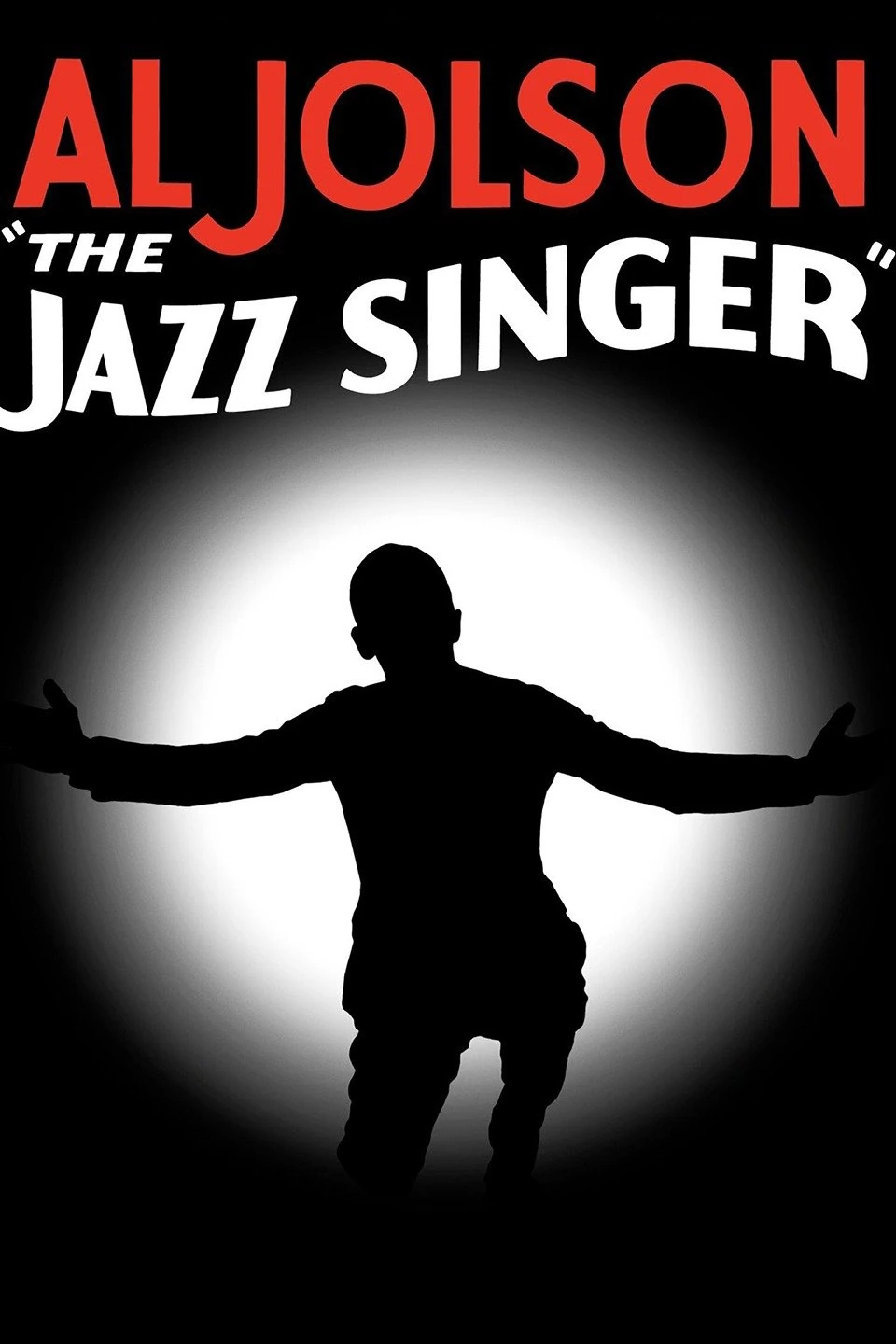
Today in Music (1927): The Jazz Singer, celebrated as the first “talkie film,” was released.

October 6, 1927

The Jazz Singer released.

The release of The Jazz Singer marked the “ascendancy of ‘talkies’ and the end of the silent-film era.” BR It was the first feature-length film with synchronized dialogue. It has been widely reported as being the first “talkie” although there had been previous films which included synchronized sound for music or sound effects. In addition, only about a fourth of the film actually featured musical numbers and conversations where the sound was synchronized to the action. BR

At the time, Warner Bros. was on the verge of going broke. Rival studios thought the company had lost their minds to make a film that featured actual singing. What if the machine broke down that controlled the synchronized sound? What about stars who looked good but might not sound so good? A year earlier, Warner Bros. made Don Juan with sound effects and it didn’t exactly set the world on fire. GN However, Warner Bros. would receive an honorary Oscar for producing the talking picture considered to have revolutionized the industry. BR TheGuardian.com said of The Jazz Singer’s release that “in the space of just over an hour, the silent film was dead.” GN

That singing was provided by none other than Al Jolson, “the biggest star on the American musical stage.” GN He starred as Jakie Rabinowitz who is destined to follow in his father’s footsteps as a Jewish cantor. Jakie, however, has other plans and pursues his dream of becoming a jazz singer under the name Jack Robin. One of Jolson’s early lines in the film, “You ain’t heard nothin’ yet” became sort of the rallying cry for the arrival of the talking picture.


For more important days in music history, check out the Dave’s Music Database history page.

Resources and Related Links:


First posted 10/27/2023.

Friday, October 4, 2013

On This Day (1913): Al Jolson topped the charts with “You Made Me Love You”

You Made Me Love You (I Didn’t Want to Do It)

Al Jolson

Writer(s): Joseph McCarthy, James Monaco (see lyrics here)


First Charted: September 20, 1913


Peak: 17 US, 13 GA, 2 DF (Click for codes to charts.)


Sales (in millions): 1.0 (sheet music)


Airplay/Streaming (in millions): -- radio, 0.64 video, -- streaming

Awards (Jolson):

Click on award for more details.


Awards (Judy Garland):


Awards (Harry James):

About the Song:

James Monaco, one of the songwriters, emigrated from Italy to the United States in the 1890s. He started out in Chicago as a self-taught ragtime pianist, billing himself as “Ragtime Jimmie.” LW He then went to New York where he became a Tin Pan Alley songwriter. For this song, Monaco collaborated with lyricist Joe McCarthy (“I’m Always Chasing Rainbows,”) who wrote for Broadway shows in the 1920s and ‘30s. LW

The song is remembered for its chorus marked by its familiar melody. It is a “skillfully crafted lyric that perfectly matches its bluesy melody, and suited Jolson’s…capacity for melodrama.” LW It was the first of two songs Monaco composed for Al Jolson. He also wrote “Dirty Hands, Dirty Face” which was featured in 1927’s The Jazz Singer.” LW

As “the world’s first talking picture” LW The Jazz Singer, was a defining moment in cinematic history and Jolson’s career, but he made a name for himself beyond that movie. Born Asa Yoelson in St. Petersburg, Russia, Jolson grew up in Washington, D.C. and found success as a vaudeville performer. He first charted in 1912, but got off to a fast start. “You Made Me Love You” was only his fifth hit, but fourth #1. Over 35 years of chart success, he topped the chart 23 times. PM However, it was this song which “was identified with him for the rest of his career.” JA

William J. Halley had a #6 hit with his 1913 recording of the song. It also charted in 1940 (Bing Crosby, #25) and again in 1941 (Harry James, #5). Judy Garland covered it for the film The Broadway Melody of 1938 (1937) and Jolson tackled it again in his biopic The Jolson Story (1946). Doris Day sang it in 1955 for the Ruth Etting biopic Love Me or Leave Me. Jeanette MacDonald recorded the song in 1948, Patsy Cline gave it her touches in the 1950s, and Harry Nilsson put his spin on it in 1973.


Resources:


Related Links:


First posted 10/4/2014; last updated 9/6/2023.

Friday, April 24, 1981

Neil Diamond “America” charted

America

Neil Diamond

Writer(s): Neil Diamond (see lyrics here)


First Charted: April 24, 1981


Peak: 8 US, 10 CB, 9 HR, 5 RR, 13 AC, 45 CN, 1 DF (Click for codes to singles charts.)


Sales (in millions): 0.63 US


Airplay/Streaming (in millions): -- radio, 29.1 video, -- streaming

Awards:

Click on award for more details.

About the Song:

Neil Diamond starred in The Jazz Singer in 1980. The dramatic film was one of several adaptations of the 1925 play of the same name by Samson Raphaelson. The 1927 film is hailed as the onset of the sound-era of film. The story is about a young, fifth-generation Jewis cantor (Diamond) who defies the traditionalism of his father (Laurence Olivier) to pursue his dream of being a pop singer.

While the movie generally received negative reviews – even earning Diamond a Golden Raspberry Award for Worst Actor – the movie made a modest profit and the soundtrack was huge. It became Diamond’s biggest selling album in the United States with more than 5 million in sales. It was fueled by three top-10 hits on the Billboard Hot 100 – “Love on the Rocks,” “Hello Again,” and “America.”

“America” was the third single and, unlike the previous two ballads, was a “bombastic melting-pot jam.” AMG It is “a tribute to immigration in America, where people from all over the world were welcome to come and seek opportunity.” SF Diamond’s grandparents were immigrants from Russia and Poland and Diamond grew up in Brooklyn, where many European immigrants arrived.

The song became a very popular number for Diamond in concert both home and abroad thanks to his “typically powerful melody, dynamic arrangements, and bombastic vocal.” WK On a personal note, the song was on my first personal chart. As a response to a local radio station’s countdown of the best songs of all time, I compiled my own list. I intended to make it a one-time list of favorites, but it turned into a weekly personal chart which I maintained for a little more than a decade.


Resources:


Related Links:


First posted 9/7/2022.