Showing posts with label Lilith Fair. Show all posts

Saturday, January 25, 2003

Evanescence charted with “Bring Me to Life”

Bring Me to Life

Evanescence with Paul McCoy

Writer(s): Amy Lee, Ben Moody, David Hodges (see lyrics here)


Released: April 7, 2003


First Charted: January 25, 2003


Peak: 5 US, 11 RR, 4 A40, 11 AR, 12 MR, 13 UK, 3 CN, 16 AU, 1 DF (Click for codes to singles charts.)


Sales (in millions): 3.0 US, 1.2 UK, 5.1 world (includes US + UK)


Airplay/Streaming (in millions): 0.7 radio, 1238.17 video, 708.2 streaming

Awards:

Click on award for more details.

About the Song:

Evanescence leaned mostly toward a commercialized form of goth which was alternative-radio friendly, but lead singer “Amy Lee’s powerful voice juxtaposes…[with] guest singer Paul McCoy’s (of 12 Stones) gruffness” AZ to give “Bring Me to Life” doses of nu-metal and rap-rock. PopMatters.com’s Adrien Bengrad said it sounded “like a love song between a Lilith Fair girl and an Ozzfest dude.” WK All Music Guide’s Johnny Loftus called it “a flawless slice of Linkin Park-style anguish pop” AMG and The Boston Globe said the song “conjures visions of Sarah McLachlan fronting Godsmack.” WK The orchestral parts and pop leanings have also earned the song genre descriptions such as “chamber pop” and a “power ballad.” WK The song didn’t just mix genres but challenged radio station owners who said, “We don’t play pianos and chicks on rock radio.” WK

They did after this song became a hit. Initially included on the Daredevil soundtrack, it also served as a launch pad for the group’s album, Fallen. The song was a chart-topper in the UK, Australia, and Italy and went top ten in at least 15 countries. WK The song also took home a Grammy for Best Hard Rock Performance and was nominated for Best Rock Song. It also won the Billboard Music Award for Soundtrack Single of the Year.

Some have interpreted the song’s lyrics as a “a call for new life in Jesus Christ,” but the record company explained that the band was secular and didn’t belong in Christian markets. WK The group’s lead singer, Amy Lee, told Billboard she opposed them being identified as a Christian band, although there are many fans suggesting they are a Christian band. SF Other fans have suggested the song was an homage to the movie Never Ending Story. SF

Lee explained that the song was about recognizing what is missing in one’s life. She said the idea was sparked by a conversation in a restaurant waiting for the rest of the party to show up. Although he was just a friend of a friend, he was perceptive enough to sense her hidden feelings and asked her, “Are you happy?” She told VH1, “I realized that for months I’d been numb, just going through the motions of life.” WK She explained to MTV News that, “One day something happens that wakes [you] up and makes [you] realize that there’s more to life…It’s just like, ‘Wow, I’ve been asleep all this time.’” WK


Resources:


Related Links:


First posted 1/25/2013; last updated 11/7/2022.

Friday, December 31, 1999

Lilith Fair: Top 100 Songs

Lilith Fair:

Top 100 Songs

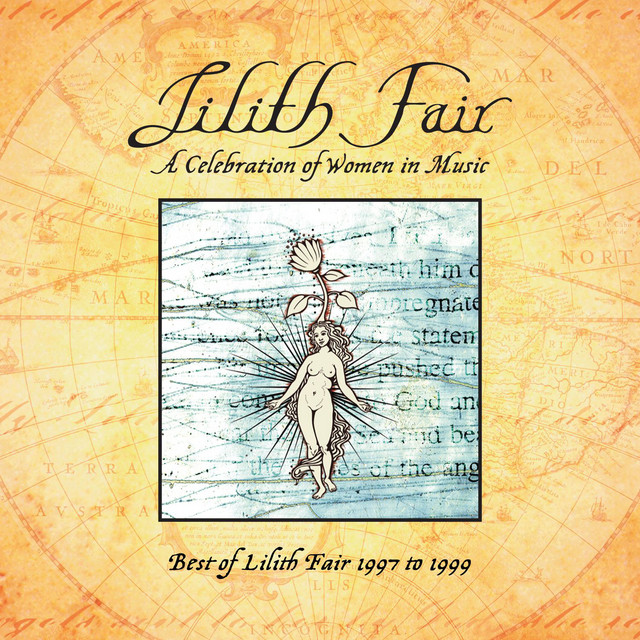
Lilith Fair wasn’t exactly a genre, but a celebration of female artists in the late 1990s. Discouraged by radio programmers and concert promoters who didn’t think it was commercially viable to have two female artists perform back to back, Sarah McLachlan launched the Lilith Fair festival in the summer of 1997. The concept was to feature only female artists or female-led bands. More than 30 dates featured over 70 performers. The festival was successful enough to spawn follow-ups in 1998 and 1999.

The initial list was generated by taking all those artists who performed from 1997 to 1999 and ranking their songs. This included songs by 10,000 Maniacs and ‘Til Tuesday even though they weren’t performers because their lead singers, Natalie Merchant and Aimee Mann respectively, were performers at Lilith Fair.

I also ceated a definition of the Lilith Fair genre that disqualified some of the performers from this list. I decided to focus on artists who broke between 1985 and 1999. That excluded Lilith Fair performers such as the Pretenders and Pat Benatar who emerged in 1979. I did make exceptions for artists like Bonnie Raitt and Lucinda Williams whose careers began prior to 1985 but reached their artistic and commercial peaks in the “Lilith Fair era.”

I also decided to limit the list to artists who fit more into an alternative-rock or folk-rock vibe. That excluded rap and R&B performers at Lilith Fair such as Missy Elliott and Erykah Badu. In addition, acts generally considered country, such as the Dixie Chicks or Mary Chapin Carpenter, were excised from the list. Again, however, this is subjective as I decided to keep k.d. lang in the mix since she was a traditional country artists but found an audience in the early ‘90s along the lines of other Lilith Fair artists.

I also added artists such as the Cranberies, Melissa Etheridge, Alanis Morissette, and No Doubt, that met my criteria but weren’t actually performers at Lilith Fair.

Finally, I imposed one last restriction. I decided not to feature more than four songs by any artist since some acts, like Sheryl Crow and Alanis Morissette, threatened to overwhelm the list and keep lesser-known artists from appearin on the lists.

Click here to see other genre-specific song lists.


Spotify Podcast

Check out the Dave’s Music Database podcast episode Lilith Fair: The 25th Anniversary which references songs on this list. Premiered September 6, 2022.


Spotify Playlist

You can listen here to a Lilith Fair Spotify playlist that includes the songs below and more.


DMDB Top 1%:

1. Sinéad O’Connor “Nothing Compares 2 U” (1990)
2. No Doubt “Don’t Speak” (1996)
3. Natalie Imbruglia “Torn” (1997)
4. Alanis Morissette “You Oughta Know” (1995)
5. Tracy Chapman “Fast Car” (1988)
6. Alanis Morissette “Ironic” (1995)
7. Sheryl Crow “All I Wanna Do” (1993)

DMDB Top 2%:

8. Alannah Myles “Black Velvet” (1989)
9. The Cranberries “Zombie” (1994)
10. Lisa Loeb & Nine Stories “Stay (I Missed You)” (1994)

11. Jewel “You Were Meant for Me” (1995)
12. Suzanne Vega “Luka” (1987)
13. Tracy Chapman “Give Me One Reason” (1995)
14. Shawn Colvin “Sunny Came Home” (1996)
15. 4 Non Blondes “What’s Up?” (1992)
16. Joan Osborne “One of Us” (1995)
17. Sixpence None the Richer “Kiss Me” (1997)
18. Sarah McLachlan “Building a Mystery” (1997)
19. k.d. lang “Constant Craving” (1992)
20. Alanis Morissette “You Learn” (1995)

21. Jewel “Foolish Games” (1995)
22. The Cardigans “Lovefool” (1996)
23. The Breeders “Cannonball” (1993)

DMDB Top 5%:

24. The Cranberries “Linger” (1993)
25. Elastica “Connection” (1994)
26. Macy Gray “I Try” (1999)
27. Bonnie Raitt “Something to Talk About” (1991)
28. Divinyls “I Touch Myself” (1991)
29. Alanis Morissette “Head Over Feet” (1995)
30. Indigo Girls “Closer to Fine” (1989)

31. Dido “Thank You” (1999)
32. Hole “Doll Parts” (1994)
33. Meredith Brooks “Bitch” (1997)
34. Sinéad O’Connor “Mandinka” (1987)
35. Bonnie Raitt “I Can’t Make You Love Me” (1991)
36. Paula Cole “I Don’t Want to Wait” (1996)
37. Tori Amos “Silent All These Years” (1991)
38. Veruca Salt “Seether” (1994)
39. Sarah McLachlan “Angel” (1997)
40. The Sugarcubes “Birthday” (1987)

41. Sheryl Crow “If It Makes You Happy” (1996)
42. Suzanne Vega with DNA “Tom’s Diner” (remix, 1990)
43. Jewel “Who Will Save Your Soul?” (1995)
44. No Doubt “Just a Girl” (1995)
45. Mazzy Star “Fade into You” (1993)
46. Garbage “Only Happy When It Rains” (1995)
47. Edie Brickell & New Bohemians “What I Am” (1988)
48. Sheryl Crow “My Favorite Mistake” (1998)
49. The Cranberries “Dreams” (1992)
50. Tori Amos “Cornflake Girl” (1994)

51. PJ Harvey “Down by the Water” (1995)
52. ‘Til Tuesday “Voices Carry” (1985)
53. Portishead “Sour Times (Nobody Loves Me)” (1994)
54. Bonnie Raitt “Love Sneakin’ Up on You” (1994)
55. Sheryl Crow “Strong Enough” (1993)
56. Fiona Apple “Criminal” (1996)
57. K’s Choice “Not an Addict” (1996)
58. Bonnie Raitt “Nick of Time” (1989)
59. Paula Cole “Where Have All the Cowboys Gone?” (1996)
60. Tori Amos “Me and a Gun” (1991)

61. 10,000 Maniacs “Like the Weather” (1987)
62. Tracy Chapman “Talkin’ ‘Bout a Revolution” (1988)
63. Sarah McLachlan “I Will Remember You” (1995)
64. Hole “Violet” (1994)
65. Concrete Blonde “Joey” (1990)
66. Tori Amos “God” (1994)
67. Billie Myers “Kiss the Rain” (1997)
68. Melissa Etheridge “I’m the Only One” (1993)
69. Loreena McKennitt “The Mummer’s Dance” (1997)
70. Garbage “Stupid Girl” (1995)

71. Hole “Malibu” (1998)
72. Sinéad O’Connor “Troy” (1987)
73. Sarah McLachlan “Possession” (1993)
74. Melissa Etheridge “Bring Me Some Water” (1988)
75. Merril Bainbridge “Mouth” (1994)
76. Tracy Bonham “Mother Mother” (1996)
77. Melissa Etheridge “Come to My Window” (1993)
78. Cowboy Junkies “Sweet Jane” (1988)
79. Sinéad O’Connor “The Emperor’s New Clothes” (1990)
80. 10,000 Maniacs “These Are Days” (1992)

DMDB Top 10%:

81. Sophie B. Hawkins “Damn, I Wish I Was Your Lover” (1992)
82. Shawn Colvin “I Don’t Know Why” (1992)
83. Heather Nova “Walk This World” (1995)
84. Natalie Merchant “Wonder” (1995)
85. No Doubt “Spiderwebs” (1995)
86. Tasmin Archer “Sleeping Satellite” (1992)
87. Letters to Cleo “Here and Now” (1995)
88. Indigo Girls “Galileo” (1992)
89. Toni Childs “Don’t Walk Away” (1988)
90. Dido “Here with Me” (1999)

91. Luscious Jackson “Naked Eye” (1996)
92. Tracy Chapman “Crossroads” (1989)
93. Lone Justice “Ways to Be Wicked” (1985)
94. Natalie Merchant “Carnival” (1995)
95. Suzanne Vega with Joe Jackson “Left of Center” (1986)
96. Michelle Shocked “Anchorage” (1988)
97. The Sundays “Here’s Where the Story Ends” (1990)
98. Alana Davis “32 Flavors” (1997)
99. Aimee Mann “Save Me” (1999)
100. Belly “Feed the Tree” (1993)


Resources/Related Links:


First posted 6/24/2022; last updated 1/12/2025.

Lilith Fair: Top 50 Albums

Lilith Fair:

The Top 50 Albums

Lilith Fair wasn’t exactly a genre, but a celebration of female artists in the late 1990s. Discouraged by radio programmers and concert promoters who didn’t think it was commercially viable to have two female artists perform back to back, Sarah McLachlan launched the Lilith Fair festival in the summer of 1997. The concept was to feature only female artists or female-led bands. More than 30 dates featured over 70 performers. The festival was successful enough to spawn follow-ups in 1998 and 1999.

This list was generated by taking all those artists who performed (including groups like 10000 Maniacs who didn’t perform, but front woman Natalie Merchant did) from 1997 to 1999 and ranking their albums. It should be noted that albums by 10,000 Maniacs and ‘Til Tuesday have been included in this list even though they weren’t performers.

Some performers were excluded from this list. Lilith Fair embraced a wide swath of genres but this list is focused on artists who fall into the alternative rock/folk rock vein. As such, acts more typically defined as R&B, rap, country, or pop were excluded. However, artists who did not perform at Lilith Fair (Alanis Morissette, Melissa Etheridge, etc.) have been included because they fit the alternative rock/folk rock label. They are noted with an asterisk (*).

An effort was also made to define the “Lilith Fair” genre as covering a certain era, specifically from the mid-‘80s to the late ‘90s. That means songs before 1985 and after 1999 were excluded. Similarly, artists (such as the Pretenders or Pat Benatar) who performed at Lilith Fair but emerged prior to 1985 have been excluded.

Check out other best-of-genre/category lists here.

1. Alanis Morissette Jagged Little Pill (1995) *
2. Tracy Chapman Tracy Chapman (1988)
3. Sinéad O’Connor I Do Not Want What I Haven’t Got (1990)
4. Tori Amos Little Earthquakes (1992) *
5. Liz Phair Exile in Guyville (1993)
6. Sheryl Crow Tuesday Night Music Club (1993)
7. No Doubt Tragic Kingdom (1995) *
8. Lucinda Williams Car Wheels on a Gravel Road (1998)
9. Bonnie Raitt Nick of Time (1989)
10. Dido No Angel (1999)

11. Sarah McLachlan Fumbling Towards Ecstasy (1993)
12. Jewel Pieces of You (1995)
13. Indigo Girls Indigo Girls (1989)
14. Emmylou Harris Wrecking Ball (1995)
15. Sarah McLachlan Surfacing (1997)
16. The Cranberries No Need to Argue (1994) *
17. Garbage Garbage (1995) *
18. Sheryl Crow Sheryl Crow (1996)
19. k.d. lang Ingénue (1992) *
20. Melissa Etheridge Yes I Am (1993) *

21. Tori Amos Under the Pink (1994) *
22. Mary Chapin Carpenter Come on, Come On (1992)
23. Sheryl Crow The Globe Sessions (1998)
24. Bonnie Raitt Luck of the Draw (1991)
25. Suzanne Vega Solitude Standing (1987)
26. Lucinda Williams Lucinda Williams (1988)
27. Melissa Etheridge Melissa Etheridge (1988) *
28. Shawn Colvin A Few Small Repairs (1996)
29. Tori Amos Boys for Pele (1996)
30. Fiona Apple Tidal (1996)

31. The Cranberries Everybody Else Is Doing It So Why Can’t We? (1993) *
32. 10,000 Maniacs In My Tribe (1987)
33. Bonnie Raitt Longing in Their Hearts (1994)
34. The Breeders Last Splash (1993) *
35. Alanis Morissette Supposed Former Infatuation Junkie (1998) *
36. Joan Osborne Relish (1995)
37. Paula Cole This Fire (1996)
38. Cowboy Junkies The Trinity Session (1988)
39. Tori Amos From the Choirgirl Hotel (1998) *
40. Tracy Chapman New Beginning (1995)

41. Natalie Merchant Tigerlily (1995)
42. Fiona Apple When the Pawn… (1999)
43. Sinéad O’Connor The Lion and the Cobra (1987)
44. Shawn Colvin Steady On (1989)
45. Tracy Chapman Crossroads (1989)
46. Aimee Mann Whatever (1993)
47. Edie Brickell & New Bohemians Shooting Rubberbands at the Stars (1988) *
48. Lone Justice Lone Justice (1985)
49. Toni Childs Union (1988) *
50. Indigo Girls Strange Fire (1987)


Resources and Related Links:


First posted 12/2/2024.

Tuesday, June 1, 1999

Dido No Angel released

No Angel

Dido


Released: June 1, 1999


Peak: 4 US, 17 UK, 4 CN, 18 AU


Sales (in millions): 4.2 US, 3.1 UK, 21.0 world (includes US and UK), 16.2 EAS


Genre: adult alternative


Tracks:

Song Title (date of single release, chart peaks) Click for codes to charts.

  1. Here with Me (5/17/99, 42 RR, 21 A40, 4 UK, 23 CN, 52 AU, 16 DF)
  2. Hunter (6/18/01, 16 A40, 17 UK)
  3. Don’t Think of Me (2/7/00, 35 A40)
  4. My Lover’s Gone
  5. All You Want (12/10/01)
  6. Thank You (9/18/00, 3 BB, 3 RR, 1 AC, 1 A40, 3 AA, 3 UK, 10 CN, 25 AU, 14 DF)
  7. Honestly OK
  8. Slide
  9. Isobel
  10. I’m No Angel
  11. My Life
  12. Take My Hand (9/01, 17 UK)


Total Running Time: 51:51

Rating:

4.267 out of 5.00 (average of 15 ratings)


Awards:

(Click on award to learn more).

About the Album:

Florian Cloud de Bounevialle O'Malley Armstrong was born on Christmas Day in 1971 in London, England. She has been known since childhood as Dido. Her parents registered her at the Guildhall School of Music and Drama when she was five. By her teens, she had learned to play the piano, recorder and violin. She went to Birkbeck, University of London, to study law but dropped out to pursue music.

She put together a demo in 1995 that got her signed with Nettwerk and later in a joint deal with Arista and Cheeky Records, who released her debut album, No Angel. While it was initially released in 1999, it didn’t really take off until it was internationally released in 2001.

“The title notwithstanding, this debut from the former Faithless singer is pretty angelic-sounding stuff. You’re bound to think of Sinéad O’Connor, but the comparison is as misleading as it is inevitable. Granted, Dido’s ethereal vocals here frequently recall O’Connor; but Dido's music – while inventively augmented with electronics – is generally less adventurous. Ditto No Angel’s lyrics, which focus almost exclusively on love, lust, and relationships. That said, the fact remains that this is an auspicious and highly listenable album; atmospheric, seductive, and beautifully produced and sequenced.” AM

The album’s first single, Here with Me, became the theme song for Roswell an American science fiction series. It didn’t become a hit until the No Angel album was released globally in 2001.

Thank You, the third single, became the album’s biggest hit, reaching #3 in the U.S. and UK and topping several Billboard genre charts in the United States. The song and album got a boost in January 2001 because Eminem sampled “Thank You” on his song “Stan.” This is what finally led to the album getting distribution outside of North America.

Resources:


Related DMDB Links:


First posted 11/15/2010; last updated 12/7/2024.

Monday, May 4, 1998

Tori Amos From the Choirgirl Hotel released

From the Choirgirl Hotel

Tori Amos


Released: May 4, 1998


Peak: 5 US, 6 UK, 10 CN, 8 AU


Sales (in millions): 1.0 US, 0.1 UK


Genre: alternative rock singer/songwriter


Tracks:

Song Title [time] (date of single release, chart peaks) Click for codes to charts.

  1. Spark [4:13] (4/20/98, 49 BB, 32 A40, 13 AA, 13 MR, 16 UK, 25 CN, 50 AU, 28 DF)
  2. Cruel [4:07] (8/24/98, 32 DF)
  3. Black-Dove (January) [4:38]
  4. Raspberry Swirl [3:58] (8/24/98, 20 CN, 57 AU)
  5. Jackie’s Strength [4:26] (9/15/98, 54 BB, 12 CN, 32 DF)
  6. i i e e e [4:07]
  7. Liquid Diamonds [6:21]
  8. She’s Your Cocaine [3:42] (32 DF)
  9. Northern Lad [4:19]
  10. Hotel [5:19]
  11. Playboy Mommy [4:08]
  12. Pandora’s Aquarium [4:45]

All songs written by Tori Amos.


Total Running Time: 54:11

Other Songs from the Era:

  • Have Yourself a Merry Little Christmas (4/20/98, “Spark” UK EP1)
  • Purple People (4/20/98, “Spark” UK EP1)
  • Bachelorette (4/20/98, “Spark” UK EP1)
  • Cooling (4/20/98, “Spark UK EP2)
  • Do It Again (4/20/98, “Spark UK EP2)
  • Never Seen Blue (9/15/98, “Jackie’s Strength” EP)
  • Belulah Land (9/15/98, “Jackie’s Strength” EP)

Rating:

3.687 out of 5.00 (average of 13 ratings)


Awards:

(Click on award to learn more).

About the Album:

From the Choirgirl Hotel “doesn’t sound like ‘a typical’ Tori Amos album. She moved forward from the sound of Boys for Pele and returned to full group recordings for the first time since the aborted heavy metal type outfit. No heavy metal here though!” AD

“Spark opens things strongly” AD with “the piano integrated successfully within a full band recording. The song gains in momentum as it goes along before reaching a stupendous middle section that's simply thrilling.” AD

“Cruel is all drums, drum machines, weird noises, atmosphere. A great vocal though. And, that word. Atmosphere. The vocal makes it special. A beautiful vocal. That word again. Beautiful.” AD

Black Dove is “a song bordering on genius – the vocals, the music, everything comes together. The song explodes in the middle section but returns againtowards the end, leaving you breathless. This would have made a great first single…to point people toward the fact that here we have Tori moving away altogether from her early piano dominated sound.” AD

“Raspberry Swirl reintroduces the machines of ‘Cruel’ and nods in a dance direction. It’s a more fully integrated dance sound than the remix of ‘Professional Widow’ however. It’s integrated within a rock song! This is one of the most furious and exhilarating songs she’s ever done.” AD

“Jackie’s Strength provides comfort to those who love Tori's earlier work, being a beautiful piano led ballad with wonderful vocals. 'Iiiee' wraps up the first half of the record being an atmospheric percussion led track with a haunting little tune where the lyrics become unimportant, this is all about the sound of the human voice.” AD

“i i e e e, Liquid Diamonds and She’s Your Cocaine are not at all quiet, Piano singer-songstress types of songs, they sound almost industrial. Northern Lad contains one of Tori’s most heart-warming and heart-breaking vocal performances, ever.” AD

“Hotel…will confound a few doubters with its sheer brilliant wall of rock noise. A stunning album, all told. Perfect from beginning to end, sequenced well, a modern classic growing in stature to rival the reputation of her debut.” AD


Notes:

“Purple People,” a B-side from “Spark,” was added to the Japanese edition of the album as a bonus track.

Review Sources:


Related DMDB Pages:


First posted 6/3/2022; last updated 12/11/2024.

Tuesday, July 15, 1997

Sarah McLachlan Surfacing released

Surfacing

Sarah McLachlan


Released: July 15, 1997


Peak: 2 US, 47 UK, 11 CN, 37 AU, 13 DF


Sales (in millions): 8.0 US, 0.1 UK, 16.0 world (includes US and UK)


Genre: adult alternative


Tracks:

Song Title (Writers) [time] (date of single release, chart peaks) Click for codes to charts.

  1. Building a Mystery (7/5/97, 13 BB, 12 RR, 28 AC, 4 A40, 1 AA, 3 MR, 1 CN, 97 AU, 13 DF)
  2. I Love You
  3. Sweet Surrender (11/1/97, 28 BB, 18 RR, 27 AC, 10 A40, 2 AA, 14 MR, 2 CN, 32 DF)
  4. Adia (3/27/98, 3 BB, 16 RR, 5 AC, 6 A40, 7 AA, 18 UK, 3 CN, 55 AU, 15 DF)
  5. Do What You Have to Do (29 DF)
  6. Witness
  7. Angel (10/24/98, 4 BB, 2 BA, 3 RR, 1 AC, 1 A40, 8 AA, 36 UK, 9 CN, 55 AU, 12 DF)
  8. Black & White
  9. Full of Grace
  10. Last Dance


Total Running Time: 41:14

Rating:

3.687 out of 5.00 (average of 18 ratings)


Awards:

(Click on award to learn more).

About Sarah McLachlan

Sarah McLachlan was born in 1968 in Nova Scotia, Canada. She started music at an early age, playing the ukulele when she was four and later studying classical guitar, classical piano, and voice at the Maritime Conservatory of Music. She fronted the band October Game while still in high school. After their first concert McLachlan was offeed a recording contract with Nettwerk, a Vancouver-based independent record label. WK

She wouldn’t sign with them until two years later after finishing high school and a year of school at the Nova Scotia College of Art and Design at the insistence of her parents. WK She released her first album, Touch, in 1988. It peaked at #132 on the Billboard album chart and eventually went gold.

Her follow-up album, 1991’s Solace, would also achieve gold status in the United States and again dent the lower regions of the Billboard album chart (#167). Three singles charted in her native Canada where the album reached #20 and sold 200,000 copies. Then came Fumbling Towards Ecstasy. It saw McLachlan reach the Billboard Hot 100 in America for the first time. While the album only peaked at #50, it would go on to sell three million copies.

From Fumbling to Surfacing

McLachlan built the success of Fumbling – and paved the way for the leap forward of Surfacing – through two and a half years of touring. WK She finally finished touring in January 1996. The plan was to start working on the follow-up that April, but McLachlan was exhausted. She even said she wanted Fumbling to be her last record. WK At management’s suggestion, she went home to Vancouver and took six months off. WK

Lilith Fair

Surfacing “was released as the first Lilith Fair tour hit the road, and Sarah McLachlan benefited enormously from the timing. As the organizer of Lilith Fair, McLachlan was on the cover of magazines across America and Canada, which helped Surfacing debut at number two on the U.S. charts.” AM The album sold sixteen million copies worldwide and won the Juno Award for Album of the Year.

A Great Leap Forward Commercially…But Critically?

“Before this mega-success, it was possible to dismiss Sarah McLachlan as another Enya-influenced peddler of vague mystic allegories. Surfacing changed that. It established the Canadian singer and songwriter as a master of the moody confessional and the soft-focus ethereal atmosphere who knew to put enough backbeat in her tunes to get them on the radio.” TM

“Production (by McLachlan and Pierre Marchand) is central to the appeal of Surfacing – a case can be made for this album as one of the most sonically alluring works of the 1990s.” TM

Each song “comes with its own thick and carefully cultivated aura designed to enhance the specific shades of melancholy McLachlan seeks. The surroundings are shrouded in mist while the theme are needle-direct – a contrast that welcomes you into this calm place of refugee again and again, and shows you something different each time you visit.” TM

Overall, though, the album “doesn’t offer anything new, and the songs aren’t as consistently captivating as they were on Fumbling Towards Ecstasy.” AM “McLachlan proffers fervent U2-style anthems, lilting piano ballads and methodical medium-tempo rockers that move with the steadiness of ticking clocks.” TM “That suggests that even though McLachlan was at the height of her popularity, she may have begun to run out of ideas.” AM


The Songs

Here are insights about individual songs.

“Building a Mystery”
“There are several fine songs on the album, including the single Building a Mystery.” AM “It might take a couple of spins to pick up on the derision in …her sketch of a lost soul caught up in New Age quackery.” TM The song won a Grammy for Best Female Pop Vocal Performance.

“Angel”
This was the first song written for the album. McLachlan said that writing it was “a joyous occasion.” WK It was inspired by articles she read in Rolling Stone about musicians who used heroin to escape music industry pressure and overdosed. WK As she said, even though she’d never done heroin, “I’ve been in that place where…you’re so lost that you don’t know who you are anymore and you’re miserable.”

Author Tom Moon attacked that song, saying, “She sings with no affectation and very little inflection, and her detachment forces the melodies, like the almost-too-common weeping line of Angel to stand on their own.” TM

“Adia”
When she reaches the chorus of Adia, McLachlan’s controlled demeanor makes the brave and stately theme, which carries a thought about lost innocence, more devastating.” TM Both songs were top-5 hits on the Billboard Hot 100.

“Sweet Surrender” and “Witness”
Sia Michel of The New York Times said that “while the album paints a ‘vivid emotional landscape,’ it is at odds with McLachlan’s statement that the album was about ‘facing ugly things about herself;’ not revealing anything particularly dark. Michel also noted certain old-fashioned ideas in the album, particularly in Sweet Surrender.” WK “She cited Witness as the highlight and said of the album, “Perhaps she hasn’t found what she’s looking for, but at least she’s trying.” WK

Review Sources:


Related DMDB Links:


First posted 11/14/2008; last updated 12/9/2024.

Saturday, March 29, 1997

K’s Choice “Not an Addict” charted

Not an Addict

K’s Choice

Writer(s): Gert Bettens, Sarah Bettens (see lyrics here)


Released: July 1995


First Charted: March 29, 1997


Peak: 56 US, 5 MR, 6 CN, 22 AU, 1 DF (Click for codes to charts.)


Sales (in millions): --


Airplay/Streaming (in millions): -- radio, 10.6 video, 22.32 streaming

Awards:

Click on award for more details.

About the Song:

K’s Choice formed in the mid-1990s in Antwerp, Belgium. The core of the alternative-rock group was guitarist, keyboardist, and singer Gert Bettens and his sister Sarah, the lead singer and guitarist who later came out as a transgender man. They released their first studio album, The Great Subconscious Club, in 1994.

The follow-up, 1996’s Paradise in Me, reached the Billboard album chart, thanks to the top-5 success of “Not an Addict” on the modern rock track chart and the release of six singles from the album. “Not an Addict” was first released in Belgium as a single in July 1995 but didn’t chart in the United States until March 1997. It won a Belgium ZAMU Award for Best Single in 1995.

“Not an Addict” is “sung in the first person with a voice of desperation and denial.” SF The narrator explains the initial exhileration of heroin use and subsequent unwillingness, and eventual reluctance, in recognizing it as a problem. It reflected on Sarah/Sam’s actual experiences with drugs and substance dependence. He never tried hard drugs like heroin, but said he was addicted to cigarettes and had experimented with acid and mushrooms. He asserted that the song wasn’t pro-drug or anti-drug. WK

Music Week called it “a brooding, bass-heavy torch song overlaid by breezy atmospheric vocals.” WK Music & Media magazine declared “Not an Addict” a single of the week in December 1996, saying “it is possible to overlook the latest gem out of this small country. To pass up on K’s Choice would be a major mistake…Singer/co-writer Sarah Bettens is obviously inspired by U.S. alternative rock queens…[and] a little bit of Bangles pops up at the end, but the guitars remain loud and clear.” WK


Resources:


First posted 2/8/2023.