Showing posts with label Larry Clinton. Show all posts

Saturday, September 9, 1989

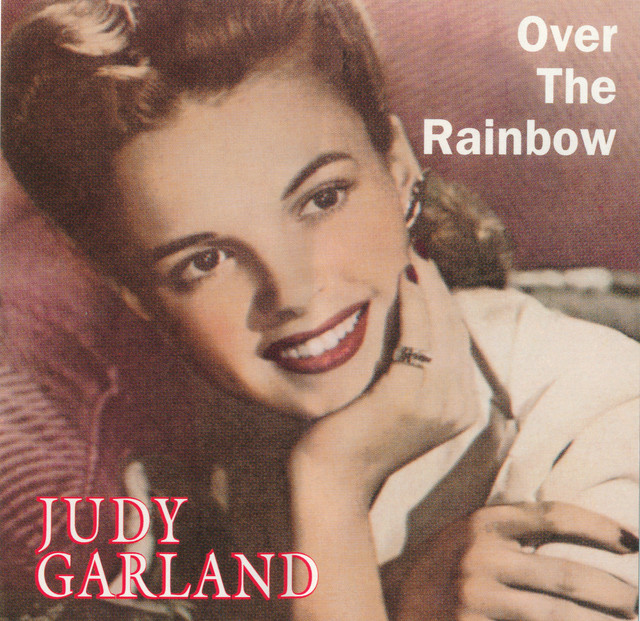
50 years ago: Judy Garland charted with "Over the Rainbow"

Over the Rainbow

Judy Garland

Writer(s): Harold Arlen/E.Y. “Yip” Harburg (see lyrics here)


First Charted: September 9, 1939


Peak: 5 US, 12 GA, 17 HP, 1 DF (Click for codes to singles charts.)


Sales (in millions): 4.2 US, -- UK, 5.63 world (includes US + UK)


Airplay/Streaming (in millions): -- radio, 60.8 video, -- streaming

Awards:

Click on award for more details.

About the Song:

There are few songs more associated with a movie more than “Over the Rainbow” is with The Wizard of Oz and then-sixteen-year-old Judy Garland’s performance of it. It topped the AFI’s list of movie songs. However, the song was initially deleted when it was thought to slow down the film. LW Movie execs even said it was inappropriate for audiences to see the movie’s star singing in a farmyard. LW It only made it back in when Harold Arlen, one of the song’s writers, and executive producer Arthur Freed lobbied on the song’s behalf. AB40

Arlen and lyricist “Yip” Harburg originally penned the song not as “a little girl’s plea for a silver lining,” TC but as a declaration of hope for America from two “unabashed lefties” TC who believed in President Roosevelt’s New Deal. TC

As was common in the first half of the 20th century, multiple versions of the song charted. In 1939, four acts took “Rainbow” into the top 10. Interesting, Garland’s was neither the most successful nor the first to chart. Glenn Miller and Larry Clinton both debuted with it the week of August 19. Miller’s went to #1 the same week Garland hit the charts. A week later, Bob Crosby hit with his #2 version. Charting versions in later years included the Dimensions (#16 US, 1960), Gary Tanner (#69 US, 1978), Jerry Lee Lewis (#10 CW, 1980), Matchbox (#15 UK, 1980), Cliff Richard (#11 UK, 2001), Katharine McPhee (#12 US, 2006), Danielle Hope (#29 UK, 2010), Nicholas David (#96 US, 2012), and the Glee Cast (#44, 2010).

However, it was Garland’s version which “became the most famous and beloved.” JA Hers was selected by the RIAA as the top song of the 20th century and won the Oscar for Best Song. She had no problem with the “theme song around which she constructed her career.” LW As she said, “I’ve sung it time and time again and it’s still the song that’s closest to my heart.” TC


Resources:


Related Links:


First posted 9/9/2011; last updated 11/22/2022.

Saturday, February 11, 1989

50 years ago: Larry Clinton took “Deep Purple” to #1 – for the first of two times

Deep Purple

Larry Clinton with Bea Wain

Writer(s): Peter DeRose/Mitchell Parish (see lyrics here)


First Charted: February 4, 1939


Peak: 19 US, 17 HP, 18 GA, 18 SM (Click for codes to charts.)


Sales (in millions): --


Airplay/Streaming (in millions): -- radio, -- video, -- streaming

Awards:

Click on award for more details.

About the Song:

Peter DeRose wrote “Deep Purple” as a piano composition. It was published in 1933 and the following year it was arranged for orchestra by, depending on the account, either Domenico Savino TY1 or Paul Whiteman. WK Whiteman said, he was “making a lady out of jazz.” WK When the song became a hit via sheet music, Mitchell Parish added lyrics in 1938.

In 1939, five versions of the song charted, including top 10 hits by Jimmy Dorsey and Guy Lombardo and top 20 hits by Bing Crosby and Artie Shaw. PM The biggest version, however, was the one by Larry Clinton & His Orchestra featuring Bea Wain as vocalist. PM That year the song was the #3 jukebox selection of the year. TY1 A decade later, Paul Weston’s instrumental version hit #20. PM In 1957, The Dominoes revamped the song as a doo-wop hit. The 1976 version by the brother-and-sister act of Donny and Marie Osmond was a #14 hit. HT

They weren’t the only siblings to have success with the song. Nino Tempo and April Stevens took the song back to #1 in 1963. HT The brother and sister had worked separately before meeting Ahmet Ertegun and signing with Atlantic Records. The pair had gone into the studio to record “Paradise,” but with 14 minutes left of studio time, Ahmet encouraged them to tackle “Deep Purple.” Nino was supposed to sing the second chorus, but when he couldn’t remember the words, April spoke them. The “narration” stayed in and became part of the song. FB

The sentimental ballad was a favorite of Babe Ruth, who even had DeRose play the song at his birthday parties for roughly a decade. WK In addition, the song provided the heavy metal group Deep Purple with their name. Guitarist Ritchie Blackmore’s grandmother kept asking the group if they would perform the song because it was her favorite. WK


Resources:


First posted 2/11/2013; last updated 2/27/2023.