Showing posts with label Cliff Edwards. Show all posts

Saturday, February 17, 1990

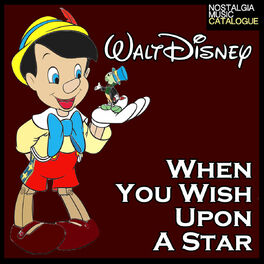
Today in Music (1940): Cliff Edwards charted with “When You Wish Upon a Star”

When You Wish Upon a Star

Cliff Edwards with the Ken Darby Singers & Victor Young’s Orchestra

Writer(s): Leigh Harline (music), Ned Washington (words) (see lyrics here)


Recorded: October 1939


First Charted: February 17, 1940


Peak: 10 PM, 14 GA, 15 HP, 1 DF (Click for codes to charts.)


Sales (in millions): --


Airplay/Streaming (in millions): -- radio, 18.27 video, 70.81 streaming

Awards:

Click on award for more details.

About the Song:

“When You Wish Upon a Star” may be the most recognizable of the Disney classics, and there have been many. The song was introduced in the animated Disney film, Pinocchio, by Cliff Edwards. He lent his voice to the character of Jiminy Cricket and crooned the sentimental ballad about the power of dreams. It won the Academy Award for Best Song and while that feat became run-of-the-mill for songs from Disney films in the 1990s (five times from 1989 to 1999), it would take nearly 50 years after “When You Wish Upon a Star” before another Disney song accomplished the feat.

Edwards was a popular star in the 1920s and ‘30s known as Ukulele Ike. He worked in vaudeville, musical comedy, and film in the beginning of the sound era, but his career was in decline when he landed the part of Jiminy Cricket. His recording of “Star” was one of the first taken directly from a soundtrack and given a commercial release. NRR He was accompanied on the recording by Victor Young & His Orchestra as well as the Ken Darby Singers. PM Edwards’ “natural tenor and clear falsetto make the song a classic.” NRR

Ned Washington and Leigh Harline wrote the song. Washington, the song’s lyricist, was prolific in writing songs for films while Harline served as a Disney staff composer. SF The song’s message about making dreams come true resonated; it would later become the theme for the Walt Disney Company, SB used in promotional campaigns for Disney’s theme parks. The first 7 notes of the melody are even used as the horn signal for the ships on the Disney cruise line. SF

The song topped the jukebox charts for eight weeks and ranked among the year’s top sheet music sellers. TY1 Edwards’ version was one of four to hit the charts in 1940. His take on the song peaked at #10 while Glenn Miller took it to #1 and Guy Lombardo had a #5 hit. Horace Heidt also got to #12 with it. PM In 1960, Dion & the Belmonts charted with a top 30 version of the song. HT Chet Atkins, Rosemary Clooney, Bill Evans, Keith Jarrett, Billy Joel, and Olivia Newton-John are among the other artists to record the song.


Resources:


Related Links:


First posted 2/17/2013; last updated 5/16/2025.

Friday, July 27, 1979

50 years ago: “Singin’ in the Rain” charted for the first time

Singin’ in the Rain

Cliff Edwards

Writer(s): Nacio Herb Brown (music), Arthur Freed (lyrics) (see lyrics here)


First Charted: July 27, 1929


Peak: 3 GA, 13 US (Click for codes to singles charts.)


Sales (in millions): --


Airplay/Streaming (in millions): -- radio, -- video, -- streaming

Singin’ in the Rain

Gene Kelly


Released: May 27, 1952 (movie)


Peak: 1 DF (Click for codes to singles charts.)


Sales (in millions): --


Airplay/Streaming (in millions): -- radio, 37.55 video, 24.0 streaming

Awards (Edwards):

Click on award for more details.


Awards (Kelly):

About the Song:

Arthur Freed was inspired to write “Singin’ in the Rain” when he saw a man outside his sheet music shop in Seattle dancing during a downpour. Nacio Herb Brown, who often worked with Freed on MGM musicals, then put it to music. SF It was introduced in 1929 by Doris Eaton Travis in The Hollywood Music Box Revue. Months later, it was performed by Cliff Edwards and the Bronx Sisters in The Hollywood Revue of 1929. Edwards was among three artists who charted with the song in 1929. Earl Burtnett took it to #4, Gus Arnheim reached # 9, and Edwards’ version went to the top of the charts.

Edwards, known as Ukulele Ike, was one of the most successful artists of the pre-rock era. His “jazz-flavored musical style made him a popular phenomenon of the 20s.” PM He charted thirty times from 1924 to 1940, including fifteen top-10 hits. He hit #1 with “I Can’t Give You Anything But Love,” but was probably best known for singing “When You Wish Upon a Star” as Jiminy Cricket in Disney’s animated film Pinocchio.

Years later Freed, now a producer at MGM, pitched the idea of a musical based around his songs. SF It became the 1952 film Singin’ in the Rain, one of the most celebrated musicals of all time. The most famous scene featured star Gene Kelly singing the song while dancing joyously in the rain and splashing in the puddles. The song became inseparable from “Kelly’s brilliant choreography.” LW

It found success again when Mint Royale recorded an electronica version in 2005. It was used in a Gene Kelly CGI-enhanced television ad for Volkswagen Golf SF and subsequently reached #20 on the UK charts. In 2008, 14-year-old George Sampson won Britain’s Got Talent replicating the routine from the ad. It revived the Mint Royale recording and it soared to #1.


Resources:


First posted 11/4/2022; last updated 11/24/2022.

Friday, October 13, 1978

50 years ago: Cliff Edwards hit #1 with “I Can’t Give You Anything But Love”

I Can’t Give You Anything But Love

Cliff Edwards

Writer(s): Jimmy McHugh, Dorothy Fields (see lyrics here)


First Charted: September 15, 1928


Peak: 1 US, 2 GA (Click for codes to charts.)


Sales (in millions): 2.5 (sheet music)


Airplay/Streaming (in millions): -- radio, 0.09 video, -- streaming

Awards:

Click on award for more details.

About the Song:

The song has been rumored to have originally been called “I Can’t Give You Anything But Love, Lindy,” in honor of Charles Lindburgh’s historic transatlantic flight. RCG However, lyricist Dorothy Fields’ account suggests otherwise. She said this song was inspired by a conversation she overheard between a black couple gazing at the jewelry in a Tiffany’s display window in which the man said, “Gee, honey, I can’t give you anything but love.” SB

Initially unpublished, the song resurfaced in the flop 1927 revue Delmar’s Revels. JA The scene featured Bert Lahr and Patsy Kelly as a couple of poor kids sitting on the front steps of a tenement building. The song was removed after the first night because Harry Delmar hated it. SB However, Fields and McHugh didn’t give up on it, using it again in Lew Leslie’s Blackbirds of 1928, where it was performed by Aida Ward (later replaced by Adelaide Hall), and Willard McLean, and Bill Robinson. TY

The song charted four times in 1928 – Cliff Edwards took it to #1 under the “Ukelele Ike” moniker, but other versions charted as well – Ben Selvin (#2), Johnny Hamp (#4), and Seger Ellis (#19). In 1929, it hit the charts two more times in renditions by Gene Austin and Nat Shilkret, who both took it to #12. Other versions charted in 1936 and 1948 – respectively by Teddy Wilson featuring Billie Holiday (#5) and another version by Rose Murphy (#13).

Louis Armstrong, Doris Day, Ella Fitzgerald, Benny Goodman, Frank Sinatra, and Fats Waller recorded the song as well. JA By the mid-‘60s, more than 450 recordings had been made. TY Katharine Hepburn sang it in the 1938 romantic comedy Bringing Up Baby. JA Ann Miller and Mickey Rooney sang it in the Broadway hit Sugar Babies and it was also featured in the 1978’s Ain’t Misbehavin’, a tribute to Waller. MM There have been claims that Waller actually wrote the music and sold it to Jimmy McHugh, but this is doubtful considering how similar this song is in style to other McHugh works. RCG


Resources:


Last updated 2/27/2023.