Showing posts with label best tin pan alley songs. Show all posts

Friday, June 17, 1983

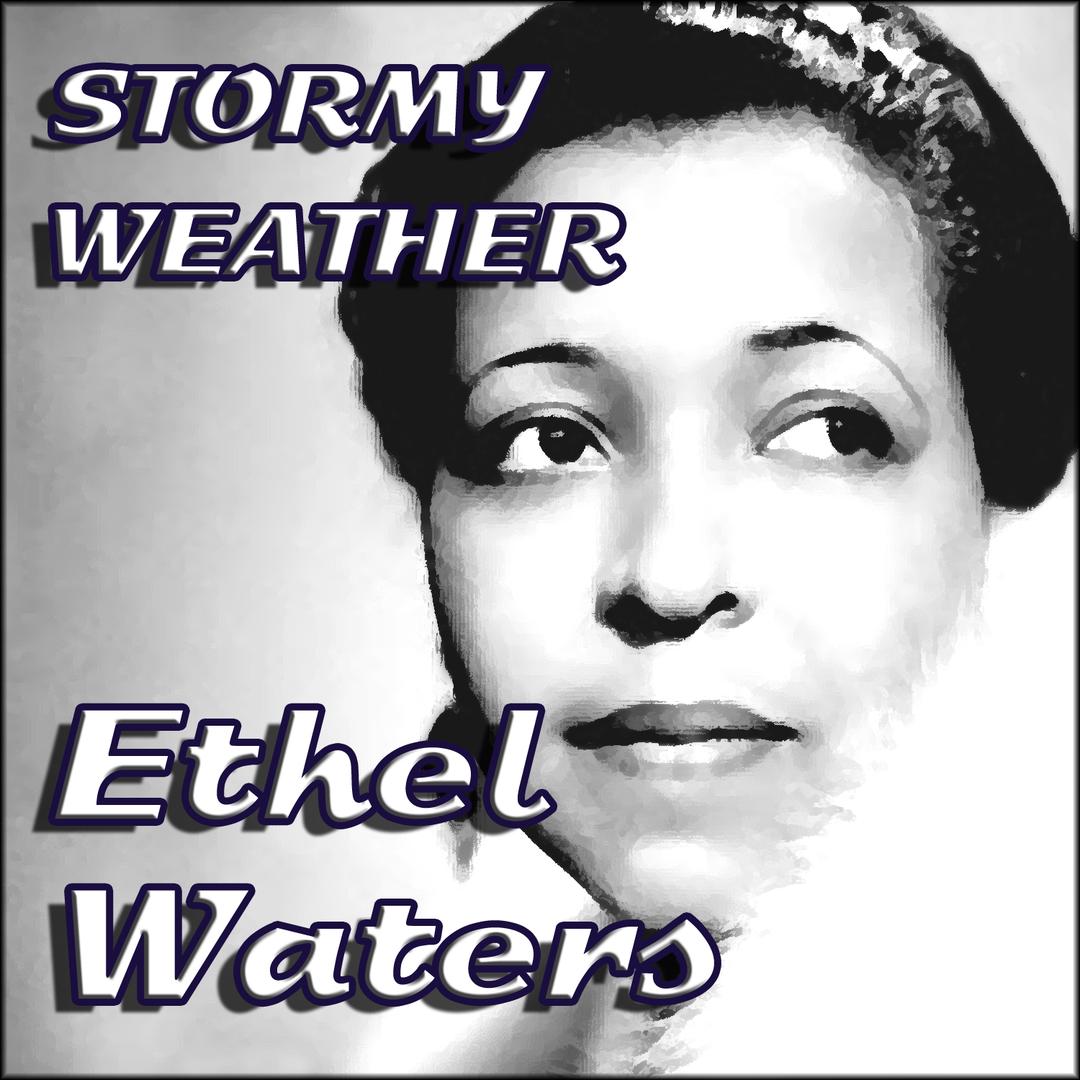
50 years ago: Ethel Waters hit #1 with “Stormy Weather”

Stormy Weather (Keeps Rainin’ All the Time)

Ethel Waters

Writer(s): Harold Arlen, Ted Koehler (see lyrics here)


First Charted: May 20, 1933


Peak: 13 US, 11 GA (Click for codes to singles charts.)


Sales (in millions): -- US, -- UK, -- world (includes US + UK)


Airplay/Streaming (in millions): -- radio, 0.59 video, -- streaming

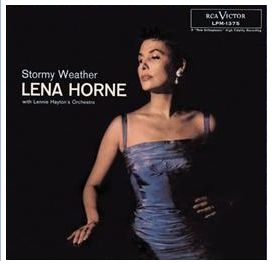
Stormy Weather (Keeps Rainin’ All the Time)

Lena Horne


First Charted: September 4, 1943


Peak: 21 US (Click for codes to singles charts.)


Sales (in millions): --


Airplay/Streaming (in millions): -- radio, -- video, -- streaming

Awards (for Ethel Waters’ version):


Awards (for Lena Horne’s version):

About the Song:

In the early 1930s, the famed Cotton Club in Harlem, New York, featured African-American performers on stage although they weren’t allowed to sit in the audience. TM Harold Arlen, a cantor’s son, and Ted Koehler wrote this “bluesy perennial” TM for Cab Calloway to introduce in a Cotton Club revue, but decided it was more fitting for a female singer and gave it to Ethel Waters. TY

Waters established herself as an “incomparable interpreter of the American Songbook,” NRR but began her career as a blues singer before adapting her voice to a more conversational style and reshaping herself as a pioneer jazz singer. NRR When she performed “Stormy Weather” in the show Cotton Club Parade, she sang it “with all her soul…expressing the anguish of people who found nothing but gloom and misery…because of the Depression.” TY “Her career – already in high flight – soared to a still loftier trajectory.” SS Waters called it “a turning point in my life.” SS

Her 1933 recording of the song was a #1 hit (Metronome magazine called it “1933’s biggest hit” SS), as was Arlen’s own recording with Leo Reisman’s Orchestra. Guy Lombardo, Duke Ellington, and Ted Lewis also had top ten hits with the song and Lena Horne took it to #21 a decade later PM when she performed in the 1943 film of the same name. She made “Stormy Weather” “her signature song [and] an autobiographical statement” TM as she became “a beacon for black performers.” TM “Her keen beauty, soprano lilt and silky poise would have made her a Hollywood star if the industry hadn’t been so profoundly racist.” TM

“Summarizing a century of pop music, the song sounds fresh and poignant in this century as well.” TM “It has become a cabaret standard” JA in which the meaning of the song lyrics are conveyed with subtle theatricality.” NRR


Resources:

  • DMDB Encyclopedia entry for Ethel Waters
  • DMDB Encyclopedia entry for Harold Arlen
  • DMDB Encyclopedia entry for Lena Horne
  • DMDB Encyclopedia entry for Ted Koehler
  • JA David A. Jasen (2002). A Century of American Popular Music: 2000 Best-Loved and Remembered Songs (1899-1999). Routledge: Taylor & Francis, Inc. Page 181.
  • NRR National Recording Registry
  • SS Steve Sullivan (2013). Encyclopedia of Great Popular Song Recordings (Volumes I & II). Scarecrow Press: Lanham, Maryland. Page 180.
  • TM Time magazine (10/24/2011). “All Time 100 Songs”
  • TY Don Tyler (1985). Hit Parade 1920-1955. New York, NY: Quill. Page 70.
  • PM Joel Whitburn (1986). Pop Memories 1890-1954. Menomonee Falls, WI; Record Research, Inc. Page 585.


First posted 7/8/2012; last updated 8/16/2022.

Saturday, March 1, 1980

50 years ago: “Puttin’ on the Ritz” hit #1

Puttin’ on the Ritz

Harry Richman

Writer(s): Irving Berlin (see lyrics here)


First Charted: February 15, 1930


Peak: 11 US, 6 GA, 7 DF (Click for codes to singles charts.)


Sales (in millions): --


Airplay/Streaming (in millions): -- radio, 0.63 video, 0.03 streaming

Awards:

Click on award for more details.

About the Song:

Irving Berlin wrote “Puttin’ on the Ritz” in May 1927 and published it in December 1929. The phrase, which came from the upscale Ritz-Carlton, means “dressing fashionably.” SF Berlin referenced the trend at the time of poor, black Harlem residents to dress flashy and parade about, WK pretending to be wealthy. SF He later revised the song to reference affluent whites strutting on Park Avenue. WK

The song was introduced by Harry Richman in the film of the same name in 1930. He also recorded the song and took it #1. It was the most successful of his six top-ten hits from 1926 to 1932. Richman was a former vaudeville pianist who went on to become a night club, Broadway, and film star. PM

Earl Burtnett (#17) and Leo Reisman (#20) each charted with the song in 1930 as well. Fred Astaire also recorded the song that year, but it didn’t chart. He revived the song in 1946 for the movie Blue Skies. Clark Gable did his only song-and-dance number to “Puttin’ on the Ritz” in the 1939 movie Idiot’s Delight. SF It surfaced again in 1974 in Mel Brooks’ Young Frankenstein in a scene featuring Gene Wilder and Peter Boyle as Dr. Frankenstein and his monster respectively, dancing and singing to the song.

The song was an unlikely one-hit wonder in 1983 for the Dutch musician known as Taco (his real name). The million-selling synth-pop version reached #4 on the Billboard Hot 100. JA Irving Berlin was 95 years old at the time, making him the oldest living songwriter to reach the top 10. WK


Resources:

  • DMDB encyclopedia entry for Harry Richman
  • JA David A. Jasen (2002). A Century of American Popular Music: 2000 Best-Loved and Remembered Songs (1899-1999). Routledge: Taylor & Francis, Inc. Page 161.
  • SF Songfacts
  • PM Joel Whitburn (1986). Pop Memories 1890-1954. Menomonee Falls, WI; Record Research, Inc. Pages 369-70.
  • WK Wikipedia


Related Links:


First posted 11/20/2022.

About the Song:

Irving Berlin wrote “Puttin’ on the Ritz” in May 1927 and published it in December 1929. The phrase, which came from the upscale Ritz-Carlton, means “dressing fashionably.” SF Berlin referenced the trend at the time of poor, black Harlem residents to dress flashy and parade about, WK pretending to be wealthy. SF He later revised the song to reference affluent whites strutting on Park Avenue. WK

The song was introduced by Harry Richman in the film of the same name in 1930. He also recorded the song and took it #1. It was the most successful of his six top-ten hits from 1926 to 1932. Richman was a former vaudeville pianist who went on to become a night club, Broadway, and film star. PM

Earl Burtnett (#17) and Leo Reisman (#20) each charted with the song in 1930 as well. Fred Astaire also recorded the song that year, but it didn’t chart. He revived the song in 1946 for the movie Blue Skies. Clark Gable did his only song-and-dance number to “Puttin’ on the Ritz” in the 1939 movie Idiot’s Delight. SF It surfaced again in 1974 in Mel Brooks’ Young Frankenstein in a scene featuring Gene Wilder and Peter Boyle as Dr. Frankenstein and his monster respectively, dancing and singing to the song.

The song was an unlikely one-hit wonder in 1983 for the Dutch musician known as Taco (his real name). The million-selling synth-pop version reached #4 on the Billboard Hot 100. JA Irving Berlin was 95 years old at the time, making him the oldest living songwriter to reach the top 10. WK


Resources:

  • DMDB encyclopedia entry for Harry Richman
  • JA David A. Jasen (2002). A Century of American Popular Music: 2000 Best-Loved and Remembered Songs (1899-1999). Routledge: Taylor & Francis, Inc. Page 161.
  • SF Songfacts
  • PM Joel Whitburn (1986). Pop Memories 1890-1954. Menomonee Falls, WI; Record Research, Inc. Pages 369-70.
  • WK Wikipedia


First posted 11/20/2022.

Sunday, July 1, 1973

50 years ago: “Yes! We Have No Bananas” hit #1

Yes! We Have No Bananas

Billy Jones

Writer(s): Frank Silver, Irving Cohn (see lyrics here)


First Charted: July 1, 1923


Peak: 15 US, 12 GA, 15 SM (Click for codes to charts.)


Sales (in millions): --


Airplay/Streaming (in millions): -- radio, 0.43 video, -- streaming

Awards:

Click on award for more details.

About the Song:

Frank Silver and Irving Cohn wrote this “classic comic novelty song” DJ and published it on March 23, 1923. Silver explained that when his orchestra was playing at a hotel in Long Island, he would stop at a fruit stand owned by a Greek who began every sentence with “Yes,” even when he didn’t have the requested item. SM As Silver said, “The jingle of his idiom haunted me…Finally, I wrote this verse and Cohn fitted it with a tune.” WK

The fruit seller was likely affected by a banana shortage as a result of an outbreak of Panama disease, which wiped out much of the banana crop at the time. GR The song re-emerged in 1932 as a rallying cry in Belfast, Northern Ireland, during the Outdoor Relief Protests, a movement “dedicated to securing social security and welfare benefits.” GR The song title was often displayed in UK fruit shops during World War II because of rations and bans. GR

The song was introduced by Eddie Cantor in the revue Make It Snappy. The song is said to have borrowed from other tunes, including Handel’s Messiah. TY1 The first recorded of the song was by Edward Furman and William Nash, SM but it didn’t chart.

However, there were five versions of the song which charted in 1923 – Billy Jones (#1), Ben Selvin’s Orchestra featuring Irving Kaufman (#1), the Great White Way Orchestra featuring Billy Murray (#3), Benny Krueger (#8), and Sam Lanin (#15). PM Jones’ version was the first and most successful. It was also one of 37 top-20 hits, 27 of which were with partner Ernest Hare. Jones also lent his vocals to the version by Krueger’s orchestra. WK Spike Jones & His City Slickers revived the song in 1950.


Resources:


First posted 11/20/2022; last updated 1/29/2023.