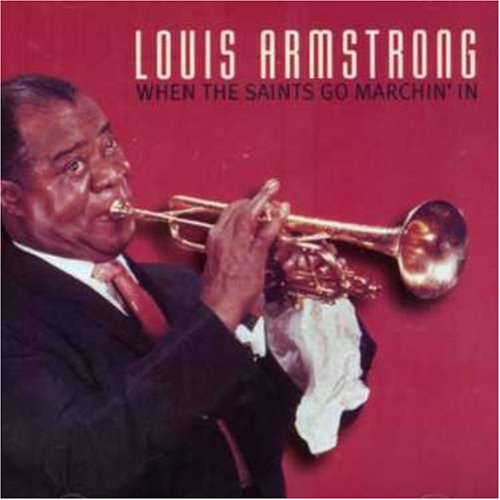
 | When the Saints Go Marching InLouis Armstrong |
Writer(s): James M. Black, Katharine E. Purvis (see lyrics here) First Charted: April 1, 1939 Peak: 10 US, 6 DF (Click for codes to charts.) Sales (in millions): -- Airplay/Streaming (in millions): -- radio, 24.05 video, -- streaming |
Awards (overall):Click on award for more details. 


Awards (Armstrong):


Awards (Bruce Springsteen):
|
About the Song:“When the Saints Go Marching In,” also known as “When the Saints Are Marching In” and simply “The Saints,” has “African-American spiritual origins, so its history is vague at best.” TY2 It was likely passed down from generation to generation via oral tradition until someone wrote it down. TY2 It gained attention as a traditional slavery-era spiritual and it has been suggested it developed in the Bahamas. FU The song promised “an end to suffering for the righteous,” SS a reference to the Book of Revelations. SS It has famously been used as a funeral hymn. Many African Americans in New Orleans belonged to fraternities, societies or burial clubs and when one of their own died, the song would be played in a mournful, slow tempo as the funeral parade headed from the church to the cemetery. After the service, the song would be played again, but with a more exuberant tempo and mood. TY2 This helped the song evolve into a “joyous hymn, especially in New Orleans,” SS and standard often played by jazz bands. WK Lyricist Katharine Purvis and composer James Milton Black published the song as “When the Saints Are Marching In” in 1896. She was the daughter of a Methodist minister who became a music teacher at the seminary of a Methodist Episcopal Church in Williamsport, Pennsylvania. FU Black was a hymn composer, choir teacher, and Sunday school teacher who worked at the same church. FU The song was published again as “When the Saints Go Marching In” in 1927 with similar words and music. FU The Paramount Jubilee Singers were the first to record it in 1923. Over the next few years it was recorded by the Four Harmony Kings (1924), the Elkins-Payne Jubilee Singers (1924), Wheat Street Female Quatet (1925), Bo Weavil Jackson (1926), Deaconess Alexander (1926), Rev. E.D. campbell (1927), Barbeque Bob (1927), Blind Willie Davis (1928), the Pace Jubilee Singers (1928), DX and Memphis Minnie (1935), sometimes under slightly different titles. SS SecondHandSongs.com notes there have been more than 700 recordings of the song, SH including versions by the Beatles with Tony Sheridan, Harry Belafonte, Bing Crosby, Fats Domino, Ella Fitzgerald, Connie Francis, the Isley Brothers, Mahalia Jackson, B.B. King, Lady Gaga, Jerry Lee Lewis, Little Richard, Guy Lombardo, Van Morrison, Bruce Springsteen, Tears for Fears, Sister Rosetta Tharpe, Ike & Tina Turner, the Weavers, and Hank Williams. The song remained relatively unknown nationally until Decca Records asked Louis Armstrong to record some songs in the Dixieland tradition. He tapped into some of his own classics from the 1920s as well as this hymn he knew from childhood. SS Whle the song had been a staple in New Orleans for years, it was Armstrong’s recording which turned it into an American jazz standard. It became the “universally known anthem” for the 1940s Dixieland revival. SS Resources:
Related Links:

First posted 4/11/2020; last updated 11/30/2025. |