Showing posts with label Vincent Rose. Show all posts

Friday, November 27, 2020

100 years ago: Al Jolson “Avalon” charted

Avalon

Al Jolson with Charles Prince’s Orchestra

Writer(s): Vincent Rose, Buddy DeSylva, Al Jolson (see lyrics here)


First Charted: November 27, 1920


Peak: 2 US, 11 GA, 12 SM (Click for codes to charts.)


Sales (in millions): --


Airplay/Streaming (in millions): -- radio, -- video, -- streaming

Awards:

Click on award for more details.

About the Song:

The title “Avalon” evokes thoughts of “the legendary island…where King Arthur’s sword Excalibur was forged” SM but is actually about a resort town on Catalina Island off the coast of California. JS It was a popular destination for Hollywood’s film community. JS Lyrically, the song tells the listener how the protagonist discovers his love beside the bay in Avalon, then sails away, leaving his love behind. Then he dreams about her and the desire to return to Avalon.

Jolson is given songwriting credit, but likely had nothing to do with writing the song. However, by including him on songwriting royalties, it made it encouraged him to perform the song and make it popular. TY2 Buddy DeSylva’s name was not originally on the credits but was added later. It is possible that he had a role in writing the lyrics as he did with many songs supposedly composed by Jolson. JS

Musically, Vincent Rose most likely deserves the credit JS although the melody of “Avalon” comes from the aria “E Lucevan le Stelle” from the opera Tosca by Giacomo Puccini. TY2 Puccini’s publishers sued and were awarded $25,000 in damages as well all future royalties. TY2

Jolson integrated the song into the musical Sinbad, which had opened on Broadway in 1918. He re-recorded the song after the 1946 film biopic The Jolson Story. The song was also used in 1932’s You Said a Mouthful, 1942’s Cairo, 1946’s It’s a Wonderful Life, 1946’s Margie, 1956’s The Benny Goodman Story, 1957’s The Helen Morgan Story, 1999’s Sweet and Low Down, and 2001’s The Cat’s Meow. The song has been recorded and/or performed by Chet Atkins, Cab Calloway, Nat “King” Cole, Bing Crosby, Benny Goodman, Coleman Hawkins, Harry James, Red Nichols, and Art Hickman, who took the song to #11 in 1921.


Resources:


Related Links:


First posted 1/28/2023.

Friday, September 29, 2006

50 years ago: Fats Domino charted with “Blueberry Hill”

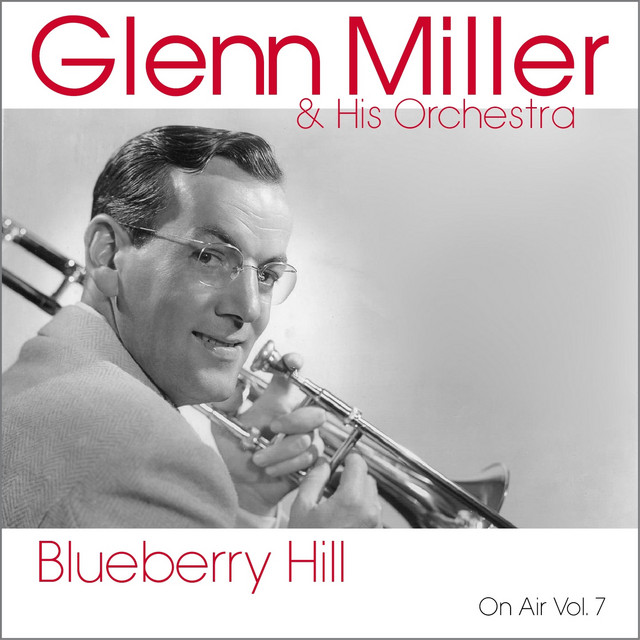
Blueberry Hill

Glenn Miller

Writer(s): Vincent Rose, Al Rose, Larry Stock (see lyrics here)


First Charted: August 10, 1940


Peak: 11 US, 14 GA, 2 HP (Click for codes to charts.)


Sales (in millions): --


Airplay/Streaming (in millions): -- radio, -- video, -- streaming

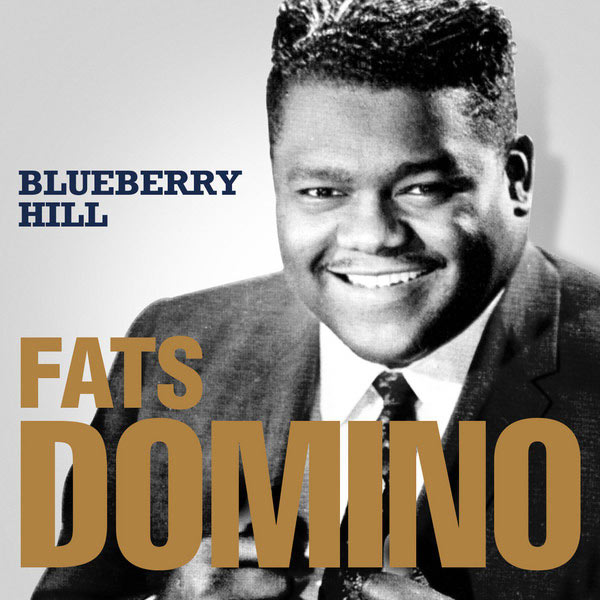
Blueberry Hill

Fats Domino


First Charted: September 29, 1956


Peak: 2 US, 4 HP, 4 CB, 3 HR, 111 RB, 6 UK, 1 DF (Click for codes to charts.)


Sales (in millions): 1.0 US


Airplay/Streaming (in millions): -- radio, 25.43 video, 42.32 streaming

Awards (Miller):

Click on award for more details.


Awards (Domino):

Click on award for more details.

About the Song:

“It’s hard to believe that any other performer could have found in [‘Blueberry Hill’] the excuse for sly lasciviousness that Fats did. And it’s surely true that nobody else could have made that sly lasciviousness seem so harmless as this jaunty Creole pianist.” DM The song that established Fats Domino as one of the pivotal figures in transforming R&B into rock and roll began life as a number in the 1940 Western The Singing Hill SF sung by Gene Autry. It quickly entered the public conscience with Sammy Kaye, Gene Krupa, Glenn Miller, Kay Kyser, Russ Morgan, Connee Boswell, and Jimmy Dorsey WK all taking a crack at it. After Autry’s original, the song charted three times in 1940. Kyser and Morgan each took it into the top 20 while Miller went all the way to #1 on the U.S. pop charts with his take on the song.

In 1949, Louis Armstrong added a more R&B vibe to “Blueberry Hill.” Armstrong’s interpretation informed Fats’ recording NRR as he birthed a “rock and roll standard.” WK The song was Domino’s biggest hit, giving him his greatest audience but his producer, Dave Bartholomew, opposed doing a song which had already been a hit several times, TB insistent that it would ruin Domino’s career. AH He even called Lew Chudd, the president of Imperial Records, begging him not to release it. SS He later admitted what a huge mistake it had been to try to block it. AH

Fats Domino’s success is significant. He was a black R&B artist who ended up being successfully marketed to white teens who’d jumped on the rock and roll bandwagon. Rockabilly star Carl Perkins said, “In the white honky-tonks where I was playin’, they were punchin’ ‘Blueberry Hill.’ And white cats were dancin’ to Fats Domino.” RS500 “The wave of white rockabilly acts that had hits throughout 1955 and ’56 had all fizzled – Carl Perkins, Gene Vincent, and Bill Haley would between them never have another major hit in the U.S.” AH Domino, however, had over 60 entries on the Billboard pop chart from 1955 to 1968. Then of those were top-10 hits and “Blueberry Hill” was the biggest of all, reaching #2.

The song reemerged in the ‘70s as a sort of theme for a television character on the popular series Happy Days. High schooler Ritchie Cunningham, played by now famous director Ron Howard, would break into the song whenever he’d scored a dating coup. SF

The Doors’ Ray Manzarek confirmed the song’s influence on future generations of rock and roll when he revealed on a BBC Radio 2 program that the Doors’ classic #1 hit “Light My Fire” took its baseline from “Blueberry Hill.” SF The song has also been cited as influence from artists as diverse as Mick Jagger and Leonard Cohen. AH


Resources:


Related Links:


Last updated 3/25/2023.