Showing posts with label Steve Winwood. Show all posts

Friday, August 9, 2019

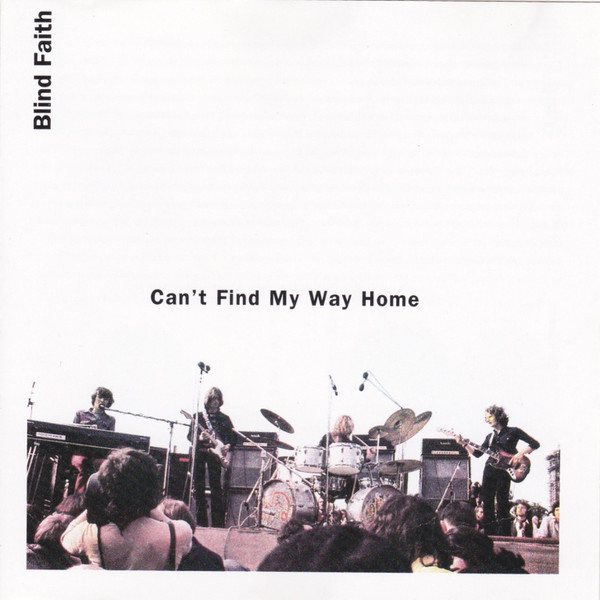
50 years ago: Blind Faith “Can’t Find My Way Home” released on debut album

Can’t Find My Way Home

Blind Faith

Writer(s): Steve Winwood (see lyrics here)


Released: August 9, 1969 (album cut)


First Charted: --


Peak: 4 CL, 1 DF (Click for codes to singles charts.)


Sales (in millions): -- US, -- UK, -- world (includes US + UK)


Airplay/Streaming (in millions): -- radio, 30.76 video, 49.31 streaming

Awards:

Click on award for more details.

About the Song:

In 1969, Eric Clapton had already established himself as one of the world’s premiere guitarists via his work with John Mayall, the Yardbirds, and Cream. Steve Winwood had developed similar credentials with stints in the Spencer Davis Group and Traffic. When they united forces as Blind Faith – along with drummer Ginger Baker of Cream and bassist Ric Grech of Family – it made for “an unprecedented and arguably unmatched collection of talent and rock stardom.” UCR

The collective made for one of rock history’s greatest supergroups, but they only recorded one album and ventured out for a one summer tour before splitting. Nonetheless, the album topped the UK and American charts and “the strength of its songs and performances have made it a lasting favorite for rock fans.” UCR

Like British contemporaries such as Led Zeppelin, Van Morrison, and the Rolling Stones, Blind Faith “seemed to discover a similarity between American blues and soul music and the folk traditions of their own United Kingdom.” AMG While Clapton, Winwood, and Baker all contributed to Blind Faith, the “striking, dreamy piece” AMG “Can’t Find My Way Home” “stands out as the definitive statement.” UCR

Winwood, “in a dreamy falsetto, sings a lyric that on first glance seems to be a simple love song, but in actuality might be intended to reflect a spiritual journey of some kind.” AMG He was also “blessed with amazingly soulful vocal abilities and an innate sense of American roots music.” AMG The song showcases his “sweet vocal floating atop the intricate acoustic guitar work,” UCR an uncommon role for Clapton, SF “while bassist Grech and drummer Baker provide subtle but effective rhythms to drive it along. Jimmy Miller’s warm and inviting production helps make the song all the more essential.” UCR


Resources:


Related Links:


First posted 7/16/2022; last updated 7/22/2022.

Sunday, July 21, 2019

50 years ago: Blind Faith released its only album

Blind Faith

Blind Faith


Released: July 21, 1969


Charted: August 16, 1969


Peak: 12 US, 12 UK, 14 CN, 2 AU


Sales (in millions): 1.0 US, 0.1 UK, 8.0 world (includes US and UK)


Genre: classic rock


Tracks:

Song Title (Writers) [time] (date of single release, chart peaks)

  1. Had to Cry Today (Winwood) [8:48]
  2. Can’t Find My Way Home (Winwood) [3:16]
  3. Well All Right (Alison/Holly/
    Mauldin/Petty)
    [4:27]
  4. Presence of the Lord (Clapton) [4:50]
  5. Sea of Joy (Winwood) [5:22]
  6. Do What You Like (Baker) [15:18]


Total Running Time: 42:01


The Players:

  • Steve Winwood (vocals, keyboards, etc.)
  • Eric Clapton (guitar, vocals)
  • Ric Grech (bass, etc.)
  • Ginger Baker (drums, percussion)

Rating:

3.971 out of 5.00 (average of 24 ratings)


Awards: (Click on award to learn more).

About the Album:

“When you look back over time at the various rock ‘supergroups,’ the one that really started it all was Blind Faith.” NO Eric Clapton, along with bassist Jack Bruce and drummer Ginger Baker were part of Cream, a “massively popular blues-rock power trio.” TM The latter two “were frequently arguing, and there was considerable tension about their future musical direction.” AZ

Clapton “jumped right back into another overhyped supergroup.” JR-25 He “wanted space to be a little adventurous” AZ and “sought out [Steve] Winwood for some informal jamming in early spring 1969.” TM The pair had “worked together briefly in the short-lived Powerhouse project” SW and Winwood had, while still a teen, “demonstrated deep appreciation of soul and R&B on several hits with the Spencer Davis Group” TM before fronting his own group, Traffic.

After Baker turned up uninvited TM and Family’s Rick Grech (who later worked with Winwood in the reformed Traffic) was added on bass, “rock’s first supergroup was in place.” TM “Concert promoters rushed to book the band before any material had been completed, hence the band’s eventual name, Blind Faith.” SH With so little repertoire, the group relied in part on Cream songs in concert and while crowds went wild, it was exactly what Clapton wanted to avoid.

“Refined through jamming, Blind Faith’s music was less dense and more transparent than that of Cream” TM by merging that group’s “heavy riffing and outsized song lengths” AMG with Traffic’s “soulful blues.” AMG Vocally, Winwood “sings like he’s got one last chance to redeem himself.” TM “Surrounded by Eric Clapton’s questioning lead guitar, the herculean drumming of Ginger Baker, and oceans of reverb, his voice became almost celestial.” TM “His performance on Sea of Joy, one of several originals he wrote for Blind Faith, is a marvel of optimism – at once perfectly formed and utterly spontaneous. His ecstatic vocals connect the rhythm section’s galloping roar to moments of placid, lakeside-at-sunset calm.” TM

Highlights include “the virtuoso electric blues of Had to Cry Today, the acoustic-textured Can't Find My Way Home, the soaring Presence of the Lord (Eric Clapton’s one contribution here as a songwriter, and the first great song he ever authored) and Sea of Joy.” AMG

“Not all of it works.” AMG “The band doesn’t do much with the Buddy Holly song Well All Right; and Ginger Baker’s Do What You Like was a little weak to take up 15 minutes of space on an LP that might have been better used for a shorter drum solo and more songs. Unfortunately, the group was never that together as a band and evidently had just the 42 minutes of new music here ready to tour behind.” AMG

Aside from the music, there was “the controversial original cover with the 12-year-old girl and her airplane.” NO A later version “featured a black and white photo of the group taken at Clapton’s home in Surrey.” NO

The group’s “self-titled debut, released in the summer of 1969, was a hit, but the extreme pressure on the group” SH and “Clapton’s greater interest in Blind Faith’s opening act Delaney & Bonnie & Friends” WK “led to their breakup even before the end of the year.” SH “Despite the crash-and-burn history of the band itself,” AMG “Blind Faith’s first and last album…remains one of the jewels” AMG in its individual member’s catalogs and “one of the true landmark albums of the rock era.” NO Clapton said of the album, “I think it’s a lovely record…It’s like it’s looseness. It’s like a supersession record.” JR-25


Notes: The 2000 Deluxe Edition adds “Sleeping in the Ground,” an electric version of “Can’t Find My Way Home,” an “Acoustic Jam,” and “Time Winds” to the original disc. A second disc of material includes four lengthy jams and another version of “Sleeping in the Ground.” It “is loaded with extra material. There are new expanded liner notes, rare session photos, and the cover art from both versions of the album.” NO

Resources and Related Links:


Other Related DMDB Pages:


First posted 7/21/2012; last updated 11/9/2021.

Friday, October 5, 1973

Lou Reed Berlin released

Berlin

Lou Reed

Released: October 5, 1973


Peak: 98 US, 7 UK, 51 CN, 59 AU, 13 DF Click for codes to charts.


Sales (in millions): -- US, 0.06 UK


Genre: rock


Tracks:

Click on a song title for more details.
  1. Berlin [3:24]
  2. Lady Day [3:39]
  3. Men of Good Fortune [4:38]
  4. Caroline Says I [3:57]
  5. How Do You Think It Feels [3:42]
  6. Oh, Jim [5:14]
  7. Caroline Says II [4:13]
  8. The Kids [7:55]
  9. The Bed [5:51]
  10. Sad Song [6:55]

Total Running Time: 49:23


The Players:

  • Lou Reed (vocals guitar)
  • Bob Ezrin, Steve Winwood (keyboards)
  • Steve Hunter, Dick Magner (guitar)
  • Jack Bruce (bass)
  • Aynsley Dunbar (drums)
  • Michael Brecker (tenor sax)
  • Randy Brecker (trumpet)

Rating:

4.038 out of 5.00 (average of 23 ratings)


Quotable:

“The most ambitious album of his career” – Mark Deming, All Music Guide

Awards:

(Click on award to learn more).

About the Album

Transformer and ‘Walk on the Wild Side’ were both major hits in 1972, to the surprise of both Lou Reed and the music industry, and with Reed suddenly a hot commodity, he used his newly won clout to make the most ambitious album of his career, Berlin.” AM Fans and critics who were “expecting another upbeat glam outing” WK did not respond well. Reed was disillusioned enough abou the album’s reception that for years he rarely played any of the material live. WK

The album is “the musical equivalent of a drug-addled kid set loose in a candy store.” AM Assisted by producer “Bob Ezrin at his most grandiose,” AM Reed crafts an album very different from the bulk of his work, fleshing out Berlin “with a huge, boomy production…and arrangements overloaded with guitars, keyboards, horns, strings, and any other kitchen sink that was handy.” AM He also assembled top flight session musicians including Jack Bruce, Steve Winwood, Aynsley Dunbar, and Tony Levin. AM “Instrumentally, Reed himself only contributes acoustic guitar,” WK which made for quite a change from the “superb use of the two-guitars/bass/drums lineup with the Velvet Underground.” AM

Thematically, Reed was more adventurous as well. While he has “often been accused of focusing on the dark side of life, he and Ezrin approached Berlin as their opportunity to make The Most Depressing Album of All Time, and they hardly missed a trick.” AM Reed uses the songs to “form a loose story line about a doomed romance between two chemically fueled bohemians.” AM

As is often the case with concept albums, “a few of the songs are little more than sketches” AM but the highlights, which include “How Do You Think It Feels, Oh, Jim, ‘The Kids,’ and Sad Song – are powerful, bitter stuff.” AM

The Kids tells a horrific tale of Caroline, the album’s main female character, having her children taken away by the authorities. The song “features the sounds of children shouting for their mother.” WK

As Reed had done with his first two solo outings, he reworks some unreleased Velvet Underground material. He reworked the song “Oh, Gin” into “Oh, Jim” while the VU song “Stephanie Says” remerges as Caroline Says II. “Sad Song” was also a song originally recorded by the Velvets. Men of Good Fortune had been played by the group as early as 1966. WK The title cut was even a reworked song – but from Reed’s debut solo album. “here it is lyrically simplified, the key changed, and re-arranged for piano.” WK

The final assessment is that “it’s hard not to be impressed by Berlin, given the sheer scope of the project, but while it earns an A for effort, the actual execution merits more of a B-.” AM “The sheer size of Berlin ultimately overpowers both Reed and his material.” AM “But if Berlin is largely a failure of ambition, that sets it apart from the vast majority of Reed’s lesser works; Lou’s vocals are both precise and impassioned.” AM

Notes

In 2006, a live performance of the full album was captured and turned into a concert film and live album (Berlin: Live at St Ann’s Warehouse).

The Songs

Some of these songs originated as Velvet Underground songs (“Caroline Says II” as “Stephanie Says,” “Oh, Jim” as “Oh Gin,” “Sad Song”) and one (“Berlin”) was originally recorded by Reed for his first solo album. The other seven songs from this album are detailed below.

Lady Day

Lou Reed

Writer(s): Lou Reed


Recorded: ?


Released: Berlin (1973), Legendary (box set: 2002)


Peak: -- Click for codes to charts.


Sales (in millions): --


Airplay/Streaming (in millions): -- radio, -- video, -- streaming


About the Song:

A

Men of Good Fortune

Lou Reed

Writer(s): Lou Reed


Recorded: ?


Released: Berlin (1973), The Very Best of (compilation: 2000), Legendary (box set: 2002)


Peak: -- Click for codes to charts.


Sales (in millions): --


Airplay/Streaming (in millions): -- radio, -- video, -- streaming


About the Song:

A

Caroline Says I

Lou Reed

Writer(s): Lou Reed


Recorded: ?


Released: February 1974 (single), Berlin (1973), Between Thought and Expression (box set, 1992), Different Times: Lou Reed in the ‘70s (compilation: 1996), Legendary (box set: 2002)


Peak: -- Click for codes to charts.


Sales (in millions): --


Airplay/Streaming (in millions): -- radio, -- video, -- streaming


About the Song:

A

How Do You Think It Feels

Lou Reed

Writer(s): Lou Reed


Recorded: ?


Released: October 1973 (single), Berlin (1973), Walk on the Wild Side: The Best of (compilation: 1977), Between Thought and Expression (box set, 1992), The Best of Lou Reed & Velvet Underground (compilation: 1995), Legendary (box set: 2002)


Peak: -- Click for codes to charts.


Sales (in millions): --


Airplay/Streaming (in millions): -- radio, -- video, -- streaming


About the Song:

A

The Kids

Lou Reed

Writer(s): Lou Reed


Recorded: ?


Released: Berlin (1973), Between Thought and Expression (box set, 1992)


Peak: -- Click for codes to charts.


Sales (in millions): --


Airplay/Streaming (in millions): -- radio, -- video, -- streaming


About the Song:

A

The Bed

Lou Reed

Writer(s): Lou Reed


Recorded: ?


Released: Berlin (1973)


Peak: -- Click for codes to charts.


Sales (in millions): --


Airplay/Streaming (in millions): -- radio, -- video, -- streaming


About the Song:

A

Resources/References:


Related DMDB Pages:


First posted 3/3/2011; last updated.