Showing posts with label Ginger Baker. Show all posts

Monday, June 29, 2026

The Top 100 Drummers of All Time

Drummers:

Top 100

This list was originally posted on the DMDB Facebook page on August 23, 2010, and then revised on January 22, 2011. 30 best-of lists (see resources at the bottom of the page) were aggregated to create this one. As tends to be the case with music lists, it heavily slants toward rock drummers, so while far from flawless, the aggregate approach to creating this list should assure that this is a more representative list than any other out there. When relevant, groups or performers most associated with the drummers are listed in parentheses.

See other lists of Acts/Music Makers by Categories.

Neil Peart, Rush’s “YYZ”

1. Neil Peart (Rush)
2. John “Bonzo” Bonham (Led Zeppelin)
3. Keith Moon (The Who)
4. Ginger Baker (Cream)
5. Ringo Starr (The Beatles)
6. Stewart Copeland (The Police)
7. Dave Grohl (Nirvana/Foo Fighters)
8. Mitch Mitchell (The Jimi Hendrix Experience)
9. Bill Bruford (Yes/ King Crimson)
10. Lars Ulrich (Metallica)

John Bonham, Led Zeppelin’s Moby Dick”

11. Ian Paice (Deep Purple)
12. Charlie Watts (The Rolling Stones)
13. Terry Bozzio (Frank Zappa/Jeff Beck)
14. Danny Carey (Tool)
15. Mike Portnoy (Dream Theater)
16. Roger Taylor (Queen)
17. Buddy Rich
18. Phil Collins (Genesis)
19. Nick Mason (Pink Floyd)
20. Bill Ward (Black Sabbath)

Keith Moon, The Who’s “Won’t Get Fooled Again” (isolated drum track)

21. Chad Smith (Red Hot Chili Peppers)
22. Carl Palmer (Emerson, Lake & Palmer/Asia)
23. Steve Smith (Journey)
24. Travis Barker (Blink-182)
25. Nicko McBrain (Iron Maiden)
26. Dave Lombardo (Slayer)
27. John Densmore (The Doors)
28. Alan White (Yes)
29. Maureen “Moe” Tucker (Velvet Underground)
30. Topper Headon (The Clash)

Ginger Baker, Cream’s “Toad”

31. Jimmy Chamberlin (Smashing Pumpkins)
32. Tommy Lee (Mötley Crüe)
33. Carter Beauford (Dave Matthews Band)
34. Vinnie Colaiuta (Frank Zappa/Sting/Jeff Beck /Herbie Hancock/Chick Corea)
35. Larry Mullen, Jr. (U2)
36. Alex Van Halen (Van Halen)
37. Aynsley Dunbar (John Mayall’s Bluesbreakers/Jeff Beck Group/Journey)
38. Cozy Powell (Black Sabbath/Rainbow)
39. Gene Krupa
40. Tommy Aldridge (Ozzy Osbourne/Whitesnake)

Buddy Rich vs. the Muppets’ Animal

41. Tim Alexander (Primus)
42. Carmine Appice (Vanilla Fudge)
43. Joey Jordison (Slipknot)
44. Bernard Purdie
45. Mick Fleetwood (Fleetwood Mac)
46. Frank “Tré Cool” Edwin Wright III (Green Day)
47. Steve Gadd (Paul Simon/Steely Dan/Eric Clapton)
48. Art Blakey
49. Michael Shrieve (Santana)
50. Al Jackson, Jr. (Booker T. & the MG’s)

Gene Krupa vs. Buddy Rich

51. Billy Cobham (Horace Silver/Miles Davis/Mahavishnu Orchestra)
52. Jaki Liebezeit (Can)
53. Matt Cameron (Soundgarden)
54. Max Weinberg (Bruce Springsteen & the E Street Band)
55. Max Roach
56. Steven Adler (Guns N’ Roses)
57. Deen Castronovo (Bad English/Journey)
58. Elvin Jones (John Coltrane)
59. Tony Williams
60. William “Benny” Benjamin (Funk Brothers)

Max Roach

61. Hal Blaine
62. Simon Phillips (Toto)
63. Klaus Dinger (Neu/LA Dusserldorf)
64. Zigaboo “Ziggy” Modeliste (The Meters)
65. Vinnie Paul (Pantera)
66. Brann Dailor (Mastodon)
67. Rick Allen (Def Leppard)
68. Zak Starkey (The Who/Oasis)
69. Phil Rudd (AC/DC)
70. Clive Bunker (Jethro Tull)

World’s Greatest Drummers Salute Ringo Starr

71. Mike Giles (King Crimson)
72. Louie Bellson
73. Jeff Porcaro (Toto)
74. Chad Wackerman (Frank Zappa)
75. Don Brewer (Grand Funk Railroad)
76. Chris Adler (Lamb of God)
77. Steve Shelley (Sonic Youth)
78. Jim “The Reverend” Sullivan (Avenged Sevenfold)
79. John French (Captain Beefheart)
80. Dominic Howard (Muse)

Lars Ulrich of Metallica, drum solo

81. Dave Weckl (Chick Corea)
82. Dave Garabaldi (Tower of Power)
83. Anton Fier (Feelies/Pere Ubu/Golden Palominos)
84. Josh Freese (A Perfect Circle/Desert Sessions)
85. Jon Theodore (Mars Volta)
86. Stanton Moore (Galactic)
87. Don Henley (Eagles)
88. Tico Torres (Bon Jovi)
89. Levon Helm (The Band)
90. Clyde Stubblefield (James Brown)

Phil Collins takes drum quiz

91. Scott Travis (Judas Priest)
92. Stephen Morris (Joy Division/New Order)
93. Earl Palmer
94. Alan “Reni” Wren (The Stone Roses)
95. Roger Hawkins (Muscle Shoals Rhythm Section)
96. Kenny Aronoff (John Mellencamp)
97. B.J. Wilson (Procol Harum)
98. Damon Che Fitzgerald (Don Caballero)
99. Thomas Lang
100. Rod Morgenstein (Dixie Dregs/Winger)

Resources/Related Links:


First posted 8/23/2010; last updated 6/30/2026.

Friday, August 9, 2019

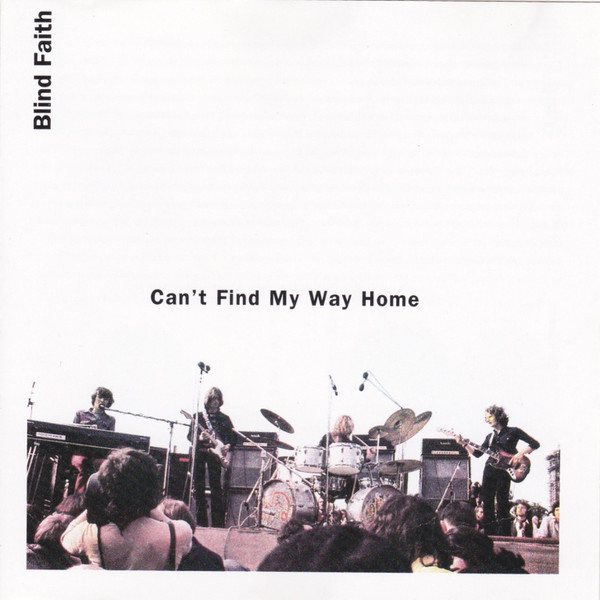
50 years ago: Blind Faith “Can’t Find My Way Home” released on debut album

Can’t Find My Way Home

Blind Faith

Writer(s): Steve Winwood (see lyrics here)


Released: August 9, 1969 (album cut)


First Charted: --


Peak: 4 CL, 1 DF (Click for codes to singles charts.)


Sales (in millions): -- US, -- UK, -- world (includes US + UK)


Airplay/Streaming (in millions): -- radio, 30.76 video, 49.31 streaming

Awards:

Click on award for more details.

About the Song:

In 1969, Eric Clapton had already established himself as one of the world’s premiere guitarists via his work with John Mayall, the Yardbirds, and Cream. Steve Winwood had developed similar credentials with stints in the Spencer Davis Group and Traffic. When they united forces as Blind Faith – along with drummer Ginger Baker of Cream and bassist Ric Grech of Family – it made for “an unprecedented and arguably unmatched collection of talent and rock stardom.” UCR

The collective made for one of rock history’s greatest supergroups, but they only recorded one album and ventured out for a one summer tour before splitting. Nonetheless, the album topped the UK and American charts and “the strength of its songs and performances have made it a lasting favorite for rock fans.” UCR

Like British contemporaries such as Led Zeppelin, Van Morrison, and the Rolling Stones, Blind Faith “seemed to discover a similarity between American blues and soul music and the folk traditions of their own United Kingdom.” AMG While Clapton, Winwood, and Baker all contributed to Blind Faith, the “striking, dreamy piece” AMG “Can’t Find My Way Home” “stands out as the definitive statement.” UCR

Winwood, “in a dreamy falsetto, sings a lyric that on first glance seems to be a simple love song, but in actuality might be intended to reflect a spiritual journey of some kind.” AMG He was also “blessed with amazingly soulful vocal abilities and an innate sense of American roots music.” AMG The song showcases his “sweet vocal floating atop the intricate acoustic guitar work,” UCR an uncommon role for Clapton, SF “while bassist Grech and drummer Baker provide subtle but effective rhythms to drive it along. Jimmy Miller’s warm and inviting production helps make the song all the more essential.” UCR


Resources:


Related Links:


First posted 7/16/2022; last updated 7/22/2022.

Sunday, July 21, 2019

50 years ago: Blind Faith released its only album

Blind Faith

Blind Faith


Released: July 21, 1969


Charted: August 16, 1969


Peak: 12 US, 12 UK, 14 CN, 2 AU


Sales (in millions): 1.0 US, 0.1 UK, 8.0 world (includes US and UK)


Genre: classic rock


Tracks:

Song Title (Writers) [time] (date of single release, chart peaks)

  1. Had to Cry Today (Winwood) [8:48]
  2. Can’t Find My Way Home (Winwood) [3:16]
  3. Well All Right (Alison/Holly/
    Mauldin/Petty)
    [4:27]
  4. Presence of the Lord (Clapton) [4:50]
  5. Sea of Joy (Winwood) [5:22]
  6. Do What You Like (Baker) [15:18]


Total Running Time: 42:01


The Players:

  • Steve Winwood (vocals, keyboards, etc.)
  • Eric Clapton (guitar, vocals)
  • Ric Grech (bass, etc.)
  • Ginger Baker (drums, percussion)

Rating:

3.971 out of 5.00 (average of 24 ratings)


Awards: (Click on award to learn more).

About the Album:

“When you look back over time at the various rock ‘supergroups,’ the one that really started it all was Blind Faith.” NO Eric Clapton, along with bassist Jack Bruce and drummer Ginger Baker were part of Cream, a “massively popular blues-rock power trio.” TM The latter two “were frequently arguing, and there was considerable tension about their future musical direction.” AZ

Clapton “jumped right back into another overhyped supergroup.” JR-25 He “wanted space to be a little adventurous” AZ and “sought out [Steve] Winwood for some informal jamming in early spring 1969.” TM The pair had “worked together briefly in the short-lived Powerhouse project” SW and Winwood had, while still a teen, “demonstrated deep appreciation of soul and R&B on several hits with the Spencer Davis Group” TM before fronting his own group, Traffic.

After Baker turned up uninvited TM and Family’s Rick Grech (who later worked with Winwood in the reformed Traffic) was added on bass, “rock’s first supergroup was in place.” TM “Concert promoters rushed to book the band before any material had been completed, hence the band’s eventual name, Blind Faith.” SH With so little repertoire, the group relied in part on Cream songs in concert and while crowds went wild, it was exactly what Clapton wanted to avoid.

“Refined through jamming, Blind Faith’s music was less dense and more transparent than that of Cream” TM by merging that group’s “heavy riffing and outsized song lengths” AMG with Traffic’s “soulful blues.” AMG Vocally, Winwood “sings like he’s got one last chance to redeem himself.” TM “Surrounded by Eric Clapton’s questioning lead guitar, the herculean drumming of Ginger Baker, and oceans of reverb, his voice became almost celestial.” TM “His performance on Sea of Joy, one of several originals he wrote for Blind Faith, is a marvel of optimism – at once perfectly formed and utterly spontaneous. His ecstatic vocals connect the rhythm section’s galloping roar to moments of placid, lakeside-at-sunset calm.” TM

Highlights include “the virtuoso electric blues of Had to Cry Today, the acoustic-textured Can't Find My Way Home, the soaring Presence of the Lord (Eric Clapton’s one contribution here as a songwriter, and the first great song he ever authored) and Sea of Joy.” AMG

“Not all of it works.” AMG “The band doesn’t do much with the Buddy Holly song Well All Right; and Ginger Baker’s Do What You Like was a little weak to take up 15 minutes of space on an LP that might have been better used for a shorter drum solo and more songs. Unfortunately, the group was never that together as a band and evidently had just the 42 minutes of new music here ready to tour behind.” AMG

Aside from the music, there was “the controversial original cover with the 12-year-old girl and her airplane.” NO A later version “featured a black and white photo of the group taken at Clapton’s home in Surrey.” NO

The group’s “self-titled debut, released in the summer of 1969, was a hit, but the extreme pressure on the group” SH and “Clapton’s greater interest in Blind Faith’s opening act Delaney & Bonnie & Friends” WK “led to their breakup even before the end of the year.” SH “Despite the crash-and-burn history of the band itself,” AMG “Blind Faith’s first and last album…remains one of the jewels” AMG in its individual member’s catalogs and “one of the true landmark albums of the rock era.” NO Clapton said of the album, “I think it’s a lovely record…It’s like it’s looseness. It’s like a supersession record.” JR-25


Notes: The 2000 Deluxe Edition adds “Sleeping in the Ground,” an electric version of “Can’t Find My Way Home,” an “Acoustic Jam,” and “Time Winds” to the original disc. A second disc of material includes four lengthy jams and another version of “Sleeping in the Ground.” It “is loaded with extra material. There are new expanded liner notes, rare session photos, and the cover art from both versions of the album.” NO

Resources and Related Links:


Other Related DMDB Pages:


First posted 7/21/2012; last updated 11/9/2021.

Saturday, January 6, 2018

50 years ago: Cream “Sunshine of Your Love” charted

Sunshine of Your Love

Cream

Writer(s): Peter Brown, Jack Bruce, Eric Clapton (see lyrics here)


Released: December 1967


First Charted: January 6, 1968


Peak: 5 US, 6 CB, 4 HR, 1 CL, 25 UK, 3 CN, 18 AU, 1 DF (Click for codes to singles charts.)


Sales (in millions): 1.0 US


Airplay/Streaming (in millions): -- radio, 33.0 video, 300.94 streaming

Awards:

Click on award for more details.

About the Song:

In 1966, Eric Clapton had established himself as the premiere blues guitarist in Britain, thanks to stints in the Yardbirds and John Mayall’s Bluesbreakers. Feeling confined by the latter group, he and fellow Bluesbreaker Jack Bruce formed a power trio with drummer Ginger Baker, who’d worked with Bruce in the Graham Bond Organisation. The resulting supergroup, Cream, only lasted two years but had a lasting impact on rock music.

“No song illustrates this better than “Sunshine of Your Love,” which mixed hard rock with aspects of psychedelia to wonderful effect. The song centers around what is perhaps one of the most simplistic guitar riffs of all time, courtesy of ‘Slowhand’ himself, Eric Clapton. In many ways though, restraint is what propels “Sunshine of Your Love” forward, although Clapton’s remarkable skill with the guitar are on prominent display throughout the solo section.” UCR

“Vocal duties are shared between Clapton and Jack Bruce, as the latter’s menacing bass gives the song it’s hefty low end. Drummer Ginger Baker cuts slightly loose during the song’s chorus, but otherwise keeps time as if he were in a military band.” UCR The lyrics were written by Peter Brown, a beat poet who was friends with Baker and Bruce. He also wrote the words for Cream’s songs “I Feel Free” and “White Room.” SF

Bruce based the song a distinctive bass riff he developed after seeing Jimi Hendrix in concert on January 29, 1967, at the Saville Theatre in London. WK As Clapton said, “it was strictly a dedication to Jimi.” WK After Cream released “Sunshine of Your Love,” “the guitar legend began adding the song to his concert setlists,” UCR Unaware that he’d inspired the song. SF

According to Bruce, Booker T. Jones and Otis Redding heard the song before its release and both said it would be a smash. SF Atlantic Record’s Ahmet Ertegun initially dismissed it as “psychedelic hogwash,” SFSF


Resources:


Related Links:


First posted 8/1/2022.

Thursday, November 2, 2017

Today in Music (1967): Cream Disraeli Gears released

Disraeli Gears

Cream


Released: November 2, 1967


Peak: 4 US, 5 UK, 10 CN, 12 AU


Sales (in millions): 1.0 US, 0.1 UK


Genre: classic rock


Tracks:

Song Title (Writers) [time] (date of single release, chart peaks) Click for codes to charts.

  1. Strange Brew (Clapton/Collins/Pappalardi) [2:50] (6/18/67, 5 CL, 17 UK, 23 AU, 4 DF)
  2. Sunshine of Your Love (Brown/Bruce/Clapton) [4:13] (1/13/68, 5 BB, 6 CB, 2 GR, 4 HR, 1 CL, 25 UK, 3 CN, 18 AU, 1 DF)
  3. World of Pain (Collins/Pappalardi) [3:05]
  4. Dance the Night Away (Brown/Bruce) [3:36]
  5. Blue Condition (Baker) [3:32]
  6. Tales of Brave Ulysses (Clapton/Sharp) [2:49] (6/67, 10 CL, 23 AU, 13 DF)
  7. Swlabr (Brown/Bruce) [2:34] (12/67, 3 CN, 14 DF)
  8. We’re Going Wrong (Bruce) [3:29]
  9. Outside Woman Blues (Reynolds) [2:27]
  10. Take It Back (Brown/Bruce) [3:08]
  11. Mother’s Lament (traditional) [1:47]


Total Running Time: 33:02


The Players:

  • Eric Clapton (guitar, vocals)
  • Jack Bruce (bass, vocals)
  • Ginger Baker (drums)

Rating:

4.211 out of 5.00 (average of 29 ratings)


Awards:

(Click on award to learn more).

About the Album:

“The threesome of Jack Bruce, Ginger Baker, and legendary guitarist Eric Clapton forming the band Cream was a monumental effort of jazz, blues, and psychedelic rock during the British rock period of the late 1960s. Cream, with their raw fury of intense sound, was renowned for their rare talent of taking songs of complex arrangements and making them an act of spontaneous beauty during live shows.” AMG

Disraeli Gears, their second release, was an essential landmark recording that brought listeners to the direction they were soon to take with Wheels of Fire. Taking on a circus-spinning arsenal of sounds and effects, Cream's fashionable art is a blend of highly sustained drenched distortion, rampant percussion, and a kaleidoscope of various musical textures and colors, both in melody and rhythm.” AMG

“Each of Disraeli Gears’ list of 11 tunes is original in format, containing it own unique brands of dashing blues-laden guitar riffs by Clapton, as well as thick basslines and smashing drum leads.” AMG The album saw “the group veering away, quite heavily, from their blues roots and induldging in more psychedelic sounds.” WK

“Highlights of the record feature Clapton's awe-inspiring and soul-gripping guitar leads, including hits such as Sunshine of Your Love and Tales of Brave Ulysses.” AMG The former features co-lead vocals from Bruce and Clapton while “the latter is a magical poem laced into a line of mesmerizing chordal changes. Disraeli Gears is a definitive staple of early British rock and a sensational addition to the avid classic rock listener.” AMG

Strange Brew “was based on a 12-bar blues song called ‘Lawdy Mama.’” WK “Take It Back,” which featured Bruce on harmonica, “may have been inspired by the contemporary media images of American students burning their draft cards.” WK Those two songs and Clapton’s arrangement of Outside Woman Blues are “the most blues-like tunes on the album.” WK

Amusingly, the album’s title came about when Mick Turner, one of the band’s roadies, was talking to Clapton about getting a racing bike with “disraeli” gears. What he meant was “derailleur” gears. Benjamin Disraeli was the name of a 19th century British Prime Minister. WK

The classic album cover is a psychedelic collage designed by Australian artist Martin Sharp. His goal was to capture what he called the “warm fluorescent sound” of the band’s music. WK The same cover was used for the 1997 Cream box set Those Were the Days.


Notes:

Cream’s official output during their short existence consisted of two studio albums and two albums of both studio and live material. The Cream box set Those Were the Days is an excellent way to get all of that material, with all the studio material on 2 discs and the live material on 2 more. The live discs also encompass the two Live Cream collections released soon after the band dissolved in 1970 and 1972.

Resources and Related Links:


Other Related DMDB Pages:


First posted 4/7/2008; last updated 11/16/2023.