Showing posts with label Billy Preston. Show all posts

Friday, May 24, 2019

Today in Music (1969): The Beatles hit #1 with “Get Back”

Get Back

The Beatles with Billy Preston

Writer(s): John Lennon, Paul McCartney (see lyrics here)


Released: April 11, 1969


First Charted: April 23, 1969


Peak: 15 US, 15 CB, 11 GR, 14 HR, 1 CL, 16 UK, 16 CB, 14 AU, 1 DF (Click for codes to charts.)


Sales (in millions): 2.0 US, -- UK, 5.0 world (includes US + UK)


Airplay/Streaming (in millions): 2.0 radio, 12.5 video, -- streaming

Awards:

Click on award for more details.

About the Song:

In 1968, the Fab Four “often resented each other’s company and there were few days when all four musicians worked happily together.” KL Despite being one of their most acclaimed works, their 1968 self-titled album (generally known as The White Album) showcased a band not so much for their united efforts, but for their individual talents.

To try to prevent imploding as a band, they made a conscious effort to “get back to Chuck Berry riffs for some barnstorming rock ‘n’ roll.” KL Paul McCartney wrote “Get Back” with the line “get back to where you once belonged” intended as “a message to himself and the other Beatles.” KL John Lennon suggested recording the next album live in the studio absent overdubbing and technical wizardry. FB Paul proposed they film the recording, which was slated a two-part TV documentary that got abandoned. FB

George Harrison walked out of the sessions on January 10, but was rejuvenated after seeing an old friend, organist Billy Preston, performing with Ray Charles. The Beatles knew Preston from their early days in 1962 when he backed Little Richard. They invited him to spend the next two weeks with them, FB which included contributing the spontaneous organ solo for “Get Back.” SF He and Tony Sheridan, whom the Beatles backed on some early recordings, are the only people to be billed on records alongside the Beatles. Preston said, “I didn’t even know until the record was out that they had put my name on it. It was something that I could have never asked for or no manager could negotiate, just something they felt for me.” FB

The Beatles famously performed the song on January 30, 1969, for their “rooftop” concert in which they their instruments to the top of the roof of the Apple studio to play what ended up being their last live performance. KL


Resources:

  • DMDB encyclopedia entry for The Beatles
  • FB Fred Bronson (2003). The Billboard Book of Number One Hits (5th edition). Billboard Books: New York, NY. Page 254.
  • KL Jon Kutner and Spencer Leigh (2005). 1000 UK Number One Hits: The Stories Behind Every Number One Single Since 1952. London, Great Britain: Omnibus Press. Page 150.
  • SF Songfacts


Related Links:


First posted 3/17/2021; last updated 9/19/2023.

Saturday, August 5, 1978

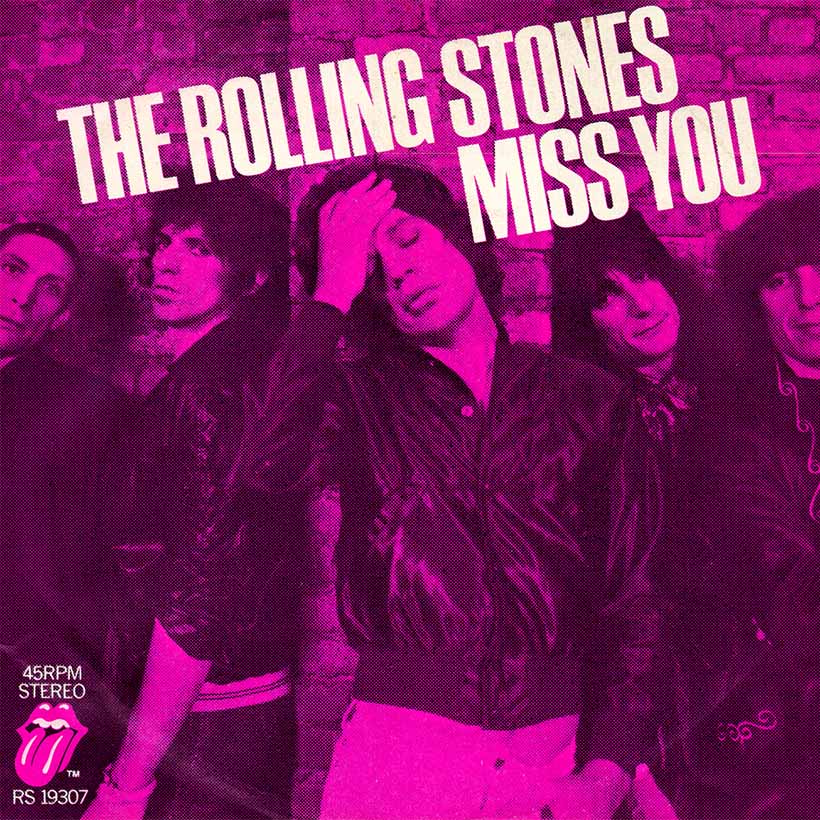
The Rolling Stones hit #1 with “Miss You”

Miss You

The Rolling Stones

Writer(s): Mick Jagger, Keith Richards (see lyrics here)


Released: May 10, 1978


First Charted: May 27, 1978


Peak: 11 US, 1 2 CB, 11 GR, 3 HR, 1 1 RR, 33 RB, 1 CL, 3 UK, 1 2 CN, 8 AU, 9 DF (Click for codes to charts.)


Sales (in millions): 1.0 US, 0.25 UK, 1.25 world (includes US + UK)


Airplay/Streaming (in millions): -- radio, 127.2 video, 180.48 streaming

Awards:

Click on award for more details.

About the Song:

In the 1970s, there were “people like Bruce Springsteen, Bob Seger, and the Who were doing just fine without every playing around with disco.” SG However, “a few rockers had messed around with disco, trying to figure it out.” SG The Rolling Stones were one such band. After “three less-than-stellar albums,” TC “they’d been written off by a fickle rock press as lumbering dinosaurs.” FB “With ‘Miss You’ the Rolling Stones proved they were far from extinct.” FB

It “blended the band’s essential rock with its newfound sound.” FB It “is, more or less, a disco song. It’s just a very Rolling Stones version of a disco song.” SG It showcases “a great band understanding how to play around with a cool new sound without sacrificing any of what made them great in the first place.” SG They “played disco as an insistent, bluesy slither.” SG

The Stones “had remained in a perpetual state of chaos” SG since their last chart topper, 1973’s “Angie.” They’d only hit the top 10 on the Billboard Hot 100 charts once since (1976’s “Fool to Cry”). Mick Taylor left and was replaced by Ronnie Wood and Keith Richards was looking at what could have been a years-long drug-related prison sentence SG that luckily ended in probation.

Mick Jagger and Charlie Watts hit the discos. Jagger in particular spent a lot of time hanging out at New York’s Studio 54 with model Jerri Hall. While “Miss You” is credited to Jagger and Richards, it was mostly Jagger who came up with the “depraved-ooze club groove.” SG He was jamming with keyboardist Billy Preston, who came up with the bass line, which Bill Wyman polished into a “walking octave bass part” TB after visits to quite a few clubs. WK Vocally, Jagger “gargles and pants and howls and grunts and launches into falsetto yips.” SG Lyrically he was inspired by the deterioration of his relationship with his wife, Bianca. SF


Resources:


Related Links:


First posted 10/26/2021; last updated 9/19/2023.

Saturday, October 11, 1975

Saturday Night Live premiered: October 11, 1975

Originally posted October 11, 2011.


In 1975, a late night show called NBC’s Saturday Night began its run on television. That show became better known as Saturday Night Live and is still airing 700+ episodes and 37 seasons later. The show has snagged 21 Emmys, a Peabody, and three Writers Guild of America awards. It also been inducted into the National Association of Broadcasters Hall of Fame and ranked by TV Guide as one of the top 50 shows of all time.

The show was built around sketch comedy featuring the show’s regular cast of “Not Ready for Prime Time Players” alongside weekly guest hosts. Some of the most popular sketches went on to become full-length feature movies such as The Blues Brothers and Wayne’s World. However, the show also became well known for its live musical guests.

Among the most frequent musical guests are Beck, Eminem, Foo Fighters, Dave Matthews, Randy Newman, Tom Petty, Paul Simon, and James Taylor, all of whom have appeared at least five times. Dave Grohl has appeared more than any other musical guest – ten in all. In addition to his six appearances with the Foo Fighers, he’s also appeared with Nirvana twice, Them Crooked Vultures once, and with Tomy Petty & the Heartbreakers once.

The shows first episode featured Billy Preston and Janis Ian as musical guests. The first season also featured Abba, Jimmy Cliff, Art Garfunkel, Al Jarreau, Anne Murray, Randy Newman, Martha Reeves, Leon Russell, Neil Sedaka, Carly Simon, Paul Simon, Patti Smith, and Bill Withers.


Among the more infamous musical moments on the show are appearances by guests who were banned for their antics. Perhaps the most infamous was Sinead O’Connor’s a cappela performance of Bob Marley’s “War” after which she tore up a picture of the Pope and asked the audience to fight the real enemy.

Early on in SNL’s history, Elvis Costello was banned after playing “Radio Radio” when he was supposed to play “Less Than Zero” on December 17, 1977. However, all was forgiven when he appeared on the 25th anniversary mocking his original appearance. He interrupted the Beastie Boys just as they were starting to play “Sabotage” and then they joined him for “Radio Radio”.


Resources and Related Links:


Saturday, December 26, 1970

George Harrison hit #1 with “My Sweet Lord”

My Sweet Lord

George Harrison

Writer(s): George Harrison (see lyrics here)


First Charted: November 28, 1970


Peak: 14 US, 14 CB, 12 GR, 13 HR, 10 AC, 1 CL, 16 UK, 14 CN, 18 AU, 1 DF (Click for codes to charts.)


Sales (in millions): 1.0 US, 0.94 UK, 10.0 world (includes US + UK)


Airplay/Streaming (in millions): 3.0 radio, 124.1 video, 481.50 streaming

Awards:

Click on award for more details.

About the Song:

While George Harrison’s songwriting talents were overshadowed during his stint with the Beatles by bandmates John Lennon and Paul McCartney, TB he was the first to have a hit as an ex-Beatle. RS500 That song, “My Sweet Lord,” was nearly given away – and it was later claimed to have never belonged to Harrison in the first place.

Harrison originally gave the song to Billy Preston, who was due to release a single of the song in September 1970. When it was withdrawn, Harrison released his own version. FB Harrison had wanted to write an uplifting song and turned to the Edwin Hawkins Singers’ “Oh Happy Day” for inspiration. Wary of committing to a specific religious belief, HL Harrison came up with what he called “a simple idea of how to do a Western pop equivalent of a mantra, which repeats holy names over and over again.’” HL

The result was a “hook…as catchy as anything he ever came up with in The Beatles.” BBC However, publishers of the 1963 Chiffons’ hit “He’s So Fine” felt like the hook wasn’t Harrison’s to use and sued him for copyright infringement. BBC A March 6, 1971 article in Billboard magazine confirmed that Harrison’s royalties had been halted worldwide until the case was settled. FB

It wasn’t until 1976 BBC that a judge ruled that George was innocent of stealing KL but was guilty of “unconscious plagiarism.” BBC Bright Tunes music got more than a half million dollars from the settlement. SF George has responded saying, “I still don’t understand how the courts aren’t filled with similar cases…as 99 per cent of popular music is reminiscent of something or other.” HL


Resources:


Related Links:


Last updated 12/24/2023.