Friday, April 24, 1981

Neil Diamond “America” charted

America

Neil Diamond

Writer(s): Neil Diamond (see lyrics here)


First Charted: April 24, 1981


Peak: 8 US, 10 CB, 9 HR, 5 RR, 13 AC, 45 CN, 1 DF (Click for codes to singles charts.)


Sales (in millions): 0.63 US


Airplay/Streaming (in millions): -- radio, 29.1 video, -- streaming

Awards:

Click on award for more details.

About the Song:

Neil Diamond starred in The Jazz Singer in 1980. The dramatic film was one of several adaptations of the 1925 play of the same name by Samson Raphaelson. The 1927 film is hailed as the onset of the sound-era of film. The story is about a young, fifth-generation Jewis cantor (Diamond) who defies the traditionalism of his father (Laurence Olivier) to pursue his dream of being a pop singer.

While the movie generally received negative reviews – even earning Diamond a Golden Raspberry Award for Worst Actor – the movie made a modest profit and the soundtrack was huge. It became Diamond’s biggest selling album in the United States with more than 5 million in sales. It was fueled by three top-10 hits on the Billboard Hot 100 – “Love on the Rocks,” “Hello Again,” and “America.”

“America” was the third single and, unlike the previous two ballads, was a “bombastic melting-pot jam.” AMG It is “a tribute to immigration in America, where people from all over the world were welcome to come and seek opportunity.” SF Diamond’s grandparents were immigrants from Russia and Poland and Diamond grew up in Brooklyn, where many European immigrants arrived.

The song became a very popular number for Diamond in concert both home and abroad thanks to his “typically powerful melody, dynamic arrangements, and bombastic vocal.” WK On a personal note, the song was on my first personal chart. As a response to a local radio station’s countdown of the best songs of all time, I compiled my own list. I intended to make it a one-time list of favorites, but it turned into a weekly personal chart which I maintained for a little more than a decade.


Resources:


Related Links:


First posted 9/7/2022.

Saturday, April 4, 1981

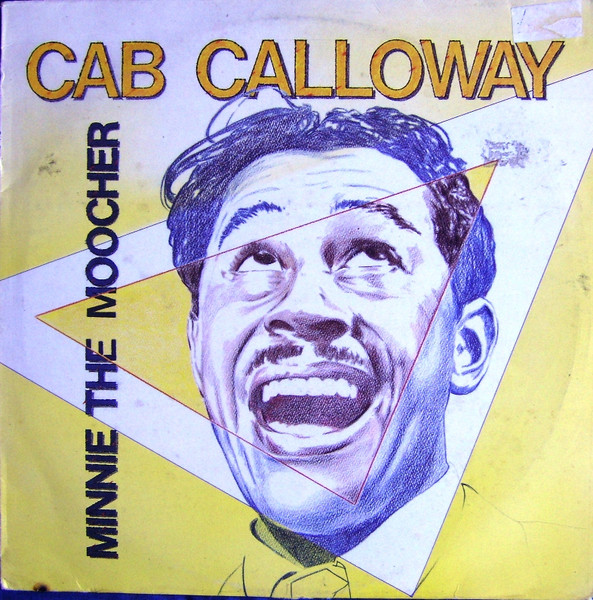
50 years ago: Cab Calloway “Minnie the Moocher” hit #1

Minnie the Moocher

Cab Calloway

Writer(s): Cab Calloway, Irving Mills (see lyrics here)


Recorded: March 3, 1931


First Charted: March 21, 1931


Peak: 11 PM, 18 GA (Click for codes to charts.)


Sales (in millions): --


Airplay/Streaming (in millions): -- radio, 30.66 video, 10.70 streaming

Awards:

Click on award for more details.

About the Song:

Cabell (Cab) Calloway III was born in 1907 in Rochester, New York. He became well known for his scat singing at the famous Cotton Club in Harlem in the 1930s. He was “one of the most exciting live performers and personalities in jazz history.” SS His name evokes “an indelible image of a rakishly handsome, zoot-suited black bandleader charistmatically belting out ‘hi-de-hi-de-hi-de-hi’ and other high-spirited scat-sung nonsense.” SS

He had 43 chart hits from 1930 to 1945. “Minnie the Moocher,” his second entry, was his only chart-topper PM and became his signature song. It was notable for its “call-and-response scatting chorus.” GN “Its ‘hi-de-ho’ singing became his trademark;” TY2 the scatting came about when Calloway forgot the lyrics during a live radio concert. WK Calloway and a big band memorably performed the song in the 1980 movie The Blues Brothers.

The song is lyrically based on “Willy the Weeper,” a traditional folk song about a drug addict recorded in 1927 by Frankie “Half-Pint” Jaxon and later associated with Louis Armstrong. SS “Minnie the Moocher” includes drug references such as describing the character “Smokey” as “cokey,” meaning a cocaine user, and using the phrase “kick the gong around,” slang for smoking opium. WK Overall, the lyrics are “almost completely nonsensical, but Calloway’s…energetic performance and the catchy rhythmic tune were enough to make it a huge hit.” TY2

Minnie was an actual person – a beggar named Minnie Gayton. When she died at the age of 82, an obituary in the November 1951 issue of Jet magazine described her as a “familiar figure in downtown Indianapolis” GN who got her nickname by “regularly begging food from grocers and carting it off in a baby buggy. She slept on doorways, on porches and in garages. During the record-breaking blizzard, her body was found on a porch, blanketed with snow. She died from exposure, ironically in a warm hospital bed.” GN


Resources:


First posted 8/6/2023.

Styx hit #1 with Paradise Theater

Paradise Theater

Styx


Released: January 19, 1981


Peak: 13 US, 8 UK, 12 CN, 112 Click for codes to charts.


Sales (in millions): 3.0 US, -- UK, 4.0 world (includes US and UK)


Genre: classic arena rock


Tracks:

Click on a song titled for more details.
  1. A.D. 1928 [1:07]
  2. Rockin’ the Paradise [3:35]
  3. Too Much Time on My Hands [4:31]
  4. Nothing Ever Goes as Planned [4:46]
  5. The Best of Times [4:17]
  6. Lonely People [5:22]
  7. She Cares [4:18]
  8. Snowblind [4:48]
  9. Half-Penny, Two-Penny [4:34]
  10. A.D. 1958 [2:31]
  11. State Street Sadie [:27]

Total Running Time: 41:02


The Players:

  • Dennis DeYoung (vocals, keyboards)
  • Tommy Shaw (vocals, guitar)
  • James “JY” Young (vocals, guitar)
  • Chuck Panozzo (bass)
  • John Panozzo (drums/percussion)

Rating:

4.071 out of 5.00 (average of 28 ratings)


Quotable:

”Styx’s greatest commercial triumph…and…one of the best examples of the convergence between progressive rock and AOR” – Ed Rivadavia, AllMusic.com

Awards:

(Click on award to learn more).

About the Album

“There are certain genres that it's tres stylish to bash unceasingly…One…is the late-seventies/early-eighties genre of arena rock, where musical alchemy mixed progressive rock with monster arena concerts. Journey, REO Speedwagon, Cheap Trick, Kansas -- lotta bands paid the rent with this stuff, and yes, some of it's drivel. But you know what? Some of it’s pretty tasty. Paradise Theater falls in the latter category.” DE

“After successfully establishing themselves as one of America's best commercial progressive rock bands of the late '70s with albums like The Grand Illusion and Pieces of Eight,” AM Styx turned out the “uneven Cornerstone album,” AM which, despite its “mediocrity…propel[ed] the band to their highest point, so far, of commercial success, so there were a lot of eyes looking at the follow-up.” OU

With Cornerstone, ”Styx had taken a dubious step towards pop overkill with singer Dennis DeYoung’s ultra-schmaltzy ballad ‘Babe.’…The number one single would sew the seeds of disaster for the group by pitching DeYoung’s increasingly mainstream ambitions against” AM “the more hard-hitting approach of” CD “Tommy Shaw and James ‘JY’ Young.” AM

However, “Paradise Theater seemed to represent the best of both worlds” AM “as the rift…hadn’t yet wreaked havoc.” CD Paradise Theater “seemed to satisfy both of the band's camps with its return to complex hard rock” AM favored by “purists Shaw and JY,” AM “while sparing no amount of [the] pomp and grandeur” AM favored by DeYoung. The album also “contains some of the best songs Styx would ever write.” DE

The album’s “loose concept about the roaring ‘20s heyday” AM “focused on something concrete” PH – “the condemnation and destruction of the Paradise Theater, a famous showplace in the band’s hometown of Chicago” AZ “is used as an allegory for America’s decline in the late seventies.” DE

Paradise Theater would become Styx's greatest commercial triumph; and [is] one of the best examples of the convergence between progressive rock and AOR which typified the sound of the era's top groups (Journey, Kansas, etc.)…Paradise Theater was truly the best of times.” AM “Styx was never this good before; Styx would never be this good again…Paradise Theater was Styx's high-water mark, and one of the greatest albums in rock history.” DE

The Songs

Here’s a breakdown of each of the individual songs.

A.D. 1928

Styx

Writer(s): Dennis DeYoung


Released: Paradise Theater (1981)


Peak: 17 DF Click for codes to charts.


Sales (in millions): --


Airplay/Streaming (in millions): -- radio, -- video, 2.21 streaming


About the Song:

Starting out with the same melody as ‘The Best of Times,’” PH opening cut A.D. 1928 is “subdued yet oddly humorous.” PH “The lyrics of this track begin with ‘Tonight’s the night we’ll make history / As sure as dogs can fly.’ In other words, it’s not likely.” PH The song “which features a lonely DeYoung on piano and vocals introducing the album’s recurring musical theme.” PH

Rockin’ the Paradise

Styx

Writer(s): Dennis DeYoung, Tommy Shaw, James Young


Released: November 1981 as a single, Paradise Theater (1981)


Charted: 3/21/1981 as an album cut


Peak: 20 CL, 8 AR, 3 DF Click for codes to charts.


Sales (in millions): --


Airplay/Streaming (in millions): -- radio, -- video, 5.60 streaming

Awards:

(Click on award to learn more).

About the Song:

This launches into Rockin’ the Paradise, “which blasts this disc into full force.” OU It is “one of the group’s most effective rockers and most substantial group efforts.” CD as it offers “the listener…what Styx has always been known for – driving rock and roll.” PH It is also “one of the few songs written by all three of the band’s composers.” CD

Too Much Time on My Hands

Styx

Writer(s): Tommy Shaw (see lyrics here)


Released: 3/21/1981 as a single, Paradise Theater (1981)


Peak: 9 BB, 8 CB, 6 GR, 7 HR, 4 CL, 2 AR, 4 CN, 68 AU, 1 DF Click for codes to charts.


Sales (in millions): --


Airplay/Streaming (in millions): -- radio, 16.90 video, 57.13 streaming

Awards:

(Click on award to learn more).

About the Song:

From 1974 to 1990, Styx landed in the top-10 eight times. Seven of those were written and sung by Dennis DeYoung. However, this was a band with multiple songwriters and singers. Guitarist Tommy Shaw leaned toward more rock-edged fare, reaching the top-40 with “Fooling Yourself,” “Blue Collar Man,” and “Renegade.” He “brings his pop sensibilities to the fore on the ridiculously catchy (and hugely successful) Too Much Time on My Hands, whose synth bass hook became part of the pop pantheon” CD and “figures among Shaw’s finest singles ever” AM and his sole top-10 hit with Styx.

The song was “a straight-ahead chug-a-lugger with a heightened chorus and crisp keyboards.” AMG It was the second single from Paradise Theater, the band’s only #1 album. Overall, the album “followed the theme of a concert hall rising to prominence and then crumbling, based on a real venue: the Paradise Theatre in Chicago.” SF This song, however, does not fit the theme.

Shaw was inspired by Mark’s Tavern in Niles, Michigan, where he was living at the time. As he said, “It was the local watering hole. The drinks were good, and the drinks were cheap. You could go in there with 20 bucks and be a hero, you know - buying rounds of drinks. And you'd always run into somebody you knew in there. That was the basis of the song.” SF

The video combined scenes from a bar with the band engaged in “goofy antics” SF mixed with footage of the band performing the song. The video got a lot of airplay when MTV went on the air in August 1981 as it was one of the few videos by an American band. SF In 2016, Jimmy Fallon did a shot-by-shot renactment of the video with guest Paul Rudd and others.

Nothing Ever Goes As Planned

Styx

Writer(s): Dennis DeYoung


Released: 7/11/1981 as a single, Paradise Theater (1981)


Peak: 54 BB, 54 CB, 62 HR, 31 CL, 33 CN, 8 DF Click for codes to charts.


Sales (in millions): --


Airplay/Streaming (in millions): -- radio, -- video, 1.87 streaming


About the Song:

DeYoung, stuck close to the overall storyline” AM with numbers like ‘The Best of Times’ and Nothing Ever Goes as Planned The latter, along with Lonely People, feature “great horn part[s] provided by the Hangalator Horn Section.” DE

The Best of Times

Styx

Writer(s): Dennis DeYoung (see lyrics here)


Released: 1/24/1981 as a single, Paradise Theater (1981)


Peak: 3 BB, 5 CB, 13 GR, 6 HR, 13 RR, 26 AC, 1 CL, 16 AR, 42 UK, 11 CN, 23 AU, 1 DF Click for codes to charts.


Sales (in millions): --


Airplay/Streaming (in millions): -- radio, 1.40 video, 34.98 streaming

Awards:

(Click on award to learn more).

About the Song:

“The Best of Times” is a fitting description of Styx’s success in the late ‘70s and early ‘80s. They were one of, if not the most, popular bands in America. In 1979, they reached their greatest peaks yet with the #2 album Cornerstone and its #1 single, “Babe.” Following that would be no easy task, but Styx responded with Paradise Theatre, their only number #1 album and their fourth in a row to go top ten and achieve multi-platinum status.

“DeYoung proves his mettle as a balladeer once again” CD on lead single The Best of Times. It gave Styx their fourth top-ten hit on the Billboard Hot 100. It also gave them their second chart-topper in Canada. Overall, Styx had eight top-ten hits in their career, seven of which were written by Dennis DeYoung, keyboardist and one of the band’s founders.

The song served as the centerpiece for Paradise Theatre, a concept album which used a fictional account of the opening and closing of Chicago’s Paradise Theatre as a metaphor for changing times in America. Dennis DeYoung envisioned the idea and embraces it most with “The Best of Times,” whose basic melody and theme is also used in the album’s opening and closing numbers, “A.D. 1928” and “A.D. 1958.”

The song “is more about the theatre than a relationship, as one would think on first listen.” PH However, some would say that “it suffers from trying to be two things and not really succeeding at either.” PH It “relies on cliches like ‘I feel so helpless like a boat against the tide’ until the sappy meter goes off the chart with ‘I know if the world turned upside down / You’d always be around.’” PH Still, “with its deliberate, marching rhythm, …somehow it just works.” AM

DeYoung said he paraphrased Charles Dickens’ famous line “It was the best of times; it was the worst of times.” He said his intent in the song was “when the world goes mad, how do you cope? And in this instance, it’s the love between two people, that they make their own paradise with their companionship, their love for each other, and their own home.” SU

Lonely People

Styx

Writer(s): Dennis DeYoung


Released: Paradise Theater (1981)


Peak: 9 DF Click for codes to charts.


Sales (in millions): --


Airplay/Streaming (in millions): -- radio, -- video, 0.90 streaming


About the Song:

“Nothing Ever Goes As Planned” and “Lonely People” feature “great horn part[s] provided by the Hangalator Horn Section.” DE

She Cares

Styx

Writer(s): Tommy Shaw


Released: Paradise Theater (1981)


Peak: 10 DF Click for codes to charts.


Sales (in millions): --


Airplay/Streaming (in millions): -- radio, -- video, 0.86 streaming


About the Song:

Shaw tried “to resist thematic restrictions” AM on songs like ‘Hands’ and She Cares, but the results “are still delightful.” DE

Snowblind

Styx

Writer(s): Dennis DeYoung, James Young


Released: November 1981 as the B-side of “Rockin’ the Paradise,” Paradise Theater (1981)


First Charted: 3/21/1981 as an album cut


Peak: 17 CL, 22 AR, 4 DF Click for codes to charts.


Sales (in millions): --


Airplay/Streaming (in millions): -- radio, -- video, 3.82 streaming


About the Song:

“JY, the band’s third songwriter (and resident peacekeeper) is only slightly more cooperative with the Paradise Theater concept. His edgier compositions include the desolate tale of drug addiction” AM on “the Young/Shaw-sung Snowblind [which] finds the boys getting downright bluesy” CD JY’s efforts “snarl and tear at your emotions,” DE finding the band “dipping into a Led Zeppelin-ish haze…powered by a guitar solo that sets up the ripping conclusion.” PH

Half-Penny, Two-Penny

Styx

Writer(s): James Young/Brandle


Released: Paradise Theater (1981)


Peak: 12 DF Click for codes to charts.


Sales (in millions): --


Airplay/Streaming (in millions): -- radio, -- video, 1.34 streaming


About the Song:

JY also contributes “the rollicking opus Half-Penny, Two-Penny,” AM his “best since ‘Miss America’” OU from 1977’s The Grand Illusion. The song “infuses a graphic depiction of inner city decadence with a final, small glimmer of hope and redemption.” AM

A.D. 1958

Styx

Writer(s): Dennis DeYoung


Released: Paradise Theater (1981)


Peak: 22 DF Click for codes to charts.


Sales (in millions): --


Airplay/Streaming (in millions): -- radio, -- video, 0.75 streaming


About the Song:

“Half-Penny, Two-Penny” “leads straight into the album’s beautiful saxophone-led epilogue, A.D. 1958,” AM which “leaves the Paradise Theatre condemned.” PH The song “once again reveals MC DeYoung alone at his piano,” AM reprising the tune that opens the album and is the core of “The Best of Times.”

State Street Sadie

Styx

Writer(s): Dennis DeYoung


Released: Paradise Theater (1981)


Peak: 26 DF Click for codes to charts.


Sales (in millions): --


Airplay/Streaming (in millions): -- radio, -- video, -- streaming

Resources/References:


Related DMDB Pages:


First posted 3/24/2008; last updated 8/11/2025.