Showing posts with label top concept albums. Show all posts

Thursday, December 20, 2018

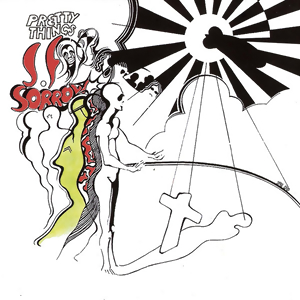
Today in Music (1968): The Pretty Things S.F. Sorrow released

S.F. Sorrow

The Pretty Things


Released: December 20, 1968


Peak: -- Click for codes to charts.


Sales (in millions): --


Genre: psychedelic rock


Tracks:

Song Title [time]

  1. S.F. Sorrow Is Born [3:12]
  2. Bracelets of Fingers [3:41]
  3. She Says Good Morning [3:23]
  4. Private Sorrow [3:51]
  5. Balloon Burning [3:51]
  6. Death [3:05]
  7. Baron Saturday [4:01]
  8. The Journey [2:46]
  9. I See You [3:56]
  10. Well of Destiny [1:46]
  11. Trust [2:49]
  12. Old Man Going [3:09]
  13. Loneliest Person [1:29]


Total Running Time: 40:59


The Players:

  • Phil May (vocals)
  • Dick Taylor (guitar, vocals)
  • Wally Waller (bass, guitar, vocals, wind instruments, piano)
  • Jon Povey (organ, sitar, Mellotron, percussion, vocals)
  • Skip Alan (drums)
  • Twink (drums, vocals)

Rating:

4.197 out of 5.00 (average of 16 ratings)


Awards:

(Click on award to learn more).

The Pretty Things

“The Pretty Things were among the original British Invasion bands, sporting a ragged, bluesy R&B sound far heavier than the Stones (with a bad boy reputation to match).” PK Like their counterparts – The Rolling Stones, The Kinks, The Who, and The Beatles – they were “inspired by the thriving psychedelic scene” RD and were soon “brushing aside their roots for a flower-power psychedelic sound.” PK

Unfortunately, the group never found anything close to the success of its peers, although “their early songs have their admirers – David Bowie covered a few of them on his 1973 Pin-Ups album.” PK However, it was with their album S.F. Sorrow that the band left their mark.” PK

The First Rock Opera

S.F. Sorrow was barely noticed when it first came out. It is “one of those albums that gets bandied about as a long lost classic that nobody actually owns or has even heard. Yet while it may not be quite the immortal classic some have talked it up as, it’s nonetheless one of the cooler artifacts of the UK psychedelic heyday.” PK For fans of this era, “this album is every bit as essential as the Zombies’ Odessey & Oracle, [The Small Faces’] Ogdens’ Nut Gone Flake, and the work of the Who and the Kinks.” PK

More importantly, “is now recognized as the first rock-opera;” TB that is, “the first full-length ‘concept album’” PK and the inspiration for Pete Townshend to write Tommy. PK It “was a daring project that provided the blueprint for all future rock operas.” RD Part of the problem, though, is that the album struggled to find an audience because the rock opera concept was so new that the record company, EMI, didn’t know how to market the album. It also got overshadowed by the release of Tommy just a few months later. PK

The Concept

The album “loosely tells the story of a lonely kid named [Sebastian F.] Sorrow,” PK following him “from birth to death, with love, work, war, and burning airship disasters in between.” TB It was based on a short story written by singer Phil May about World War II that featured “a central character who was an amalgam of May himself and his foster father, Charlie.” TB

Guitarist Dick Taylor, however, says that making a rock opera wasn’t the plan when they began recording. He said, “We’d recorded two tracks, ‘Bracelets of Fingers’ and ‘I See You’ before the concept came up.” TB

Experimentation

The album was focused on experimentation from the beginning. Taylor said, “I’d bought a bagpipe chanter in a junkshop, which turned out to be in the right key for the tooty bits in ‘Bracelets of Fingers.’” TB He said, “Our basic principle…was that if it made a noise we would bring it to the studio and find a way to incorporate it into a track.” TB “The pegs and strings from an old upright piano, for example, were scavenged to create a home-made zither which provided eerie twanging sounds on ‘Death.’” TB “Te story-telling element lent itself naturally to the inclusion of unusual sounds to represent events in Sorrow’s life.” TB

The Recording and the Music

The album was “recorded during a druggy stay at Abbey Road during the Summer of Love.” RD It was produced by Norman Smith, who also notably engineered Sgt. Pepper’s Lonely Hearts Club Band and Pink Floyd’s debut Piper at the Gates of Dawn). While done on a shoestring budget, “it sounds great – densely packed but never obscuring the band’s sharp performances.” PK

Smith helped bring the story “to life through a kaleidoscope of vocal collages, Middle Eastern instrumentation, and fuzzy guitar. The sounds range from the breathtaking a cappella intro of ‘Bracelets of Fingers’ and the graceful sitar on ‘Death’ to the lush vocal harmonies of ‘The Journey’ and the dense guitar of ‘Old Man Song.’” RD

“Musically it ranges from shimmering pop (the title track) to melodic beauty (‘Trust,’ ‘Loneliest Person’) to trippy weirdness (‘Baron Saturday’). Like similar attempts at easing into psychedelia by traditional British rockers – the Small Faces’ Ogdens’ Nut Gone Flake being the closest example, though the Stones’ Satanic Majesties Request fits as well – S.F. Sorrow shows signs of tension between the band’s harder-edged tendencies and the melodic, experimental demands of the Summer of Love. But the tension works in the band’s favor, giving many of the songs a guitar-driven edge that prevents them from becoming dated relics.” PK

Reviews:


Related DMDB Links:


First posted 9/5/2025.

Saturday, November 11, 2017

Today in Music (1967): The Moody Blues Days of Future Passed

Days of Future Passed

The Moody Blues


Released: November 11, 1967


Peak: 3 US, 27 UK, 3 CN, 10 AU Click for codes to charts.


Sales (in millions): 1.0 US, 0.06 UK, 1.16 world (includes US and UK)


Genre: progressive rock


Tracks:

Song Title [time] (date of single release, chart peaks)

  1. The Day Begins:
    The Day Begins [4:08]
    Morning Glory (unlisted) [1:42]
  2. Dawn: Dawn Is a Feeling [3:48]
  3. The Morning: Another Morning [3:55]
  4. Lunch Break: Peak Hour [5:33]
  5. The Afternoon:
    Forever Afternoon (Tuesday?) [5:06] (7/20/1968, #24 BB)
    (Evening) Time to Get Away [3:17]
  6. Evening:
    The Sunset [3:17]
    Twilight Time [3:23]
  7. The Night:
    Nights in White Satin [5:58] (11/10/1967, #2 BB, 9 UK, 37 AC, sales: 1 million)
    Late Lament / Resolvement (unlisted) [1:46]


Total Running Time: 41:34


The Players:

  • Justin Hayward (vocals, guitar)
  • John Lodge (bass, vocals)
  • Mike Pinder (Mellotron, vocals, spoken word on “Late Lament”)
  • Ray Thomas (flute, vocals)
  • Graeme Edge (drums)

Rating:

4.344 out of 5.00 (average of 20 ratings)


Awards:

(Click on award to learn more).

The Moodies’ Early Years

The Moody Blues formed in Birmingham, England, in 1964. They were part of the British beat and R&B scene, finding #1 success in the UK and top-ten success in the U.S. with the song “Go Now,” a cover of an R&B classic by Bessie Banks. Despite that early success, the Moodies struggled to have more hits over the next couple of years. When original members Denny Laine and Clint Warwick left the band, the group found themselves looking for “a new musical direction.” TB They brought in singer/guitarist Justin Hayward and bassist/singer John Lodge. They gave “the band an infusion of new songwriting talent and…material with a ‘cosmic’ edge to it.” CRS

At the Forefront of Progressive Rock

The new lineup recorded a pair of singles before launching into the “bolder and more ambitious” AM Days of Future Passed. The band had “passed through their fascination with American blues…and sought to emphasize rock’s European roots that had been forgotten by English bands who bowed down to Muddy Waters and Robert Johnson.” CS The band became known as “a sophisticated orchestral rock band, combining lush symphonic instrumentation…with heady lyrics and a whisper of their blues background to create an overwhelming…psychedelic experience for the listener.” CS

Days of Future Passed “marked the formal debut of the psychedelic-era Moody Blues” AM and it “became one of the defining documents of the blossoming psychedelic era, and one of the most enduringly popular albums of its era.” AM It is “probably the most successful integration of orchestra and rock band.” CRS “The album flutters back and forth between English psychedelica, buttery smooth vocal harmonies, and symphonic arrangements to propel rock into a whole new territory.” CS

It “paved the way for a host of English progressive bands to experiment with sophisticated studio technology and elaborate stage productions, popularizing progressive rock to become one of the hottest genres of the 1970s in the United States, bringing stardom to bands like Yes, Procol Harum, Jethro Tull, the Electric Light Orchestra, and Emerson, Laked & Palmer.” CS

Recording the Album

Interestingly, the “album was created out of deceit.” CRS Eager to showcase their new stereo sound system, Decca Records approached the band about recording a rock version of Dvorak’s “New World Symphony.” The Moody Blues agreed, but once in the studio they convinced producer Tony Clarke to let them record a “symphonic song cycle” they’d been working on. Conductor/arranger Peter Knight added inventive orchestral arrangements by the London Festival Orchestra, who were actually “a hastily cobble assortment of studio musicians.” CS

How to Promote?

The record company was at a loss for how to promote the album, “fearing rock fans would not buy it, and classical fans would be incensed by this aberration.” CS However, the album “seemed to satisfy the appetites whetted by the Beatles’ Sgt. Pepper’s Lonely Hearts Club Band…a thickly textured departure from amplified, blues-based rock.” CS The album was “one of the first pieces of heavily orchestrated, album-length psychedelic rock to come out of England.” AM

Theme Album

In the wake of Sgt. Pepper’s there was much greater interest in conceptual works and the Moody Blues delivered “with the strongest, most cohesive body of songs in their history.” AM Days succeeded because it “was refreshingly original, rather than an attempt to mimic the Beatles.” AM It also benefited from being “one of the earlier theme albums, a loose story told of a man’s journey over the course of a day (a metaphor for the course of a life).” CS

The Songs

Even the best of themes, however, don’t work without strong songs. Days gave the group the most memorable song of their career with “the wildly romantic” TBNights in White Satin.” The song originally missed the Billboard Hot 100, but went all the way to #2 upon a 1972 re-release. It would also become a staple at classic rock radio.

The album produced another classic rock staple with “Tuesday Afternoon,” the single version of the awkwardly titled “Forever Afternoon (Tuesday?).” Although it didn’t chart in the UK, it reached the top 25 in the United States, “glorious Mellotron-driven pop for the ‘Summer of Love.’” TB

“Much of the orchestration is MOR, with the ‘morning music’ resembling the busy-busy scores once featured on travel documentaries. ‘Dawn Is a Feeling’ is the highlight of the first side.” TB “Sandwiched among the playful lyricism of ‘Another Morning’ and the mysticism of ‘The Sunset,’ songs like ‘Tuesday Afternoon’ and ‘Twilight Time’ (which remained in their concert repertory for three years) were pounding rockers within the British psychedelic milieu, and the harmony singing (another new attribute for the group) made the band’s sound unique.” AM

Reissue

A 2008 reissue added some alternate tracks (“Tuesday Afternoon,” “Dawn Is a Feeling,” “The Sun Set,” “Twilight Time”) and pre-Days singles (“Fly Me High,” “I Really Haven’t Got the Time,” “Love and Beauty,” “Leave This Man Alone,” and “Cities”), as well as the Moodies rendition of “Don’t Let Me Be Misunderstood,” by the Animals.

Reviews:


Related DMDB Links:


First posted 11/17/2008; last updated 9/5/2025.

Tuesday, May 18, 2010

Janelle Monáe The Arch Android released

The Arch Android

Janelle Monáe


Released: May 18, 2010


Peak: 17 US, 4 RB, 51 UK, -- CN, 63 AU Click for codes to charts.


Sales (in millions): 0.19 US, 0.06 UK, 0.25 world (includes US and UK)


Genre: alternative R&B


Tracks:

Song Title [time] (date of single release, chart peaks)

  1. Suite II Overture [2:31]
  2. Dance or Die (with Saul Williams) [3:12]
  3. Faster [3:19]
  4. Locked Inside [4:16]
  5. Sir Greendown [2:14]
  6. Cold War [3:23] (8/8/10, --)
  7. Tightrope (with Big Boi) [4:22] (2/11/10, --)
  8. Neon Gumbo [1:37]
  9. Oh, Maker [3:46]
  10. Come Alive (The War of the Roses) [3:22]
  11. Mushrooms & Roses [5:42]
  12. Suite III Overture [1:41]
  13. Neon Valley Street [4:11]
  14. Make the Bus (with Of Montreal) [3:19]
  15. Wondaland [3:36]
  16. 57821 (with Deep Cotton) [3:16]
  17. Say You’ll Go [6:01]
  18. BabopbyeYa [8:47]


Total Running Time: 68:35

Rating:

4.304 out of 5.00 (average of 28 ratings)


Awards:

(Click on award to learn more).

Her Early Years

She was born Janelle Monáe Robinson in Kansas City, Kansas, in 1985. She learned to sing at a local church and began writing musicals as a teenager. After high school, she moved to New York City to study at the American Musical and Dramatic Academy. She relocated to Atlanta and began writing her own music, self-releasing a demo album in 2003. She appeared on OutKast’s Idlewild album in 2006, after which she was signed to Sean Combs’ Bad Boy label.

Metropolis Theme

In 2007, Janelle Monáe released Metropolis: Suite I (The Chase), an EP inspired by Fritz Lang’s 1927 silent film classic Metropolis. The Arch Android “continues the series’ fictional tale of a messianic android” WK named Cindy Mayweather sent back in time “to liberate Metropolis from a secret society of oppressors” AM who use time travel as a means to suppress freedom and love.

It is “an extravagant 70-minute album involving more imagination, conceptual detail, and stylistic turnabouts than most gatefold prog rock epics.” AM The album “features lyrical themes of love, identity, and self-realization.” WK Monáe said she was inspired by the quotation, “The mediator between the hand and the mind is always the heart.” WK She said the android “represents the mediator between the haves and the have-nots, the minority and the majority” WK and that “her return will mean freedom for the android community.” WK

The Songs

“A few tracks merely push the album along, and a gaudy Of Montreal collaboration is disruptive, but there are numerous highlights that are vastly dissimilar from one another. ‘Tightrope,’ the biggest standout, is funky soul, all locomotive percussion and lyrical prancing to match: ‘I tip on alligators, and little rattlesnakers / But I’m another flavor, something like a Terminator.’” AM

“Just beneath that is the burbling synth pop of ‘Wondaland,’ as playful and rhythmically juicy as Tom Tom Club (‘So inspired, you touch my wires’); the haunted space-folk of ‘57821’ (titled after Monáe’s patient number); and the conjoined ‘Faster’ and ‘Locked Inside,’ packing bristling energy with a new-wave bounce that morphs into a churning type of desperation worthy of Michael Jackson.” AM

The Music

Monáe said the album encompasses “all the things I love, scores for films like Goldfinger mixed with albums like Stevie Wonder’s Music of My Mind and David Bowie’s Ziggy Stardust, along with experimental hip hop influences from albums such as Outkast’s Stankonia.” WK She “might not have much appeal beyond musical theater geeks, sci-fi nerds, and those who like their genres crossed-up, but no one can deny that very few are on the artist’s level. They can sing, sang, and scream like hell, too.” AM

Reviews:


Related DMDB Links:


First posted 9/6/2025.

Monday, April 25, 2005

Today in Music (1955): Frank Sinatra In the Wee Small Hours released

In the Wee Small Hours

Frank Sinatra


Released: April 25, 1955


Charted: May 28, 1955


Peak: 12 US


Sales (in millions): 1.0


Genre: traditional pop


Tracks:

Song Title (Writers) [time] (date of single release, chart peaks) Click for codes to charts.

  1. In the Wee Small Hours of the Morning (Bob Hilliard, David Mann) [3:00]
  2. Mood Indigo (Barney Bigard, Duke Ellington, Irving Mills) [3:30]
  3. Glad to Be Unhappy (Richard Rodgers, Lorenz Hart) [2:35]
  4. I Get Along without You Very Well (Hoagy Carmichael) [3:42]
  5. Deep in a Dream (Eddie DeLange, Jimmy Van Heusen) [2:49]
  6. I See Your Face Before Me (Howard Dietz, Arthur Schwartz) [3:24]
  7. Can’t We Be Friends? (Paul James, Kay Swift) [2:48]
  8. When Your Lover Has Gone (Elnar Aaron Swan) [3:10]
  9. What Is This Thing Called Love? (Cole Porter) [2:35]
  10. Last Night When We Were Young (Harold Arlen, Yip Harburg) [3:17]
  11. I’ll Be Around (Alec Wilder) [2:59]
  12. Ill Wind (Harold Arlen, Ted Koehler) [3:46]
  13. It Never Entered My Mind (Richard Rodgers, Lorenz Hart) [2:42]
  14. Dancing on the Ceiling (Richard Rodgers, Lorenz Hart) [2:57]
  15. I’ll Never Be the Same (Gus Kahn, Matty Maineck, Frank Singorelli) [3:05]
  16. This Love of Mine (Sol Parker, Henry W. Sanicola Jr. Frank Sinatra) [3:33] (8/30/41, 3 US)


Total Running Time: 48:41

Rating:

4.113 out of 5.00 (average of 18 ratings)


Quotable:

“Sinatra recordings were the yardstick by which all other vocalists would be judged when it came to dealing with the American Popular Songbook.” – Thunder Bay Press

Awards:

(Click on award to learn more).

Sinatra’s Waning Career

In the early ‘50s, it looked like Frank Sinatra’s career was at its end. He couldn’t get a record contract or a regular nightclub gig. However, Capitol Records’ Alan Livingston signed Sinatra to a seven-year deal in 1953 – the same year Sinatra won an Oscar for Best Supporting Actor in From Here to Eternity.

The Themed Album

Sinatra had pushed for a decade “to make a cohesive LP at a time when no one in the record business was thinking beyond singles.” TL In 1954, he recorded a pair of albums, Songs for Young Lovers and Swing Easy, which both had overall thematic links amongst the songs. “Both are fine sets, but they are mostly notable because they introduced Sinatra…to a young arranger named Nelson Riddle.” RD

The “All-Time Greatest Break-Up Album”

Sinatra’s “break-up with Ava Gardner provided the perfect catalyst” TL for what has been hailed as “the all-time greatest break-up album.” RD “If you want to cry, here’s one to do it with.” ZS Sinatra’s “voice had deepened and worn to the point where his delivery seems ravished and heartfelt, as if he were living the songs.” AM “The wisecracking, finger-snapping Sinatra of popular legend is absent;” RD this is an “authoritative take on masculine loneliness.” TL This could be “considered a heart broken follow-up to his more romantically wide-eyed prior release Songs for Young Lovers.” CAD

The First Concept Album?

It is also one of “one of Sinatra’s most jazz-oriented performances” AM and “one of the finest jazz albums of all time.” CAD It “sustains a midnight mood of loneliness and lost love – it’s a prototypical concept album;” RS it is “considered by many to be the first concept album.” CAD

In real life, Sinatra had “embraced the high-rolling Las Vegas lifestyle with a vengeance. Breakfasting at five in the afternoon, he now lived a nocturnal life, making the newly written title song by David Man and Bob Hilliard a particularly appropriate one.” TB The line “‘In the wee small hours of the morning, that’s the time you miss her most of all,’ pretty much says it all.” CAD The “feeling of not being able to sleep, tossing and turning, thinking about his lover sets the mood for the entire album.” CAD

The Benchmark for Tackling Standards

Ol’ Blue Eyes “wears his heart on his forlorn sleeve” CAD as he works “through a series of standards that are lonely and desolate.” AM “Like all Sinatra songs, they’re not just beautifully sung but interpreted into drama.” TL thanks to “ravishing and heartfelt vocal phrasings” CAD from “the man with the world’s greatest diction.” ZS

“Sinatra recordings were the yardstick by which all other vocalists would be judged when it came to dealing with the American Popular Songbook.” TB “Both Tom Waits and Marvin Gaye have cited the album as one of their favorites with Waits using the album art on the cover of his own album The Heart of Saturday Night.” CAD

The Cover

The cover for Wee Small Hours “depicts late-night desolation particularly effectively, showing a solitary Sinatra smoking a cigarette under a streetlight’s baleful glow.” TB In fact, the reviewer at Cool Album of the Day even suggested playing “this album in its entirety while leaning against a lamp post preferably with a cigarette dangling out of the side of your mouth…Once you are finished put out your cigarette, down one more shot of whiskey, and leave the wee small hours of the morning behind you….and go to sleep.” CAD

The Music

Sinatra took on a deliberate “musical recipe of less-is-more” TB with “somewhat muted guitar work and the lush almost in the background string arrangements.” CAD The songs were crafted “around a spare rhythm section featuring a rhythm guitar, celesta, and Bill Miller’s piano, with gently aching strings added every once and a while.” AM The “carefully selected melancholy standards that come across with even more sublime poignancy with the expertly crafted arrangements by Nelson Riddle and his orchestra.” CAD “In hindsight, [this] is the first record where the pair really clicked.” RD

The Songs

Here are insights into individual tracks.

“Mood Indigo”
“Duke Ellington’s Mood Indigo…never sounded bluer.” RD “Things seem to be getting a bit desperate for our desolate hero. In the evening when the lights are low seems to be a particularly bad part of the day for him as he calls himself just a soul that when he gets that blue indigo he could just lay down and die.” CAD

“Glad to Be Unhappy”
Glad to Be Unhappy, “the first of three Rodgers & Hart tunes, showcased a voice now deeper and more ravaged than the light tenor of early days.” TB

“I Get Along Without You Very Well”
Cole Porter’s I Get Along Without You Very Well “epitomizes the mood of the entire album and highlights Sinatra’s vocal prowess.” TB

“Can’t We Be Friends?”
There’s also “the barfly confessional of Can’t We Be Friends?RD

“When Your Lover Has Gone”
That’s followed by “When Your Lover Has Gone, penned by Edgar Swan, a number Sinatra had originally recorded back in 1944…With a decade of life lived since then, Sinatra’s vocal performance effortlessly surpasses the earlier version – and legend has it that he broke down in the studio and cried after concluding the final take.” TB

“What Is This Thing Called Love?”
Side two of the album kicks off with a “pleading take on Cole Porter’s What Is This Thing Called Love?RD – “a question Sinatra must have spent much time considering. Riddle’s clarinet theme here is arguably as persuasively haunting as Porter’s original melody.”

“It Never Entered My Mind”
Sinatra also tackles Rodgers and Hart’s It Never Entered My Mind, “described by one critic as ‘perhaps the definitive musical evocation of loneliness.’” TB

“I’ll Never Be the Same”
On I’ll Never Be the Same The Chairman of the Board faces “the grim acceptance that the lady’s gone for good.” TL

“Dancing on the Ceiling” and “This Love of Mine”
However, Dancing on the Ceiling “sees Sinatra daring to hope,” TB as does “a trenchant recast of This Love of Mine, a hit from his Tommy Dorsey days,” RS in which he sings “This love of mine goes on and on.”

Reviews:


Other Related DMDB Pages:


First posted 5/28/2012; last updated 3/2/2026.