Showing posts with label Robbie Krieger. Show all posts

Friday, August 3, 2018

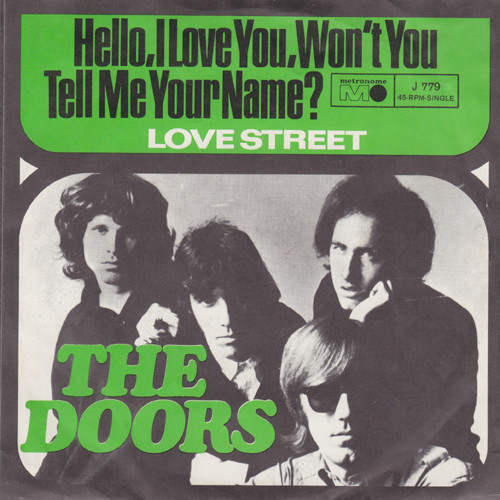
Today in Music (1968): The Doors “Hello, I Love You” hit #1

Hello I Love You

The Doors

Writer(s): John Densmore, Robbie Krieger, Ray Manzarek, Jim Morrison (see lyrics here)


Released: June 11, 1968


First Charted: June 21, 1968


Peak: 12 BB, 11 CB, 11 GR, 11 HR, 1 CL, 15 UK, 11 CN, 1 DF (Click for codes to charts.)


Sales (in millions): 1.0 US


Airplay/Streaming (in millions): -- radio, 28.9 video, 90.53 streaming

Awards:

Click on award for more details.

About the Song:

In 1968, the Doors were falling victim to what guitarist Robbie Krieger called “the third album syndrome” in which a group have exhausted the repertoire they started with as a band and are then “they go on tour and they don’t have time to write any more stuff. By the third album you find yourself trying to write stuff in the studio and it shows.” FB

In an effort to find material for their third album, Waiting for the Sun, the Doors went through some old poems written by lead singer Jim Morrison the summer after he graduated from UCLA film school. He wrote it in Venice one afternoon when he and keyboardist Ray Manzarek saw a young black girl walking down the beach. FB

Morrison, Manzarek, and drummer John Densmore actually first recorded the song in 1965 when they were members of Rick & the Ravens. WK By the end of that year, they joined forces with Krieger to form The Doors. The latter band’s recording finds them “riding a riff that the early Kinks could have conjured, the Doors rock like a garage band.” DT Krieger created the effect by running his guitar through a fuzz box, which created a distorted effect similar to what Cream had done with “Sunshine of Your Love.” RC

Krieger would also state that the song’s drum beat was taken from “Sunshine of Your Love” while denying that the song’s overall musical structure was taken from the Kinks’ “All Day and All of the Night.” WK According to the Kinks’ lead singer Ray Davies, Morrison admitted that the Doors had used the riff from “All Day and All of the Night.” WK


Resources:


Related Links:


First posted 4/26/2024.

Saturday, July 29, 2017

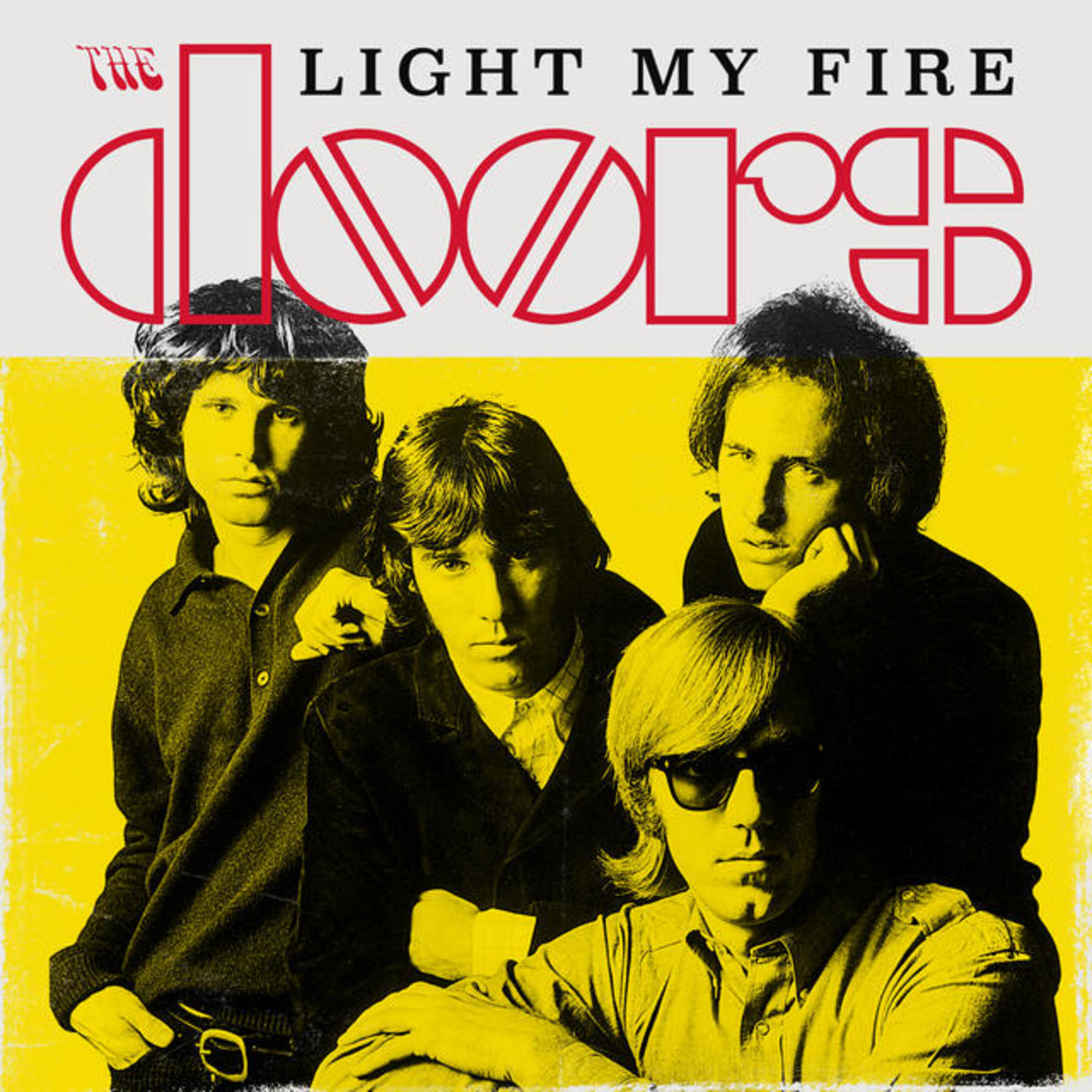
Today in Music (1967): The Doors hit #1 with “Light My Fire”

Light My Fire

The Doors

Writer(s): John Densmore, Robby Krieger, Ray Manzarek, Jim Morrison (see lyrics here)


Released: April 1967


First Charted: May 27, 1967


Peak: 13 US, 11 CB, 11 HR, 1 CL, 7 UK, 2 CN, 16 AU, 1 DF (Click for codes to charts.)


Sales (in millions): 1.0 US, -- UK, 1.0 world (includes US + UK)


Airplay/Streaming (in millions): -- radio, 71.65 video, 305.65 streaming

Awards:

Click on award for more details.

About the Song:

The song that “positively dripped with sexual desire” TC was a fitting launch for the Doors and, with “Jim Morrison’s beauty, akin to that of Michelangelo’s David,” TB established the band’s frontman as one of rock’s most legendary sex symbols. Morrison was the band’s chief songwriter, but “Light My Fire” emerged after he challenged the rest of the band to come up with material. SS According to keyboardist Ray Manzarek, Jim said at a band rehearsal, “Everyone go home this weekend and write at least one song.” MM Guitarist Robby Krieger responded with the first song he ever wrote. He said the melody was inspired by “Hey Joe” by the Leaves and the idea of writing about fire came from the Rolling Stones’ “Play with Fire.” MM Krieger also got help from the band in writing the song. He explained, “Ray had the idea for the opening part, which was the real hook. Jim helped me out on some of the lyrics...and the beat was John [Densmore]’s idea.” FB

The song had more than just sex. Its blatant reference to drug use with the line “We couldn’t get much higher” got the band in trouble with the Ed Sullivan Show. The band had promised to replace the word “higher” when performing the song on a live television broadcast, but sang it anyway, getting them permanently banned from the show. AMG

The group wasn’t thinking of the song as a single when they created the version that runs near seven minutes on LP. FB The Doors knew how to “extend songs to satisfy LSD-fueled crowds on the dance floor.” MM It is “the only one a sane person would play.” RC However, it was whittled down to less than three minutes for radio consumption – a move which meant stripping it of “all of the instrumental breaks which are the heart of the song.” RC “Manzarek’s manic organ runs particularly prominent” TB and Larry Knechtel, who played the opening chords on the legendary “Mr. Tambourine Man” by the Byrds, played bass. SS After the song hit #1, though, many radio stations opted for the longer version, which today remains mainstay of album rock radio. FB

Proving its power beyond the psychedelic and sexual revolutions of the sixties with which the song became synonymous, AMG the song also garnered José Feliciano a Grammy in 1969 for Best Male Pop Vocal Performance of his flamenco version of the song. More than two decades later, when Oliver Stone’s 1991 film biopic The Doors WK rekindled interest in the band, the song trounced its original #49 peak on the UK charts by landing all the way up at #7. The UK also gave Amii Stewart a #5 hit with the song in 1979 and Will Young took it to #1 in 2002.


Resources:


Related Links:


Last updated 4/28/2024.