Showing posts with label Johnny Mathis. Show all posts

Monday, June 29, 2026

Top 20 Crooners of All Time

Crooners:

Top 20

According to Wikipedia, “crooners are singers who sing in a soft, intimate style made possible by the introduction of microphones and amplification.” This technological breakthrough made it possible to pick up quieter sounds and a greater frequency range. Prior to such breakthroughs, singers had to be able to project through a very loud vocal style. Crooners often performed in front of big bands. The style grew to its height in popularity in the 1940s through the late ‘60s. It has, however, continued through modern day artists such as Michael Bublé and Harry Connick, Jr. who sing vocal jazz in a style which has come to be labeled as “traditional pop.”

This list was created by aggregating 10 lists focused on the best crooners of all time. See other lists of Acts/Music Makers by Categories.


Frank Sinatra

1. Frank Sinatra
2. Bing Crosby
3. Nat “King” Cole
4. Tony Bennett
5. Dean Martin

6. Perry Como
7. Johnny Mathis
8. Bobby Darin
9. Sammy Davis, Jr.
10. Mel Tormé

11. Michael Bublé
12. Harry Connick, Jr.
13. Matt Monro
14. Andy Williams
15. Charles Aznavour

16. Louis Armstrong
17. Barry Manilow
18. Tom Jones
19. Eddie Fisher
20. Vic Damone


Resources/Related Links:


First posted 6/29/2026.


Saturday, February 22, 2020

Dave's Music Database Hall of Fame: Album Inductees (Feb. 2020)

Originally posted 2/22/2020.

January 22, 2019 marked the 10-year anniversary of the DMDB blog. To honor that, Dave’s Music Database announced its own Hall of Fame. This month marks the fifth batch of album inductees. As of August 4, 2020, there were only 56 albums to spend 250 or more weeks on the Billboard album chart (“The Longest-Charting Albums in U.S. Chart History”). Of those albums, only 19 spent four or more weeks at #1. Seven of those have already been inducted: Adele 21 (2011), Fleetwood Mac Rumours (1977), Michael Jackson Thriller (1982), Carole King Tapestry (1971) , and the South Pacific cast album (1949). That leaves 13 albums to be inducted this month.

See the full list of album inductees here.

The Beatles Abbey Road (1969)

Inducted February 2020 as “Album with 4+ weeks at #1 and 250+ chart weeks.”

While not their final release, this marked the last time the Fab Four worked together in the studio. The Beatles were “exhausted and angry with one another after the disastrous sessions for the aborted Get Back LP.” RS500 Even their producer, “the normallly unruffled” George Martin, said “I don’t want to be part of this anymore.” JI However, when Paul McCartney suggested they make a Beatles’ record “like we used to” JI “the group reconvened at EMI’s Abbey Road Studios” RS500 to create what would be their “most polished and crafted long player” TL and “the best sounding Beatles’ record.” JI Read more.

The Beatles 1 (compilation: 1962-70, released 2001)

Inducted February 2020 as “Album with 4+ weeks at #1 and 250+ chart weeks.”

When this single-disc collection emerged over 30 years after the band’s finale, it proved there was still a market for their songs as the collection spent eight weeks atop the Billboard charts and sold more than 30 million copies. The set gathered the 27 songs which peaked atop the U.K. and/or U.S. charts, meaning fans could get a one-sitting overview of the Beatles from their beginnings from early hits like “I Want to Hold Your Hand” and “She Loves You” to mid-career hits like “Yesterday” and latter hits like “Hey Jude” and “Let It Be.” Read more.

Eagles Their Greatest Hits 1971-1975 (compilation: 1971-75, released 1976)

Inducted February 2020 as “Album with 4+ weeks at #1 and 250+ chart weeks.”

This wasn’t just the “first album ever certified platinum;” WR1 but the best-selling album in the U.S. in the 20th century WK1 with sales now estimated over 40 million. This collection gathered nine singles and the album-cut “Desperado” from the band’s first four albums. By the time the band recorded their fifth album, they’d become more of a rock act, but this set showcases their more country-pop leanings like “Tequila Sunrise” and “Lyin’ Eyes” as well as #1 pop hits “Best of My Love” and “One of These Nights.” Band member Don Henley didn’t like the songs taken out of the context of their original albums, WK1 but this makes for “a collection consistent in mood and identity” WK that “works so much better than the band’s previous discs [that it] practically makes them redundant.” WR1 Read more.

Eminem The Eminem Show (2002)

Inducted February 2020 as “Album with 4+ weeks at #1 and 250+ chart weeks.”

After exploring the deliberately-shocking alter ego Slim Shady and delving more into his past as Marshall Mathers, Eminem put his public persona front and center on this collection. He “spends much of the album commenting on the media circus that dominated…his life” STE and familiar topics such as “his troubled childhood; his hatred of his parents; his turbulent relationship with his ex-wife, Kim…; his love of his daughter, Hailie; and, of course, all the controversy he generated, notably the furor over his alleged homophobia.” STE Eminem proves “to be one of the all-time classic MCs, surprising as much with his delivery as with what he says.” STE Read more.

Eminem Recovery (2010)

Inducted February 2020 as “Album with 4+ weeks at #1 and 250+ chart weeks.”

Critic Robert Christgau says this is Eminem at “his most confessional” WK although detractors argued “that being privy to the man’s therapy sessions just isn’t compelling anymore.” DJ Entertainment Weekly’s Simon Vozick-Levinson said, “Eminem’s lyrical craftsmanship is second to none…and there are flashes of new maturity.” WK This album made Eminem the first artist to have four albums debut atop the Billboard album chart with over 700,000 copies. “Not Afraid,” the album’s lead single, was only the second rap song to debut at #1 on the Billboard Hot 100 and was followed to the pinnacle by “Love the Way You Lie,” a duet with Rihanna. Read more.

Alan Jay Lerner and Frederick Loewe (composers) My Fair Lady (cast, 1956)

Inducted February 2020 as “Album with 4+ weeks at #1 and 250+ chart weeks.”

My Fair Lady is “the crowning achievement” AZ for Lerner and Loewe. It has been called “the most perfect stage musical ever.” CL This was an adaptation of George Bernard Shaw’s Pygmalion, a story about “the mythic Greek figure who falls in love with his sculpture.” TM Rex Harrison is “effortlessly charming” ZS as Professor Henry Higgins and Julie Andrews was a “twenty-year-old revelation” ZS as “Eliza Doolittle, who aspires to a better accent and the social advantages that will come with it.” R-S Its Broadway run of 2717 performances from 1956 to 1962 was the longest run in history for a major musical at that time. W-M Read more.

Alan Jay Lerner and Frederick Loewe (composers) Camelot (cast album, 1960)

Inducted February 2020 as “Album with 4+ weeks at #1 and 250+ chart weeks.”

Lerner & Loewe turned to the legend of King Arthur, specifically T.H. White’s novel The Once and Future King, for this 1960 musical. The show “has it all – a beautiful English princess swept off her feet by a shy, but passionate bachelor king; an ardent French knight, torn between devotion to his liege and an uncontrollable hunger, reciprocated, to be sure, for the king’s tempestuous wife.” WK-C “The advance sale for the show was the largest in Broadway history.” WK-C It starred Richard Burton (Arthur) and Julie Andrews (Guinevere) and introduced Robert Goulet as Lancelot in his first Broadway role and won four Tony Awards. Read more.

Johnny Mathis Heavenly (1959)

Inducted February 2020 as “Album with 4+ weeks at #1 and 250+ chart weeks.”

This was the most successful studio album from Mathis, marking a return to ballads with orchestral accompaniment. All Music Guide’s William Ruhlmann called it “the epitome of Mathis’s approach to music.” WK The highlight of this collection of standards was “Misty,” a top ten R&B hit which was inducted into the Grammy Hall of Fame. Read more.

Metallica Metallica (aka ‘The Black Album’) (1991)

Inducted February 2020 as “Album with 4+ weeks at #1 and 250+ chart weeks.”

Prior to their eponymous 1991 release (nicknamed The Black Album for its monochromatic cover), Metallica “wrote scathing diatribes about such topics as our desensitized society and the horrors of drug addiction, signed with a major record label, and then watched millions of kids buy these spewings, all without the benefit of one hummable melody.” EW For this effort, the band tapped Bob Rock, who had produced Bon Jovi and Mötley Crüe, to give them “crisp, professional production” AMG and add “a previously nonexistent warmth and depth to their sound.” GW The group “slowed down the tempos, streamlined the arrangements” GW and the band plays actual hooks.” EW Read more.

Richard Rodgers/Oscar Hammerstein II (composers) Oklahoma! (soundtrack, 1955)

Inducted February 2020 as “Album with 4+ weeks at #1 and 250+ chart weeks.”

Oklahoma! was the first collaboration between Rodgers and Hammerstein. They “turned out an exuberant, tuneful score in which all the songs grew out of the characters and the situations, an unusual approach in musical theater, where songs often had little relationship to the action.” RC The show’s five-year run made it the longest-running musical in Broadway history up to that time. More than a dozen years later, Rodgers & Hammerstein oversaw a film version, assuring “it would be more faithful than most Hollywood treatments.” RS Compared to the cast recording, the soundtrack has “a bigger, broader interpretation and has continued to sound impressive over the decades.” RS Read more.

Richard Rodgers & Oscar Hammerstein II (composers) South Pacific (soundtrack, 1958)

Inducted February 2020 as “Album with 4+ weeks at #1 and 250+ chart weeks.”

The cast album for South Pacific was one of the first twelve DMDB Hall of Fame album inductees. It was the biggest album of the 1940s, spending 69 weeks at #1 and 400 weeks on the chart. That set the bar incredibly high for the soundtrack to the 1958 movie. However, it reached similar lofty status with 262 weeks on the chart, 31 at the pinnacle. The album is also the biggest #1 in the history of the UK charts with 115 weeks on top. Read more.

Richard Rodgers/Oscar Hammerstein II (composers) The Sound of Music (cast album, 1959)

Inducted February 2020 as “Album with 4+ weeks at #1 and 250+ chart weeks.”

The Sound of Music was the final work for the famous musical theater team of Rodgers and Hammerstein. “The ‘based on a true story’ plot concerned an aspiring nun who becomes a governess in pre-World War II Austria” WR-C for “a wealthy naval captain with seven children,” WR-S “only to marry the children’s father and flee with the family from the Nazis.” WR-C The cast album spent an astonishing 70 weeks atop the UK charts and 16 in the U.S. Read more.

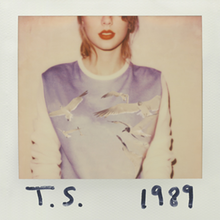
Taylor Swift 1989 (2014)

Inducted February 2020 as “Album with 4+ weeks at #1 and 250+ chart weeks.”

This was Taylor Swift’s second Grammy-winner for Album of the Year, after 2010’s Fearless. Inspired by the synthpop of the late ‘80s, this completed her transition from country music. It was her third album to sell over a million copies in its first week, making her the first artist to do so. WK The Guardian’s Alexis Petridis said the album is full of “undeniable melodies and huge, perfectly turned choruses and nagging hooks.” WK The public agreed, sending three songs to #1 on the Billboard Hot 100 (“Shake It Off,” “Blank Space,” and “Bad Blood”) and two more into the top ten (“Style,” “Wildest Dreams”). Read more.

Thursday, December 31, 2009

Billboard Top Pop Album Artists

image from epgold.com

Based on the Billboard album chart, these are the top album artists in the history of the chart from 1955-2009:

1. Elvis Presley
2. Frank Sinatra
3. The Beatles
4. Barbra Stresiand
5. The Rolling Stones
6. Johnny Mathis
7. Elton John
8. Bob Dylan
9. Neil Diamond
10. The Temptations

11. Eric Clapton
12. The Beach Boys
13. Rod Stewart
14. Willie Nelson
15. Mantovani
16. Ray Charles
17. Neil Young
18. Ray Conniff
19. Prince
20. Paul McCartney

21. Aretha Franklin
22. George Strait
23. Jimmy Buffett
24. Pink Floyd
25. Chicago
26. David Bowie
27. James Brown
28. Bruce Springsteen
29. Andy Williams
30. The Bee Gees

31. Lawrence Welk
32. Van Morrison
33. Kenny Rogers
34. The Supremes
35. Grateful Dead
36. Henry Mancini
37. The Kingston Trio
38. Barry Manilow
39. Aerosmith
40. Jimi Hendrix

41. Michael Jackson
42. Herb Alpert
43. Stevie Wonder
44. Nat “King” Cole
45. Johnny Cash
46. Metallica
47. Madonna
48. Led Zeppelin
49. U2
50. Queen

51. Roger Williams
52. Kiss
53. Fleetwood Mac
54. Linda Ronstadt
55. The Ventures
56. Santana
57. Garth Brooks
58. Diana Ross
59. James Taylor
60. AC/DC

61. Rush
62. The Who
63. Billy Vaughn
64. Billy Joel
65. Alabama
66. Jefferson Airplane/Starship
67. Alan Jackson
68. Eagles
69. Dionne Warwick
70. Tony Bennett

71. Dave Matthews Band
72. Harry Belafonte
73. The Isley Brothers
74. The Doors
75. John Denver
76. Mitch Miller
77. Mariah Carey
78. Dean Martin
79. Tom Petty & the Heartbreakers
80. The Lettermen

81. Nancy Wilson
82. Journey
83. Marvin Gaye
84. Jethro Tull
85. Bon Jovi
86. Elvis Costello
87. Dolly Parton
88. Carly Simon
89. Bob Seger
90. The Kinks

91. Tupac Shakur
92. Gladys Knight & the Pips
93. Pearl Jam
94. Kenny G
95. Joan Baez
96. R.E.M.
97. Anne Murray
98. The Monkees
99. Glen Campbell
100. The Jackson 5/The Jacksons


Resources:
  • Joel Whitburn (2010). Top Pop Albums (7th edition). Record Research: Menomonee Falls, WI. Page 951.

Monday, September 21, 2009

50 years ago: Johnny Mathis charted with Heavenly for 1st of 295 weeks

First posted 10/1/2020.

Heavenly

Johnny Mathis


Released: August 10, 1959


Charted: September 21, 1959


Peak: 15 US, 10 UK, -- CN, -- AU


Sales (in millions): 1.0 US, -- UK, 1.0 world (includes US and UK)


Genre: easy listening


Tracks:

Song Title (Writers) [time] (date of single release, chart peaks) Click for codes to singles charts.

  1. Heavenly (Burt Bacharach, Sydney Shaw) [3:23]
  2. Hello, Young Lovers (Richard Rodgers, Oscar Hammerstein) [4:18]
  3. A Lovely Way to Spend an Evening (Harold Adamson, Jimmy McHugh) [4:04]
  4. A Ride on a Rainbow (Leo Robin, Jule Styne) [4:11]
  5. More Than You Know (Vincent Youmans, Edward Eliscu, Billy Rose) [4:18]
  6. Something I Dreamed Last Night (Sammy Fain, Herbert Magidson, Jack Yellen) [4:32]
  7. Misty (Erroll Garner, Johnny Burke) [3:38] (9/14/59, 12 US, 14 CB, 12 UK)
  8. Stranger in Paradise (George Forrest, Robert Wright) [4:06]
  9. Moonlight Becomes You (Johnny Burke, Jimmy Van Heusen) [4:06]
  10. They Say It’s Wonderful (Irving Berlin) [3:33]
  11. I’ll Be Easy to Find (Bart Howard) [4:04]
  12. That’s All (Alan Brandt, Bob Haymes) [3:50]


Total Running Time: 48:03

Rating:

4.248 out of 5.00 (average of 5 ratings)


Quotable: --


Awards:

About the Album:

In 1958, Columbia Records released Johnny’s Greatest Hits. This collection by Johnny Mathis has been described as the “original greatest-hits package.” It peaked at #1 on the Billboard album chart and logged more than 10 years on the chart, a record it held until it was surpassed by Pink Floyd’s Dark Side of the Moon in 1983.

While the album could be considered the peak of his career, Mathis followed it with nine consecutive top-10 albums, including the five-million-selling Merry Christmas. From a chart standpoint, the most successful of these was 1959’s Heavenly. It was his only other #1 album and, like Johnny’s Greatest Hits, became a staple on the album chart, logging 295 weeks.

The album is “the epitome of Mathis’ approach to music.” AMG “The tempos are slow, the strings swell, and Mathis’ vulnerable tenor, dripping with tender emotion, yet never missing a beat, soars and swoops over all.” AMG This was Mathis’ tenth album release in under three years, which made him “a recording veteran while still being fresh enough to give his performance real feeling.” AMG

The most notable track is Misty, a jazz piano standard by Erroll Garner with new lyrics added by Johnny Burke. It wasn’t the biggest hit of Mathis’ career (that would be the #1 “Chances Are” in 1957), but it became what many considered his signature song. In 2002, it was inducted into the Grammy Hall of Fame.

Resources and Related Links:

Wednesday, March 15, 2006

50 years ago: My Fair Lady opened on Broadway

My Fair Lady

Alan Jay Lerner (music), Frederick Loewe (lyrics)

The Musical

Opened on Broadway: March 15, 1956


Number of Performances: 2717


Opened at London’s West End: April 30, 1958


Number of Performances: 2281

Cast Album


Charted: April 28, 1956


Peak: 115 US, 119 UK


Sales (in millions): 8.0 US


Genre: show tunes


Soundtrack


Charted: October 10, 1964


Peak: 14 US, 19 UK


Sales (in millions): 1.5 US


Genre: show tunes


Songs:

  1. Overture: Orchestra/ Why Can’t the English?
  2. Wouldn’t It Be Loverly? *
  3. I’m an Ordinary Man
  4. With a Little Bit of Luck **
  5. Just You Wait
  6. The Rain in Spain
  7. I Could Have Danced All Night
  8. Ascot Gavotte
  9. On the Street Where You Live
  10. You Did It
  11. Show Me
  12. Get Me to the Church on Time
  13. A Hymn to Him
  14. Without You
  15. I’ve Grown Accustomed to Her Face

* 2 versions back-to-back on cast album
** appears only on soundtrack


Singles/Hit Songs:

As was common in the pre-rock era, songs from musicals were often recorded by artists not associated with the musical and released as singles. Here are some of the most notable hit singles resulting from the show:

  • “On the Street Where You Live” – Vic Damone (#4, 1956), Eddie Fisher (#18, 1956), Lawrence Welk (#96, 1956), Andy Williams (328, 1964)
  • ”I Could Have Danced All Night” – Sylvia Syms (#20, 1956), Rosemary Clooney (#49, 1956), Dinah Shore (#93, 1956), Ben E. King (#72, 1963), Biddu Orchestra (#72, 1976)
  • ”I’ve Grown Accustomed to Your Face” – Rosemary Clooney (#70, 1956), Gordon MacRae (#96, 1956)
  • ”With a Little Bit of Luck” – Percy Faith (#82, 1956), Jo Stafford (#85, 1956)
  • ”Get Me to the Church on Time” – Julius LaRosa (#89, 1956)

Rating:

4.462 out of 5.00 (average of 13 ratings for cast album and soundtrack combined)


Quotable: “The most perfect stage musical ever” – Colin Larkin, Virgin All-Time Top 1000 Albums


Awards (Cast Album): (Click on award to learn more).


Awards (Soundtrack): (Click on award to learn more).

About the Show:

My Fair Lady is “the crowning achievement” AZ for lyricist Alan Jay Lerner and composer Frederick Loewe. In fact, some consider it to be “the most perfect stage musical ever.” CL “It boasts a magnificent score…witty, intelligent, beautiful, and romantic.” NRR This is “a collection of performances that long ago became a ubiquitous and indispensable fixture of American musical theater.” AZ

Frederick Loewe and Alan Jay Lerner

After several productions in the 1940s, Lerner and Loewe first tasted major Broadway success with 1947’s Brigadoon. They next worked together on 1951’s Paint Your Wagon before adapting George Bernard Shaw’s Pygmalion into My Fair Lady. It was a story about “the mythic Greek figure who falls in love with his sculpture.” TM In My Fair Lady, the story focuses on “the relationship between an elocutionist” R-C and “pre-World War I London flower girl Eliza Doolittle, who aspires to a better accent and the social advantages that will come with it.” R-S

The show opened on Broadway on March 15, 1956. It ran for 2717 performances, closing on September 29, 1962. It had what was then the longest run in history for a major musical. W-M The production has been called “the perfect musical.” W-M

Julie Andrews was a “twenty-year-old revelation” ZS as “the fairest of all ladies,” ZS making the “loverly…score soar” ZS with her “glorious voice and emotional range.” ZS Rex Harrison is “effortlessly charming” ZS in his recreation of the stage role as “Professor Henry Higgins (he had also appeared in the film adaptation of…Pygmalion.” R-S He “enjoys every wink of his ironies: When he describes himself, in I’m an Ordinary Man, his exaggerated demeanor suggests his character is anything but ordinary. That Harrison caught this specific dynamic so early in what became a historic extended run is remarkable.” TM

“The show yielded an astounding number of songs that became standards, including the luminous I Could Have Danced All Night and I’ve Grown Accustomed to Her Face.” TM Among the other gems in this “embarrassment of riches,” AZ including The Rain in Spain, Wouldn’t It Be Loverly, Why Can’t the English?, and On the Street Where You Live.

As was common in the 1950s, the cast album “was recorded in one marathon fourteen-hour session on March 25, 1956.” TM “Producers tried to schedule the sessions as close to the opening of the musical as possible, thinking that the nuances of the work would be fresh in the performers’ minds.” TM This sometimes backfired, but here Harrison and Andrews “are beyond lively… and the supporting cast – which, as was often the case with Lerner and Loewe, got the meatiest songs – positively sparkles.” TM

“The recording established a new relationship between Broadway productions and record companies; the album’s critical success and popularity with the public were unrivaled at the time of its release.” NRR The cast album spent fifteen weeks atop the Billboard album chart, making it one of the biggest #1 albums in U.S. chart history. What’s incredible, however, is that those chart-topping weeks were spread out over four years time. Billboard magazine named it album of the year – in 1957 and 1958.

The album stuck around on the charts for a total of 480 weeks. Only Pink Floyd’s Dark Side of the Moon and Johnny Mathis’ Johnny’s Greatest Hits have logged more weeks.

For the film version, Harrison and Holloway were back, but since they were making their third recordings of the score, they didn’t have much to add…The result was an acceptable recording that did not surpass the Broadway or London cast albums.” R-S However, despite starring in the Broadway and London stage productions, Julie Andrews was deemed “not enough of a star to carry the movie. (Embarrassingly, by the time the movie opened, Mary Poppins had made her more than enough of a star to do so.) Instead, Audrey Hepburn stepped into the role.” R-S

Hepburn’s singing voice was dubbed by Marni Nixon, who “was an accomplished Hollywood voice ghost, having previously sung for Deborah Kerr in The King and I, Natalie Wood in West Side Story, and Rosalind Russell in Gypsy.” R-S She “was fine…lacked the flair that Andrews would have given it.” R-S

A “1965 Best Picture Oscar capped the show’s decade of prominence.” AZ

Resources and Related Links:

  • R-C All Music Guide review of cast album by William Ruhlmann
  • R-S All Music Guide review of soundtrack by William Ruhlmann
  • AZ Amazon.com review of the cast album by Jerry McCulley
  • CL Colin Larkin (1998). Virgin All-Time Top 1000 Albums. Virgin Books: London, England. Page 201.
  • TM Tom Moon (2008). 1,000 Recordings to Hear Before You Die. Workman Publishing Company, Inc.: New York, NY.
  • NRR National Recording Registry
  • ZS Zagat Survey (2003). Music Guide: 1,000 Top Albums of All Time. Coordinator: Pat Blashill. Music Editor: Holly George-Warren. Editors: Betsy Andrews and Randi Gollin. Zagat Survey, LLC: New York, NY. Page 170.


Other Related DMDB Pages:


First posted 3/7/2011; last updated 12/23/2021.