Showing posts with label Jerry Garcia. Show all posts

Sunday, November 1, 1970

Grateful Dead “Truckin’” released

Truckin’

Grateful Dead

Writer(s): Jerry Garcia, Bob Weir, Phil Lesh, Robert Hunter (see lyrics here)


Released: November 1, 1970


First Charted: November 27, 1971


Peak: 64 US, 64 CB, 68 HR, 1 CL, 1 DF (Click for codes to singles charts.)


Sales (in millions): --


Airplay/Streaming (in millions): -- radio, 19.49 video, -- streaming

Awards:

Click on award for more details.

About the Song:

The Grateful Dead formed in Palo Alto, California, in 1965. They became known as the quintessential jam band; that is, they built their reputation on their live performances that included long, instrumental jams and merged elements of “rock, folk, country, jazz, bluegrass, blues,…gospel, reggae, world music, and psychedelia.” WK Bob Dylan said they “are from a different world than their contemporaries.” BD Regarding their live performances, he said, “With most bands the audience participates like in a spectator sport…With the Dead, the audience is part of the band – they might as well be on the stage.” BD

They weren’t known for a lot of classic studio albums, although Workingman’s Dead and American Beauty, both released in 1970, proved to be the exceptions. Not surprisingly, they weren’t known much as a singles band either. Their only top-40 hit on the Billboard Hot 100 came in 1987 with the top-10 hit “A Touch of Grey.” Still, they did rack up some songs in the 1970s that have become noted as classic rock staples, including “Uncle John’s Band,” “Sugar Magnolia,” “Friend of the Devil,” and, perhaps the biggest of all, “Truckin’.”

The latter only reached #64 on the Billboard Hot 100, but has become a notable classic. The United States Library of Congress called it a national treasure in 1997. The song’s refrain “What a long, strange trip it’s been” has achieved iconic status with widespread cultural use. WK

The lyrics were written by Robert Hunter, who Bob Dylan called the band’s “in-house writer poet…with a wide range of influences – everyone from Kerouac to Rilke – and steeped in the songs of Stephen Foster.” BD The song references a drug raid in New Orleans of the band’s hotel lodgings. WK


Resources:

  • BD Bob Dylan (2022). The Philosophy of Modern Song. New York, NY: Simon & Schuster. Pages 137-39.
  • WK Wikipedia


Related Links:


First posted 11/2/2022.

Grateful Dead released American Beauty

First posted 4/6/2008; updated 12/3/2020.

American Beauty

Grateful Dead


Released: November 1, 1970


Charted: December 12, 1970


Peak: 19 US, -- UK, -- CN, 34 AU


Sales (in millions): 2.0 US


Genre: folk rock/jam band


Tracks:

Song Title (date of single release, chart peaks) Click for codes to singles charts.

  1. Box of Rain (10 CL)
  2. Friend of the Devil (8 CL)
  3. Sugar Magnolia (2/3/73, 91 US, 5 CL)
  4. Operator
  5. Candyman
  6. Ripple (4/18/81, 50 AR *, 9 CL)
  7. Brokedown Palace
  8. Till the Morning Comes
  9. Attics of My Life
  10. Truckin’ (11/21/71, 64 US, 1 CL)

* live version of song from 1981’s live album, Reckoning


Total Running Time: 42:21


The Players:

  • Jerry Garcia (vocals, guitar, piano)
  • Mickey Hart (percussion)
  • Robert Hunter (lyrics)
  • Bill Kreutzmann (drums)
  • Phil Lesh (bass, guitar, piano, vocals)
  • Ron “Pigpen” McKernan (harmonica, vocals)
  • Bob Weir (guitar, vocals)

Rating:

4.661 out of 5.00 (average of 22 ratings)


Quotable: --


Awards: (Click on award to learn more).

About the Album:

American Beauty, the fifth studio album from the Grateful Dead, can be considered “a companion piece to the luminous Workingman's Dead,” AMG the album released by the group earlier that year. Both albums “were innovative at the time for their fusion of bluegrass, rock and roll, folk, and especially, country music.” WKAmerican Beauty is an even stronger document of the Grateful Dead’s return to their musical roots” AMG The sound was “focused more on folk harmonies and major-key melodies, showing influence from Bob Dylan and Crosby, Stills, Nash, & Young.” WK

Drummer Bill Kreutzmann said “the singers in our band really learned a lot about harmonizing” WK from CSNY. He explained that the two group’s “circles overlapped,” WK noting that singer Jerry Garcia had played pedal steel on CSNY’s Déjà Vu album that year and that Stephen Stills had lived at the Dead percussionist Mickey Hart’s ranch. WK

“Thanks to the addition of subtle electric textures,” AMG this album sports “a more full-bodied and intricate sound than its predecessor.” AMG While the previous album was written solely by Jerry Garcia and Robert Hunter, this one is “more representative of the group as a collective unit, allowing for stunning contributions from Phil Lesh (the poignant opener, Box of Rain) and Bob Weir (Sugar Magnolia).” AMG

Garcia is “at the top of his game as well…[as he] delivers the superb Friend of the Devil…and Ripple.” AMG Both songs also represent Garcia’s first collaborations with with mandolin player David Grisman, especially the latter. WK

The album closes with Truckin’, “a blues/boogie-based rock tune with a shuffle rhythm.” WK While it only peaked at #64 on the Billboard Hot 100, “the autobiographical song became the one most associated with the band, and their track most commonly played on FM radio classic rock formats.” WK

The album as a whole became iconic in the band’s live performances as eight of the ten tracks remained in their setlist throughout their history. WKAmerican Beauty remains the Dead’s studio masterpiece – never again would they be so musically focused or so emotionally direct.” AMG


Notes: The 2001 Rhino reissue added eight more songs, mostly live, but also single versions of “Truckin’” and “Ripple.” A 50h anniversary deluxe edition added a two-disc live set from Capitol Theatre, Port Chester, New York.

Resources and Related Links:

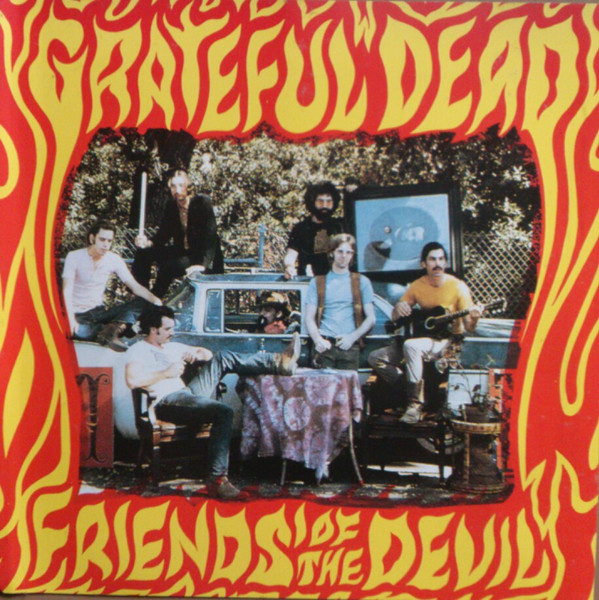
Grateful Dead “Friend of the Devil” released

Friend of the Devil

Grateful Dead

Writer(s): Robert Hunter (words), Jerry Garcia and John Dawson (music) (see lyrics here)


Released: November 1, 1970 (album cut on American Beauty)


Peak: 8 CL, 3 DF (Click for codes to charts.)


Sales (in millions): --


Airplay/Streaming (in millions): -- radio, 11.6 video, 92.1 streaming

Friend of the Devil

Lyle Lovett


Released: April 23, 1991 (album cut on Deadicated)


Peak: 1 DF (Click for codes to charts.)


Sales (in millions): --


Airplay/Streaming (in millions): -- radio, 0.7 video, -- streaming

Awards (Grateful Dead):

Click on award for more details.


Awards (Lyle Lovett):

Click on award for more details.

About the Song:

The Grateful Dead formed in 1965 in Palo Alto, California. While they became one of the most celebrated live acts of all time, they released a pair of critically acclaimed studio albums (Workingman’s Dead and American Beauty) in 1970. The latter was marked by several classics, including “Truckin’,” “Sugar Magnolia,” and “Friend of the Devil.”

While he wasn’t a performer, lyricist Robert Hunter regularly collaborated with the band. He is credited on nine of the ten songs on American Beauty, including “Friend of the Devil.” Hunter once said “that was the closest we’ve come to what may be a classic song.” WK

Hunter actually wrote the song with the intent of playing it with New Riders of the Purple Sage who had asked him to be their bassist. Member John Dawson got a credit on the song because he helped Hunter tweak the lyrics, including the line “a friend of the devil is a friend of mine.” SF

The largely acoustic song is one of the Grateful Dead’s most covered songs, including versions by Elvis Costello, Counting Crows, Bob Dylan, Loggins & Messina, Dave Matthews Band, Ministry, Mumford & Sons, New Riders of the Purple Sage, and Tom Petty & the Heartbreakers. Lyle Lovett recorded it in 1991 for Deadicated, a rainforest benefit album of Grateful Dead cover songs.


Resources:


Related Links:


First posted 3/20/2023.

Sunday, June 14, 1970

Grateful Dead Workingman’s Dead released

Workingman’s Dead

The Grateful Dead


Released: June 14, 1970


Peak: 27 US, -- UK, -- CN, -- AU, 12 DF Click for codes to charts.


Sales (in millions): 1.0 US


Genre: folk rock


Tracks:

Song Title (Writers) [time] (date of single release, chart peaks)

  1. Uncle John’s Band (7/1/70, 69 BB, 4 CL, 6 DF)
  2. High Time
  3. Dire Wolf (5/2/81, 16 CL, 37 AR, 27 DF)
  4. New Speedway Boogie (21 CL)
  5. Cumberland Blues
  6. Black Peter
  7. Easy Wind
  8. Casey Jones (3 CL, 11 DF)


Total Running Time: 35:33


The Players:

  • Jerry Garcia (vocals, guitar, piano)
  • Mickey Hart (percussion)
  • Robert Hunter (lyrics)
  • Bill Kreutzmann (drums)
  • Phil Lesh (bass, guitar, piano, vocals)
  • Ron “Pigpen” McKernan (harmonica, vocals)
  • Bob Weir (guitar, vocals)

Rating:

4.307 out of 5.00 (average of 20 ratings)


Awards:

(Click on award to learn more).

From Psychedelic to Roots Rock

The “Dead are long-term champions of the mind-shredding psychic frontier.” JSH Prior to this album, they “were already established as paragons of the free-form, improvisational San Francisco psychedelic sound.” AM Their previous album, Live/Dead, was “their magnum opus of the free-jamming style.” JSH Then they “abruptly shifted gears for the acoustic Workingman’s DeadAM and “concentrated on writing a more concise series of songs.” JSH

The group was also in a position where they needed to make the album cheaply. They owed Warner Bros. nearly $200,000 and were in trouble with the law after a marijuana bust. This compelled lead singer Jerry Garcia and lyricist Robert Hunter to return to their “roots and come up with a collection of tight, melodic songs with a simple acoustic framework.” TB The band “knew exactly what needed to be done right from the start – and the simplicity of the arrangements made the going that much easier.” TB

“Despite its sharp contrast to the epic live space jams on which the group’s legend primarily rests, Workingman’s Dead nonetheless spotlights the Dead at their most engaging, stripped of all excess to reveal the true essence of their craft.” AM

They offer up “a lovely exploration of American roots music illuminating the group’s country, blues, and folk influences.” AM “There’s a rollicking western outlaw spirit to this album that actually lives up to the album cover, which shows ‘em hangin’ out in a railyard like hippie hobos.” JSH They churn out “eight spooky blues and country songs that rival the best of Bob Dylan.” 500 Joe S. Harrington, in writing for the web zine Blastitude, called it “the best country-rock album of all-time.” JSH It was also their commercial breakthrough.

The Influence of CSN

The sound was influenced by the band’s friendship with Crosby, Stills & Nash. Grateful Dead frontman Garcia said, “Hearing those guys sing and how nice they sounded together, we thought, ‘We can try that.’” WK He also said, “We weren’t feeling like an experimental music group, but were feeling more like a good old band.” 500

Drummer Mickey Hart further explained that “Stills lived with me for three months…and he and David Crosby really turned Jerry and Bobby onto the voice as the holy instrument…That turned us away from pure improvisation and more toward songs.” WK

The Title

The album’s title came from a comment Garcia made to lyricist Robert Hunter (who is featured on the album cover as the band’s seventh member) that “this album was turning into the Workingman’s Dead version of the band.” WK

The Songs

Garcia and Hunter “proved themselves one of rock’s sharpest songwriting teams, with the acoustic hymn Uncle John’s Band, “a nod to the three-part harmonizing” of CSN. TB Hunter said, ‘It was my feeling about what the Dead was and could be. It was very much a song for us and about us, in the most hopeful sense.’” 500 It “opens the record and perfectly summarizes its subtle, spare beauty; complete with a new focus on more concise songs and tighter arrangements, the approach works brilliantly.” AM

That song as well as “the countrified” TBHigh Time and Cumberland Blues were brought to life with soaring harmonies and layered vocal textures that had not been a part of the band’s sound” WK previously. There’s also the “slow blues” TB of Black Peter.

The album features “Garcia’s best singing ever” on Casey Jones and the “amazing Dire Wolf,” JSH which Harrington calls “purely American expression…as good as Hank Williams or the Everly Brothers.” JSH New Speedway Boogie “is the Dead’s ode to Altamont, and it’s one of their best rockers.” JSH


Notes:

An expanded edition was released in 2003 which included an alternate mix of “New Speedway Boogie” as well as live versions of “Dire Wolf,” “Black Peter,” “Easy Wind,” “Cumberland Blues,” “Mason’s Children,” and “Uncle John’s Band.”

Reviews:


Related DMDB Links:


First posted 8/1/2011; last updated 11/4/2025.