Showing posts with label top Southern rock songs. Show all posts

Tuesday, April 16, 2019

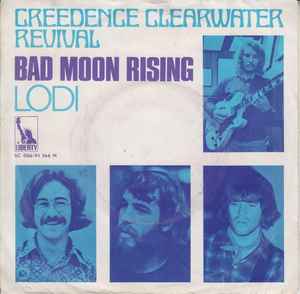
On This Day (1969): Creedence Clearwater Revival “Bad Moon Rising” released

Bad Moon Rising

Creedence Clearwater Revival

Writer(s): John Fogerty (see lyrics here)


Released: April 16, 1969


First Charted: May 2, 1969


Peak: 2 BB 2 CB, 11 GR, 11 HR, 1 CL, 13 UK, 5 CN, 3 AU, 1 DF (Click for codes to charts.)


Sales (in millions): 2.0 US, 0.6 UK


Airplay/Streaming (in millions): 2.0 radio, 121.15 video, 683.45 streaming

Awards:

Click on award for more details.

About the Song:

Creedence Clearwater Revival was formed in 1968 by John Fogerty. Rock and roll may have been in its adolescence, but it was already old enough for roots revival music like CCR’s that “turned to bluegrass, mountain music, rockabilly, and honky-tonk for inspiration.” MM The band’s first two hits were covers of Dale Hawkins’ “Suzy Q” and Screamin’ Jay Hawkins’ “I Put a Spell on You.” Between those and their third single, the original Mississippi-steamboat-themed “Proud Mary” the band established themselves as the band with a swampy-vibe that sounded like they were from New Orleans – even though they’d never been there.

They extended that feeling with their next single, “Bad Moon Rising,” and its suggestion of down-south voodoo. The song was considered a reflection of “the cosmic ethos of the hippie movement and the foreboding late 1960s. In truth, the song poked fun at astrology and had little to do with current events.” MM Still, it was “a dark song for dark times, with the Vietnam war riaging and Richard Nixon in power – but all set to a bouncy, jangly beat; a vision of Doomsday with a smile.” SS Author Dave Thompson describes it as “the end of the world set to music. It is every horror film you’ve ever seen and every nightmare you’ve ever had.” DT

It was inspired more by the 1941 The Devil and Daniel Webster about a farmer who sells his soul to the devil. As Fogerty said, “What I remembered most is this furious storm the town endures. All of my lyrics for the song were inspired by that scene.” MM Of course, the title of the song has evoked one of the most misunderstood lyrics of all time as people have mistakenly thought Fogerty to be singing, “There’s a bathroom on the right.” Fogerty has said he purposely pokes fun at the song now by singing the incorrect lyrics. MM

Fogerty also shared that the instrumental arrangement was influenced by “I’m Left, You’re Right, She’s Gone” by Elvis Presley, MM particularly Scotty Moore’s guitar licks. SS The recording technique was inspired by Gene Vincent, who recorded vocals and instrumentals separately. MM It worked. As rock critic Dave Marsh said, “The jangle of the guitar isn’t simply evoking old rockabilly singles, just vibrating at the same damnable frequency as your nerves.” DM


Resources:


Related Links:


First posted 9/12/2023; last updated 9/15/2023.

Friday, August 17, 1973

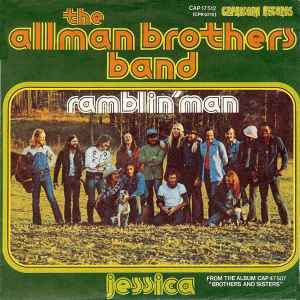
Allman Brothers Band “Ramblin’ Man” charted

Ramblin’ Man

Allman Brothers Band

Writer(s): Dickey Betts (see lyrics here)


First Charted: August 17, 1973


Peak: 2 BB, 11 CB, 11 GR, 2 HR, 2 RR, 12 AC, 1 CL, 7 CN, 40 AU, 6 DF (Click for codes to charts.)


Sales (in millions): --


Airplay/Streaming (in millions): 2.0 radio, 7.2 video, 214.77 streaming

Awards:

Click on award for more details.

About the Song:

Duane Allman was one of rock’s most celebrated guitarists. When he was killed in a motorcycle accident at 24, it was understandable that people wondered how the Allman Brothers Band could soldier on without him. However, they translated their mix of rock, country, jazz, and blues into being one of the signature Southern rock groups who’ve been hailed for the improvisational stage jams and “double-guitar harmony.” MM

Their biggest hit, “Ramblin’ Man,” came courtesy guitarist Dickey Betts “who leaned very strongly towards country” TC and here served up a liquid tone and a shuffle beat [that was] simple and seamless” DM with a vocal that “is two parts B.B. King and one part George Jones.” DM This is “probably the closest real blues slide guitar has come to topping the chart.” DM

Betts said he carried the line “I bet you’re just tryin’ to make a livin’ and doin’ the best you can” around in his head for three years. It was a friend’s comment in 1969 about how he imagined Betts was doing with his music. MM When he finally sat down to write the song in 1973, he said, “the words came fast, like I was writing a letter.” MM Although it was a completely different song, this “was rooted around an old Hank Williams number [of the same name from 1951] about traveling the world and taking life as it comes.” DT

It was released on the band’s Brothers and Sisters album, the first without Duane. It was also the last to feature bassist Berry Oakley, who – after a year of struggling with depression and substance abuse brought on by Duane’s death – also died in a motorocycle accident before the album’s release.

“Ramblin’ Man” “stands alongside Lynyrd Skynyrd’s ‘Sweet Home Alabama’ as one of the definitive Southern rock songs. It’s an amiable, laid-back tune, falling halfway between blues-rock and country-rock, graced with wonderful guitar harmonies. The Allmans could rock much harder than this, but that was the record’s charm – it was easy and friendly, with all the charm of a breezy summer’s day.” AMG “The refrain that bookends the chorus is perhaps the catchiest and prettiest hook in all of Southern rock.” AMG


Resources:


Related Links:


First posted 9/12/2023.

Friday, August 6, 1971

Joan Baez charted with “The Night They Drove Old Dixie Down” by The Band

The Night They Drove Old Dixie Down

The Band

Writer(s): Robbie Robertson (see lyrics here)


Released: September 22, 1969


First Charted: 11/1/1969 (The Band), 8/6/1971 (Joan Baez)


Peak: 7 CL, 10 CN (The Band), 3 BB, 3 CB, 2 GR, 11 HR, 15 AC, 6 UK (Baez) (Click for codes to charts.)


Sales (in millions): 1.0 US (Baez)


Airplay/Streaming (in millions): -- radio, 37.7 (Band), 17.1 (Baez) video, 104.56 (Band), 45.82 (Baez) streaming

Awards (The Band):

Click on award for more details.


Awards (Joan Baez):

Click on award for more details.

About the Song:

Author Dave Thompson called this “the song of the South, circa 1864.” DT Critic Ralph Gleason said, “Nothing I have read…has brought home the overwhelming sense of history that this song does...The rhythmic structure, [the vocal arrangement], make it seem impossible that this isn’t some traditional material handed down from fathe to son straight from the winter of 1865 to today.” SS “‘The Night They Drove Old Dixie Down’ is made to sing around the campfire, high-lonesome harmonies and all.” TM

This “Civil War epic” SS is a “perfect folk ballad” TM that captures the “lament of a Confederate soldier standing in the ruins of the starving American South.” TM Not only was the song written more than a hundred years after the events it depicts, it was recorded by The Band, a rock group comprised of four Canadians and the Arkansas-born drummer Levon Helm. The group ironically came to be viewed as the originators of Americana music and this song could arguably be viewed as the pinnacle of the genre.

Guitarist Robbie Robertson wrote the song over eight months. It was inspired by his fascination with screenwriter Tennesseee Williams and the American South. He first composed a melody on the piano and then, with considerable library research, crafted lyrics. SS “Looking at the war as an outsider allows a fresh perspective that deeply humanizes the song’s Southern soldier and his profound sense of loss without implying sympathy for the Southern cause.” SS

While Robertson wrote it, it was Levon Helm who gave the song its “broken heartbeat,” TM “dirt-swept voice,” TM and “gritty integrity.” SS His performance in The Last Waltz concert movie from the Band is so powerful you’d swear Helm lived through the Civil War himself. Rock critic Greil Marcus said, “the performance leaves behind a feeling that for all our oppositions, every American still shares this odd event; because to this day, none of us has escaped its impact.” SS

While The Band’s version of the song is the most iconic, it isn’t the one that charted. The Band only released the song as the B-side of “Up on Cripple Creek” so it didn’t reach the Billboard chart. However, in 1971 Joan Baez covered the song and reached #3 on the Billboard Hot 100.


Resources:


Related Links:


First posted 11/21/2025.