Showing posts with label electronica. Show all posts

Saturday, September 14, 2024

The Top 25 Electronica Albums of All Time

Electronica:

The Top 25 Albums

This is Dave’s Music Database’s take on the top electronica albums of all time. This list is the result of an aggregate of 16 best-of lists focused on electronica albums. Links will take you to more detailed pages about the album at DavesMusicDatabase.com.

Check out other best-of-genre/category lists here.

1. Massive Attack Blue Lines (1991)
2. DJ Shadow Endtroducing… (1996)
3. Portishead Dummy (1994)
4. Moby Play (1999)
5. The Orb Adventures Beyond the Ultraworld (1991)

6. Tricky Maxinquaye (1995)
7. Leftfield Leftism (1995)
8. The Prodigy The Fat of the Land (1997)
9. Orbital Orbital 2 (aka “The Brown Album”) (1993)
10. Underworld Dubnobasswithmyheadman (1993)

11. Daft Punk Homework (1997)
12. Chemical Brothers Dig Your Own Hole (1997)
13. Primal Scream Screamadelica (1991)
14. Global Communication 76:14 (1997)
15. Fatboy Slim You’ve Come a Long Way, Baby (1998)

16. Aphex Twin Selected Ambient Works 85-92 (compilation: 1985-92, released 1992)
17. Happy Mondays Pills ‘N’ Thrills and Bellyaches (1990)
18. Depeche Mode Violator (1990)
19. Air Moon Safari (1998)
20. The Prodigy Music for the Jilted Generation (1994)

21. Massive Attack Mezzanine (1998)
22. The Chemical Brothers Exit Planet Dust (1995)
23. Kraftwerk Computerwelt (Computer World) (1981)
24. The KLF Chill Out (1990)
25. New Order Substance (compilation: 1981-87, released 1987)


Resources and Related Links:


First posted 11/29/2011; last updated 9/14/2024.

Tuesday, March 20, 2007

LCD Soundsystem Sound of Silver released

Sound of Silver

LCD Soundsystem


Released: March 20, 2007


Peak: 46 US, 28 UK


Sales (in millions): -- US, 0.1 UK


Genre: electronica/dance punk


Tracks:

Song Title (Writers) [time] (date of single release, chart peaks) Click for codes to singles charts.

  1. Get Innocuous! (James Murphy, Tyler Pope) [7:11]
  2. Time to Get Away (Murphy, Pope, Patrick Mahoney) [4:11]
  3. North American Scum [5:25] (2/28/07, 40 UK)
  4. Someone Great [6:25] (10/22/07, --)
  5. All My Friends (Murphy, Mahoney, Pope) [7:37] (5/28/07, 41 UK)
  6. Us v. Them (Murphy, Mahoney, Pope) [8:29]
  7. Watch the Tapes [3:55]
  8. Sound of Silver [7:07]
  9. New York, I Love You But You’re Bringing Me Down (Murphy, Mahoney, Pope) [5:35]
Songs written by James Murphy unless noted otherwise.


Total Running Time: 55:55


The Players:

  • James Murphy (vocals, synthesizers, drums, percussion, bass, programming, etc.)
  • Tyler Pope (guitar, bass, etc.)
  • Patrick Mahoney (drums, percussion)
  • Nancy Whang (vocals)

Rating:

4.034 out of 5.00 (average of 21 ratings)


Awards: (Click on award to learn more).

About the Album:

“James Murphy had proven his kung fu as the most badass electro-punk producer in clubland. But not even fierce fans dreamed he’d make a masterpiece like Sound of Silver.” RS’20 “Every track sounded like a different band’s greatest hit.” RS’20 “Compared to the first LCD Soundsystem album, Sound of Silver is less silly, funnier, less messy, sleeker, less rowdy, more fun, less distanced, more touching. It is just as linked to James Murphy’s record collection, with traces of post-punk, disco, Krautrock, and singer/songwriter schlubs, but the references are evidently harder to pin down; the number of names dropped in the reviews published before its release must triple the amount mentioned throughout ‘Losing My Edge.’ There’s even some confusion as to which version of David Bowie is lurking around.” AMG

“One clearly evident aspect of the album is that Murphy has streamlined his sound. All the jagged frays have been removed, replaced by a slightly tidier approach that is more direct and packs more punch. Murphy comes across as a fully naturalized producer of dance music – especially on Get Innocuous! – as opposed to a product of ‘90s indie rock who has made a convincing switch-up.” AMG

“And yet, the album’s best song is sad, should not be played in any club, and it at least matches the work of any active songwriter who has been praised.” AMG Someone Great is a “synth-pop breakup lament” RS’20 “built on swelling synthesizers and a dual vocal-and-glockenspiel melody, could definitely be about a devastating breakup (‘To tell the truth I saw it coming / The way you were breathing’), at least until ‘You’re smaller than my wife imagined / Surprised you were human,’ which could mean the song either took a turn for the absurd or is about the death (and funeral) of a loved one. Either way, it is the most moving song Murphy has made, and it only helps further the notion that he should be considered a great songwriter, not simply a skilled musician with a few studio tricks and the occasional clever quip.” AMG

“The closer, New York, I Love You But You’re Bringing Me Down, seals it: ‘New York, you’re perfect, oh please don’t change a thing/ Your mild billionaire mayor’s now convinced he’s a king/ And so the boring collect – I mean all disrespect/ In the neighborhood bars I’d once dreamt I would drink.’ If he keeps it up, he’ll be writing songs for Pixar by 2020.” AMG

The album also includes the “political punk goof North American ScumRS’20 andAll My Friends, a “song for the ages…[with] huge, sweeping, ferociously emotional, with disco keyboards and rock guitars pulsing as Murphy looked back on a youth of killer parties and silent mornings.” RS’20

Resources and Related Links:


First posted 3/30/2010; last updated 4/27/2022.

Monday, March 18, 1996

The Prodigy “Firestarter” released

Firestarter

The Prodigy

Writer(s): Liam Howlett, Keith Flint, Kim Deal, Anne Dudley, Trevor Horn, J.J. Jeczalik, Gary Langan, Paul Morley (see lyrics here)


Released: March 18, 1996


First Charted: March 30, 1996


Peak: 30 US, 24 MR, 13 UK, 3 CN, 22 AU (Click for codes to singles charts.)


Sales (in millions): 0.5 US, 0.85 UK, 1.35 world (includes US + UK)


Airplay/Streaming (in millions): -- radio, 141.0 video, 77.04 streaming

Awards:

Click on award for more details.

About the Song:

The Prodigy formed in 1990. Fronted by keyboardist and songwriter Liam Howlett, the group also included MC/singer Maxim and singer/dancer Keith Flint. They are considered – along with the Chemical Brothers and Fatboy Slim – to be pioneers of the backbeat-influenced genre big beat. The group has gone on to sell over 20 million records worldwide – “a feat that remains unparalleled in dance music history.” XFM

“Firestarter” was the lead single from their third album The Fat of the Land. It became their first UK chart topper was also the group’s first song to feature Flint on vocals. Howlett wrote it as an instrumental originally and then Flint, just a dancer with the band at the time, said he’d like to add some vocals, reportedly saying, “If I’m ever going to do any lyrics, I’m going to do it on this tune.” SF It was their only top-40 hit in the United States. After Flint’s suicide in 2019, the song reached #13 on Billboard magazine’s dance/electronic digital songs sales chart in the U.S. The follow-up single, “Breathe,” was also a #1 hit in the UK.

Upon the single’s release, British magazine Music Week called the song a “powerful return for the kings of live techno.” WK RM magazine’s Brad Beatnik described it as “a typically searing chunk of heavy techno featuring some manie vocale and an awesome synth line.” WK Gerald Martinez referred to in New Sunday Times as “heavy metal meets techno-dance stylisations.” WK

Kim Deal received a songwriting credit because of “the looped wah-wah guitar” WK in “Firestarter” that was sampled from “S.O.S.,” a song of hers with the Breeders. Anne Dudley, Trevor Horn, J.J. Jeczalik, Gary Langan, and Paul Morley also were credited because of the “hey hey hey” sample from their song “Close (To the Edit)” by Art of Noise. SF

The song generated controversy in the UK where it was accused by the national fire service of promoting arson, XFM although Flint told Melody Maker the “rave rock anthem has nothing to do with literally starting fires by about performing in front of 5,000 people and stirring them up into a frenzy.” SF Flint’s enancing look in the video was also criticized by tabloids as frightening young children. SF


Resources:


Related Links:


First posted 10/26/2021.

Monday, May 1, 1995

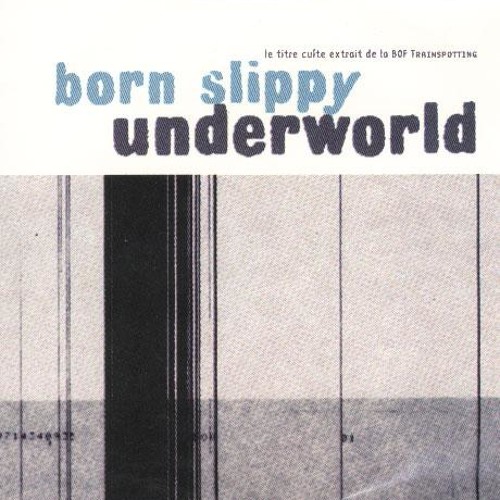
Underworld released “Born Slippy” – for the first time

Born Slippy

Underworld

Writer(s): Rick Smith, Karl Hyde, Darren Emerson (see lyrics here)


Released: May 1, 1995


First Charted: May 13, 1995


Peak: 2 UK, 20 AU (Click for codes to charts.)


Sales (in millions): 0.4 UK


Airplay/Streaming (in millions): -- radio, 78.4 video, 140.24 streaming

Awards:

Click on award for more details.

About the Song:

Karly Hyde and Rick Smith are “pioneers of electronic music” XFM who worked together more than 20 years, 14 as Underworld. However, it wasn’t until “Born Slippy,” “the dance anthem of the Ibiza generation – that they became known for bringing dance music to the masses.” XFM The song “took Underworld from underground electro obscurity to the festival roster.” AMG

It became “one of the greatest dance tracks of the decade.”XFM All Music Guide’s Tim DiGravina says it is “one of the best slices of electronica one will find…a landmark of its genre.” TG “The song's big opening chords, laced with delay and backed up with an ethereal wash of faux, electronic voices, made as much of an imprint as any of the great rock riffs of the past half century.” AMG

Hyde wrote the song after a night of drinking with the intent of capturing how a drunk sees the world. It “document[s] the x-statically sharp heights of an evening out -- dancefloors, lust, and chemical highs -- and how quickly they are to dissipate.” AMG The song was mistakenly adopted by some as a drinking anthem, when it was really Hyde’s cry for help in dealing with alcoholism.

The song first emerged as a B-side in 1995 and reached #52 on the UK charts. It resurfaced a year later after its inclusion in the movie Trainspotting. Underworld were initially reluctant to be involved with the film for fear of strengthening the link between drugs and dance music. XFM Director Danny Boyle showed them a clip of how it would be used and they signed on. Boyle called the song the “heartbeat” of the film. XFM The new version, known as “Born Slippy. NUXX,” was released as a single in July 1996 and went all the way to #2 on the UK charts.


Resources:


First posted 10/13/2021; last updated 8/24/2023.

Monday, April 8, 1991

Massive Attack released Blue Lines

Blue Lines

Massive Attack


Released: April 8, 1991


Peak: -- US, 13 UK, -- CN, 69 AU


Sales (in millions): 0.2 US, 0.86 UK, 1.26 world (includes US and UK)


Genre: dance/electronica > trip-hop


Tracks:

Song Title (date of single release, chart peaks) Click for codes to charts.

  1. Safe from Harm (5/27/91, 25 UK, 28 MR)
  2. One Love
  3. Blue Lines
  4. Be Thankful for What You Got (2/10/92, --)
  5. Five Man Army
  6. Unfinished Sympathy (2/11/91, 13 UK)
  7. Daydreaming (10/15/90, 81 UK)
  8. Lately
  9. Hymn of the Big Wheel (2/10/92, --)


Total Running Time: 45:08


The Players:

  • Robert “3D” Del Naja (graffiti artist)
  • Adrian “Tricky” Thaws (singer/rapper)
  • Andrew “Mushroom” Vowles (musician/composer)
  • Grant “Daddy G” Marshall (DJ)
  • Featured vocalists: Shara Nelson, Horace Andy, Tony Bryan

Rating:

4.170 out of 5.00 (average of 22 ratings)


Awards:

(Click on award to learn more).

Who Are Massive Attack?

Massive Attack formed in 1988 in Bristol, England. Members Grant Marshall, Robert Del Naja, Andrew Vowles, and Tricky came out of the Wild Bunch, a group of DJs and audio engineers, who started performing in 1982. They were marked by their diversity – “English, West Indian and American musicians whose backgrounds were in hip-hop, reggae, rap, soul, and pop music.” CM

They “adapted the Jamaican tradition of sound systems to British clubs.” CM They were, as a review in the Guardian said, “a collective who did not play any instruments themselves and employed other artists to augment – and in some cases – define their electronically driven sound and vision.” IB-114

Bristol

In the early ‘80s, the “Bristol sound” “fused angular reggae guitars, spacey reverb, and funk bass with the complex percussive polyrhythm and chromatic dexterity more associated with free jazz..” IB-17 Thanks to Massive Attack, this sound became known as trip-hop and suddenly this “unattractive west-coast English port changed music.” CM

As a university town, Bristol sees “a constant influx of young people from throughout the UK, which consistently generates fresh ranks of both audiences and instrumentalists.” IB-15 The University of Bristol “specializes in classical and avant-garde composition and even more arcane medieval forms. The DIY zeal of the punk scene was therefore counterbalanced by virtuosic players and traditional jazz hangs. Even now, a quick walk around Bristol…reveals a high concentration of stores selling instruments and production equipment.” IP-16

The Birth of Trip-Hop

Massive Attack’s debut album, Blue Lines, is celebrated as not only “the first trip-hop album” CM but the genre’s “first masterpiece.” AM Mixmag’s Andy Permberton allegedly coined the term while music critic Simon Reynolds said Massive Attack are “widley regarded as the genre’s inventors.” IB-67 It “defined much of the decade to follow,” IB-67 “setting the American hip hop formula to a mossy electronic backdrop.” PM

In simplistic terms, prior to trip-hop if music “had a synth, it was electronic(a) or ‘techno;’ if it had a breakbeat of featured a black producer, it was typically couched as some variant of ‘rap.’” IB-22 Trip-hop was “music that relied on sampling and breakbeats, music that was for and by producers (people who liked record stores) and less for MCs – especially MCs in the American model.” IB-71

Trip-hop however, was more than just a blend of electronica and hip-hop. It also integrated acid house, “classic soul, dub reggae,..and even psychedelic rock.” URB Blue Lines displayed a “wide-ranging palette of influences; a rottedness in diasporic textures and production techniques; a merger of the atmospheric, introspective, and cerebral; and crucially, a subtle but distinct political edge.” IB-4

“Unlike the club music that had come before, Blue Lines was down-tempo with heavy dub grooves that really moved forward but at a languid pace.” CM As Grant Marshall said, “We were trying to…create dance music for the head rather than feet.” IB-6 “This was music that transcended the nightclubs.” CM The sound has been associated with fellow Bristol artist Neneh Cherry as well as British groups Soul II Soul and Portishead.

British Urban Music

Trip-hop was a genre which essentially filtered “American hip-hop through the lens of British club culture.” AM Blue Lines can be viewed “as the beginnings of a truly British form of urban music, one that spoke to the specific contours of black life in England.” IB-128 “Records like Blue Lines did important work precisely because they incorporated styles drawn from Britain’s anti-Conservative punks and black immigrants, and because they carried all of these worlds in the same breath.” IB-130

Relationship to Hip-Hop

In many ways, Blue Lines was “a hip-hop record – it relied on genre-defining techniques such as sampling and scratching. Many of its verses are unmistakably rapped rather than whispered or sung.” IB-77 Grant Marshall said, “in the beginning, the sampler was our main musical instrument…when we first formed Massive Attack, basically we were DJs who went into the studio with our favorite records and created tracks.” IB-112

Music for After the Club

However, while “most hip-hop of the era was made explicitly for blasting from car stereos or banging away at the club, Blue Lines represented a shift toward records made for the lounge or the bedroom,” IB-78 sometimes described as “headphone hip-hop, slowed down moon music for darkened bedroom listening.” IB-65 As Marshall said, “We were making the type of music for after the club. You’ve come home and you’re off your head and you want to relax.” IB-22

The genre’s “dark moodiness…exists in that twilight realm between sleep and waking” RV creating “a stylish, nocturnal sense of scene that encompassed music from rare groove to dub to dance.” AM It “balances dark, diva-led club jams along the lines of Soul II Soul with some of the best British rap (vocals and production) heard up to that point, occasionally on the same track.” AM


The Songs

Here are thoughts on individual songs.

“Safe from Harm”
“The opener Safe from Harm is the best example” AM of “this new breed of sound and all of the throbbing ecstasy it entails.” RV It features “ghostly whooshes and a dose of reverb, but it paired rasped or whispered stanzas of rhymes with [singer Shara] Nelson’s searing diva hooks.” IB-47 She “lays the vocals over…pulsing beats and balances Tricky Kid’s monotone rap style.” RV Videos for this song and three others from the album “brought both Tricky and Nelson into the limelight, making them the faces of Massive Attack.” IB-113

“One Love”
“Even more than hip-hop or dance, however, dub is the big touchstone on Blue Lines. Most of the productions aren’t quite as earthy as you’d expect, but the influence is palpable in the atmospherics of the songs, like the faraway electric piano on One Love (with beautiful vocals from the near-legendary Horace Andy).” AM

It’s a “model of simplicity with its drum machine-beat, barely-there bass throb, and iconic electric piano – purloined from a lengthier Mahavishnu Orchestra workout – which has been looped to sound like a hammered guitar roof.” IB-46 While not complex, “the track was an adept erger of new production techniques and a DJ’s sense of how funk textures might interlock like puzzle pieces.” IB-46 The song “cements an unmistakable psychic tone that elevates Blue Lines beyond the hodge-podge of singles and castoffs that often characterized the hip-hop or dance album format.” IB-33

“Five Man Army”
Five Man Army “makes the dub inspiration explicit, with a clattering percussion line, moderate reverb on the guitar and drums, and Andy’s exquisite falsetto flitting over the chorus.” AM It is “a highpoint of the album and the one most evidently an inheritor of the UK reggae subgenres that prefigure it.” IB-34 In fact, Paste magazine’s Ted Davis calls it “the album’s clear highlight.” PM

“The song pinpoints a grayscale, marbled smoothness at the heart of Blue Lines.” PM It “features spoken-word verses from The Wild Bunch sound system affiliate Willy Wee” PM “calmly rapping over a dub reggae-laced downtempo beat.” PM The track is “all throbbing, spidery bass, reverb-soaked-up-picks on the guitar syncopated rim clicks and little riffs on something that sounds like a synthesized melodica.” IB-34

“Be Thankful for What You’ve Got”
This is a “lovely, if lesser known, paean to the virtues of gratitude.” IB-72 It “is quite close to the smooth soul tune conjured by its title.” AM “It’s fair to say that the message of this song is precisely the opposite of what was on offer in most American hip-hop.” IB-73

The original version of “Be Thankful for What You’ve Got” was by William DeVaughn in 1974. “It’s languid, funky, with an insistent beat layered in the sumptuous instrumentation so typical of the era’s productions.” IB-75 Rather than just sample a few bars of the song, though, Massive Attack “produced what amounts to a thoughtful cover, but using production techniques suited to the hip-hop era.” IB-73

“Unfinished Sympathy”
This is “the group’s first classic production…a tremendously moving fusion of up-tempo hip-hop and dancefloor jam with slow-moving, syrupy strings.” AM Thi was “an influential, landmark song influencing many subsequent British artists.” CM

Both this and “Safe From Harm” “are chillout classics, driven by undulating basslines, blissful synthesizer pads, and crisp percussion.” PM “Unfinished Sympathy” is “one of the most widely discussed ‘electronic’ singles of the decade and a landmark production.” IB-118 “Many critics, musicians, and casual listeners consider ‘Unfinished Sympathy’ to be the most beautiful ‘dance’ record ever produced.” IB-115

“Daydreaming”
This song “is, in many ways, a rather pure distillation of the Massive sound. Musically, it is built around an iconic beat, and a sample of the first sections of Beninois composer Wally Badarou’s instrumental ‘Mambo’ from 1984. It’s all atmospheric washes of keys and airy piano fills over a loping, expressive puercussion.” IB-54

“Hymn of the Big Wheel”
“By the time Blue Lines comes to a close with the layered orchestrations of Hymn of the Big Wheel, it’s clear Moby, Fatboy Slim, Portishead and Radiohead owe Massive Attack a debt of gratitude.” RV “It isn’t just a visionary soul record; it’s also a better slow-sex album than any other we can name.” VB

Resources:


Related DMDB Pages:


First posted 3/22/2008; last updated 11/19/2024.