Showing posts with label Silver Bullet Band. Show all posts

Friday, October 22, 1976

Bob Seger releases Night Moves

Night Moves

Bob Seger & the Silver Bullet Band


Released: October 22, 1976


Charted: November 13, 1976


Peak: 8 US, -- UK, 12 CN, 13 AU, 13 DF


Sales (in millions): 6.0 US, -- UK, 7.5 world (includes US and UK)


Genre: classic rock


Tracks:

Song Title (Writers) [time] (date of single release, chart peaks) Click for codes to charts.

  1. Rock and Roll Never Forgets [3:52] (7/9/77, 41 US, 5 CL)
  2. Night Moves [5:25] (12/11/76, 4 US, 1 CL, 45 UK)
  3. The Fire Down Below [4:28] (6 CL)
  4. Sunburst [5:13] (47 CL)
  5. Sunspot Baby [4:38] (13 CL)
  6. Mainstreet [3:43] (4/23/77, 24 US, 5 CL)
  7. Come to Poppa (Earl Randle, Willie Mitchell) [3:11] (12 CL)
  8. Ship of Fools [3:24]
  9. Mary Lou (Young Jessie, Sam Ling) [2:56]

All songs written by Bob Seger unless noted otherwise.


Total Running Time: 36:50


The Silver Bullet Band:

  • Bob Seger (vocals, guitar, production)
  • Drew Abbott (guitar, backing vocals)
  • Robyn Robbins (keyboards)
  • Alto Reed (saxophone, flute)
  • Chris Campbell (bass, backing vocals)
  • Charles Allen Martin (drums, percussion, backing vocals)


Muscle Shoals Rhythm Section:

  • Pete Carr (guitar, production)
  • Jimmy Johnson (rhythm guitar, production)
  • Barry Beckett (keyboards, production)
  • David Hood (bass, production)
  • Roger Hawkins (drums, percussion, production)

Rating:

4.272 out of 5.00 (average of 22 ratings)


Quotable:

“One of the universally acknowledged high points of late-‘70s rock & roll” – Stephen Thomas Erlewine, All Music Guide

Awards:

(Click on award to learn more).

About the Album:

“Bob Seger recorded the bulk of Night Moves before Live Bullet brought him his first genuine success, so it shouldn’t come as a surprise that it’s similar in spirit to the introspective Beautiful Loser, even if it rocks harder and longer. Throughout much of the album, he’s coming to grips with being on the other side of 30 and still rocking.” AMG Critic Robert Cristgau said the album is for those no longer in their teens, but that it is still comprised of classic rock and roll riffs in the vein of Chuck Berry or The Rolling Stones. WK Seger “floats back in time, turning in high-school memories, remembering when wandering down Mainstreet was the highlight of an evening, covering a rockabilly favorite in Mary Lou.” AMG

“Stylistically, there’s not much change since Beautiful Loser, but the difference is that Seger and his Silver Bullet Band – who turn in their first studio album here – sound intense and ferocious, and the songs are subtly varied. Yes, this is all hard rock, but the acoustic ballads reveal the influence of Dylan and Van Morrison, filtered through a Midwestern sensibility, and the rockers reveal more of Seger’s personality than ever.” AMG Rolling Stone reviewer Kit Rachlis said that Seger sounded like Rod Stewart and wrote like Bruce Springsteen. WK In addition, the Muscle Shoals Rhythm Section lends a hand on 4 of the album’s songs. WK

“Seger may have been this consistent before (on Seven, for example), but the mood had never been as successfully varied, nor had his songwriting been as consistent, intimate, and personal.” AMG

“Thankfully, this was delivered to a mass audience eager for Seger, and it not only became a hit, but one of the universally acknowledged high points of late-‘70s rock & roll. And, because of his passion and craft, it remains a thoroughly terrific record years later.” AMG

Resources and Related Links:


Other Related DMDB Pages:


First posted 9/30/2011; last updated 9/30/2023.

Monday, April 12, 1976

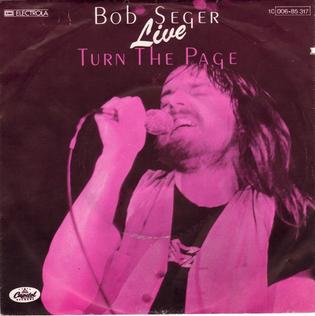
Bob Seger “Turn the Page” live version released

Turn the Page

Bob Seger & the Silver Bullet Band

Writer(s): Bob Seger (see lyrics here)


Released (studio version): January 1973 (album cut)


Released (live version): April 12, 1976 (album cut)


Released (live version): November 1977 (single)


First Charted: --


Peak: 1 CL, 1 DF (Click for codes to singles charts.)


Sales (in millions): --


Airplay/Streaming (in millions): -- radio, 148.0 video, -- streaming

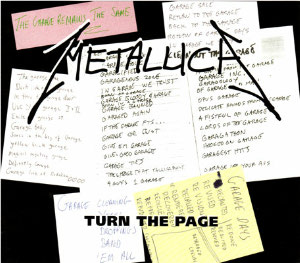
Turn the Page

Metallica


Released: November 16, 1998


First Charted: November 21, 1998


Peak: 111 AR, 39 MR, 15 CN, 11 AU, 11 DF (Click for codes to singles charts.)


Sales (in millions): --


Airplay/Streaming (in millions): -- radio, 99.5 video, -- streaming

Awards (Bob Seger):

Click on award for more details.


Awards (Metallica):

Click on award for more details.

About the Song:

Bob Seger released his first single with the Decibals in 1961, but didn’t put out an album until 1969’s Ramblin’ Gamblin’ Man. That album’s title cut reached #17 on the Billboard Hot 100 and it looked like his career might finally be underway. Over the next six years, he charted seven more hits, but none reached the top 40.

As he struggled to find success during the early ‘70s “he was all too familiar with the trials and tribulations of being a musician on tour.” UCR He poured those experiences into “Turn the Page,” a track from his 1973 album Back in ‘72. “Few other ‘life on the road’ songs can rival…[its] intensity and passion.” UCR The song “does a remarkable job summing up the grueling and lonely realities of the day-to-day life of a musician on the road in the early ‘70s.” UCR He references personal experiences such as suffering from tinnitus and having truck drivers mock him and his bandmates for their long hair. BC

“The song starts with a saxophone which set a somewhat ominous tone for the remainder of the proceedings. Seger’s vocals come across as rather hushed: You can almost picture the rock and roll legend quietly singing to himself as to not disturb the other members of his band as they try to get some sleep on the bus.” UCR

The song didn’t really find an audience until a live version from 1976’s Live Bullet hit the radio and became an album rock classic. That album became his highest charting to date (#34) and went five times platinum. Even bigger things were to come for Seger: his next seven albums were top-10, multi-platinum hits.

“It should be little surprise that Seger’s words would resonate…well with his peers.” UCR Waylon Jennings, Staind, and Kid Rock have all performed the song live and Bon Jovi has acknowledged the song as an inspiration behind their hit “Wanted Dead or Alive.” UCR Garth Brooks wrote “The Thunder Rolls” as a tribute to the song. BC Metallica recorded the song in 1998 for their Garage Inc. cover album. It spent 11 weeks atop the Billboard album rock chart.


Resources:


Related Links:


First posted 8/1/2022.