Showing posts with label Peter Green. Show all posts

Wednesday, December 7, 2022

Fleetwood Mac et al: Top 100 Songs

Fleetwood Mac et al

Top 100 Songs

Drummer Mick Fleetwood and bassist John McVie, Fleetwood Mac’s two consistent namesakes and only members throughout every incarnation, initially formed the group in 1967 as a blues outfit with Peter Green (guitar: 1967-70) and Jeremy Spencer (guitar: 1967-71). Members during the late ‘60s and early ‘70s included included Danny Kirwan (guitar: 1968-72), Christine McVie (keyboards, vocals: 1968-), Bob Welch (guitar: 1971-74), Bob Weston (guitar: 1972-73), and Dave Walker (guitar: 1972-73).

In 1975, Lindsey Buckingham (vocals, guitar: 1975-87,98-18) and Stevie Nicks (vocals: 1975-93,97,03-) joined, giving the band a more California sound and making for their most popular lineup. Other members have included Billy Burnette (guitar/vocals: 1987-93), Rick Vito (guitar/vocals: 1987-91), Bekka Bramlett (vocals: 1993-95), and Dave Mason (vocals, percussion: 1993-95).

This list was originally created in honor of Bob Welch, who passed away on June 7, 2012. It has since been updated in honor of Stevie Nicks’ birthday (born May 26, 1948) and upon Christine McVie’s death (November 30, 2022). This includes songs by Fleetwood Mac as well as its individual members.

Click here to see other acts’ best-of lists.


Spotify Podcast:

Check out the Dave’s Music Database podcast Remembering Christine McVie, the Songbird based on this list. Debut: December 6, 2022, at 7pm CST. New episodes based on Dave’s Music Database lists are posted every Tuesday at 7pm CST.

Awards:


Top 100 Songs


Dave’s Music Database lists are determined by song’s appearances on best-of lists as well as chart success, sales, radio airplay, streaming, and awards.

DMDB Top 1%:

1. Go Your Own Way (1976)
2. Dreams (1977)

DMDB Top 2%:

3. Don’t Stop (1977)

DMDB Top 5%:

4. Rhiannon (Will You Ever Win) (1975)
5. You Make Loving Fun (1977)
6. Edge of Seventeen (Stevie Nicks, 1981)
7. Sara (1979)
8. Stop Draggin’ My Heart Around (Stevie Nicks with Tom Petty & the Heartbreakers, 1981)
9. The Chain (1977)
10. Say You Love Me (1975)

11. Oh Well (1969)
12. Little Lies (1987)
13. Albatross (1968)
14. Gold (John Stewart with Stevie Nicks & Lindsey Buckingham, 1979)
15. Everywhere (1987)
16. Landslide (1975)
17. Whenever I Call You “Friend” (Kenny Loggins with Stevie Nicks, 1978)
18. Over My Head (1975)

DMDB Top 10%:

19. Gypsy (1982)
20. Tusk (1979)

21. Leather and Lace (Stevie Nicks with Don Henley, 1981)
22. Hold Me (1982)
23. Trouble (Lindsey Buckingham, 1981)
24. Stand Back (Stevie Nicks, 1983)
25. Big Love (1987)
26. Got a Hold on Me (Christine McVie, 1984)
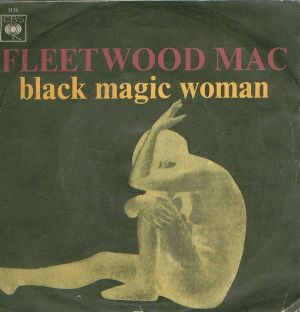
27. Black Magic Woman (1968)

DMDB Top 20%:

28. Silver Springs (1977)
29. Talk to Me (Stevie Nicks, 1985)
30. Seven Wonders (1987)

31. Rooms on Fire (Stevie Nicks, 1989)
32. I Can’t Wait (Stevie Nicks, 1985)
33. Save Me (1990)
34. Sentimental Lady (Bob Welch, 1977)
35. Magnet and Steel (Walter Egan with Stevie Nicks & Lindsey Buckingham, 1978)
36. Gold Dust Woman (1977)
37. Ebony Eyes (Bob Welch, 1977)
38. Go Insane (Lindsey Buckingham, 1984)
39. As Long As You Follow (1988)
40. Think about Me (1979)

41. Nightbird (Stevie Nicks, 1983)
42. If Anyone Falls (Stevie Nicks, 1983)
43. A Love in Store (1982)
44. Sometimes It’s a Bitch (Stevie Nicks, 1991)
45. Precious Love (Bob Welch, 1979)
46. Songbird (1977)
47. Love Will Show Us How (Christine McVie, 1984)
48. Holiday Road (Lindsey Buckingham, 1983)
49. Midnight Wind (John Stewart with Stevie Nicks & Lindsey Buckingham, 1979)
50. Has Anyone Ever Written Anything for You? (Stevie Nicks, 1985)

Beyond the DMDB Top 20%:

51. Needles and Pins (Tom Petty & the Heartbreakers live with Stevie Nicks, 1985)
52. Peacekeeper (2003)
53. Maybe Love Will Change Your Mind (Stevie Nicks, 1994)
54. After the Glitter Fades (Stevie Nicks, 1982)
55. Fireflies (1980)
56. Man of the World (1969)
57. Countdown (Lindsey Buckingham, 1992)
58. Isn’t It Midnight (1987)
59. Hypnotized (1973)
60. Need Your Love So Bad (1968)

61. Family Man (1987)
62. The Green Manalishi with the Two-Prong Crown (1972)
63. Paper Doll (1992)
64. Say You Will (2003)
65. Love Is Dangerous (1990)
66. Rattlesnake Shake (1969)
67. Hot Love, Cold World (Bob Welch, 1977)
68. No Questions Asked (1988)
69. Church (Bob Welch, 1979)
70. Tango in the Night (1987)

71. Heroes Are Hard to Find (1974)
72. Long Way to Go (Stevie Nicks, 1989)
73. Skies the Limit (1990)
74. Monday Morning (1975)
75. Dreams (Deep Dish with Stevie Nicks, 2006)
76. Second Hand News (1977)
77. Never Going Back Again (1977)
78. Sisters of the Moon (1979)
79. Oh Diane (1982)
80. Sorcerer (Stevie Nicks, 2001)

81. Wrong (Lindsey Buckingham, 1992)
82. Every Day (Stevie Nicks, 2001)
83. Secret Love (Stevie Nicks, 2001)
84. World Turning (1975)
85. Soul Drifter (Lindsey Buckingham, 1992)
86. I Don’t Want to Know (1977)
87. Slow Dancing (Lindsey Buckingham, 1984)
88. I Believe My Time Ain’t Long (1967)
89. Violet and Blue (Stevie Nicks, 1984)
90. Planets of the Universe (Stevie Nicks, 2001)

91. In My World (Lindsey Buckingham & Christine McVie, 2017)
92. Did You Ever Love Me (1973)
93. Whole Lotta Trouble (Stevie Nicks, 1989)
94. Enchanted (Stevie Nicks, 1983)
95. Friend (Christine McVie, 2004)
96. I Will Run to You (Stevie Nicks with Tom Petty & the Heartbreakers, 1983)
97. In the Back of My Mind (1990)
98. For What It’s Worth (Stevie Nicks, 2011)
99. Dragonfly (1971)
100. Nothing Ever Changes (Stevie Nicks, 1983)


Resources and Related Links:


First posted 6/9/2012; updated 12/7/2022.

Saturday, November 7, 1970

Santana “Black Magic Woman” charted

Black Magic Woman

Fleetwood Mac

Writer(s): Peter Green (see lyrics here)


Released: March 29, 1968


First Charted: April 10, 1968


Peak: 10 CL, 37 UK, 6 DF (Click for codes to singles charts.)


Sales (in millions): --


Airplay/Streaming (in millions): 2.0 radio, -- video, -- streaming

Black Magic Woman

Santana


First Charted: September 7, 1970


Peak: 4 US, 4 CB, 3 HR, 29 AC, 1 CL, 4 CN, 16 AU, 1 DF (Click for codes to singles charts.)


Sales (in millions): --


Airplay/Streaming (in millions): 2.0 radio, 83.7 video, 135.99 streaming

Awards (Fleetwood Mac):

Click on award for more details.


Awards (Santana):

About the Song:

Fleetwood Mac arguably became the biggest band in the world with 1977’s Rumours, but they were a very different band than the one that formed a decade earlier. Drummer Mick Fleetwood and bassist John McVie, the only consistent members throughout all the band’s incarnations, originally formed a British blues group in 1967 that included guitarists Peter Green and Jeremy Spencer. Their first charting single was “Black Magic Woman” in 1968, reaching #37 in the UK. They had four top-ten hits in the UK before experiencing a chart drought in 1971 that lasted until the famous 1975 lineup.

During that time, “Black Magic Woman” became an even bigger hit for Santana. That group formed in San Francisco in 1966. Over the years, they went through even more lineup changes than Fleetwood Mac with guitarist Carlos Santana being the one constant. The group released its self-titled debut in 1969, followed by Abraxas in 1970. The latter was a #1 album in the United States, fueled by the success of the group’s cover of “Black Magic Woman.”

Peter Green, who wrote the song, sang lead on the Fleetwood Mac original. He was inspired by Sanra Elsdon, his former girlfriend. WK Bob Dylan described the black magic woman as “a creature with dark powers” BD who “summons demons, holds seances, levitates, is skilled in the art of necromancy, conducts rituatlistic orgies with the dead.” BD He also explains that “she’s your tower of strength and you can’t let her go.” BD

Musically, it was influenced by the Otis Rush song “All Your Love,” which he had recorded while as a member of John Mayall & the Bluesbreakers. Green said that Mayall said, “if you really like something, you should take the first lines and make up another song from them. So that’s what I did with ‘Black Magic Woman.’” WK

The version by Santana featured Gregg Rolie, who would go on to form Journey in 1973 with fellow Santana member Neal Schon. The song was “a curious blend of blues, rock, jazz…afro-Cuban…and Latin polyrhythms.” WK The song is actually a medley, including an adaptation of “Gypsy Queen,” a 1966 instrumental by Hungarian guitarist Gábor Szabó called “Gypsy Queen.” WK


Resources:

  • BD Bob Dylan (2022). The Philosophy of Modern Song. New York, NY: Simon & Schuster. Pages 269-72.
  • SF Songfacts
  • WK Wikipedia


Related Links:


First posted 11/2/2022.