Showing posts with label Loose. Show all posts

Saturday, July 8, 2006

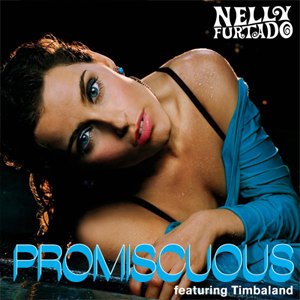
Nelly Furtado hit #1 with “Promiscuous”

Promiscuous

Nelly Furtado with Timbaland

Writer(s): Tim “Attitude” Clayton/Nelly Furtado/Nate Hills/Tim “Timbaland” Mosley (see lyrics here)


Released: April 25, 2006


First Charted: May 5, 2006


Peak: 16 US, 17 RR, 27 A40, 22 RB, 3 UK, 11 CN, 2 AU (Click for codes to charts.)


Sales (in millions): 3.82 US, 0.6 UK, 5.23 world (includes US + UK)


Airplay/Streaming (in millions): 0.5 radio, 636.8 video, 1133.87 streaming

Awards:

Click on award for more details.

About the Song:

Nelly Furtado first charted with the folkie, alternative-rock “I’m Like a Bird” in 2001. That song and its follow-up, “Turn Out the Light,” were top 10 U.S. hits, but her second album failed to land any songs on the Billboard Hot 100. It looked like Furtado had already peaked, but then she teamed with Timbaland, one of the hottest producers around, for her third album. Billboard called them “a surprisingly good match.” WK

On the song “Promiscuous,” the pair lyrically flirt with each other as she initially rejects his advances. She told Blender she saw the song as being about verbal foreplay, saying that she and co-writer Tim Clayton “called it ‘The Blackberry Song’ because everything we say in the song you could text-message to somebody.” SF

Because of a lyrical reference to basketball star Steve Nash (“Is that the truth or are talkin’ trash/ Is your game MVP like Steve Nash?”), some assumed they were romantically linked. Nash said that he was “flattered that she put me in her song, but I’m completely in love with my wife and two little baby girls.” WK Furtado also denied any tryst, saying that she included him because both were from Victoria, British Columbia. WK

The New Yorker called the song a “playful update” of Janet Jackson’s “Nasty” and All Music Guide’s Stephen Thomas Erlewine compared the song to “vintage Prince,” WK although he also said Furtado doesn’t “generate much carnal heat.” WK

The song won a Billboard Award for Best Pop Single of the Year and was nominated for a Grammy for Best Pop Collaboration with Vocals.


Resources:


First posted 2/7/2021; last updated 4/9/2024.

Saturday, August 7, 1993

Pearl Jam “Crazy Mary” charted

Crazy Mary

Pearl Jam with Victoria Williams

Writer(s): Victoria Williams (see lyrics here)


First Charted: August 7, 1993


Peak: 26 AR, 8 MR, 1 DF (Click for codes to charts.)


Sales (in millions): --


Airplay/Streaming (in millions): -- radio, 7.6 video, 0.21 streaming

Awards:

Click on award for more details.

About the Song:

Folk-rock singer/songwriter Victoria Williams was born in 1958 in Shreveport, Louisiana. She released her first album, Happy Come Home in 1987 and its follow-up, Swing the Statue! three years later. In 1992, she was diagnosed with multiple sclerosis. Because she didn’t have health insurance, a collection of artists recorded her songs for a benefit album called Sweet Relief.

While Victoria Williams wasn’t a household name, many of the artists on the album were. Amongst them were Evan Dando, the Jayhawks, Maria McKee, Pearl Jam, Michael Penn, Lou Reed, Soul Asylum, Matthew Sweet, and Lucinda Williams. All of the songs except two had been recorded by Victoria on her first two albums.

One of them was “Crazy Mary.” Victoria Williams wrote the song about an old black woman – referred to in the song as “a wild-eyed woman who lives in a tar paper shack” – who walked around Shreveport, refusing to get inside a moving car. She was killed when an out-of-control car crashed into her shack. SF

It was one of two songs featured on Sweet Relief that had not been previously released on one of Williams’ first two albums. She put the song out in 1994 on her third album, Loose, but it was recorded first by Pearl Jam (with Victoria on backing vocals) for the Sweet Relief project. Their version was a top-10 modern rock track and reached the album rock chart as well.

Pearl Jam had only released one album, 1991’s Ten, but it had established them as one of the biggest acts in the world. It became a cornerstone of grunge and would be certified for 13 million in sales.


Resources:


Related Links:


First posted 3/15/2023.

Tuesday, July 7, 1970

The Stooges Fun House released

Fun House

The Stooges


Released: July 7, 1970


Peak: -- Click for codes to charts.


Sales (in millions): --


Genre: proto-punk


Tracks:

Song Title [time] (date of single release, chart peaks)

  1. Down on the Street [3:42] (Aug. 1970, 26 CO)
  2. Loose [3:34]
  3. T.V. Eye [4:16] (18 CL, 31 CO)
  4. Dirt [7:00]
  5. 1970 (I Feel Alright) [5:14] (Dec. 1970, --)
  6. Fun House [7:45]
  7. L.A. Blues [4:52] (35 CL, 26 CO)

All songs written by Dave Alexander, Ron Asheton, Scott Asheton, and Iggy Pop.


Total Running Time: 36:35


The Players:

  • Iggy Pop (vocals)
  • Ron Asheton (guitar)
  • Dave Alexander (bass)
  • Scott Asheton (drums)
  • Steve Mackay (tenor saxophone)

Rating:

4.270 out of 5.00 (average of 31 ratings)


Quotable:

Fun House is, was and always will be absolutely essential.” – Joe S. Harrington, Blastitude

Awards:

(Click on award to learn more).

Predecessor to Punk

“It’s hard to understate the Stooges’ influence on the punk scene that would soon follow.” PM “This grinding gale storm was acid-punk before punk was cool.” EW’93 “The album’s corrosive psychosis directly influenced Richard Hell, The Birthday Party, and Black Flag, and many other dark-hearted punks have begun their musical careers by aping these brutal licks.” RD “Anyway, you slice it – aesthetics or otherwise – Fun House is, was and always will be absolutely essential.” JSH It “is the ideal document of the Stooges at their raw, sweaty, howling peak.” AM

Don Gallucci as Producer

“The Stooges’ first album was produced by a classically trained composer.” AM After it was “widely panned,” RD “Elektra assigned them a slowly staff producer for Fun House.” RD However, Don Gallucci proved an excellent choice. At age 14, he played keyboards on “Louie Louie” by the Kingsmen. He “took the approach that the Stooges were a powerhouse live band, and their best bet was to recreate the band’s live set” AM – “a riot of sinful riffage and frontman Iggy Pop’s drug-addled misadventures with cream-pies and broken glass.” RD

“As a result, the production on Fun House bears some resemblance to the Kingsmen’s version of ‘Louie Louie’ – the sound is smeary and bleeds all over the place, but it packs the low-tech wallop of a concert pumped through a big PA, bursting with energy and immediacy.” AM

The Sound

“Though nothing could fully capture the chaos of the Stooges onstage, Fun House came as close as possible.” PM “Slow and thuddy as it sounds now, almost nobody had ever made rock as primal as this second album.” AZ “Drunk on their own testosterone, Iggy Pop and Co. kept things simple, loud, and brutal.” AM “Of course the Stooges were stupid, that was the whole point.” AZ

Fun House “assembles all the elements.” PM “Iggy howled like a psycho, the band sounded like they could barely play the elementary riffs, and occasionally a moment of bone-headed poetry made it through the glorious muck.” AZ “There are brutish guitars, pounding beats and a general air of mayhem enhanced by the sense that frontman Iggy Pop was just barely keeping himself under control.” PM

The Band Members

“Ron Asheton’s blazing minimalist guitar gained little in the way of technique since The Stooges, but his confidence had grown by a quantum leap as he summoned forth the sounds that would make him the hero of proto-punk guitarists everywhere, and the brutal pound of drummer Scott Asheton and bassist Dave Alexander had grown to heavyweight champion status.” AM

“And Fun House is where Iggy Pop’s mad genius first reached its full flower; what was a sneer on the band’s debut had grown into the roar of a caged animal desperate for release, and his rants were far more passionate and compelling than what he had served up before.” AM He “yelps, mewls, screams, imitates James Brown…every…variation of voice-as-instrument possible, all to the tune of the band’s primal-grinding guttural howl.” JSH

“The addition o’ Ann Arbor/Dark Carnival sax player Steve MacKaye was like an open invitation for punks everywhere to get hipped to the ‘energy’ potential of jazz as well.” JSH

The Songs

The first three songs on Fun House are “a triptych of controlled abandon that's never been equaled.” WR Iggy Pop “sets the tone with a feral whoop at the start of the greasy, strutting opener Down on the Street.” PM

The Stooges may have had more ‘hits,’ but Fun House has stronger songs, including the garage raver to end all garage ravers in Loose.” AM

On that song and T.V. Eye, in which Iggy “yowls over scabrous guitars,” PM “you can…hear a whole style of rock guitar being born.” JSH Ron Asheton’s use “of the wah-wah is particularly awesome.” JSH “The delirium of subhuman snarls and sucking sounds emitted by Iggy at the climax…is the living end, a nether limit even the Birthday Party (for whom Fun House was bible) underpassed.” WR

Iggy Pop “loses himself in the sprawling psychedelia of the title track, which comes complete with honking saxophone.” PM

Dirt is “a hymn to transcendence thru abjection, with Ron Asheton alternating between piteous blues and silvered cascades.” WR

There’s also “the primal scream of 1970, and the apocalyptic anarchy” AM of “the cacophonous L.A. BluesAM in which the Stooges showed “three chords were okay, two were even better, one or none…was best of all.” AM


Notes:

A 2005 reissue added 14 alternate takes and single mixes to the original track listing.

Reviews:


Related DMDB Links:


First posted 8/21/2011; last updated 8/29/2026